

Tech
Early Deals From the Amazon Spring Sale That Passed Our BS Test

After a relatively quiet few months, Amazon is bringing back another of its famously invented shopping holidays. The Amazon Spring Sale is on its third year, and it’ll be arriving again on March 25. Amazon says the sale will run through March 31 and, like last year’s event, customers are promised thousands of deals across various daily themed categories.
Of course, as we’ve seen in the past with Prime Day, Black Friday, and Cyber Monday, the true discounts on good products will likely be buried among junk deals on shoddy wares. The WIRED Reviews team tests gear all year long, and we’ll be recommending fact-checked discounts on the products we actively recommend to our friends, family, and readers. We’ve highlighted early deals below, and we’ll be updating this story with more when the event officially arrives.
WIRED Featured Deals:
.png)
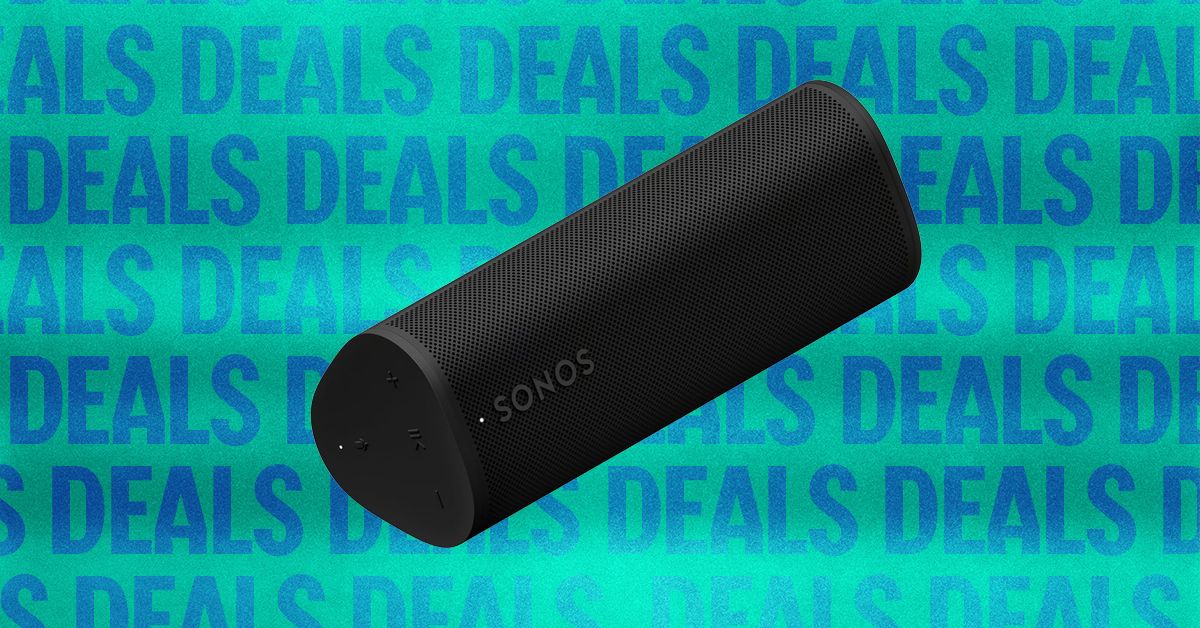
The Sonos Roam 2 is the best smart speaker on the market for most people. It’s portable but has impressive sound despite its small form factor. Bluetooth pairing is fast and simple, and it has IP67 dust and water resistance. The battery has up to 10 hours of listening time. It can also connect to your Sonos home system when you aren’t taking it on the go. The Roam 2 basically never sells for less than this.











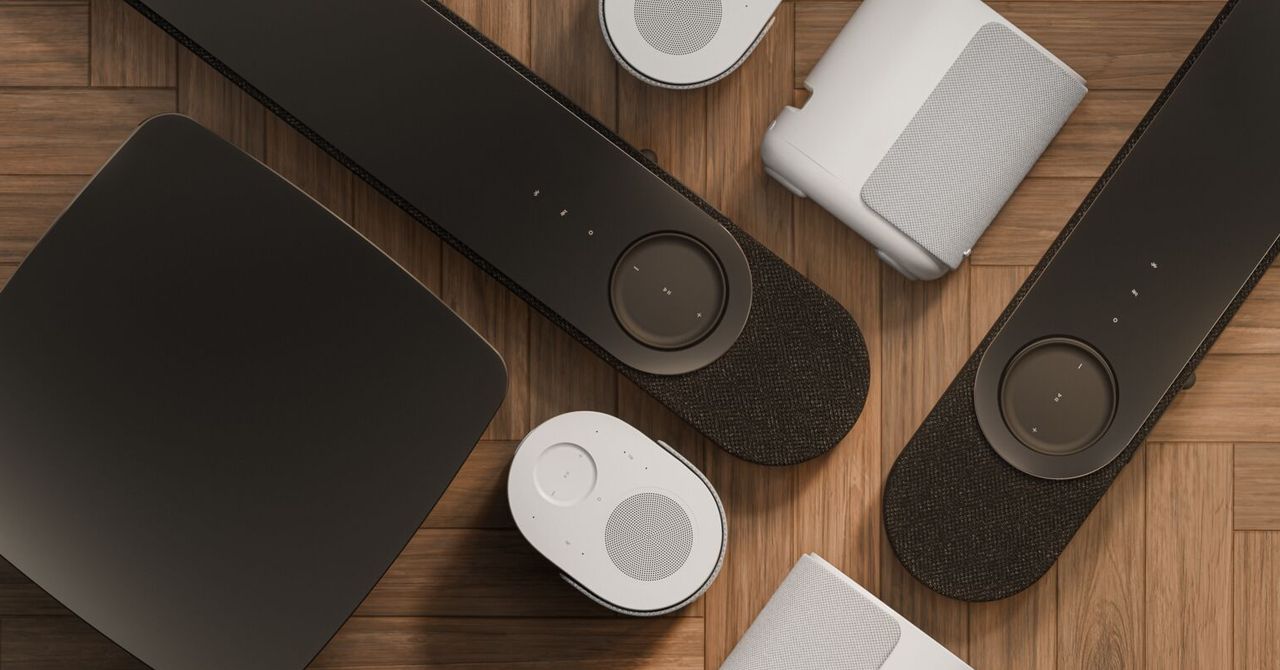
Bose has three new speakers to spice up your home listening. The company’s new “Lifestyle Collection”—designed with a snazzy fabric-wrapped grille and gentle curves—includes the Lifestyle Ultra Speaker, Lifestyle Ultra Subwoofer, and Lifestyle Ultra Soundbar. All of them can be connected to multiple units and third-party speakers via AirPlay and Google Cast for a better multi-room audio experience.
These audio products mark a “reentering” into the home speaker space for the company, bringing back the iconic Lifestyle lineup that originally debuted in 1990—known for simplicity and ease of use—which Bose subsequently discontinued in 2022.
To no surprise, Bose says the Ultra Soundbar is the “best soundbar we have ever made,” and that the Ultra Speaker might even be one of the company’s best in its storied history. The wireless speaker starts at $299, with a $349 limited-edition model in Driftwood Sand; the soundbar costs $1,099, and the subwoofer is $899. They’re available for preorder now and go on sale May 15.
These Wi-Fi-enabled speakers support AirPlay, Google Cast, Spotify Connect, and, uniquely, are the first to integrate with Alexa+ (in the US only), allowing you to ask Amazon’s chatbot to play music through the speakers via voice commands. There’s also Bluetooth support, and even an auxiliary input for connecting the Ultra Speaker to a turntable.
You can group two Lifestyle Ultra Speakers into a stereo system in the Bose app, or group them all together for a home theater system. Sadly, if you hoped to use it as a surround system with your existing Bose soundbar, the company says it’s only backward compatible with the Bass Module 700. And with the new Lifestyle Ultra Soundbar, it can only be used as a wired connection. For multi-room audio, the company has passed those grouping duties to the Google Home app for Google Cast technology, or Apple’s AirPlay for iOS users. Speaking of the app, there’s a redesigned onboarding process that purportedly makes setting up all of these speakers a breeze.
On the audio front, the Ultra Speaker notably features an upward-firing driver for Dolby Atmos–like spatial audio, along with two front-facing drivers. (It doesn’t seem to support Dolby Atmos Music at this time.) The company is also touting its CleanBass technology, which pairs Bose’s QuietPort acoustic opening with the woofer for deep sound that performs better than its size suggests, though we’ll have to hear it for ourselves to see if it lives up to Bose’s claims.

When the numbers coming out of the biggest AI companies get reported, the coverage is almost always the same: revenue up, growth accelerating, the boom is real. What almost nobody asks is what kind of revenue it is. In AI right now, that question is being skipped entirely. It’s the only one that matters.
Any investor who has sat across from a founder in a pitch meeting knows that headline revenue is just the starting point. The real questions come after: Is this B2B or B2C? Is it contracted or casual? Does the use case suggest land-and-expand potential, or is this customer already at their ceiling? Is the product embedded in something the customer cannot easily stop doing, or is it a nice-to-have competing with shrinking budgets and fading attention? These questions are table stakes at the startup level. They have almost completely vanished from the conversation about the companies now defining the AI landscape.
Take Anthropic and OpenAI. By most coverage, OpenAI is the dominant player – larger revenue, broader adoption, a product that has become genuinely cultural. That may all be true. But when you ask what colour that revenue is, the picture gets more complicated. OpenAI’s CFO confirmed that roughly 75% of its revenue comes from consumer subscriptions. ChatGPT has somewhere in the range of 800 million weekly active users – and only about 5% are paying subscribers. That is an enormous base resting on consumer willingness to pay for something most people still access for free, competing with curiosity, with free alternatives, and with whatever captures attention next. Consumer subscriptions cancel quietly and they cancel fast.
Anthropic’s revenue is built on integration
Anthropic’s revenue is smaller. But look at where it comes from. Approximately 80% comes from enterprise customers. Over 500 companies now spend more than $1 million annually on Claude. Eight of the Fortune 10 are customers. Claude Code, a tool embedded directly into developer workflows, went from zero to $2.5 billion in annualized revenue in roughly nine months. The result is a monetization gap that rarely gets discussed: Anthropic generates roughly $211 per monthly user while OpenAI generates roughly $25 per weekly user. That is not a small difference. It reflects what happens when revenue is built on integration rather than attention.
When a business has embedded AI into its compliance process, its coding infrastructure, or its data operations, switching is not a casual decision. It is an engineering project, a procurement process, and an organizational headache. That friction is not a bug; it is the entire point. It is what makes a dollar of Anthropic’s revenue structurally different from a dollar of consumer subscription revenue, regardless of the size of the number attached to it.
Lessons from SaaS
This is not a new lesson. The 2022 SaaS correction made it visible at a category level. When pressure hit, it did not hit evenly. Public SaaS multiples fell an average of 67% from their 2021 peak – but within that average, some companies saw multiples fall 90% while infrastructure and security tools largely held. The companies that took the worst hits were not necessarily bad businesses with bad products. They had the wrong colour revenue for a pressure environment. The market treated them as equivalent until the moment it didn’t.
AI will produce extreme divison
AI will produce a more extreme version of that divergence. Two reasons. First, the hype cycle is larger than anything SaaS produced – the speed of adoption, the scale of investment, and the cultural footprint of these products have created a wider gap between perceived value and embedded value than we have seen before. Second, the consumer-versus-enterprise variance is wider. SaaS was predominantly a business product. AI has gone consumer in a way SaaS never fully did, which means a much larger share of current AI revenue sits in the category most vulnerable to pressure. When that pressure arrives, the disaggregation will be severe and it will not look like a uniform correction. It will look like two completely different industries reporting results in the same earnings cycle.
The boom-or-bust framing that dominates AI coverage is the wrong question. Some of this is a boom. Some of it is not. The difference will not show up in total revenue figures until it is too late to be useful information. The question worth asking now is simpler and harder: which revenue survives pressure? That answer depends entirely on use case, contract structure, and how deeply the tool is actually embedded in how people and businesses work. We do not yet have a clean public way to measure it. That is exactly the problem.
Judah Taub is the founder and managing partner of Hetz Ventures, an Israeli early-stage venture capital firm specializing in cybersecurity, data, and AI infrastructure.

Armed with some Python and a white-hot sense of injustice, one medical student spent six months trying to figure out whether an algorithm trashed his job application.
Source link


Pakistan ‘hopeful’ efforts will lead to early resolution of US-Iran conflict: DPM Dar

Sugarcane price hike: Govt raises FRP to Rs 365/quintal for 2026-27, farmers to benefit from higher returns – The Times of India

Climate is now in the cost sheet

-

 Tech1 week ago
A Brain Implant for Depression Is About to Be Tested in Humans
-

 Tech1 week ago
Almost 90% of women leave tech industry within 10 years | Computer Weekly
-

 Sports1 week ago
Pro wrestling star Steph De Lander reveals how colleague’s advice helped lead her to title triumph at ACW
-
 Business1 week ago
‘I had £20,000 stolen and had to fight a 13-month fraud reporting rule to get it back’
-

 Entertainment1 week ago
Norway joins Type 26 Frigate Programme to boost NATO naval power
-

 Entertainment1 week ago
Melania Trump says ABC should ‘take a stand’ on late-night host Kimmel
-

 Tech1 week ago
This Ambitious Laptop Doesn’t Leave Much Room for Your Hands
-
 Business6 days ago
PSX plunges over 4,800 points | The Express Tribune