

Business
Peloton is launching bikes and treadmills for gyms, accelerating commercial strategy


A Peloton Interactive Inc. logo on a stationary bike at the company’s showroom in Dedham, Massachusetts, Feb. 3, 2021.
Adam Glanzman | Bloomberg | Getty Images
Peloton on Monday announced its Commercial Series, the company’s first Bike and Tread products built for high-traffic gym floors.
The move marks the company’s latest push beyond its core at-home business and deeper into the multibillion-dollar commercial fitness market.
“I’ve had the chance of speaking with the CEOs of a number of gyms, gym operators or big-box operators over the last year,” CEO Peter Stern told CNBC in an interview. “The one brand their members asked for, and therefore that they are asking for it, ‘Find a way to get me Peloton equipment.'”
The suite of products is a part of the company’s commercial unit, which it launched in 2025 in partnership with Precor, the fitness equipment maker it acquired in 2021. Peloton already has a presence in major businesses like hotel chains Hyatt and Hilton. The company did not say which gyms specifically would offer its new machines.
The expansion could broaden Peloton’s footprint in the fitness industry. Through its integration with Precor, Peloton now has access to a commercial distribution network spanning more than 60 countries, allowing the company to scale its equipment and digital platform internationally.
Stern did not disclose pricing for the new equipment, but said the products will be “priced competitively,” with more details expected closer to the planned launch in late 2026.
The machines combine Peloton’s digital workout platform and instructor-led classes with hardware engineered by Precor to withstand heavy daily use.
Pedaling uphill
Peloton’s push into gyms could face resistance. Some fitness chains have been reluctant to integrate Peloton equipment, preferring to promote their in-house classes, digital platforms and instructors.
“I need to leave how gyms react to that up to them,” said Stern. “But if you look at a typical gym floor, they’ve got Bikes, Treads and lots of other equipment that’s out there. We’re just now giving them a better experience for customers on those Bikes and on those Treads.”
Peloton has dipped its toes in commercial spaces for several years, including through the hotel partnerships, but has been held back because its hardware wasn’t designed to be used in high-traffic spaces. The company has been the subject of numerous product safety recalls.
Peloton machines have had a tendency to break, and fixing them can be challenging because its infrastructure is different from a traditional fitness manufacturer’s.
When Peloton launched its revamped product assortment last fall, the company also introduced a new line of equipment for its commercial business unit. The hardware is more durable than its consumer machines, but is still only designed for places with smaller gyms, like hotels and corporate wellness centers.
The development comes as Peloton struggles to convince consumers its new AI-driven product line, Peloton IQ, is worth the steep price tag.
When it reported fiscal 2026 second-quarter earnings last month, the company missed Wall Street’s expectations on the top and bottom lines and said it expected sluggish sales to continue in the current quarter.
The weak results, coupled with the soft guidance, were the first clue investors had that Peloton’s product overhaul wasn’t the sales driver the company had hoped it would be, putting more focus on its commercial business unit.
During Peloton’s last quarter, revenue in its commercial business unit rose 10%, even as companywide sales fell about 3%.










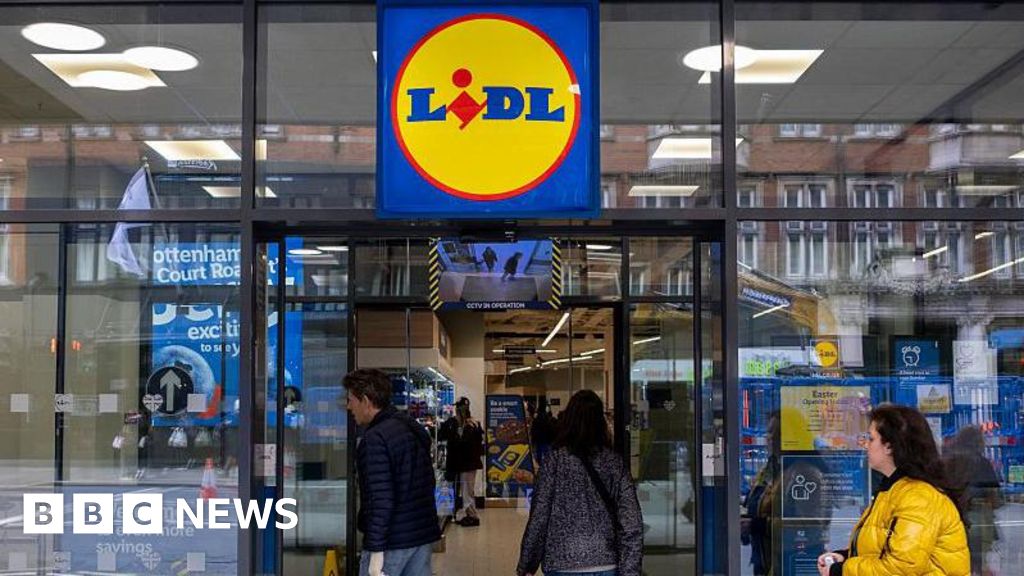
Under the changed system customers collect points rather than reward coupons, with £1 spent equalling one point.
Source link

There have been extra jitters in UK government debt markets ahead of Thursday’s local and national elections.
Source link
Business
Sugarcane price hike: Govt raises FRP to Rs 365/quintal for 2026-27, farmers to benefit from higher returns – The Times of India

The government has increased the fair and remunerative price (FRP) of sugarcane by Rs 10 to Rs 365 per quintal for the 2026-27 season beginning October, PTI reported.The decision was approved by the Cabinet Committee on Economic Affairs (CCEA), chaired by Prime Minister Narendra Modi.“The FRP will be Rs 365/quintal for a basic recovery rate of 10.25 per cent,” Union Minister Ashwini Vaishnaw said after the meeting.The revised FRP is 2.81 per cent higher than the current rate of Rs 355 per quintal for the 2025-26 season.For every 0.1 per cent increase in sugar recovery above 10.25 per cent, the FRP will rise by Rs 3.56 per quintal, providing an incentive to mills for higher efficiency.To safeguard farmers supplying to mills with lower recovery rates, the government has decided that there will be no deduction in FRP for recovery below 9.5 per cent. In such cases, farmers will receive Rs 338.3 per quintal in the 2026-27 season.The production cost of sugarcane for 2026-27 has been estimated at Rs 182 per quintal, making the FRP 100.5 per cent higher than the cost.“Farmers are expected to get more than Rs 1 lakh crore,” Vaishnaw said.The move is expected to benefit nearly one crore sugarcane farmers, along with farm labourers and workers engaged in sugar mills.The FRP has been fixed based on recommendations of the Commission for Agricultural Costs and Prices (CACP) and consultations with state governments and stakeholders.The sugar sector supports the livelihoods of around five crore farmers and their families, and about five lakh workers directly employed in sugar mills, besides those involved in related activities such as transportation.Sugar mills are required to purchase sugarcane from farmers at the FRP or higher.Vaishnaw said the FRP has been increased every year over the past decade, and the latest revision will also support ethanol production from surplus sugarcane.On cane dues, he said that in the 2024-25 season, about Rs 1,02,209 crore, or nearly 99.5 per cent, of the total payable dues of Rs 1,02,687 crore had been cleared as of April 20, 2026.For the ongoing 2025-26 season, Rs 99,961 crore, or 88.6 per cent, has been paid out of total dues of Rs 1,12,740 crore.


AS-level Business Studies paper allegedly leaked online

Italy’s Meloni warns over AI deepfakes after false photos circulate

Oprah’s Book Club: Author Douglas Stuart reads “John of John” excerpt

-

 Tech1 week ago
A Brain Implant for Depression Is About to Be Tested in Humans
-

 Sports1 week ago
Pro wrestling star Steph De Lander reveals how colleague’s advice helped lead her to title triumph at ACW
-

 Tech1 week ago
Almost 90% of women leave tech industry within 10 years | Computer Weekly
-
 Business1 week ago
‘I had £20,000 stolen and had to fight a 13-month fraud reporting rule to get it back’
-

 Entertainment1 week ago
Norway joins Type 26 Frigate Programme to boost NATO naval power
-

 Entertainment1 week ago
Melania Trump says ABC should ‘take a stand’ on late-night host Kimmel
-
 Business6 days ago
PSX plunges over 4,800 points | The Express Tribune
-

 Tech1 week ago
This Ambitious Laptop Doesn’t Leave Much Room for Your Hands