

Business
Stock market today: Which are top gainers and losers on NSE & BSE on March 23? Check list – The Times of India

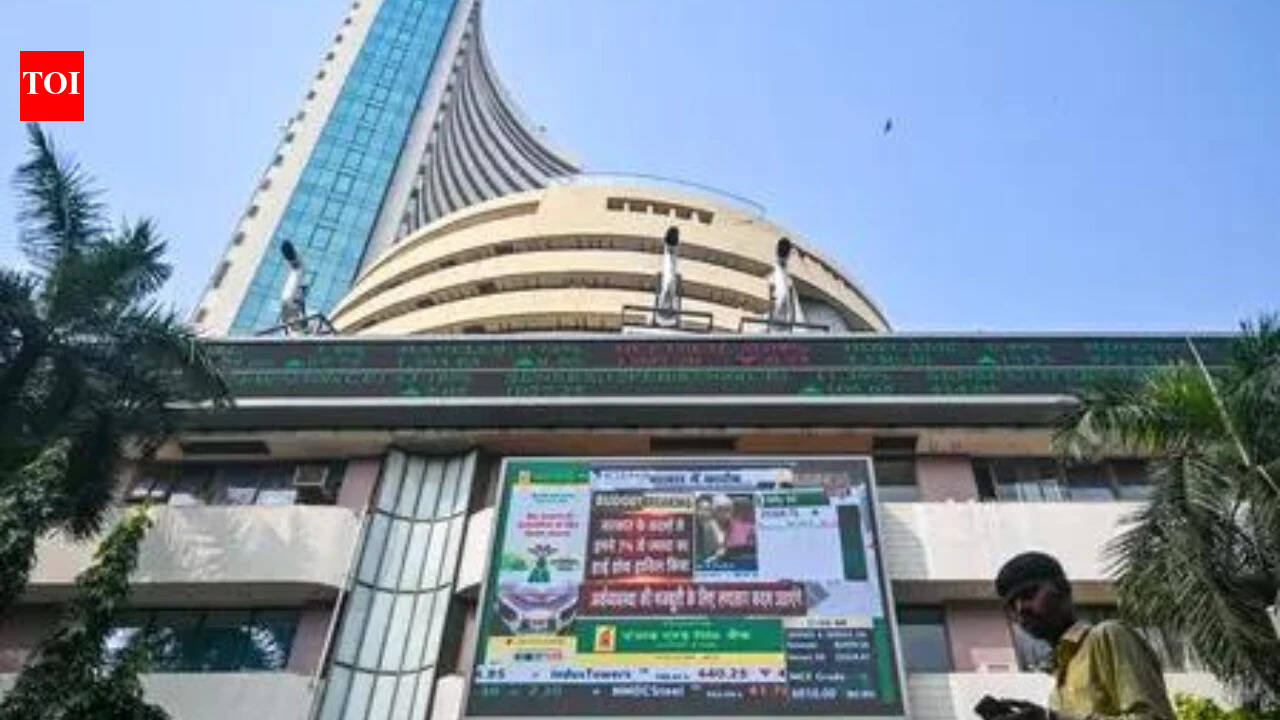
Benchmark equity indices Sensex and Nifty plunged sharply on Monday, tracking a brutal global sell-off as the Middle East war deepened into its fourth week, with rising crude prices, persistent foreign fund outflows and a record-low rupee worsening investor nerves.The 30-share BSE Sensex slumped 1,836.57 points, or 2.46 per cent, to close at 72,696.39, after falling as much as 1,974.52 points intraday to 72,558.44. The NSE Nifty dropped 601.85 points, or 2.60 per cent, to settle at 22,512.65.
Nifty50 top gainers
| Company Name | Current Price (Rs) | Price Change | % Change |
|---|---|---|---|
| HCL Tech | 1,359 | 24.90 ↑ | 1.87% ↑ |
| Power Grid | 302.10 | 4.50 ↑ | 1.52% ↑ |
| Infosys | 1,257 | 0.90 ↑ | 0.08% ↑ |
| ONGC | 265.45 | 0.06 ↑ | 0.02% ↑ |
Sensex top gainers
| Company Name | Current Price (Rs) | Price Change | % Change |
|---|---|---|---|
| HCL Tech | 1,359 | 24.90 ↑ | 1.87% ↑ |
| Power Grid | 302.10 | 4.50 ↑ | 1.52% ↑ |
| Infosys | 1,257 | 0.90 ↑ | 0.08% ↑ |
Nifty50 top losers
| Company Name | Current Price (Rs) | Price Change | % Change |
|---|---|---|---|
| Shriram Finance | 877.70 | -60.90 ↓ | -6.49% ↓ |
| Titan Company | 3,853 | -254.00 ↓ | -6.18% ↓ |
| Trent | 3,357 | -203.00 ↓ | -5.71% ↓ |
| Jio Financial Ser… | 226.10 | -13.21 ↓ | -5.52% ↓ |
| UltraTech Cem. | 10,362 | -572.00 ↓ | -5.24% ↓ |
| JSW Steel | 1,110 | -60.00 ↓ | -5.13% ↓ |
| HDFC Life | 592.10 | -31.55 ↓ | -5.06% ↓ |
| InterGlobe | 3,945 | -204.00 ↓ | -4.92% ↓ |
| Adani Ent. | 1,833 | -94.10 ↓ | -4.89% ↓ |
| Tata Steel | 187.17 | -9.61 ↓ | -4.88% ↓ |
Sensex top losers
| Company Name | Current Price (Rs) | Price Change | % Change |
|---|---|---|---|
| Titan Company | 3,853 | -254.00 ↓ | -6.18% ↓ |
| Trent | 3,357 | -203.00 ↓ | -5.71% ↓ |
| UltraTech Cem. | 10,362 | -572.00 ↓ | -5.24% ↓ |
| InterGlobe | 3,945 | -204.00 ↓ | -4.92% ↓ |
| Tata Steel | 187.17 | -9.61 ↓ | -4.88% ↓ |
| BEL | 405.50 | -20.61 ↓ | -4.84% ↓ |
| HDFC Bank | 744.15 | -36.31 ↓ | -4.66% ↓ |
| Adani Ports SEZ | 1,304 | -61.81 ↓ | -4.53% ↓ |
| M&M | 2,956 | -110.00 ↓ | -3.60% ↓ |
| Asian Paints | 2,121 | -74.10 ↓ | -3.38% ↓ |
War, oil and rupee pressure trigger broad sell-off
Monday’s fall came in line with a steep decline across global markets as fears mounted over prolonged geopolitical disruption and the risk of deeper energy supply shocks.Brent crude — the global oil benchmark — rose 0.97 per cent to $113.3 per barrel, adding to concerns for an oil-importing economy like India.“Markets witnessed a sharp sell-off on Monday, continuing the prevailing downtrend amid weak global cues and escalating geopolitical tensions. Investor sentiment remained extremely fragile amid escalating geopolitical tensions in West Asia, which have once again pushed crude oil prices sharply higher,” Ajit Mishra, SVP, research at Religare Broking Ltd, said, according to news agency PTI.He added that the rise in oil prices, along with continued foreign institutional investor outflows and weakness in the rupee, significantly hit risk appetite.Vinod Nair, head of research at Geojit Investments Ltd, was quoted by PTI as saying that domestic markets mirrored weakness across Asia as investors worried about potential disruptions to global energy supplies.“Domestic markets witnessed a sharp decline, mirroring weakness across Asian markets amid escalating tensions in the Middle East and concerns over potential disruptions to global energy supplies. Investor sentiment turned cautious following Trump’s 48-hour ultimatum to Iran on the Strait of Hormuz,” Nair said.He added that rising global bond yields, signalling inflation and fiscal worries, along with the rupee falling to a record low, further pressured equities and triggered more FII selling.
Titan, Trent among major losers; IT stocks buck trend
The sell-off was broad-based, with heavy damage across consumption, metals, real estate and banking names.Titan was the biggest loser among Sensex stocks, tumbling 6.24 per cent. Trent, UltraTech Cement, Bharat Electronics, InterGlobe Aviation, Tata Steel and HDFC Bank were also among the major laggards.A handful of IT and utility counters offered limited resistance, with HCL Tech, Power Grid and Infosys ending in the green.
Midcaps, smallcaps and sectoral indices sink
The pain was even sharper outside the frontline indices, pointing to a wider risk-off mood in the market.The BSE MidCap Select index tanked 3.82 per cent, while the SmallCap Select index plunged 3.66 per cent.All sectoral indices ended lower. Consumer durables fell the most, dropping 4.91 per cent, followed by metal (4.76 per cent), realty (4.75 per cent), services (4.70 per cent), BSE PSU Bank (4.39 per cent), MidSmall Private Banks Quality Tilt (4.37 per cent), commodities (4.35 per cent), industrials (4.05 per cent) and capital goods (3.99 per cent).Market breadth remained extremely weak, with 3,798 stocks declining, compared with just 635 advancing, while 123 remained unchanged on the BSE.
Foreign investors continue heavy exit
Foreign capital flight remained a major overhang.Foreign Institutional Investors (FIIs) sold equities worth Rs 5,518.39 crore on Friday. In contrast, Domestic Institutional Investors (DIIs) bought shares worth Rs 5,706.23 crore, partially cushioning the fall.Still, the broader trend remains negative: PTI said foreign investors have pulled out Rs 88,180 crore — about $9.6 billion — from Indian equities so far this month.That persistent outflow, combined with currency weakness and expensive oil, is reinforcing fears that the market may remain vulnerable even on rebound days.
Global markets deep in the red
The weakness was not limited to India.Major Asian markets ended sharply lower, including South Korea’s Kospi, Japan’s Nikkei 225, Shanghai’s SSE Composite and Hong Kong’s Hang Seng. The Kospi saw the steepest fall, plunging 6.49 per cent.Markets in Europe were also trading with deep losses, while the US market had ended significantly lower on Friday, adding to the negative global backdrop.
Sensex, Nifty down over 10% since war began
Monday’s slump adds to the deep losses already seen since the conflict began on February 28.Since the war started, the Sensex has fallen 8,590.8 points, or 10.56 per cent, while the Nifty has shed 2,666 points, or 10.58 per cent.That means Indian equities have now erased a substantial chunk of gains in less than a month, with the market increasingly pricing in a prolonged conflict, sustained energy stress and a tighter macro environment.



Business
Noel Tata part of 3-1 vote against Srinivasan, Singh at Tata edu trust – The Times of India
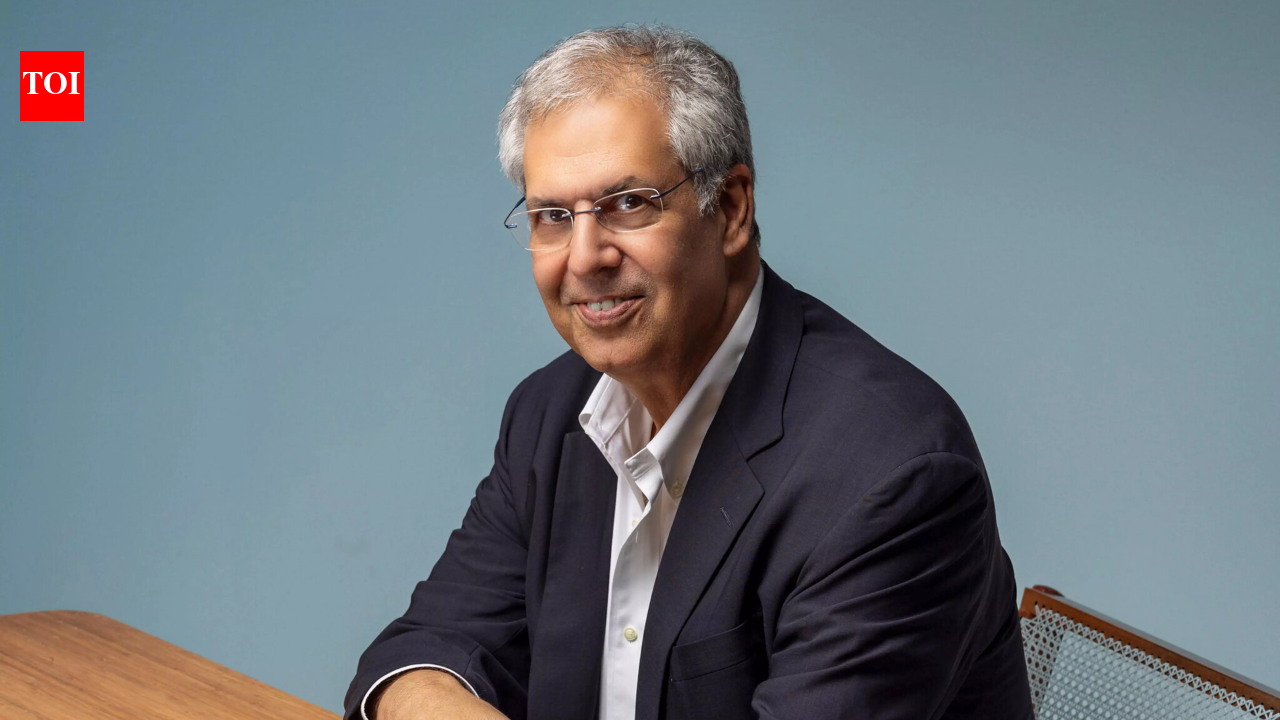
MUMBAI: Noel Tata has voted against the reappointment of Venu Srinivasan and Vijay Singh as trustees of Tata Education and Development Trust (TEDT), the largest corpus trust within Tata Trusts, in a move that widens fault lines within one of India’s most powerful philanthropic structures. It marks the first time Noel has made his opposition to the duo unequivocal.The vote, the last of four cast on the matter, added to a verdict that had already been sealed when Mehli Mistry became the first to oppose the duo’s extension, shortly after the trusteeship renewal circular was issued.Under TEDT’s governance rules, reappointments require unanimous consent among trustees – a threshold that had already been foreclosed by Mehli’s vote. Jehangir Mistry subsequently voted against both men as well. Srinivasan and Singh had each voted for the other. The tally stood at 3-1 against each of them.
Noel’s vote signals widening of Tata Trusts rift since ’25
Their tenures in an influential Tata trust that supports projects in India and abroad, formally expired on Sunday, May 10. Noel Tata voting against Srinivasan and Singh significantly curtails influence of both men within wider Tata Trusts ecosystem, even as they remain vice-chairmen of the Sir Dorabji Tata Trust (SDTT) and Sir Ratan Tata Trust (SRTT) — the two apex trusts that together hold controlling stake in Tata Sons.The rift between Noel and the duo deepened after Srinivasan and Singh publicly backed a listing of Tata Sons, a move Noel opposed. In an email to Tata Trusts CEO, Mehli said “My affidavit in response to the board composition change report for SDTT explains the reasons why I chose to take such a decision.” According to the affidavit, Noel, Srinivasan and Singh had wrongly voted against him at SDTT. He also said that Srinivasan had taken part in the vote even though his term had already ended at SDTT. TEDT, with a corpus of Rs 5,600 crore, has been among the most prominent Indian donors to Ivy League institutions, including Harvard Business School and Cornell University, and owns and operates two cancer hospitals in India while supporting 17 others through grants.Following the board changes, Noel remains chairman and perpetual trustee of TEDT. Mehli continues in his role as perpetual trustee, while Jehangir holds a fixed-term trusteeship. With Srinivasan and Singh’s departure, TEDT now sits at the minimum threshold of three trustees permitted under its deed. An email sent to Noel did not elicit a response. The vote is the latest and most visible expression of a fracture within Tata Trusts that has been widening since late 2025. Established by former Tata Trusts chairman Ratan Tata in 2008, TEDT is perhaps the only trust within Tata Trusts that can support social projects in India and abroad.

NEW DELHI: The Competition Commission has ordered a detailed probe against French spirits major Pernod Ricard and seven other entities for alleged cartelisation in the Indian-made foreign liquor market.The seven entities that have come under the watchdog’s lens are Indo Spirits, Pathway HR Solutions, Universal Distributors, Khao Gali, Bubbly Beverages, Shiv Associates and Organomix Ecosystems.Ordering the investigation, the regulator said it is of prima-facie view that Pernord Ricard’s restrictive conduct with its retailers/wholesalers, purportedly, to induce brand pushing and achieve higher market share in IMFL market in Delhi, falls within the purview of ‘exclusive dealing agreement’ under the Competition Act. Such conduct violates the Act, according to a 26-page order, dated May 5, by the Competition Commission of India (CCI). The complaint was filed before the CCI in 2024.CCI’s Director General (DG) will carry out the investigation that will also look into the role of the persons/officers who were responsible for the conduct of the activities of such entities as well as individuals whose consent or connivance was involved during the time of the contraventions.

More than half of tradespeople have seen an increase of late payments compared to a year ago, a survey finds.
Source link

Noel Tata part of 3-1 vote against Srinivasan, Singh at Tata edu trust – The Times of India
Cost of living crisis sees tradespeople having to chase debt
CCI to probe Pernod Ricard, seven others – The Times of India

-

 Politics1 week ago
Iran weighs US reply delivered via Pakistan as Trump signals opposition to deal terms
-

 Fashion1 week ago
AAFA pushes for swift US House passage of key anti-counterfeiting law
-

 Fashion1 week ago
US’ J.Jill, Inc. appoints Kimberly Wallengren as CMO
-

 Fashion1 week ago
US cotton export sales show strong recovery, Upland rise 36%
-

 Sports1 week ago
Sajid Ali Sadpara summits world’s fifth-highest peak
-

 Tech6 days ago
DHS Demanded Google Surrender Data on Canadian’s Activity, Location Over Anti-ICE Posts
-

 Fashion1 week ago
ICE cotton witnesses sharp rise on weaker dollar, strong exports
-
 Business1 week ago
Heineken to invest £44.5m in hundreds of pubs creating 850 jobs