

Business
Property Play: Home flippers see smallest profits since the Great Recession, real estate data firm says


Vesnaandjic | E+ | Getty Images
A version of this article first appeared in the CNBC Property Play newsletter with Diana Olick. Property Play covers new and evolving opportunities for the real estate investor, from individuals to venture capitalists, private equity funds, family offices, institutional investors and large public companies. Sign up to receive future editions, straight to your inbox.
Higher mortgage rates, high home prices and tight supply are all conspiring to squeeze investors in the home flipping play.
In all of 2025, roughly 297,000 single-family homes and condos were flipped nationwide, according to ATTOM, a real estate data provider, which defines a flip as a home purchased and sold in the same 12-month period. That was a decrease of 3.9% from 2024 and the lowest number of flips in any year since 2020. Investor flips accounted for 7.4% of all 2025 home sales, down from 7.6% in 2024.
Flips are falling because profits are making it less and less worth it.
With the backdrop of the highest median home prices on record, the typical home flip netted investors just $65,981 in gross profit, or a 25.5% return on investment, according to ATTOM. That is down from 32% the prior year and the lowest rate since the Great Recession in 2008.
“Competition for homes remains strong in many markets due to constrained supply,” Rob Barber, CEO of ATTOM, said in a release. “With prices staying elevated, investors are finding it harder to secure deals that deliver strong returns.”
For comparison, in the boom decade following the financial crisis, profit margins were higher than 50%, peaking at 61% in 2012, which is around the time home prices bottomed.
Net profits, or investor returns that factor in the cost of fixing up the property, can vary widely depending on local labor, material and financing costs. Across the U.S., however, the cost of fixing properties before flipping remains elevated due to ongoing supply chain pressures and tariff-related increases in material prices, which continue to compress investor margins, according to ATTOM.
There are signs, however, that the flipping market could improve this year, as home prices are expected to moderate further and mortgage rates remain below year-ago levels.
“After nearly 4 years of declining flipped home transaction volume, our survey is picking up signs of positive momentum in the fix-and-flip space,” Alex Thomas, research manager at John Burns Research and Consulting, wrote in a recent report.
The firm partners with Kiavi on a Fix and Flip Housing Market Index, which looks at investor sentiment in the market. In the fourth quarter of 2025, it recorded the largest quarter-over-quarter gain in three years and a reversal of six consecutive quarters of declines.
In addition, 71% of investors surveyed said they expect to purchase more homes this year, compared with 66% last year and 49% in 2024, according to the JBRC/Kiavi survey. That is the highest share in its four-year history.
Fewer flippers are also reporting disappointing results from their investments. Nationally, 17% of flippers in the fourth quarter reported selling “mostly below” expected after-repair volume, or ARV, down from 21% in the prior quarter, per the survey.
“Because flippers tend to cut prices faster than typical home sellers during slowdowns (to avoid costly holding periods), this improvement is an early signal that the pricing environment is firming,” Thomas wrote.
He also said several provisions in last summer’s “big beautiful bill” could boost fix-and-flip profitability, including enhanced depreciation, a permanent 20% qualified business income deduction and deductible interest expenses on fix-and-flip loans.
Other measures of real estate flipper sentiment, including the RCN Capital Investor Sentiment Survey, a quarterly report prepared by CJ Patrick Company, also cite optimism.
“It’s those improving market conditions — more inventory, moderating home prices, and slightly better financing costs — coupled with pent-up demand from buyers and increased numbers of distressed properties for sale that I think should give flippers more opportunities as the year goes on,” said Rick Sharga, CEO of CJ Patrick.
The wild card will be mortgage rates. More investors are using financing, at 37.7% in 2025 compared with 36.9% in 2024, according to ATTOM. Rates were expected to be lower this year, but the Iran war and the resulting rise in oil prices have upended those forecasts.
“Flippers are having to get more creative to maintain profitability,” Barber said. “That could include taking on older homes, as the median flipped property in 2025 was built in 1978, the oldest since we began tracking, along with tighter cost control and more disciplined renovation strategies.”


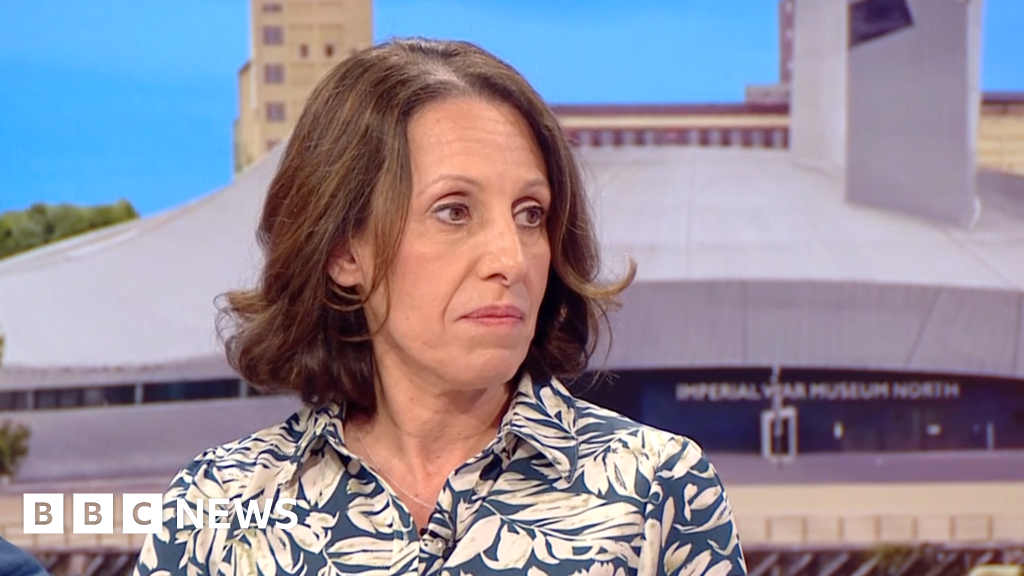
Co-op chair Debbie White said: “We thank Shirine for her leadership and for the significant contribution she has made to our Co-op, to our communities and to the co-operative movement during her tenure. The Board is grateful for her commitment and leadership, particularly during a challenging few years, and we wish her every success in the future.”

Air travel is all set to become highly expensive as the airlines are indicating at doubling the air ticket prices following a whopping increase in jet fuel rate.
The jet fuel price has rocketed to Rs417 from Rs388 per litre in Pakistan and the airlines have started to increase the airfares through enhancing fuel surcharge rates.
The airlines maintained the basic fare but added the fuel price surge into the fuel surcharge.
The one-way fare from Karachi to Islamabad and Lahore has shot up to Rs40,000 while air travel on chance seats for Islamabad and Lahore has soared by 150 percent.
Accordingly, the Pakistan International Airlines (PIA) has boosted the airfares by 10 to 100 dollars.
Domestic flights will now carry additional $10 fuel surcharge which on Canada routes extra $100 will be received as fuel charge.
Passengers on UK-bound flights to pay 75 dollars additional surcharge while 50 dollars will be received on Middle East routes.
Private airlines have gone a step ahead as they enforced charging additional 15 dollars to 150 dollars on different routes.
The airlines were under pressure after closure of many air routes with the airlines administrations are saying that extraordinary rise in airfares has become inevitable.
Earlier on Wednesday, Pakistan fuel NOTAM forced foreign airlines to tanker Jet A-1 fuel from abroad and limit uplift at Karachi and Lahore airports.
The Pakistan Airports Authority issued the order to protect local supplies amid supply disruptions.
Foreign carriers now arrive with enough fuel for their return flights while Pakistani airlines receive full requirements.
This change hit operations on March 25 when one Karachi-to-Doha flight diverted to Muscat.
The Pakistan fuel NOTAM A0147/26 took effect on March 13 and runs through March 31 2026. It targets Jinnah International Airport in Karachi and Allama Iqbal International Airport in Lahore.
Airlines follow the rule and carry maximum fuel on inbound legs. Officials confirm foreign airlines get only the minimum quantity inside Pakistan.
Pakistan fuel NOTAM creates immediate changes on the ground. Foreign airlines offload passenger baggage and cargo to stay within weight limits.
The extra fuel adds weight that reduces payload capacity on every affected flight.
According to a Notice to Airmen (NOTAM) issued by the PAA, the supply of aviation fuel at domestic airports has been significantly curtailed due to regional supply chain disruptions, advising international carriers to maximize their fuel “uplift” at foreign stations and minimize refuelling within Pakistan.
The directive has already begun to impact international flight schedules.

The government-backed bank has been accused of a series of errors, including not paying bereaved families money that was rightfully theirs.
Source link


2026 NFL draft team needs: Depth chart holes, prospect fits

China’s coal-to-chemicals: Winning the Iran war energy crisis

King Charles hopes for peace in new message as US tour hangs in balance

Sales at US apparel, clothing accessories stores up 4% YoY in Jan 2026

Justice Department Says Anthropic Can’t Be Trusted With Warfighting Systems

March Madness 2026 – How to watch in SA, start time, schedule, TV channel for NCAA championship basketball tournament

-
 Fashion1 week ago
Sales at US apparel, clothing accessories stores up 4% YoY in Jan 2026
-
 Tech1 week ago
Justice Department Says Anthropic Can’t Be Trusted With Warfighting Systems
-

 Entertainment1 week ago
Val Kilmer revived 1 year after death through AI
-
 Sports1 week ago
March Madness 2026 – How to watch in SA, start time, schedule, TV channel for NCAA championship basketball tournament
-
 Business1 week ago
Stocks and pound rise as US rate call approaches
-
 Business1 week ago
Brits cashing in jewellery as gold price hits record high
-

 Politics1 week ago
Iran strikes Tel Aviv with cluster-warhead missiles in retaliation of Larijani’s martyrdom
-

 Fashion1 week ago
Spain’s Inditex FY25 sales rise 3.2% to $46.28 bn amid strong demand