

Business
Stocks swing in choppy trade amid war uncertainty

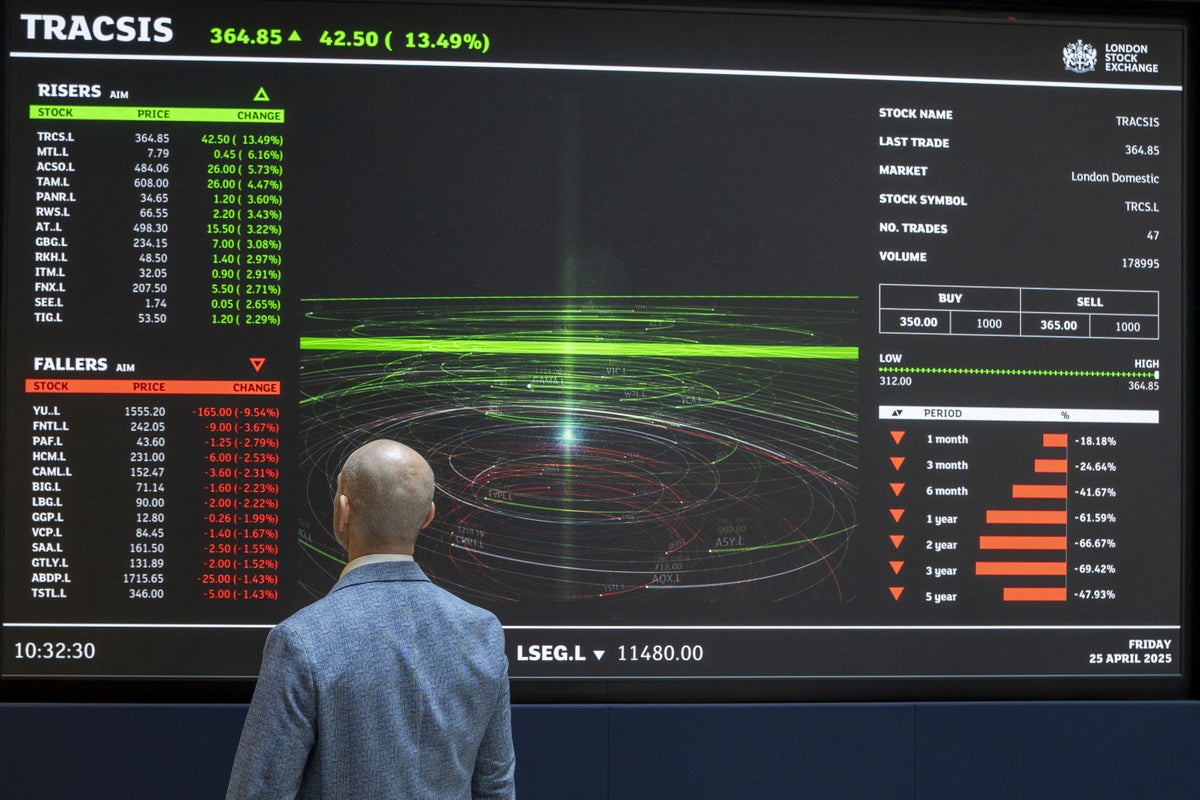
London’s FTSE 100 rose strongly into the close on Friday in volatile trading, as rumours and uncertainty surrounding the Middle East sparked sharp market moves.
The FTSE 100 closed up 71.50 points, 0.7%, at 10,436.29.
The blue-chip index traded as high as 10,465.24 and as low as 10,287.90 on Friday.
The FTSE 250 ended down 45.89 points, 0.2%, at 21,642.30, and the Aim All-Share fell 4.64 points, 0.6%, to 734.61.
For the week, the FTSE 100 rose 4.7%, the FTSE 250 firmed 1.6% and the AIM All-Share added 1.9%.
Stocks initially nursed hefty falls after US President Donald Trump threatened further heavy strikes on Iran, although he signalled that the US was “very close” to achieving its military objectives.
Tehran responded by warning the US and Israel to expect “more crushing, broader, and more destructive actions”.
The address by Mr Trump late on Wednesday in the US dampened hopes of de-escalation that had buoyed markets on Wednesday.
“Investors didn’t get what they wanted from President Trump’s address to the American people and have reacted accordingly,” said AJ Bell investment director Russ Mould.
“Famously, uncertainty is kryptonite for the markets and between the contradictory messages from Trump, disputed claims on both sides, and the lack of clarity on a plan which can provide a resolution to the conflict they are getting a heavy dose of it right now.”
But mid-afternoon UK time, the FTSE 100 pushed higher and US and European markets pared losses as Bloomberg, and others, noted a report by Iran’s state-run IRNA that Iran is drafting a protocol with Oman to monitor traffic through the Strait of Hormuz.
CNBC said according to a translation of IRNA’s report that ship traffic through the key global oil transit route “should be supervised and coordinated” with the two countries, quoting Kazem Gharibabadi, Iran’s deputy minister of legal and international affairs.
“Of course, these requirements will not mean restrictions, but rather to facilitate and ensure safe passage and provide better services to ships that pass through this route,” Mr Gharibabadi reportedly said.
Brent oil traded higher 106.75 dollars a barrel on Thursday afternoon, up from 101.83 dollars late on Wednesday, but well below earlier highs of closer to 110 dollars a barrel.
In European equities on Thursday, the CAC 40 in Paris closed down 0.2%, while the Dax 40 in Frankfurt fell 0.6%, both well above early lows.
Stocks in New York were slightly lower, but well ahead of earlier levels.
The Dow Jones Industrial Average was down 0.2%, but jumped 600 points on the Iran/Oman reports.
The S&P 500 index was down 0.1%, as was the Nasdaq Composite.
On Thursday, the UK hosted talks featuring 35 nations to discuss how to reopen the Strait of Hormuz, through which a fifth of global oil normally travels.
UK Foreign Secretary Yvette Cooper condemned “Iranian recklessness” for “hitting global economic security”.
She said: “Iranian recklessness towards countries who were never involved in this conflict… is not just hitting mortgage rates and petrol prices and the cost of living here in the UK and in many different countries across the world, it is hitting our global economic security.”
Ms Cooper insisted that “diplomatic and international planning measures” were currently the focus for the countries seeking to re-open the sea passage.
The yield on the US 10-year Treasury narrowed to 4.30% on Thursday from 4.31% on Wednesday.
The yield on the US 30-year Treasury was unchanged at 4.89%.
The pound fell to 1.3238 dollars on Thursday afternoon from 1.3324 dollars at the equities close on Wednesday.
Against the euro, sterling eased to 1.1463 euros from 1.1476 euros.
The euro stood lower against the greenback at 1.1548 dollars from 1.1608 dollars.
Against the yen, the dollar was trading higher at 159.31 yen compared to 158.66 yen.
In the UK, a report showed firms expect to raise prices in the coming months but only modestly.
According to the Bank of England’s Decision Maker Panel survey firms expect to increase their prices by 3.5% over the next 12 months, according to data for the three months to March.
This is 0.1 percentage point higher than predicted over the three months to February.
JPMorgan analyst Allan Monks these moves are “small” compared to the jump seen in household inflation expectations.
“Arguably, business expectations matter more now, given the weaker jobs market and the reduced bargaining power of labour,” he added.
Mr Monks thinks the report reduces the pressure on the Bank of England to act quickly, and therefore not have to hike rates in April.
On the FTSE 100, the weak gold price weighed on Fresnillo and Endeavour Mining, down 1.7% and 2.4% respectively.
While on the FTSE 250, Hochschild Mining fell 3.4%.
Gold traded at 4,663.40 dollars an ounce on Thursday, down from 4,781.92 dollars at the same time on Wednesday.
SSE rose 1.9% after raising the bottom end of annual earnings guidance to reflect continued strong operational performance.
The Perth, Scotland-based electricity generator now expects adjusted earnings per share of 147p to 152p in the financial year ending March.
This compares to guidance of 144p to 152p per share provided in February, and 160.9p per share in the financial year prior.
RBC Capital Markets said Bloomberg consensus for adjusted EPS for the financial year to March is 148.4p per share.
The biggest risers on the FTSE 100 were 3i Group, up 103.0p at 2,687.0p, Centrica, up 6.5p at 218.5p, Shell, up 100.0p at 3,543.5p, Tesco, up 13.5p at 487.0p and Rentokil Initial, up 12.7p at 488.3p.
The biggest fallers on the FTSE 100 were Endeavour Mining, down 114.0p at 4,606.0p, St James’s Place, down 25.0p at 1,211.0p, Kingfisher, down 5.8p at 282.9p, Howden Joinery, down 15.0p at 799.0p and Experian, down 47.0p at 2,592.0p.
Tuesday’s global economic calendar has a slew of composite PMI readings including the UK at 9.30am BST.
In the US, durable goods orders data is due and a consumer inflation expectations report.
Tuesday’s domestic corporate calendar has full year results from JTC PLC.
Financial markets in the UK are closed on Friday and Monday for Good Friday and Easter Monday.
– Contributed by Alliance News
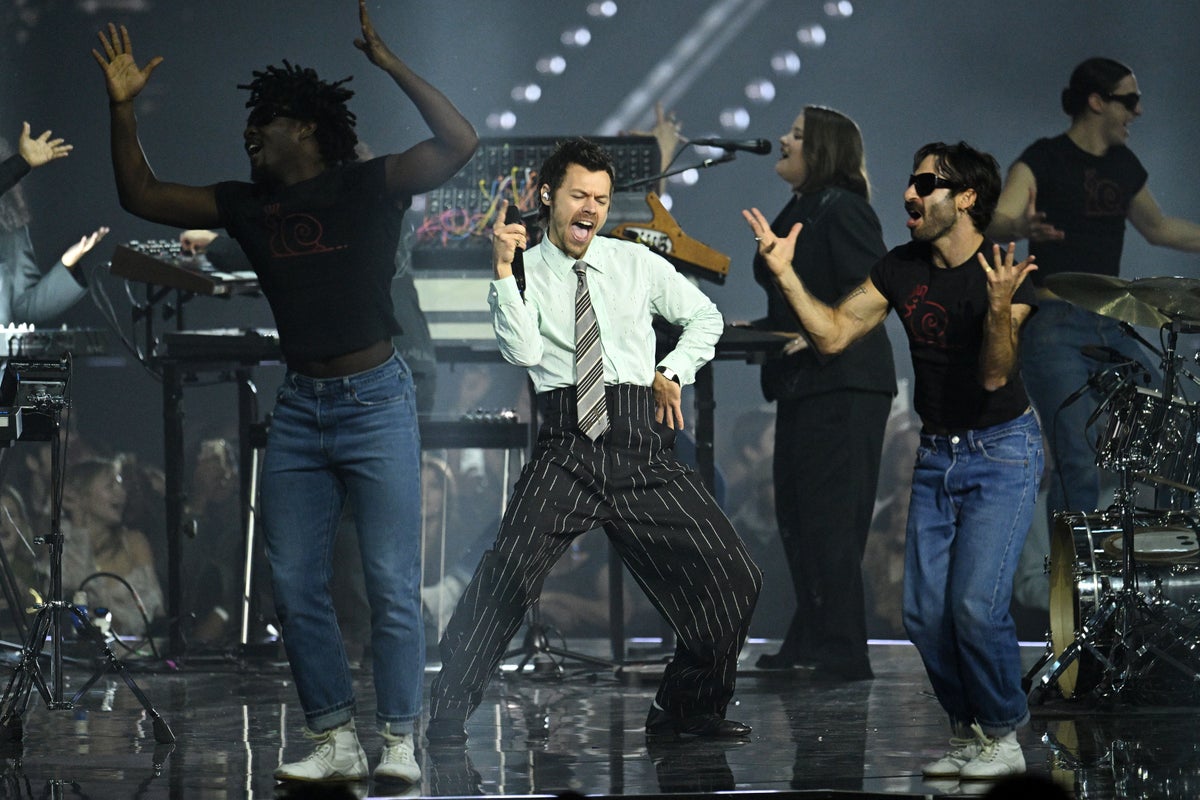
Fan spending for Harry Styles’s 12-night run at Wembley Stadium is set to reach £1.1 billion despite ongoing cost-of-living pressures, figures suggest.
Ticket-holders are expected to spend a total of £981 on average attending the Together, Together tour – which is limited to London in the UK – including travelling to the venue, staying overnight, buying merchandise and other costs, according to a survey for Barclays bank.
The figure exceeds the average £848 spent by fans who flocked to Taylor Swift’s Eras Tour, and the average £766 on attending the Oasis Live ’25 shows, although these were both held across four UK locations, leading to lower travel costs.
Styles’ fans anticipate they will spend an average £102 on official tour merchandise, while nine in 10 will participate in a “fan trend” on the day with 63% planning to wear a Harry Styles-themed look.
A fifth (20%) will make sure their outfits are co-ordinated with their friends and 22% hope to create or exchange fan-made items with other fans.
Barclays said the event was set to be a “major cultural moment” as a million ticket-holders travel to London for the 12 dates beginning on June 12.
With just one other European tour location, in Amsterdam, Styles’ Wembley residency will be the most performances by any artist in a single year at the venue, which has a capacity of around 90,000 people for music events.
The survey found those going to the show spent an average of £143.20 on their ticket, with 19% saying this was more than they planned but 66% saying they would have been willing to pay more if needed.
Other expected costs include an average £141.20 on accommodation, £103.10 on transport and £103.10 on food and drinks before the show.
Some 28% of fans say they are planning other activities such as sightseeing and exhibitions while in London.
More than a quarter (27%) of ticket-holders view the concert as a once-in-a-lifetime experience, and 17% said FOMO (fear of missing out) played a part in their purchase.
Almost 74% of those polled said getting tickets to sold-out or in-demand events now felt like a status symbol.
Tom Corbett, managing director of sponsorship and client experience at Barclays, said: “This tour shows just how powerful live entertainment can be, benefiting consumers and businesses alike.
“‘Concert tourism’ is on the rise because of the extent to which people value unique, shared experiences – so much so that they’re willing to invest in them even when cutting back elsewhere, and to travel to see their favourite artists perform.”
Opinium surveyed 2,000 respondents, and an additional 200 ticket-holders, between April 28 and May 1.

A sign sits outside of the Centers for Disease Control and Prevention (CDC) Roybal campus in Atlanta, Georgia, U.S. March 18, 2026.
Megan Varner | Reuters
One American has tested positive for Ebola in the Democratic Republic of Congo in connection to the deadly outbreak in central Africa that global health agencies are racing to contain, the Centers for Disease Control and Prevention said on Monday.
The person was exposed as part of their work in Congo, developed symptoms over the weekend and tested positive late Sunday, Dr. Satish Pillai, the CDC’s Ebola response incident manager, told reporters on a call. The CDC and State Department are working to move that individual and six other Americans exposed to Ebola to Germany for treatment, care and monitoring.
But Pillai emphasized that no cases tied to the outbreak have been confirmed in the U.S., and that the overall risk to the American public and travelers remains low.
Still, the CDC also announced on Monday that for the next 30 days, it will restrict entry into the country for people without a U.S. passport who were in the Democratic Republic of the Congo, South Sudan or Uganda in the last three weeks.
The update came one day after the World Health Organization declared the Ebola epidemic a “public health emergency of international concern.” The outbreak does not meet the criteria of a “pandemic emergency,” but the WHO warned that the high positivity rate and increasing cases and deaths point toward a “potentially much larger outbreak” than what is being detected and reported.
As of Sunday, more than 300 suspected cases and 88 suspected deaths have been reported, primarily in Congo but also in neighboring Uganda, according to the CDC.
The specific virus involved in this outbreak, called Bundibugyo, has no vaccine or treatment. Historically, that virus has death rates ranging from 25% to 50%, the CDC added.
But agency officials told reporters on Monday that work is underway to develop a monoclonal antibody therapy as a potential treatment for this specific strain of Ebola.
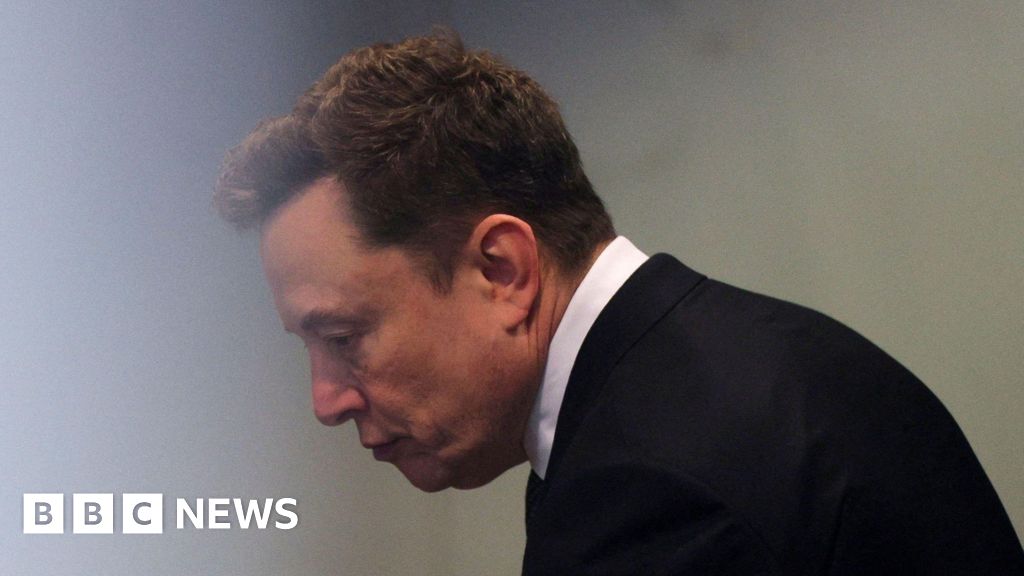
Musk’s loss against OpenAI is the latest in a string of courtroom defeats.
Source link

Fan spending on Harry Styles Wembley gigs set to top £1bn

‘Star Wars’ voice actor was 64

Harry Potter important actress leaves series just before season 2

-

 Entertainment6 days ago
Conan O’Brien hat tricks as Oscar host
-

 Tech1 week ago
Could Contact-Tracing Apps Help With the Hantavirus? Not Really
-

 Fashion5 days ago
Italy’s Zegna Group’s Q1 growth boosted by strong organic performance
-

 Entertainment1 week ago
Martin Short: Facing tragedy with joy
-

 Entertainment1 week ago
Tom Brady gets back at Kevin Hart during Netflix roast
-
 Sports1 week ago
Jacob Fatu unleashes vicious assault on Roman Reigns after World Heavyweight Championship loss at WWE Backlash
-

 Entertainment1 week ago
Martha Stewart: How to make an omelet
-
 Tech1 week ago
Papa Johns Is Getting Into Drone Delivery—but Not for Pizza