

Business
Thorne is on pace for $650 million in sales as Gen Z fuels a supplement boom — despite subscription fatigue


Supplement brand Thorne is on pace to reach $650 million in annual revenue this year, fueled by Gen Z and millennial shoppers who are increasingly focused on improving their health, CNBC has learned.
The 42-year-old supplement brand, which L Catterton took private in 2023, has sustained a compound annual growth rate of over 30% since the acquisition, according to the company. Between 2022 and 2025, its revenue more than doubled from $229 million to over $500 million, according to filings and the company.
Meanwhile, the number of consumers who shop with the brand directly has grown to about 7 million, up from around 4 million at the end of 2023, fueling a 63% surge in direct-to-consumer sales, the company said.
“A lot of what we’ve done in the last few years has been streamlining and focusing and in some ways, simplifying our go-to-market, being really clear about who is our consumer that we’re serving, what are they looking for from brands as you move forward, and looking back at our heritage,” said CEO Colin Watts, the former CEO of The Vitamin Shoppe. “… Our expectation is this is going to be a billion-dollar brand over the next few years.”
Thorne’s growth comes as the market for vitamins, minerals and supplements balloons in the U.S. — buoyed in part by the “Make America Healthy Again” movement and by health-conscious young shoppers who are looking to optimize their health and improve things like sleep and nutrition. The vitamins, minerals and supplements market reached $125 billion in the U.S. in 2025 and is projected to grow 11% by 2027, according to data collected by consulting firm AlixPartners.
“As the science has gotten better and as, frankly, the consumer has taken more control over their health, there’s been a shift in spending and a shift in focus towards ‘what can I do proactively to manage my health in the future?'” Watts said.
Thorne’s Magnesium Glycinate and Ginseng Plus supplements.
Courtesy: Thorne
The surge in interest in dietary supplements, which was a popular gifting category over the recent holiday season, has created an opportunity for major retailers like Walmart, Target and Amazon, consumer product companies like Nestlé and smaller brands like Thorne. It also reflects a broader generational shift reshaping the industry. Once dominated by older consumers focused on preventative health, today the category is increasingly driven by younger shoppers interested in performance, personalization and daily wellness routines.
“When I started looking and working in this market 25 years ago, this was a boomer-driven market; you basically focused on servicing the boomers, that’s how you won in the market. So the reality is, today’s market is a Gen Z, millennial market,” Watts said. “One of the big Gen Z millennial trends is, they don’t think about supplementation as prevention. They think about it as performance. It’s like, ‘I want to sleep better. I want to have more energy. I want to deal with my anxiety. I want to work out better.’ These are the kinds of things that they’re very, very focused on.”
About 60% of Thorne’s total revenue comes from shoppers under the age of 40, who are spending about 1.5 times more than their parents did on wellness, Watts said. He estimated about half of those shoppers under 40 are subscribers, despite a broader hesitation among some younger consumers to commit to recurring subscription plans.
“One of the reasons that Gen Z hates subscriptions is because it drives them crazy — drives me crazy, frankly — to put something on a subscription and then see it cheaper somewhere else,” Watts said. “We are very disciplined about our pricing .… We don’t, you know, high, low, promote the brand. It is fairly consistent.”
To entice shoppers to subscribe and offer a break on high pricing, Thorne offers free shipping and a 10% discount on each refill order. Subscriptions can come as often as every two weeks or as far apart as four months. When shoppers subscribe to three or more products, they can save 20%.
As the supplement industry grows, so does scrutiny surrounding ingredients, claims and manufacturing, especially among younger shoppers who often want to know how products are produced. Supplements are not regulated by the FDA for safety or effectiveness, putting pressure on brands to conduct their own testing that they can integrate into marketing campaigns.
“We spend a lot of time trying to make sure that we can demonstrate the science, that we can demonstrate the efficacy. We’re one of the few brands, for example, that has worked with the Mayo Clinic now for over 14 years,” Watts said. “We’ve also worked with a lot of top sports teams. We’re the official supplement of the UFC. We’re working with various different tennis associations … all of this basically forces us to raise our game, because these are folks that are even more discerning than the average consumer.”
When asked if the company has ambitions to go public again, Watts said there’s “no rush” to do so. He called an IPO one potential route, along with a potential strategic acquisition by a larger firm.
“Like any private equity firm, I think [L] Catterton will look for the right opportunity, for the right exit, at the right time,” Watts said. “Right now, as we look at where we’re going to grow — through bricks-and-mortar retail, through international expansion, through larger expansion moving forward — there’s also a lot of strategic companies that are out there that might see a brand like Thorne as a very powerful asset within their overall portfolio.”


Business
India’s fuel demand growth may slow sharply in H2 2026 amid price hikes, austerity push: Report

India’s transportation fuel demand growth is expected to slow sharply in the second half of 2026 as higher fuel prices, government-led conservation measures and a weakening rupee weigh on mobility and consumption trends, according to a report.The report by Kpler’s lead analyst (modelling), Elif Binici, revised down India’s 2026 refined products demand growth forecast by around 77,000 barrels per day (kbd), or 39 per cent, to nearly 78 kbd from an earlier estimate of 128 kbd.As per news agency PTI, the downgrade reflects weaker expected growth in petrol and diesel demand due to elevated fuel costs, softer mobility trends and official efforts to conserve fuel amid the ongoing West Asia crisis.Petrol and diesel prices have been increased by around Rs 5 per litre in three instalments since May 15, after oil marketing companies passed on part of the burden of soaring global crude oil prices to consumers.
Petrol demand faces steepest downside risk
The report said petrol demand is likely to see the sharpest slowdown, with projected growth revised down by 25 kbd, from 63 kbd to 38 kbd.Petrol consumption is now estimated at 1,010 kbd, compared to the earlier estimate of 1,035 kbd.According to the report, weaker commuting activity, slower discretionary travel and government fuel-saving campaigns are expected to curb fuel consumption.Annual diesel demand growth was also cut by around 20 kbd, while jet fuel demand growth was nearly halved to about 6 kbd from 11 kbd earlier due to expectations of reduced air travel and tighter spending patterns.“The revisions primarily reflect weaker expected growth in gasoline and diesel demand as higher costs, weaker mobility trends, and recent government-led fuel conservation efforts increasingly feed into domestic transportation activity,” the report said, as quoted by PTI.
Rupee weakness, crude surge add pressure
The report noted that India’s macroeconomic environment has deteriorated since the escalation of the US-Iran conflict, with rising crude import costs, refinery expenses and rupee depreciation increasing inflationary pressure.The rupee has weakened by around 6 per cent since the conflict began and nearly 10 per cent over the past year. Foreign exchange reserves have also reportedly declined by about 4.3 per cent since late February as authorities attempted to stabilise the currency and contain imported inflation.The report said the current average petrol price of around Rs 103 per litre remains well below the estimated breakeven level of nearly Rs 125 per litre.Diesel prices near Rs 94 per litre are also below the estimated breakeven range of Rs 115-120 per litre.Before the recent price revisions, state-run fuel retailers were reportedly losing nearly Rs 1,000 crore daily because rising crude procurement costs and currency weakness outpaced retail fuel prices.“The key issue is the inability of state-run retailers to pass through rising import costs quickly enough to restore profitability,” the report said.
Russian crude continues to support supply security
The report added that India’s dependence on discounted Russian crude imports, estimated at around 1.9-2 million barrels per day, continues to provide stability to the domestic fuel market amid geopolitical uncertainty in West Asia.Policymakers now appear to be prioritising macroeconomic stability, inflation management, foreign exchange preservation and fuel supply security over near-term fuel demand growth.The report warned that unless crude prices ease significantly, the rupee stabilises or additional fiscal support measures are introduced, further fuel price hikes and stricter fuel-conservation measures may become difficult to avoid.
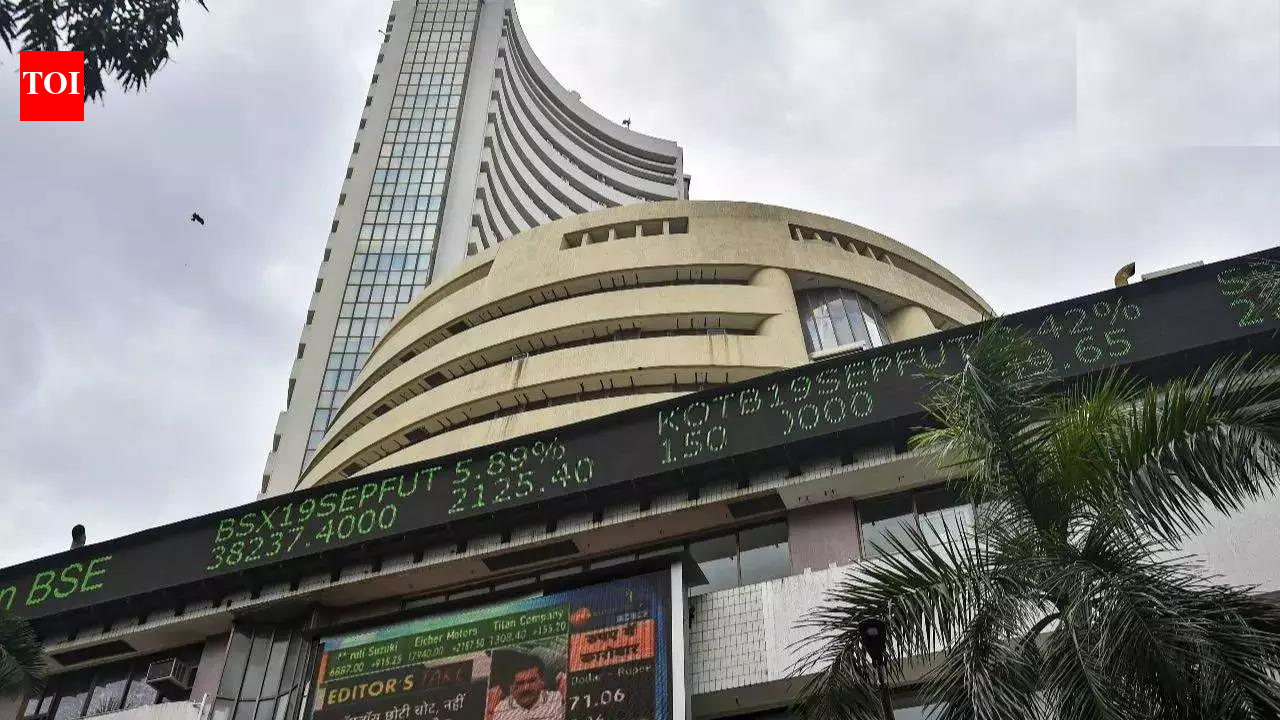
The combined market valuation of six of India’s top-10 most valued companies rose by Rs 74,111.57 crore last week, with Reliance Industries emerging as the biggest gainer. The rally came during a volatile trading week in which the BSE Sensex advanced 177.36 points, or 0.23%.According to news agency ANI, Reliance Industries added Rs 24,696.89 crore to its valuation, taking its total market capitalisation to Rs 18,33,117.70 crore.Tata Consultancy Services saw its valuation jump by Rs 19,338.68 crore to Rs 8,38,401.33 crore, while ICICI Bank added Rs 14,515.93 crore to reach a market capitalisation of Rs 9,06,901.32 crore.The valuation of Life Insurance Corporation of India climbed Rs 9,076.37 crore to Rs 5,14,443.69 crore.Meanwhile, Bajaj Finance gained Rs 3,797.83 crore, taking its valuation to Rs 5,70,515.57 crore, while Larsen & Toubro added Rs 2,685.87 crore to Rs 5,40,228.21 crore.
Airtel, HUL among laggards
On the losing side, Bharti Airtel witnessed the sharpest erosion in market value, losing Rs 20,229.67 crore to settle at Rs 11,40,295.49 crore.The market valuation of Hindustan Unilever declined by Rs 16,212.18 crore to Rs 5,17,380 crore, while State Bank of India lost Rs 12,784.4 crore in valuation to Rs 8,76,077.92 crore.HDFC Bank also saw its market capitalisation dip by Rs 2,094.35 crore to Rs 11,79,974.90 crore.Reliance Industries retained its position as India’s most valued company, followed by HDFC Bank, Bharti Airtel, ICICI Bank, State Bank of India, TCS, Bajaj Finance, Larsen & Toubro, Hindustan Unilever and LIC.
Markets end volatile week with modest gains
Ajit Mishra, SVP, research at Religare Broking Ltd, said markets ended the week with marginal gains amid a “highly volatile and range-bound trading environment”.“Benchmark indices witnessed sharp intraday swings throughout the week, driven by persistent rupee weakness, mixed global cues, sectoral rotation, and continued uncertainty around inflation and interest rates,” he said, as quoted by ANI.Benchmark indices recovered on Friday, with the Sensex closing 231.99 points higher at 75,415.35 and the NSE Nifty rising 64.60 points to settle at 23,719.30.Analysts cited optimism surrounding possible progress in US-Iran peace negotiations and easing Middle East tensions as factors supporting market sentiment.Vinod Nair, head of research at Geojit Investments, was quoted by news agency PTI as saying that domestic markets traded with a “mild positive bias” due to buying at lower levels and constructive global cues.“Globally, the AI investment theme remained the primary driver, while domestically, financial stocks led the gains,” he said.Brent crude prices climbed 2.3% to $104.7 per barrel, while foreign institutional investors (FIIs) sold equities worth Rs 1,891.21 crore in the previous session.

Six supermarket brand eggs cost £1 in 2022. How much are they now, why have they gone up, and is anyone profiteering?
Source link


Prince George set to reconnect with cousin in unexpected twist

Queen Elizabeth II heartbreaking final message for Prince Philip emerges

Proposed US-Iran deal involves opening strait during ceasefire extension: report

-

 Entertainment1 week ago
Where Pete Davidson, Elsie Hewitt stand after breakup: Details revealed
-

 Politics1 week ago
Rising diesel costs from Iran war strain US school budgets
-

 Entertainment1 week ago
Drake drops highly anticipated "Iceman" album, plus two surprise albums
-

 Tech1 week ago
Greg Brockman Officially Takes Control of OpenAI’s Products in Latest Shakeup
-

 Tech1 week ago
Why Is Your Grill So Dumb? The Best Grills Set Temp Like an Oven
-

 Tech1 week ago
This Solar-Powered Smart Sprinkler Keeps My Lawn Watered Without Any Power Cables
-

 Fashion1 week ago
RMG trade bodies seek policy support from Bangladesh PM
-
 Business1 week ago
Oil price gains and Westminster worry sink stocks