

Tech
Cisco: Network readiness a determining factor for AI success | Computer Weekly


Research from Cisco has found that as many as two-thirds of industrial organisations have moved to active artificial intelligence (AI) deployments in live operational environments, yet while adoption momentum is strong, infrastructure and organisational alignment – especially networking and security – will dictate who achieves real transformation.
The latest version of the State of industrial AI report 2026 looked to provide a data‑driven view into how industrial organisations are adopting AI, the challenges they face as AI moves into live operations, and the opportunities created as AI becomes embedded in physical systems, infrastructure and workflows.
The study is based on data from a global survey of more than 1,000 operational technology decision‑makers, conducted by Cisco in association with Sapio Research. Respondents were from 19 countries and across 21 industry sectors, representing a range of industries including manufacturing, transportation, logistics, energy and utilities, and more. The study aggregated findings from decision-makers at companies with annual revenues of more than $100m.
Among the top findings were that AI organisations are harnessing AI to drive progress and overcome industry challenges, and that it is now delivering measurable operational benefits, in particular in use cases such as process automation, automated quality inspection, predictive maintenance, logistics and energy forecasting. Strong expected benefits from AI included productivity (59%), cost reduction (42%) and sustainability.
Industrial AI was seen to have moved from a future consideration to active deployment, with 61% of organisations now using AI in live industrial operations where performance, reliability and security have direct physical consequences, and 20% reporting scaled, mature deployments. Across manufacturing, transportation and utilities, AI was found to be powering machine vision, mobility, robotics and safety‑critical operations.
Most organisations indicated that they planned to increase AI spending (83%), and nearly nine in 10 expect meaningful outcomes in the next two years (87%). Yet just as adoption was accelerating, many firms were struggling to sustain and expand deployments, with readiness across network infrastructure, security and skills increasingly determining whether AI can scale consistently across core physical environments.
Indeed, network readiness and security posture were cited as the primary factors shaping how quickly and safely organisations scale AI across connected assets, machines and sites. The report observed that as AI becomes embedded in machines, sensors, vision systems and autonomous operations, organisations face rising demands for reliable connectivity, wireless mobility, predictable latency, edge compute and power, which were making network readiness a gating factor for physical AI deployments.
Just over half of firms (51%) expect significant increases in connectivity and reliability requirements in their industrial networks, and almost all firms (96%) noted that reliable wireless networks are vital for AI. In addition, 97% expected AI workloads to impact their industrial network requirements.
Yet while legacy infrastructure and skills gaps remain secondary challenges, Cisco also cautioned that the study also revealed many organisations were increasingly constrained by readiness gaps in networking infrastructure, cyber security and IT/OT operating models as AI shifts into real‑time, production‑grade use in physical environments.
Another key discovery was that organisations with closer collaboration between IT and operational teams report greater confidence in expanding AI, more stable networks supporting physical operations, and a stronger emphasis on cyber security as a baseline requirement, underscoring the need to build the skills required for scalable AI adoption.
Nearly two in three firms (57%) reported some level of IT/OT collaboration, while 43% reported limited or no collaboration. Just under half (47%) of organisations with limited IT/OT collaboration cited network instability as a top operational challenge to scale AI.
Cyber security was highlighted as shaping both the pace and confidence of AI adoption. Cisco also found that as AI expands connectivity and data flows across industrial environments, security remained the top barrier to scale. At the same time, organisations increasingly view AI as part of the solution, with a majority expecting AI to strengthen monitoring, detection and operational resilience.
“Industrial AI is moving from experimentation into production, where AI systems sense, reason and act in the real world,” said Vikas Butaney, senior vice-president and general manager of secure routing and industrial internet of things at Cisco. “At this stage, success is no longer determined by models alone, but by whether networks, security and teams are ready to support AI at the edge, in motion, and at scale. The research shows that organisations confident in scaling AI are those treating infrastructure, cyber security and IT/OT collaboration as foundational, not optional.”

Within the app, you can add safe zones, more pets with Fi trackers, and other users who can also track and monitor the pet. There’s a Health tab where you can add and store things like vet records, receipts, and insurance information, and add vets to easily share your pet’s documents and get appointment reminders. You can also set up the Fi app on your Apple Watch to have even quicker access to monitor your pet’s location, activity, and safety (including Lost Mode) without needing a phone.
When you open the app, you’ll see a map with live tracking showing where your pet is currently, as well as a notification of the last time they were outside and where they were. With the latter, you can pull up stats like location timeline, showing where they were and when. If you dive into any day when the tracker left the home, it will recreate the route, following the path and calculating the distance the pet traveled.
There’s also health-monitoring data from activity and sleep tracking, which is most useful for an indoor-only pet like mine. Like other health-tracking collars, stats for sleep and activity aren’t 100 percent accurate, as the app uses GPS to track movement, categorizing “activity” when the animal is moving and “sleep” when the pet is still for a prolonged period. This means that if Basil was awake but stationary, the app may inaccurately categorize this as sleep.
Fi Mini App source Molly Higgins
In the Rest tab, you can see sleep metrics, including a daily summary of deep sleep, naps, and interruptions during nightly sleep. You can compare this over time, and the app notes how much more or less Basil slept than the night before. It also compares stats historically, by week, month, and year, so you can track trends and better understand your pet’s normal sleep schedule.
The Activity tab is similar, tracking activity by day, week, and month, noting in the day’s timeline when the pet was most active and for how long. This also compares activity to the day before. I liked looking at the weekly report, comparing days during the week to see which he was most active during and if any patterns in activity popped up.
For example, I noticed that his sleep-versus-activity schedule was similar to mine, except he was active between 4:45 and 6:30 am (while I was still asleep), because that’s when his automatic feeder goes off for breakfast and my roommate is getting ready to leave for work. He was most active in the evenings, when I feed him dinner, have dedicated playtime, and my roommates are home, so there’s more activity to keep him awake. Historical comparison is also a super helpful way to track whether your pet is sleeping more or becoming more lethargic—an early warning sign of a bigger health problem.
Not Without Its Quirks
Since my cat is indoor-only, I ran some experiments to track location, using GPS on both the Fi Mini tracker and my phone. I also had a friend take the tracker out without my phone nearby to see whether I’d get pinged that “Basil” had left the safe zone.
Although it is better than not being alerted at all, the Fi’s GPS has limitations (as did the Tractive tracker I tested). It needs a strong signal to communicate with cell towers for accurate location. If your phone is close to the smart collar (via Bluetooth), it uses that instead of the Fi’s GPS, making it more accurate and alerting quicker. If the pet gets loose and is out of range of your phone, it uses the collar’s cellular antenna (in this case, Verizon cell towers). But because the Fi’s antenna isn’t as strong as a phone’s, location accuracy is lower, and the connection can be very spotty, especially if your pet is in the country or on acreage where cell towers are farther away.

The other goal of the Button is rapid response time. Unlike the Humane Ai pin, which got lots of criticism for taking a painfully long time to reply to queries, the Button is designed to be nearly instantaneous. In a demo via Zoom call, I watched Nolet ask the Button for a recommendation for the best sandwich shops in my neighborhood. While the Button didn’t choose my idea of the best sandwich place around, it did at least answer all the questions within a second. It can also be immediately interrupted by pressing the button, which is a great feature for people like me who cannot tell a chatbot to shut up fast enough.
Nolet is unapologetic about the very clear Apple ethos you might be able to suss out in the design.
“The Humane pin felt a little geeky to wear, right?” Nolet says. “But the iPod shuffle? Really cool. That’s where the idea started, and then we just put all of our Apple-esque expertise into it and tried to refine it into something that we thought would actually be useful.”
Nearly all their product images and videos show the Button being used as a wearable, but Nolet insists the device can also be kept in a pocket, bag, or car glove box as well.
“My cofounder says we can’t tell people it looks cool; they have to decide,” Nolet says. “Our intention is to build something that is kind of fashionable, but it’s up to you guys to tell us if it’s cool.”
Though Apple has long been a leader in technological coolness, it has struggled in the virtual reality space, specifically with its too expensive, too heavy Vision Pro and that devices complicated rollout. Apple is not alone on that front. Meta is actively rejiggering support for its VR efforts. Nolet posits that part of the reason for that instability is that VR has required building hardware and the software ecosystems to support it at the same time.
“There was no software innovation that we were anchored to as an industry, so I think it’s quite a hard pitch,” Nolet says. “It’s much, much easier to stand on the shoulders of giants.”
Courtesy of Button
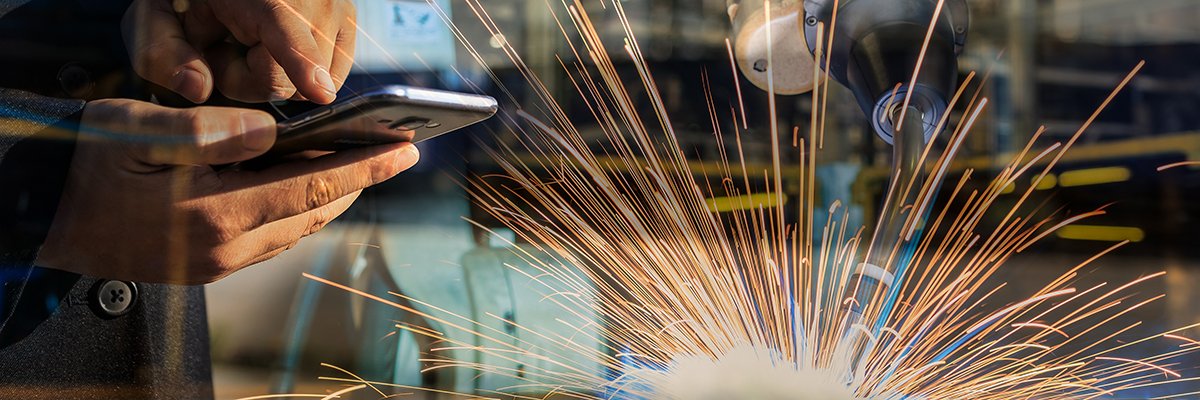
As part of a Series A extension designed to strengthen the artificial intelligence (AI)-native smart industry services provider’s position as an emerging intelligence layer for factories, logistics environments and original equipment manufacturer products, Finland-based Treon has gained €6.8m from a strategic investment led by Silicon Valley-based ACME Capital.
Established in 2016 by experts with a strong background in wireless communications, battery-operated devices and smartphones, Treon has the stated mission of providing scalable internet of things (IoT) services built to help customers overcome challenges in physical operations. It aims to help businesses boost productivity, and enhance operational visibility and long-term sustainability.
The company’s core integrated predictive maintenance cloud services combine AI analytics, a mobile-first user experience, automated workflows and wireless vibration sensors delivered as a managed service with scalable subscription pricing. Treon currently supports more than 200 customers worldwide across the manufacturing, material handling and logistics sectors. This model is said to support continued multiyear recurring revenue growth.
Treon said that while global industrial production continues to rise, companies face an unprecedented challenge: how to maintain increasingly large fleets of assets as the workforce of skilled specialists shrinks.
To address the challenges presented by this dynamic, Treon is executing a strategy to build AI-native maintenance orchestration that transforms industrial environments from reactive and manual to predictive, contextual and autonomous, thus boosting efficiency and productivity. This direction, it said, aligns strongly with ACME’s investment thesis in physical AI and next-generation manufacturing.
With offices in San Francisco and investing across the US and Europe, ACME Capital’s strategy focuses on deep tech sectors including aerospace and defence, AI, robotics, health, advanced materials, and next-generation manufacturing.
The funding round will see ACME join Ventech as a board member, bringing deep expertise in scaling frontier technologies into real-world industrial systems.
Joni Korppi, Treon CEO, said: “As we enter a new era of AI-native industrial operations, ACME’s partnership strengthens our ability to scale the industrial AI technologies globally. ACME’s experience in building transformational technology companies, combined with our industrial AI platform and our exceptional team, will accelerate the transformation of factories and logistics hubs around the world.”
ACME Capital partner Christian Tang-Jespersen added: “Treon has built a remarkable foundation at the intersection of hardware, software and AI. The company’s focused strategy and strong execution capabilities make it a category-defining leader in the shift from predictive maintenance to autonomous operations. We’re excited to partner with Treon, a reflection of Europe’s technical strength and ACME’s commitment to helping the company scale and bridge Europe and the US.”
The Treon AI-native Maintenance Orchestration Layer is set to be unveiled at Hannover Messe 2026, showcasing a smart motor with Treon intelligence embedded inside, alongside its Agentic AI Technician Companion user experience.
In December 2025, the company announced that its cloud-native, AI-first predictive maintenance Flow service for material handling was available on Amazon Marketplace.
Built to deliver zero downtime operations, Flow aims to help enterprises detect faults early, reduce maintenance costs and scale from pilot to thousands of assets. With installation measured in days, it uses AI and machine learning to analyse vibration and temperature data to automatically identify abnormal patterns, predict potential failures, and generate actionable alerts on mobile and cloud applications.


Iran will respond decisively to any ceasefire violation: Pezeshkian

Mortgage lenders expect property market boost – but credit wobbles are emerging

Lower tax rates for Bangladesh RMG exporters may not last longer: NBR

-
Uncategorized7 days ago
[CinePlex360] Please moderate: “Trump signals p
-
 Business7 days ago
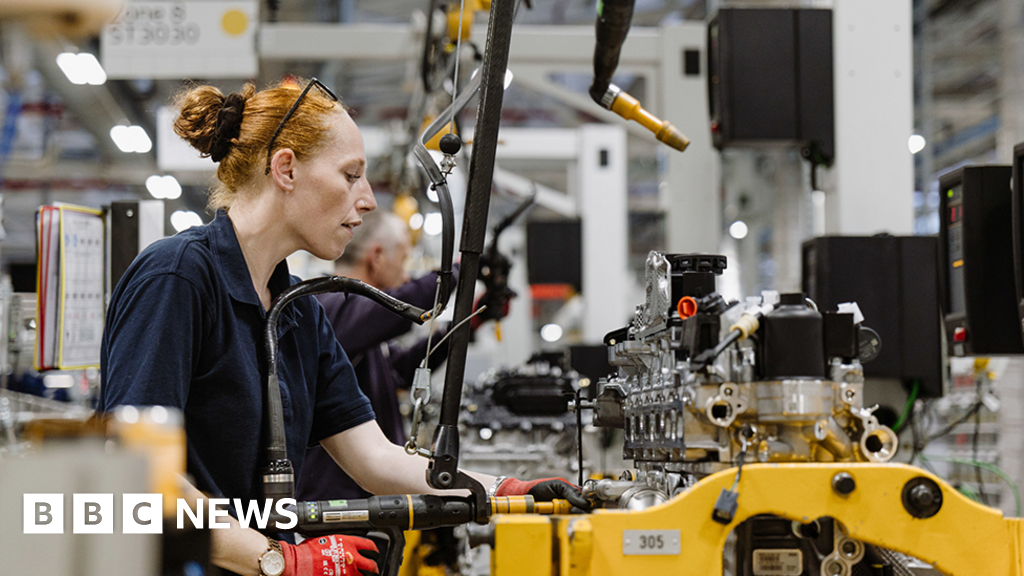
Jaguar Land Rover sees sales recover after cyber attack
-

 Entertainment6 days ago
Joe Jonas shares candid glimpse into parenthood with Sophie Turner
-

 Tech6 days ago
Our Favorite iPad Is $50 Off
-

 Fashion1 week ago
China’s Anta Sports posts record $11.62 bn revenue in 2025
-

 Politics6 days ago
Iran can sustain Strait of Hormuz closure for years, will cut US military logistics: Official
-

 Sports6 days ago
UConn Final Four run could trigger a $50M furniture giveaway for Massachusetts-based Jordan’s Furniture
-
 Business6 days ago
Video: Why Is the Labor Market Stuck?