

Politics
Iran’s armed forces keep ‘intelligent’ control over Strait of Hormuz

The Iranian military command says it maintains “intelligent” control over the Strait of Hormuz through its own initiative.
It warned on Wednesday that any new adversarial mistake will be met with even more destructive and lethal force.
“With initiative, we manage and intelligently control the Strait of Hormuz,” the Armed Forces General Staff and the Khatam al-Anbiya Central Headquarters said in a joint statement.
The statement came hours after an announcement of a two-week ceasefire between Iran and the United States after 40 days of war, during which Iran’s armed forces launched 100 waves of decisive strikes against US and Israeli targets across the region.
“With mistrust toward the American and Zionist enemies, we are monitoring all their movements in the region,” the command said. “Should they make a mistake again, we will confront them more destructively and more lethally than before.”
Ceasefire follows Iranian victory
The ceasefire agreement, brokered by regional mediators, brings a temporary halt to the illegal US-Israeli war of aggression that began on February 28.
“Forty days of resistance, steadfastness and conscious presence of the Iranian people on the scene, and the tireless combat of the brave and proud sons of the nation against the open and illegal aggression of the American-Zionist enemies, finally forced them to accept the proposed terms of Islamic Iran and surrender.”
Iranian forces had prepared for a longer and wider war after the 12-day imposed war in June 2025, the command stated.
Enemy never expected such power
“The enemies never expected such steadfastness and power from the Iranian armed forces,” the command said. “With the initiative of Iran’s powerful armed forces, control of the war slipped out of the enemy’s hands.”
The enemy gained nothing but heavy losses, numerous military casualties and extensive infrastructure damage, the statement added.
A model of resistance for the world
The command praised Iran’s fighters across the Army, IRGC, police, defense industry workers, Basij and tribal warriors.
With full popular support, they targeted US bases across West Asia and Zionist positions in the occupied territories.
“They humiliated the American and Zionist enemies,” the statement said. “They proved that a powerful Iran can decisively and steadfastly put any enemy, at any level, in its place and force it to surrender and retreat.”
“The cost of resisting the world’s most bullying, arrogant and rebellious government, the globe-devouring America, is far lower than compromise.”
Iran no threat to neighbors
The armed forces reiterated that Iran is not and will never be a threat to regional countries.
“We once again reiterate that we are not and will not be a threat to the countries of the region,” the command said.
“We advise Muslim governments and nations to trust Islamic Iran and to cooperate and strive for the expulsion of the US military, the main source of insecurity in the region and the world.”
The military also pledged continued support for resistance fronts in Lebanon, Palestine, Yemen and Iraq.
“We hold America responsible for any aggression or violation by the Zionist regime against Islamic Iran and its interests, and will deal decisively with it,” the command said.
It also called on the Iranian people to maintain their presence on the streets and squares in the coming nights. “Disappoint the enemies of a powerful Iran and a valiant nation from any sedition.”
- Hezbollah halts attacks as Israel presses campaign.
- France’s Macron urges Lebanon’s inclusion in ceasefire.
- UN ‘strongly condemns’ Israeli strikes in Lebanon.
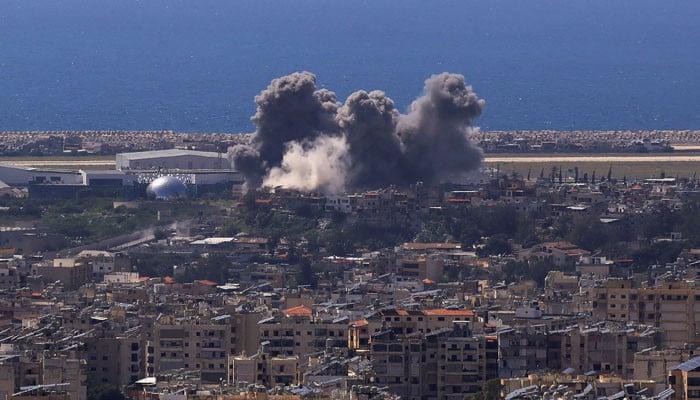
Israel carried out its heaviest strikes on Lebanon since the conflict with Hezbollah broke out last month, even as the Iran-aligned group paused attacks on northern Israel and Israeli troops in Lebanon under a two-week US-Iran ceasefire.
Consecutive explosions shook Beirut, sending smoke billowing across the capital, as Israel’s military said it had launched the largest coordinated strike of the war. More than 100 Hezbollah command centres and military sites were targeted in Beirut, the Bekaa Valley and southern Lebanon, it said.
The strikes killed 89 people – including a dozen medics – and wounded 700 across the country, Lebanon’s health ministry spokesman told Reuters.
In Beirut, Reuters reporters saw people on motorcycles picking up wounded and transporting them to hospitals because there were not enough ambulances to get them in time. A group of firefighters worked to put out flames in a car park after one strike left more than a dozen cars scorched and mangled.
The head of Lebanon’s syndicate of doctors, Elias Chlela, called in a written statement for “all physicians from all specialities” to head to any hospital they could to offer help. One of Beirut’s biggest hospitals said it was in need of donations of all blood types.
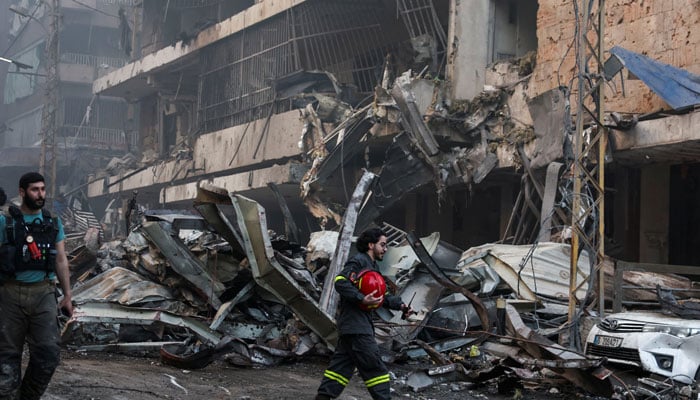
Israeli Prime Minister Benjamin Netanyahu said overnight that the ceasefire suspending the six-week-old US-Israeli war against Iran did not apply to Lebanon, and the Israeli military said operations against Hezbollah there would continue.
That position contradicted comments by Prime Minister Shehbaz Sharif, a key intermediary in the US-Iran ceasefire talks, who had said the truce would include Lebanon.
Lebanon’s state news agency NNA had reported continued Israeli strikes across southern Lebanon earlier in the day, including artillery shelling and a dawn airstrike on a building near a hospital that killed four people. An Israeli strike on the southern city of Sidon killed eight people and wounded 22 others, Lebanon’s health ministry said.
A further strike hit central Beirut in the early evening, NNA reported.
‘A grave violation’
Hezbollah stopped attacking Israeli targets early on Wednesday, three Lebanese sources close to the group told Reuters. The group’s last public statement on its military activity was posted at 1am (2200 GMT Tuesday), saying it had targeted Israeli troops inside Lebanon on Tuesday evening.
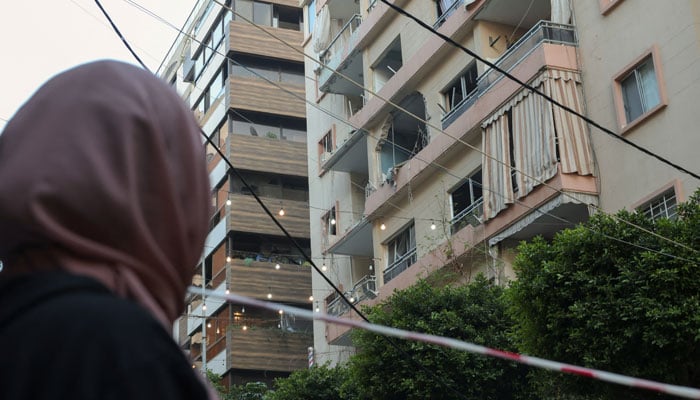
“Hezbollah was informed that it is part of the ceasefire – so we abided by it, but Israel as usual has violated it and committed massacres all across Lebanon,” senior Hezbollah lawmaker Ibrahim al-Moussawi told Reuters.
Another Hezbollah lawmaker, Hassan Fadlallah, told Reuters the Israeli strikes were “a grave violation of the ceasefire” and that there would be “repercussions for the entire agreement” if they continued.
The group is likely to issue a statement outlining its formal position on the ceasefire and on Netanyahu’s assertion that Lebanon is not included, the three Lebanese sources said.
Lebanese President Joseph Aoun, welcoming the US-Iran ceasefire, said Beirut would continue its efforts to ensure that Lebanon was included in any lasting regional peace agreement.
Most of Wednesday’s strikes were in civilian-populated areas, Israel’s military said. Hours before the strike, the military had issued warnings for some areas of southern Beirut and southern Lebanon. No such warning was given for central Beirut, which was also hit.
Following the strikes, Israeli military spokesperson Avichay Adraee claimed on X that Hezbollah had moved out of its stronghold in southern Beirut’s Dahiyeh neighbourhood to mixed areas of the city, including in the north.
Addressing Hezbollah, he said, Israel’s military will “pursue you and act with great force against you wherever you are”.
‘Lebanon can’t take it anymore’
More than 1,500 people have been killed in Israel’s air and ground campaign across Lebanon, including more than 130 children and more than 100 women, since March 2 when Hezbollah started firing rockets at Israel in solidarity with Tehran.
Israel has issued evacuation orders covering around 15% of Lebanese territory since then, mostly in the south and in suburbs south of Beirut. More than 1.2 million people have been displaced, according to Lebanese authorities.
Israel has also pledged to occupy southern Lebanon up to the Litani River as part of a “security zone” it says is intended to protect its northern residents.
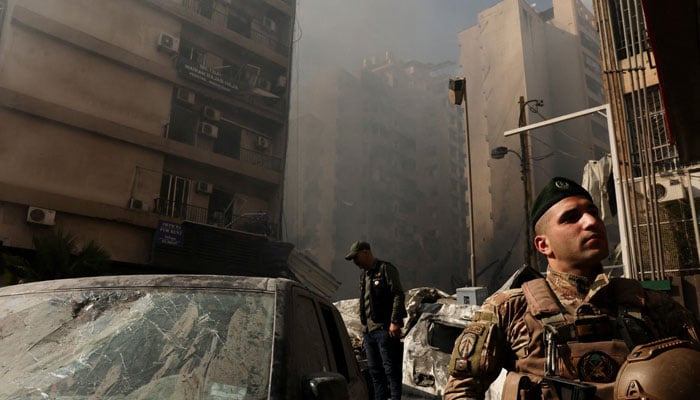
“Hopefully, a ceasefire will be reached,” said Ahmed Harm, a 54-year-old man displaced from Beirut’s southern suburbs. “Lebanon can’t take it anymore. The country is collapsing economically, and everything is collapsing.”
Outside a school sheltering displaced people in Sidon, pillows and blankets were piled onto cars as some families held out hope of returning home soon. On an astroturf football field, one family had packed plastic bags with clothes, pots and pans, towels, sheets and blankets.
“We’re just waiting for the official decision from the top, so we can go back,” said Samar al-Saibany, who was displaced from a village in the south.
Local mayor Mustafa al-Zein said more than 28,000 people were sheltering in the area as of Tuesday night. He cautioned residents against trying to return before an official signal.
“In the south, give someone a signal to return, and he’ll return,” Zein said.
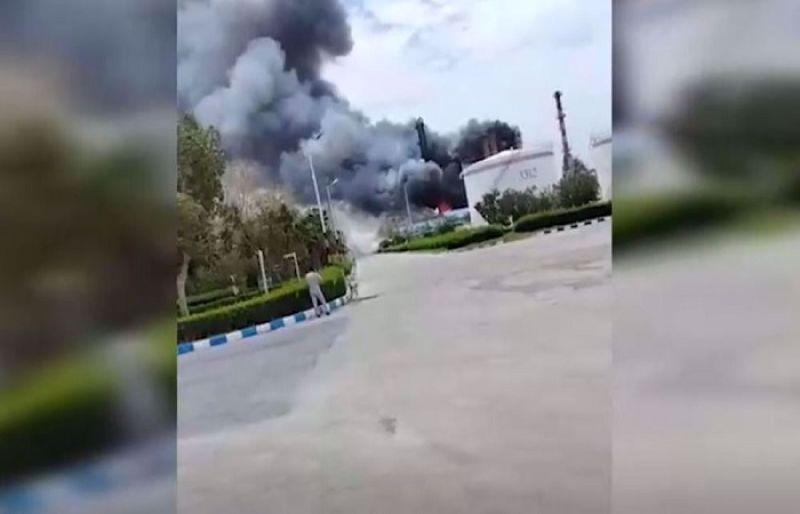
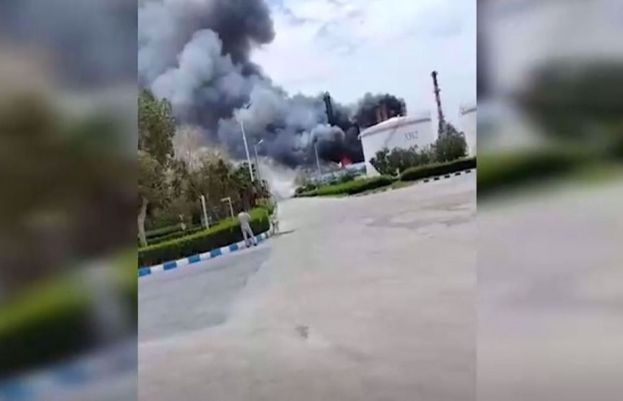
The National Iranian Oil Refining and Distribution Company says an oil refinery located on Iran’s Lavan Island came under attack on Wednesday morning, despite the announcement of a ceasefire between the United States and Iran.
In a statement on Wednesday, the company said the facility of Lavan oil refinery was targeted by “a cowardly attack by enemies” at 10:00 local time.
“Safety and firefighting teams are controlling and extinguishing the fire and securing the facility,” the statement said.
No casualties have so far been reported.
“Fortunately, no casualties have been reported so far due to the timely evacuation of employees,” the company added.
The attack comes despite the announcement of a ceasefire early Wednesday after 41 days of intense fighting between Iran and the US-Israeli coalition.
Israel’s Maariv newspaper admitted that the US-Israeli war against the Islamic Republic has ended in a “decisive victory for Iran,” with both the US and Israel conceding to a “strategic surrender” and retreating from the battlefield.
On Wednesday, the United States and Iran agreed to a two-week ceasefire after Washington received a 10-point proposal from Tehran.
The Israeli newspaper emphasized that Iran has imposed a deal largely of its own design on the US, rejecting Washington’s proposal.
Throughout the war, Iran continued to target Israeli and American assets in occupied Palestine and US military bases and interests in the Persian Gulf, maintaining its resilience even after 41 days of fighting.
Iran’s Supreme National Security Council also declared a “historic and crushing defeat” of the United States and the Israeli regime, saying that Washington was forced to accept the Iranian proposal that includes a permanent ceasefire, the lifting of all sanctions, and the withdrawal of US combat forces from the region.
Politics
Iran may rise in ‘full-scale defense’ any moment as Israel violates truce agreement: Official
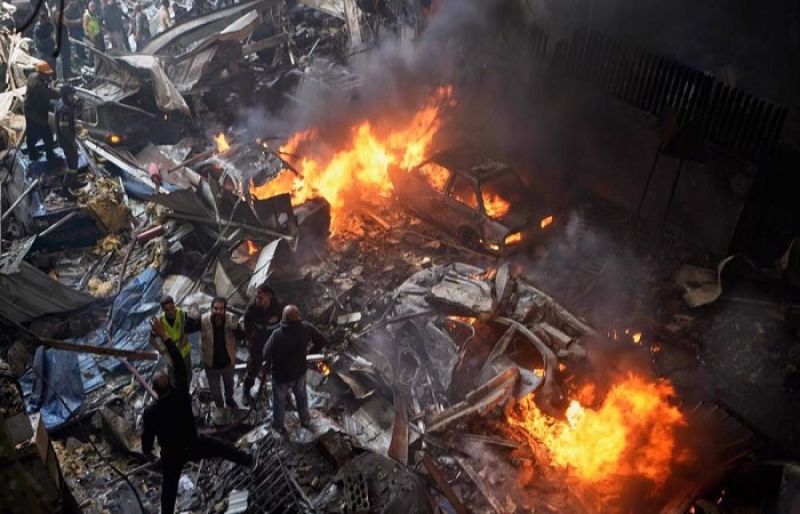

Iran could rise up in full-scale defense at any moment as the Israeli regime is resorting to violation of a fragile and temporary ceasefire, a senior security official has warned.
The official said the entire world is currently witnessing the regime destabilize the already tenuous truce reached earlier in the day.
According to the official, the regime is raising the cost of the agreement for the United States by breaching the ceasefire while simultaneously carrying out aggression against Lebanon and attacking Iran.
The highly placed official called on mediating countries to intervene immediately, stating that the time has come to “put this aggressor regime in its place.”
He further warned that if the ceasefire collapses, the Zionist regime will be held solely responsible, vowing that Iran “will punish the aggressor.”
The official also cautioned that the current period of ease, which followed the controlled reopening of the Strait of Hormuz, would come to a swift end if the violations continue.
Earlier on Wednesday, Iran declared a “historic victory” following the war of aggression by the United States and the Israeli regime that lasted 40 days, announcing that Washington had been forced to accept a 10-point Iranian proposal.
One of the points in the proposal called for the immediate cessation of US-Israeli hostilities on all fronts, including in Lebanon.
However, hours after the ceasefire was announced, the Israeli regime targeted multiple locations in Lebanon, including the capital, Beirut, killing hundreds of civilians.
According to reports, Israel launched at least 100 airstrikes in under 10 minutes, targeting areas across the country. Local media said that at least 88 people were killed in Beirut alone.
It was described as the heaviest Israeli bombardment against Lebanon since the regime started fresh aggression on the Arab country in early March, concurrent with the war of aggression against the Islamic Republic of Iran.


Notre Dame on ‘revenge tour’ after ’25 CFP snub, says CB Moore

US military drank nearly 1 million gallons of coffee during Iran war, top general says
[CinePlex360] Please moderate: “ICE cotton stay

-
Uncategorized6 days ago
[CinePlex360] Please moderate: “Trump signals p
-

 Entertainment5 days ago
Joe Jonas shares candid glimpse into parenthood with Sophie Turner
-

 Tech5 days ago
Our Favorite iPad Is $50 Off
-
 Business6 days ago
Jaguar Land Rover sees sales recover after cyber attack
-

 Fashion1 week ago
China’s Anta Sports posts record $11.62 bn revenue in 2025
-
 Politics5 days ago
Iran can sustain Strait of Hormuz closure for years, will cut US military logistics: Official
-

 Sports5 days ago
UConn Final Four run could trigger a $50M furniture giveaway for Massachusetts-based Jordan’s Furniture
-

 Politics1 week ago
Trump considers asking Arab allies to help to pay for Iran war