

Fashion
Gujarat high court halts QCO rescission for mother yarn, mono yarn

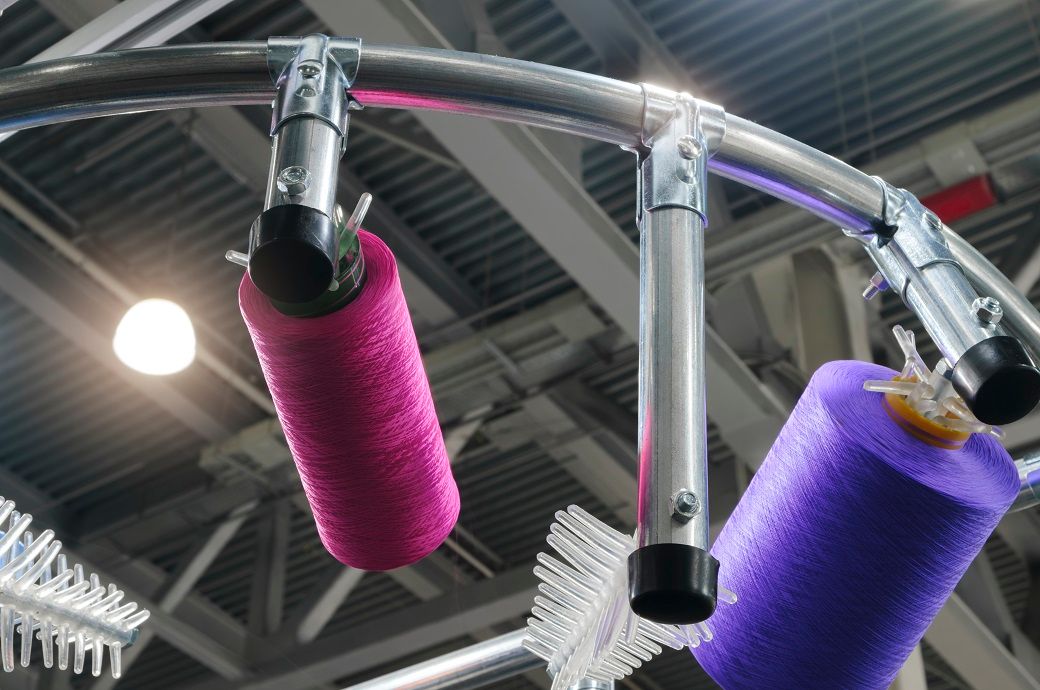
In its order dated April 6, 2026, the court stayed the operation of the November 12, 2025, rescission notification to a limited extent, directing that the QCO 2023 will continue to apply for polyester mother yarn and mono yarn until final disposal of the case. The court observed that the matter requires detailed consideration and issued notice while granting interim protection.
The Gujarat High Court has stayed the rescission of QCOs for polyester mother yarn and mono yarn, granting interim relief in a case filed by Orilon Tectex Pvt Ltd.
While broader QCO rollbacks aimed to ease compliance, the court’s order reinstates quality norms for select yarns, reflecting ongoing concerns over standards, imports, and market balance in the polyester value chain.
This comes months after the Ministry of Chemicals and Fertilisers withdrew multiple BIS QCOs covering PTA, EG, PSF, FDY, POY, and other key materials, citing public interest and industry concerns over compliance burdens, supply disruptions, and certification delays.
The move had been widely welcomed by textile manufacturers and exporters seeking greater raw material flexibility and improved global competitiveness.
However, the present legal challenge signals emerging concerns within segments of the domestic industry over quality control, import standards, and potential market distortions following deregulation. By reinstating the QCO provisions for select yarn categories, the court’s interim order introduces a nuanced regulatory scenario for polyester stakeholders.
Industry participants are expected to closely monitor the final outcome, as it could influence the balance between ease of doing business and quality assurance across India’s synthetic fibre ecosystem.
Fibre2Fashion News Desk (KUL)











ETI is a composite index for payroll employment. When it increases, employment is likely to grow as well, and vice versa.
The Conference Board employment trends index for the US declined to 105.72 in March, from an upwardly revised 105.84 in February.
Job seekers continue to face a challenging market, according to economist Mitchell Barnes.
The share of consumers who report ‘jobs are hard to get’ climbed to 21.5 per cent in March and reflects a 5-percentage point rise YoY.
“Job seekers continue to face a challenging market,” said Mitchell Barnes, economist at the US think tank, said in a release. “This is evident in the ETI as several components moderated in March. Overall, the US economy has remained surprisingly resilient, but rising geopolitical uncertainty may contribute to ongoing employer hesitancy to add more workers.”
The share of consumers who report ‘jobs are hard to get’—an ETI component from the Consumer Confidence Survey—climbed to 21.5 per cent in March and reflects a 5-percentage point (pp) rise year on year (YoY).
The share of small firms reporting that jobs are ‘not able to be filled right now’ declined by 1 pp in March to reach 32 per cent.
Fibre2Fashion News Desk (DS)

The initiative aims to create a platform for curiosity, open discussion and meaningful progress, with a focus on advancing sustainability across the industry. The board includes technologist and sustainability innovator Kiara Nirghin, model and global brand ambassador Amelia Gray, fashion editor and journalist Susie Lau, model, actress and Gurls Talk founder Adwoa Aboah, and global artist and activist Anitta, alongside Stella McCartney and subject experts from H&M. Sessions are moderated by fashion strategist Julie Gilhart.
The group held its first in-person meeting in London this week, discussing the industry’s sustainability challenges and the need to accelerate innovation, transparency and responsible material use. Key themes include materials, circularity, innovation and communication, with an emphasis on identifying tangible action points.
“We are excited to start this dialogue that connects different voices and perspectives from across the fashion world. The Insights Board is a unique opportunity to listen, gain new insights and explore how we can move both ourselves and the fashion industry forward,” said Daniel Ervér, CEO H&M.
Stella McCartney highlighted the need for honesty and accountability, noting that the initiative focuses on listening and learning from diverse communities while keeping sustainability at the forefront to inspire meaningful change.
Participants underscored that fashion is at a critical crossroads where science, innovation and creativity must converge to drive progress. Discussions also explored how sustainability is represented in online conversations and its influence on consumer behaviour, stressing the importance of clear, accessible and fact-based communication on materials, animal welfare and environmental performance.
The Insights Board reflects a broader shift in the global fashion industry towards collaborative, transparent and solutions-driven approaches, as brands move beyond commitments to embed sustainability into core business practices and cultural narratives.
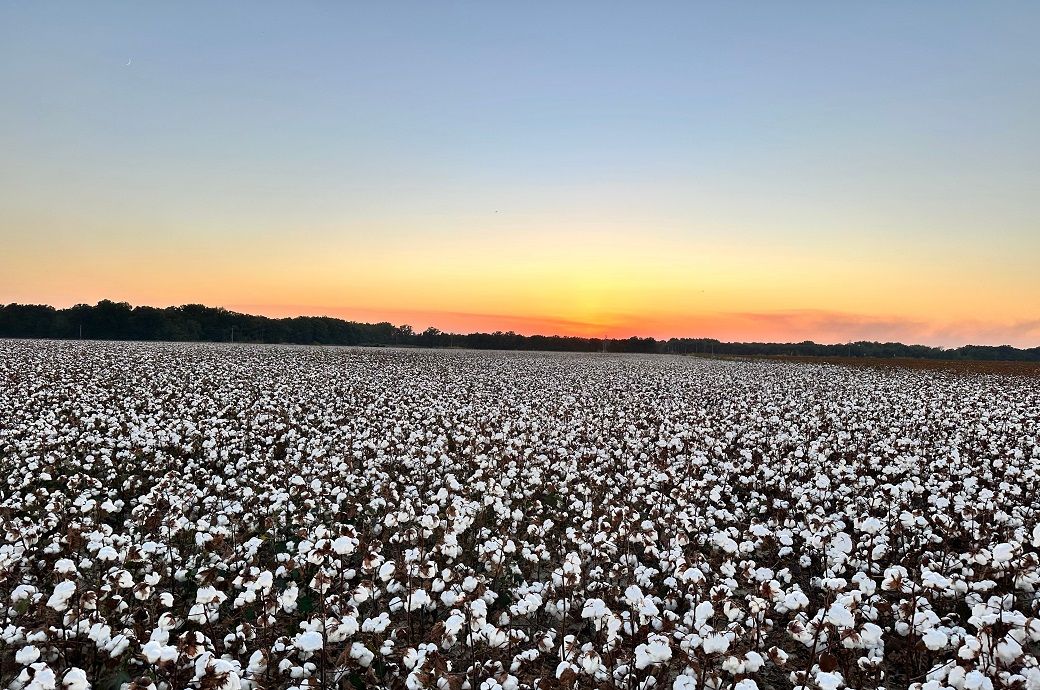
The most traded May 2026 contract settled at 71.31 cents per pound, down 0.36 cent or 0.50 per cent. The contract had touched an intraday high of 72.15 cents per pound. It also touched a low level of 70.90 cents per pound. During the session, the contract touched its highest level since May 6, 2025. This showed strong bullish momentum in early trade but also highlighted resistance near the 72-cent zone.
ICE cotton futures declined after profit booking at higher levels, with the May 2026 contract settling at 71.31 cents per pound.
Early gains, driven by rising crude oil and weather concerns, were capped by higher certified stocks and resistance near 72 cents.
Despite short-term pressure, the market remains fundamentally supported by supply risks and input cost concerns.
The early upside in the market was mainly supported by rising crude oil prices (WTI up around 0.5 per cent), which increased polyester production costs, making cotton relatively cheaper and more attractive, thereby improving cotton’s demand outlook through substitution effect.
Continued dry weather conditions across the US western and southwestern Great Plains are becoming a major concern for the upcoming crop, as soil moisture remains low and weather risk premium is gradually being built into prices.
According to market analysts, high input costs including fuel, fertilisers, and labour, are influencing farmers’ planting decisions, which could potentially limit acreage expansion or affect crop investment levels, thereby supporting prices in the medium term.
As per USDA Crop Progress Report (week ending April 5), cotton planting reached 5 per cent compared to 4 per cent last year and equal to the 5-year average, indicating a normal start to the season, although future progress will heavily depend on weather conditions.
Brazil’s export data (Secex) showed that March cotton exports reached 347,822.83 tons compared to around 239,000 tons last year, registering a sharp 45 per cent year-on-year increase, reflecting strong export momentum and ample global supply availability.
ICE certified cotton stocks increased significantly to 128,213 bales from 113,241 bales in the previous session (an increase of 14,972 bales), which added short-term pressure on prices as higher deliverable stocks signal improved immediate supply.
In the broader commodity complex, CBOT May soybeans declined by 0.73 per cent and soybean oil fell by 0.33 per cent, with soybean oil earlier touching a contract high of 70.49 cents/lb before correcting, indicating weakness in the vegetable oil segment.
US equity markets closed mixed as investors remained cautious amid ongoing geopolitical developments and uncertainty surrounding global trade and energy routes.
The cotton market remains fundamentally bullish with strong support from weather concerns and energy linkage, but short-term consolidation is likely as higher stocks and resistance near 72 cents continue to cap upside momentum.
This morning (Indian Standard Time), ICE cotton for May 2026 traded at 71.00 cents per pound (down 0.31 cent), cash cotton at 69.31 cents (down 0.36 cents), the July 2026 contract at 73.20 cents (down 0.34 cent), the October 2026 contract at 75.07 cents (down 0.55 cent), the December 2026 at 75.05 cents (down 0.42 cent) and the March 2027 contract at 75.94 cents (down 0.39 cent)). A few contracts remained at their previous closing levels, with no trading recorded so far today.
Fibre2Fashion News Desk (KUL)


Iran war: Oil prices rise as traders eye fragile ceasefire deal
[CinePlex360] Please moderate: “Sensex gains fo

The Conference Board employment trends index for US declines in Mar

-
Uncategorized7 days ago
[CinePlex360] Please moderate: “Trump signals p
-
 Business7 days ago
Jaguar Land Rover sees sales recover after cyber attack
-

 Entertainment6 days ago
Joe Jonas shares candid glimpse into parenthood with Sophie Turner
-

 Tech5 days ago
Our Favorite iPad Is $50 Off
-
 Fashion1 week ago
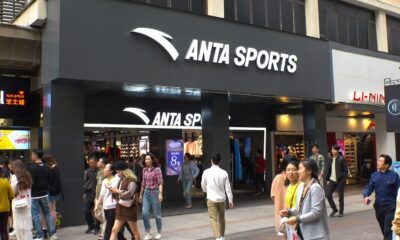
China’s Anta Sports posts record $11.62 bn revenue in 2025
-

 Politics6 days ago
Iran can sustain Strait of Hormuz closure for years, will cut US military logistics: Official
-

 Sports5 days ago
UConn Final Four run could trigger a $50M furniture giveaway for Massachusetts-based Jordan’s Furniture
-
 Business6 days ago
Video: Why Is the Labor Market Stuck?