

Business
How coffee chains like Costa lost the matcha generation

Rachel Clun & Connie BowkerBusiness reporters, BBC News
 BBC
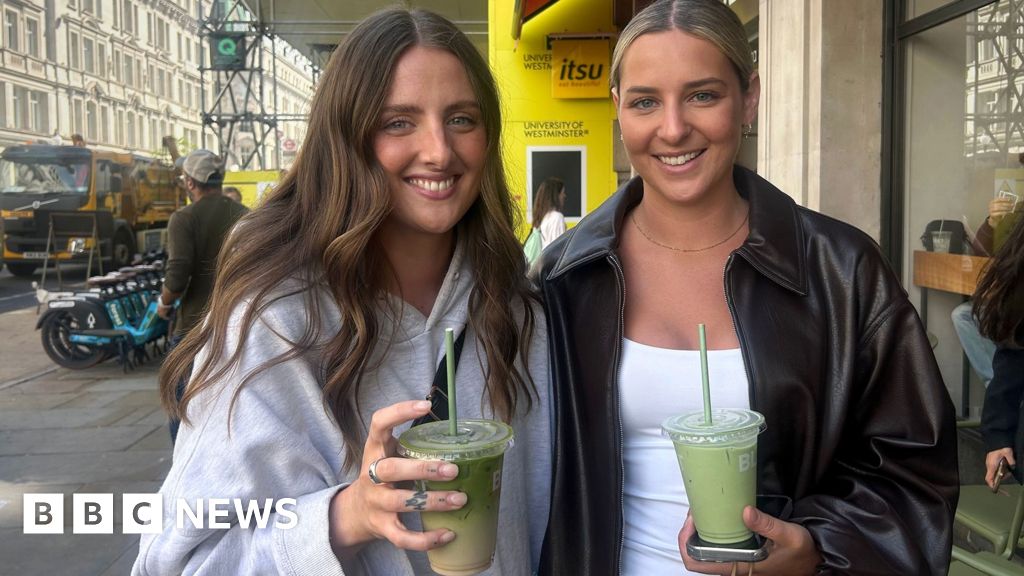
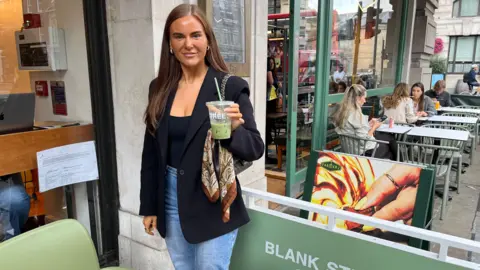
BBCLucy Williams is enjoying an iced strawberry matcha after going with her sister to her niece’s first-ever haircut.
“I feel like a strawberry matcha is a coming out with your sister thing, rather than an everyday thing,” she says.
But here in the UK, you can’t get an iced strawberry matcha – or any kind of matcha at Costa Coffee.
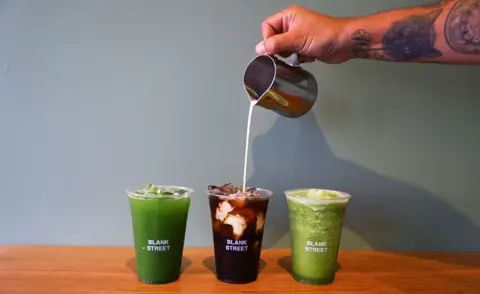
Lucy is at Blank Street Coffee where a rainbow array of matcha drinks have gained the chain a cult following, including celebrity fans Molly-Mae Hague and Sabrina Carpenter.
Lucy drinks coffee at home every day, but buys a barista-made cup for when she wants a treat.
“There are only certain places I’d go for a coffee,” she says and Costa is not on her list.
Costa’s owner Coca-Cola is reportedly looking to sell the chain, with one analyst suggesting it could go for £2bn – about half of the $4.9bn (£3.9bn) it paid in 2019. So is something going wrong?

 The Boston Globe via Getty Images
Coffee and tea drinking trends are changing particularly among younger generations, analysts say, and when combined with higher coffee prices and cost of living pressures in general, chains like Costa are in hot water.
But not Blank Street which began in 2020 as a tiny coffee cart in the garden of a Brooklyn diner before expanding across New York, Washington and Boston. It opened its first London store in 2022 and now has about 35 in the capital with three more in Manchester, two in Birmingham and two in Edinburgh.
Its popularity has in part been driven by its TikTok appeal, with fans posting videos of themselves ordering in its minty fresh decorated cafes or at free tattoo pop up events.
For Australian travellers Bree Taylor and Rebecca Trow, both 27, Blank Street was on their London to-do list after seeing its pastel-hued drinks on TikTok.
“We saw it and were like ‘we have to go there’. We saw it and came here specifically. We wanted to try it,” says Rebecca.
Lauren Nicholson, 24, and Jordan Brookes, 27, were also drawn to the cafe for its brightly coloured matcha which cost just under £5 each.
Jordan says he started drinking matcha about two months ago and is now “hooked”.
He’s not the only one – the worldwide matcha craze means supplies of the bright green Japanese tea are drying up and the demand is pushing up prices.
Costa’s rivals have jumped on the trend with Starbucks and Pret offering an iced matcha latte and Nero a strawberry and vanilla iced matcha latte.
And it is not just a London thing – popular national chains like Gail’s and Black Sheep Coffee make it. The latter offers green matcha waffles too.

Seeking out a new luxury drink as an affordable treat is a trend that emerged since Covid and has continued to grow as the cost of living remains high.
“If you think about a lot of gen Z, they’re looking at matcha, they’re looking at brews, they’re more healthy. My late teenagers, they don’t drink caffeinated beverages at all,” says Danni Hewson, head of financial analysis at AJ Bell.
Traditionally, matcha is considered to contain antioxidants and have a more tempered caffeine effect than the “high” and “crash” of regular coffee but there is some debate over any proven health benefits.
Alongside standard coffees, Costa serves a variety of frappé and fruit coolers, but these contain syrups and can be topped with whipped cream which may not appeal to the clean-living green-juice sippers among us.
With the rising popularity of home coffee machines, chains have to come up with special reasons to get customers through the door.
 Getty Images
Costa is not the only brand struggling with the changing UK coffee market, says Clive Black, vice chairman of independent investment group Shore Capital.
The rise of smaller chains and artisanal independent stores have also “eaten into the share” of the major chains, he adds.
Young people increasingly care about spending choices – Lauren and Jordan both say they generally avoid big coffee chains in favour of supporting smaller businesses, but also because of considerations about the taste.
And when a coffee can cost you the best part of £5 you expect something you can’t make yourself.
“A straight up latte isn’t a treat, that’s a necessity,” says Clare Bailey, independent retail analyst and founder of The Retail Champion.
“I feel like businesses that don’t reimagine themselves and don’t respond to consumer behaviour, and perhaps get a little complacent, are the ones who end up in trouble,” she adds.
Coca-Cola’s chief executive James Quincey admitted to an investor call last month Costa was “not where we wanted it to be” and the company was “thinking about how we might want to find new avenues to grow in the coffee category”.
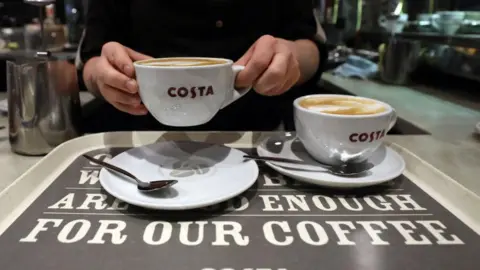
Costa began as a London roastery in 1971 and has since expanded to more than 4,000 stores and with operations in 50 countries. It is a prominent feature of many a high street in small towns across the country, often appealing to families.
In the 2023 financial year, the most recent report, Costa reported revenues of £1.2bn, but said inflationary pressures including increased prices of goods, energy and pay resulted in an operating loss of £14m.
Now Coca-Cola is working with investment bank Lazard to explore its options for the coffee chain, including a potential sale, according to reports from Reuters and Sky News. Clive, from Shore Capital, says it is not clear why Coca-Cola bought Costa in the first place.
Costa, Coca-Cola and Lazard were all approached for comment.
There are now 11,450 branded coffee chain outlets across the UK, up from 9,800 five years ago, according to World Coffee Portal.
And the number of independent coffee shops has also risen over the last five years from 11,700 to around 12,400 now.
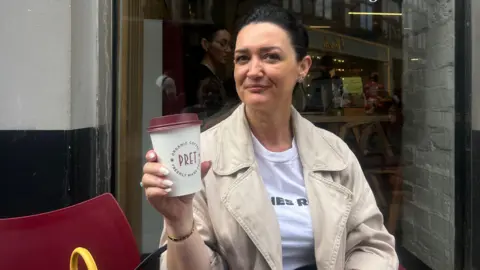
With so much choice, competition to attract customers heats up. Mimoza Emsa, 47, says while she used to drink Costa, she now always goes to Pret because it’s close to her work and she has its subscription which offers discounts.
“It’s really convenient. It’s one of the things that persuades me to have coffee here,” she says.
Costa and similar chains are not as quick and cheap as a Greggs or McDonalds coffee, but also don’t offer the higher-end experience for when we want to treat ourselves.
“We’ve seen all these middle of the road retailers struggle because they’re neither one thing nor the other,” says retail analyst Clare.

Despite these shifts, Costa still has loyal customers.
Rafik Khezmadji, 37, says he comes to Costa because it’s close to work, but he also enjoys being able to sit outside and savour his coffee.
“I enjoy having this moment to myself,” he says.
For 20-year-old fashion business student Megan Penfold the coffee at Costa is “not the worst and not the best”. She has stopped at the cafe on Wigmore Street in London for a quick black coffee.
“Trends don’t affect me as much. I like what I like,” she says.
Correction: An earlier version of this story said Coca-Cola bought Costa for £4.9bn in 2019. The figure was actually $4.9bn, which was worth about £3.9bn.
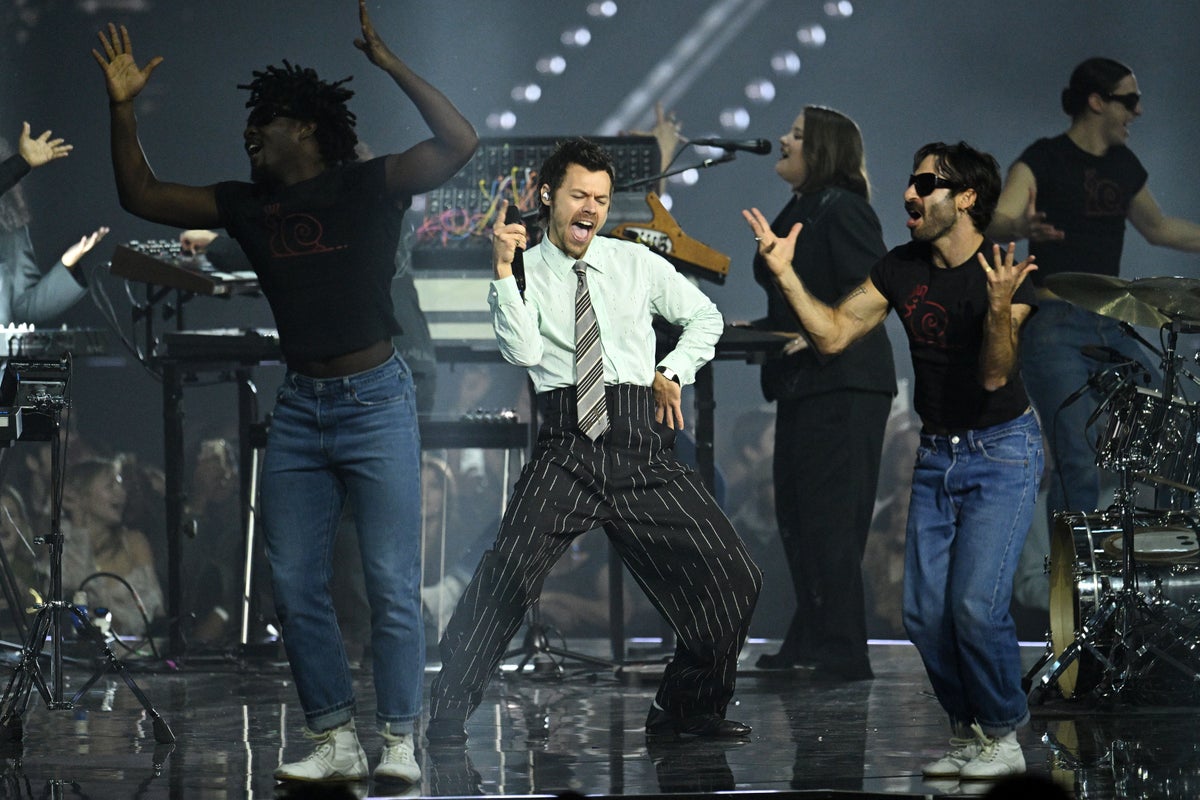
Fan spending for Harry Styles’s 12-night run at Wembley Stadium is set to reach £1.1 billion despite ongoing cost-of-living pressures, figures suggest.
Ticket-holders are expected to spend a total of £981 on average attending the Together, Together tour – which is limited to London in the UK – including travelling to the venue, staying overnight, buying merchandise and other costs, according to a survey for Barclays bank.
The figure exceeds the average £848 spent by fans who flocked to Taylor Swift’s Eras Tour, and the average £766 on attending the Oasis Live ’25 shows, although these were both held across four UK locations, leading to lower travel costs.
Styles’ fans anticipate they will spend an average £102 on official tour merchandise, while nine in 10 will participate in a “fan trend” on the day with 63% planning to wear a Harry Styles-themed look.
A fifth (20%) will make sure their outfits are co-ordinated with their friends and 22% hope to create or exchange fan-made items with other fans.
Barclays said the event was set to be a “major cultural moment” as a million ticket-holders travel to London for the 12 dates beginning on June 12.
With just one other European tour location, in Amsterdam, Styles’ Wembley residency will be the most performances by any artist in a single year at the venue, which has a capacity of around 90,000 people for music events.
The survey found those going to the show spent an average of £143.20 on their ticket, with 19% saying this was more than they planned but 66% saying they would have been willing to pay more if needed.
Other expected costs include an average £141.20 on accommodation, £103.10 on transport and £103.10 on food and drinks before the show.
Some 28% of fans say they are planning other activities such as sightseeing and exhibitions while in London.
More than a quarter (27%) of ticket-holders view the concert as a once-in-a-lifetime experience, and 17% said FOMO (fear of missing out) played a part in their purchase.
Almost 74% of those polled said getting tickets to sold-out or in-demand events now felt like a status symbol.
Tom Corbett, managing director of sponsorship and client experience at Barclays, said: “This tour shows just how powerful live entertainment can be, benefiting consumers and businesses alike.
“‘Concert tourism’ is on the rise because of the extent to which people value unique, shared experiences – so much so that they’re willing to invest in them even when cutting back elsewhere, and to travel to see their favourite artists perform.”
Opinium surveyed 2,000 respondents, and an additional 200 ticket-holders, between April 28 and May 1.

A sign sits outside of the Centers for Disease Control and Prevention (CDC) Roybal campus in Atlanta, Georgia, U.S. March 18, 2026.
Megan Varner | Reuters
One American has tested positive for Ebola in the Democratic Republic of Congo in connection to the deadly outbreak in central Africa that global health agencies are racing to contain, the Centers for Disease Control and Prevention said on Monday.
The person was exposed as part of their work in Congo, developed symptoms over the weekend and tested positive late Sunday, Dr. Satish Pillai, the CDC’s Ebola response incident manager, told reporters on a call. The CDC and State Department are working to move that individual and six other Americans exposed to Ebola to Germany for treatment, care and monitoring.
But Pillai emphasized that no cases tied to the outbreak have been confirmed in the U.S., and that the overall risk to the American public and travelers remains low.
Still, the CDC also announced on Monday that for the next 30 days, it will restrict entry into the country for people without a U.S. passport who were in the Democratic Republic of the Congo, South Sudan or Uganda in the last three weeks.
The update came one day after the World Health Organization declared the Ebola epidemic a “public health emergency of international concern.” The outbreak does not meet the criteria of a “pandemic emergency,” but the WHO warned that the high positivity rate and increasing cases and deaths point toward a “potentially much larger outbreak” than what is being detected and reported.
As of Sunday, more than 300 suspected cases and 88 suspected deaths have been reported, primarily in Congo but also in neighboring Uganda, according to the CDC.
The specific virus involved in this outbreak, called Bundibugyo, has no vaccine or treatment. Historically, that virus has death rates ranging from 25% to 50%, the CDC added.
But agency officials told reporters on Monday that work is underway to develop a monoclonal antibody therapy as a potential treatment for this specific strain of Ebola.
Musk’s loss against OpenAI is the latest in a string of courtroom defeats.
Source link

Fan spending on Harry Styles Wembley gigs set to top £1bn

‘Star Wars’ voice actor was 64

Harry Potter important actress leaves series just before season 2

-

 Entertainment6 days ago
Conan O’Brien hat tricks as Oscar host
-

 Tech1 week ago
Could Contact-Tracing Apps Help With the Hantavirus? Not Really
-

 Fashion5 days ago
Italy’s Zegna Group’s Q1 growth boosted by strong organic performance
-

 Entertainment1 week ago
Martin Short: Facing tragedy with joy
-

 Entertainment1 week ago
Tom Brady gets back at Kevin Hart during Netflix roast
-

 Sports1 week ago
Jacob Fatu unleashes vicious assault on Roman Reigns after World Heavyweight Championship loss at WWE Backlash
-

 Entertainment1 week ago
Martha Stewart: How to make an omelet
-

 Tech1 week ago
Papa Johns Is Getting Into Drone Delivery—but Not for Pizza