

Business
EU airline industry warns of fuel shortages if Strait of Hormuz stays closed

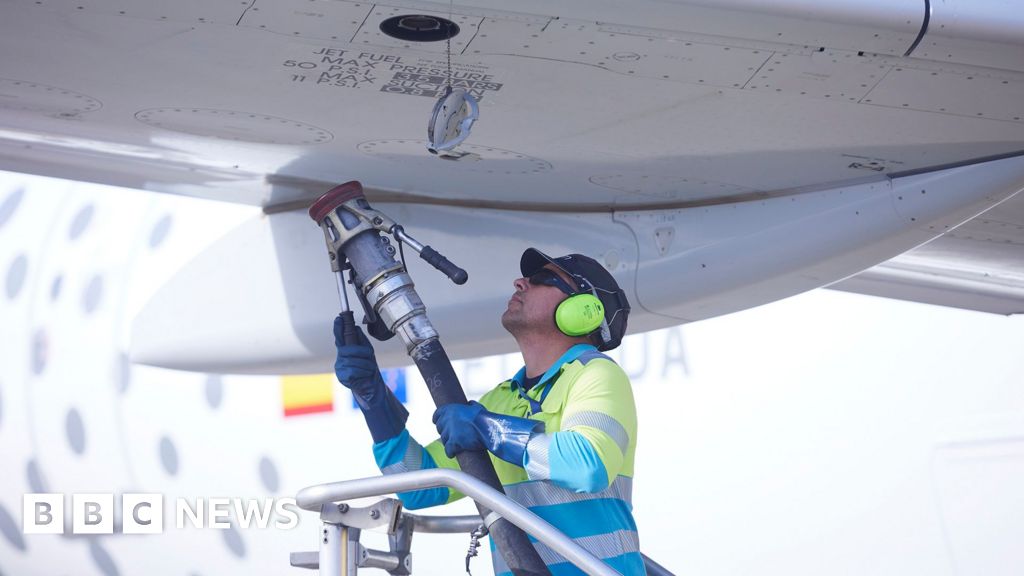
The trade body for European airports said if the Strait of Hormuz did not open in the next three weeks, there could be shortages.
Source link

A trade body for European airports has warned over a “systemic” shortage of jet fuel ahead of the peak summer season if the Strait of Hormuz does not reopen in the weeks ahead.
Airports Council International (ACI), which represents more than 600 airports, wrote a letter to the European commissioners for energy and transport and tourism.
The body’s director-general Olivier Jankovec wrote in the letter: “At this stage, we understand that if the passage through the Strait of Hormuz does not resume in any significant and stable way within the next three weeks, systemic jet fuel shortage is set to become a reality for the EU.
“The fact that we are entering the peak summer season… is only adding to those concerns.”
Supplies of jet fuel – which is used to fly planes – from the Middle East have been disrupted since the US-Israel’s war with Iran because of Iran’s effective closure of the Strait of Hormuz, a critical international shipping route.
This has led to soaring prices and warnings that flights could be affected because of Europe’s reliance on fuel imports from around the world.
Analysts have also said higher jet fuel prices can be quicker to pass through to airfares than road fuel and household energy costs.
Ryanair’s boss Michael O’Leary said earlier this month that if the war continues, then there was a risk of “disruptions in Europe in May and June”, adding that “maybe 10%, 20%, 25% of our supplies might be at risk”.
Sir Keir Starmer has been visiting allies in the Gulf for talks on how to support what he described as a “fragile” ceasefire between the US and Iran, which was agreed this week.
He spoke to US President Donald Trump about the need for a “practical plan” to get shipping going through the Strait of Hormuz amid suggestions Tehran wants to charge vessels for passage.
In its letter, the ACI says jet fuel supply for the next six months needs to be urgently monitored by the European Commission, including identifying action that can be taken to increase production within the EU.
It also asks them to consider temporarily lifting restrictions and regulations that limit the ability to import jet fuel.
“This crisis has exposed the reduced refining capacity of the EU for jet fuel production, and its acute dependence on imports from other world regions,” Mr Jankovec warned on behalf of the body.
Susannah Streeter, chief investment strategist for Wealth Club, said: “Carriers have had to deal with a more than doubling of fuel costs since the conflict erupted and the threat of shortages lingers.
“As the war has put a chokehold on supplies from the Middle East, it has caused other nations which produce jet fuel to impose export bans, causing trade to seize up further.
“It will take time to unwind panic positions, and for jet fuel prices to stabilise, so airlines are likely to continue to pass on the cost to passengers for the foreseeable future.”
Business
US stock market today (April 10, 2026): S&P 500, Nasdaq rise on tech gains after inflation data – The Times of India
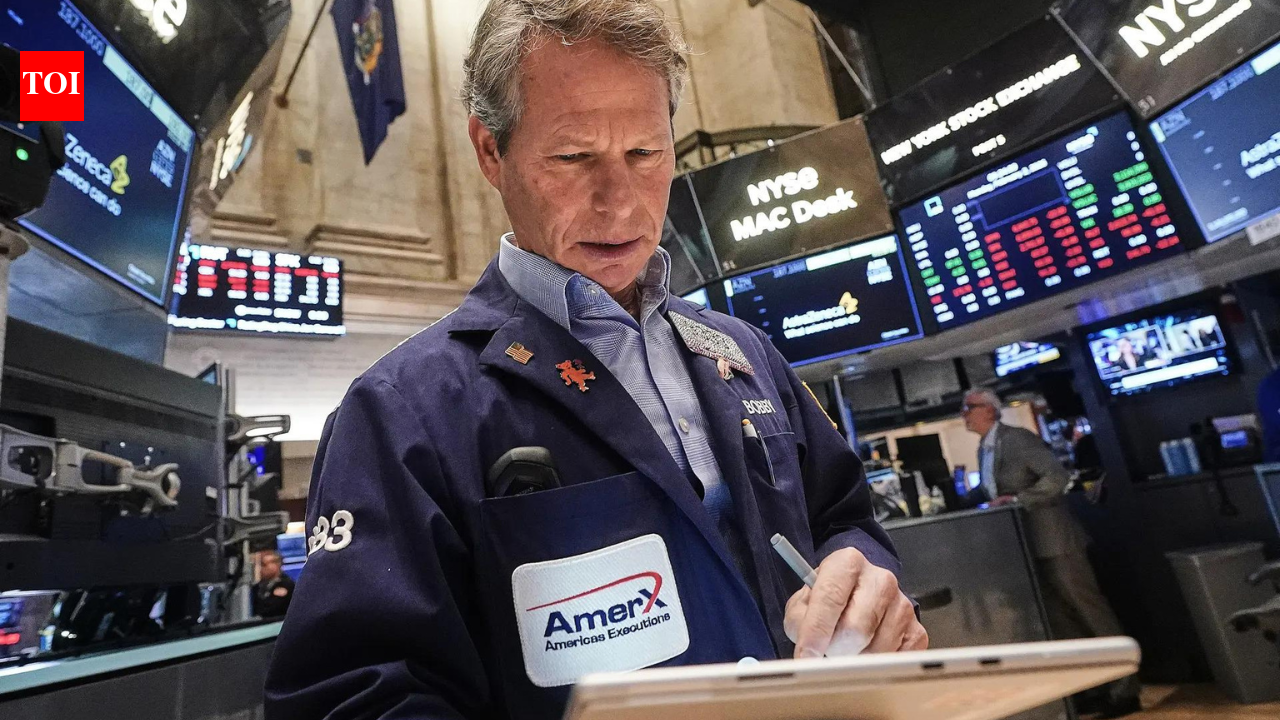
US equity benchmarks traded mixed on Friday, with the S&P 500 and Nasdaq moving higher on strength in technology stocks after March inflation data came in line with expectations, while investors kept a close watch on geopolitical tensions in the Middle East.US consumer prices rose the most in nearly four years in March, driven by higher oil prices linked to the Iran conflict and continued tariff pass-through. Despite this, traders maintained expectations that the US Federal Reserve will hold borrowing costs steady this year, scaling back earlier bets of two rate cuts prior to the conflict, according to Reuters.“When paired with Thursday’s PCE data, the message is clear: inflation remains sticky – and that optimistically assumes the energy surge proves to be a temporary headwind rather than a lasting recalibration,” said Bret Kenwell, US investment analyst at eToro. “It should keep policymakers on pause, unless we see a more notable deterioration in the labor market or the broader economy.”San Francisco Fed President Mary Daly told Reuters on Thursday the oil shock from the Iran war would extend the timeline on bringing inflation back to the US central bank’s 2% target.At 10:15 a.m. ET, the Dow Jones Industrial Average was down 109.60 points, or 0.23%, at 48,076.20, while the S&P 500 gained 10.56 points, or 0.15%, to 6,835.22, and the Nasdaq Composite rose 123.70 points, or 0.54%, to 22,946.11.Gains were led by technology stocks, with the S&P 500 information technology index advancing 0.8%, supported by chipmakers. Nvidia rose 1.8% and Broadcom climbed 4.4%, while the Philadelphia Semiconductor index touched a record high of 8,926.08.However, declines in financial stocks, down 0.8%, limited the broader upside. Goldman Sachs and Travelers weighed on the Dow.On a weekly basis, Wall Street’s main indexes were poised for gains, with the S&P 500 and Dow set for their strongest weekly rise since November and June, respectively.Investor sentiment was supported by the two-week ceasefire between Washington and Tehran, along with remarks from Israeli Prime Minister Benjamin Netanyahu indicating efforts to initiate direct talks with Beirut. However, the Pakistan-brokered truce showed signs of strain, with both sides accusing each other of violations ahead of talks scheduled for Saturday.“This is a headline-driven market… as long as the ceasefire holds and the market sees a path toward relative calm in the Middle East, investors should be able to look through disruptions,” said Jeff Buchbinder, chief equity strategist at LPL Financial.Separately, preliminary data showed the University of Michigan’s consumer sentiment index fell to 47.6 in April, below economists’ expectations of 52, according to a Reuters poll.US-listed shares of Taiwan Semiconductor Manufacturing, the world’s largest contract chipmaker, rose 2.7% after reporting stronger-than-expected first-quarter revenue.CoreWeave advanced 6.8% after announcing a multi-year agreement with Anthropic and pricing its convertible bond offering at a premium.Advancing stocks outpaced decliners by a 1.22-to-1 ratio on the NYSE and by 1.07-to-1 on the Nasdaq. The S&P 500 recorded 17 new 52-week highs and 18 new lows, while the Nasdaq logged 84 new highs and 70 new lows.

A surge in prices at the pump due to the Iran war has pushed the inflation rate to 3.3%.
Source link


WIRED’s Favorite Gas Grill is on a Pretty Good Sale Right Now
Airports warn of ‘systemic’ jet fuel shortage if Strait of Hormuz stays closed

Camilla Mendes reveals plans for having kids with fiance Rudy Mancuso

-
 Business1 week ago
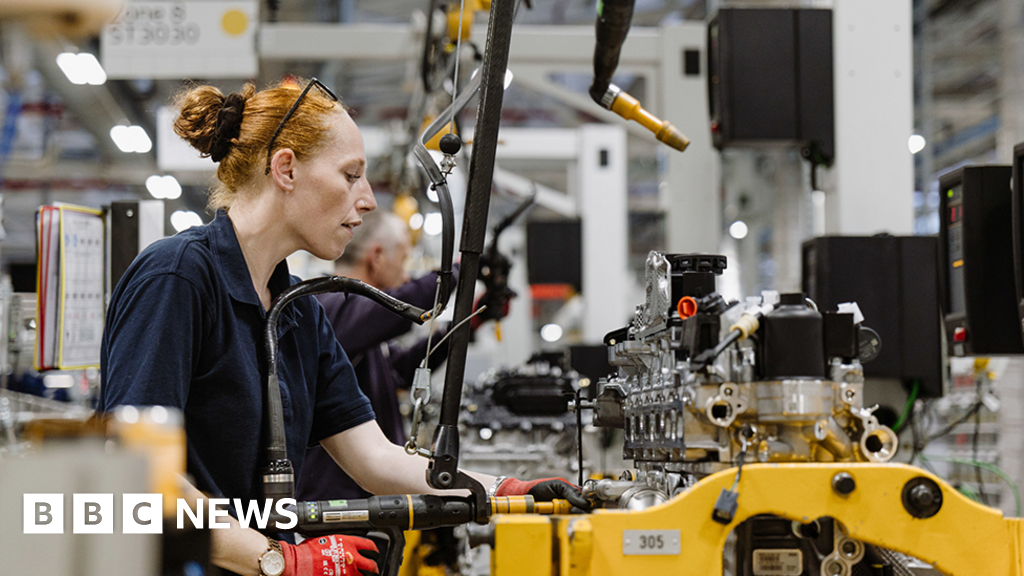
Jaguar Land Rover sees sales recover after cyber attack
-
Uncategorized1 week ago
[CinePlex360] Please moderate: “Trump signals p
-

 Entertainment1 week ago
Joe Jonas shares candid glimpse into parenthood with Sophie Turner
-

 Tech1 week ago
Our Favorite iPad Is $50 Off
-

 Sports7 days ago
UConn Final Four run could trigger a $50M furniture giveaway for Massachusetts-based Jordan’s Furniture
-
 Business1 week ago
Video: Why Is the Labor Market Stuck?
-

 Entertainment7 days ago
Blake Lively reacts to harassment claims dismissal against Justin Baldoni
-

 Politics1 week ago
Iran can sustain Strait of Hormuz closure for years, will cut US military logistics: Official