

Business
Oil prices ease as US pauses Project Freedom to seek Iran deal


President Donald Trump raised hopes of an agreement between the US and Iran after days of escalation.
Source link
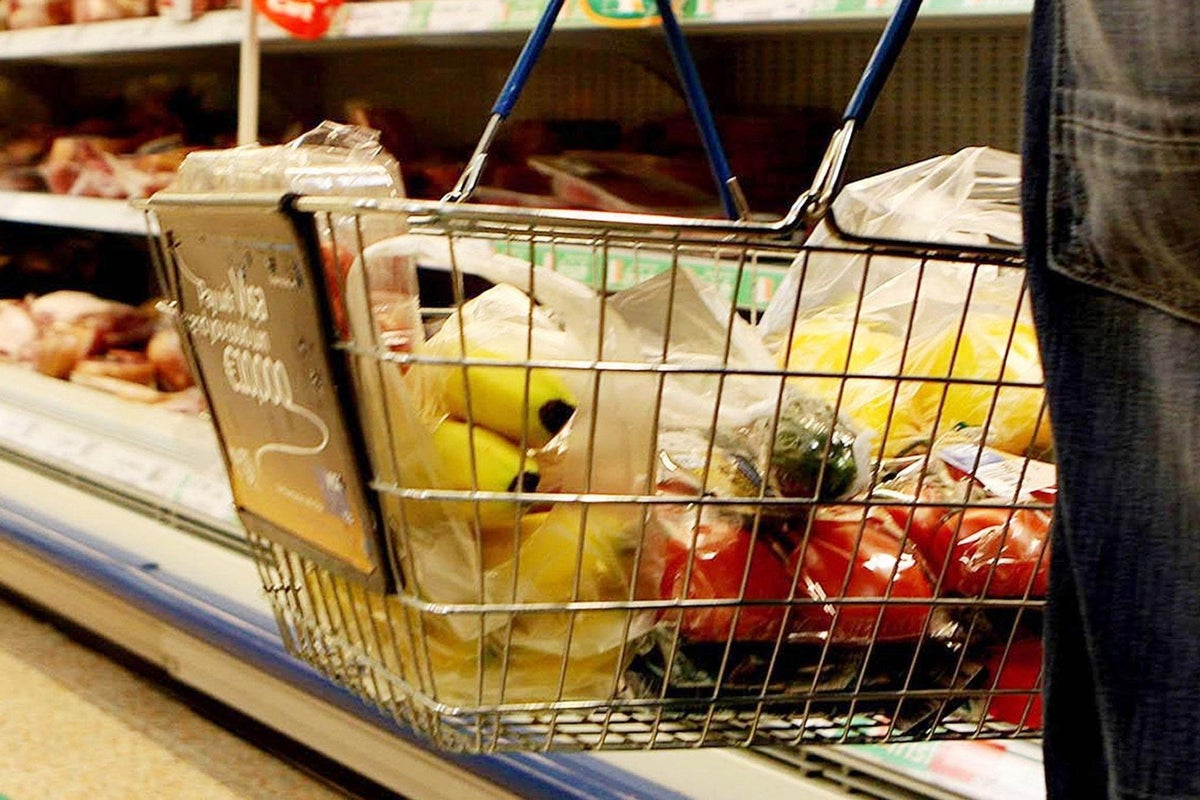
Retailers braced for the effects of the Middle East conflict have urged the Government to cut domestic costs to help them keep prices down for consumers.
The British Retail Consortium (BRC) said four in five people (80%) feared the Middle East conflict would push up food prices, and called on the Government to help by easing pressure on businesses from higher national insurance, packaging levies, new regulations, and business energy charges.
The BRC said retailers were already absorbing “significant” additional costs from the conflict including rising energy and shipping costs, with knock-on effects for fertiliser, manufacturing and logistics.
It warned those costs would inevitably filter through to the till over the coming months.
But it said the Middle East was only part of the picture, and retailers had absorbed £6.5 billion in extra employment costs from rising national insurance contributions and the national living wage, alongside a new packaging tax costing £1.6 billion.
Meanwhile, more regulatory “burdens” were imminent, including guaranteed hours provisions under the Employment Rights Act and the proposed reformulation of thousands of food lines under the new nutrient profiling model.
A survey for the BRC found 73% of people expect the Middle East conflict to raise the price of products other than food, while 81% are worried about rising energy bills, 76% about petrol and diesel, and 68% about tax increases.
Food retailers met Chancellor Rachel Reeves in early April and called for the removal of energy policy levies, network charges and system fees that now make up between 57% and 65% of a typical business electricity bill.
They also asked for the introduction of the updated nutrient profiling model for food and drink to be delayed, and for a review of the triple packaging levy, forecast to cost retailers more than £2 billion a year.
BRC chief executive Helen Dickinson said: “The Middle East conflict is driving up costs across the supply chain and families are right to be concerned.
“But not every pressure bearing down on retailers comes from the Gulf. Higher national insurance, packaging levies, new regulations, and business energy charges are all domestic policy decisions, made in Westminster, and they can be addressed there.
“Such action by government would help retailers to keep prices affordable for households.
“Other governments are already acting. Germany has reduced electricity costs for businesses by moving levies off bills and EU leaders are actively discussing similar responses to this crisis.
“The UK should be moving in the same direction, not treating global instability as cover for inaction on costs of its own making.
“Retailers are working hard to hold prices down, but they cannot do it alone.
“Every cost government chooses not to address is a cost that will find its way into someone’s shopping basket. That is a political choice, and it is one ministers still have time to change – but the window to act is closing.”

Campaigners are calling for the Government to ban the spraying of glyphosate on UK crops at harvest following studies linking it to cancer and other illnesses.
Glyphosate – commonly known for being the active ingredient in the product Roundup – is used by some farmers to tackle weeds, but it is also often sprayed on crops to dry them out at harvest time.
The Soil Association warned that this left residues in foods such as bread, breakfast cereal, and beer, with nearly half of crop samples tested in the UK across wheat, barley and oats containing the chemical.
Use of glyphosate as a pre-harvest drying agent was banned in the EU in 2023, and campaigners are calling on the UK Government to do the same.
Farmers Weekly reported in December that the renewal of glyphosate’s licence in Great Britain was entering a “critical stage”, with the Health and Safety Executive (HSE) set to launch a major public consultation ahead of a final approval decision later this year.
The consultation will allow farmers, industry, and farming organisations to comment on the extensive scientific dossier submitted by the Glyphosate Renewal Group (GRG), a coalition including Bayer, Syngenta, Nufarm and five other companies seeking renewal of the active ingredient.
Glyphosate remains approved for use in Great Britain until December 15, after ministers extended its authorisation to give regulators time to review new data.
Farmers Weekly said farming organisations were preparing to argue for continued access to glyphosate-based weedkillers – including as a pre-harvest desiccant – or moisture absorber – in cereals and oilseed rape, which they say is essential for food security, climate goals, and farm viability.
Glyphosate was labelled as a probable carcinogen by the World Health Organisation in 2015, and in March this year a group of international scientists gathered to review new science published over the last decade.
The expert statement issued after the Seattle Glyphosate Symposium stated that glyphosate and glyphosate-based herbicides (GBHs) harm human health and can cause cancer.
It added: “The evidence that glyphosate and GBHs harm human health at levels of current use is now so strong that no additional delays in regulation of glyphosate can be justified.”
In an open letter, the Soil Association, Nature Friendly Farming Network, Greenpeace, Riverford, The Wildlife Trusts and other environment and health groups have called for the Government to use the opportunity to end pre-harvest desiccation in the UK.
If implemented, this could prevent glyphosate from being sprayed annually on crops covering up to 780,000 hectares – an area five times the size of London – according to estimations by the Soil Association.
The charity has also launched a petition, and campaigners are calling for urgent support for farmers to ensure their businesses “can continue to thrive” while changing practices, alongside research into alternatives.
Soil Association campaigns co-ordinator Cathy Cliff said: “No-one wants a chemical linked to cancer in their sandwiches or breakfast cereal.
“The UK is already lagging behind Europe, which takes a much tougher stance on pesticides that pose a risk to human health.
“The Government must act to protect public health by stopping this toxic chemical from being sprayed on our food at harvest.
“Many farmers are already reducing their use of harmful pesticides, and the Government must work harder to support their efforts.
“Our Government must do the right thing and remove glyphosate from our foods, while supporting farmers to find alternatives that protect nature and public health.”
Dr May van Schalkwyk, from the Centre for Pesticide Suicide Prevention and Global Health Policy Unit at the University of Edinburgh, said: “There is a mounting body of independent evidence of the harm to people’s health and the environment from glyphosate-based pesticides.
“Government action is long overdue.”
Guy Singh-Watson, founder of organic vegetable box company Riverford, said: “Glyphosate use in our food system is poison in plain sight.
“Spraying crops with a chemical classified as ‘probably carcinogenic’, often just days before harvest, creates a direct route from field to plate that should concern us all.
“This is not only a public health issue, but also a farming one too.
“Many farmers are locked into using these chemicals by a system that leaves them with few commercially viable alternatives.
“The Government has a responsibility to ensure our food is produced without compromising the health of people or the planet.
“Banning glyphosate as a pre-harvest desiccant is a sensible first step, and farmers must be supported to make the transition away from chemical dependence.”
A Government spokesman said: “Like all pesticides, glyphosate is subject to strict regulation in Great Britain and are only approved for use if the evidence shows that they won’t harm human or animal health, and won’t have unacceptable effects on the environment.
“Our UK Pesticides National Action Plan supports moves by farmers, growers and other land managers to minimise the use of pesticides and increase integrated pest management – a holistic and sustainable approach to pest, weed and disease control.”

The Lucid logo is shown at the Los Angeles Auto show on Nov. 20, 2025.
Mike Blake | Reuters
DETROIT — Lucid Group suspended its vehicle production guidance for the year as its incoming CEO evaluates the all-electric vehicle manufacturer’s business operations, including the potential for lower output of EVs.
The company on Tuesday also said it needs to lower its “elevated inventory” of vehicles, which for automakers has historically meant decreasing or idling vehicle production.
A company spokesman told CNBC that there is currently no plan to idle its sole U.S. plant in Arizona, but incoming CEO Silvio Napoli said he is continuing to evaluate Lucid’s business.
“An essential objective over time is to build a more cost-efficient company, one that progresses in funding its own growth. That means being rigorous in delivering our commitments,” Napoli said Tuesday on Lucid’s quarterly results call with investors. “In simple words, this means making clear choices on where to invest and, just as importantly, where not to.”
Napoli said he plans to review the company’s operations over the next several weeks before updating investors on the company’s guidance when Lucid reports its second-quarter results at an unspecified date.
The company’s prior production guidance was between 25,000 to 27,000 units in 2026. Lucid executives said plans for cost-cutting, autonomous vehicles with Uber and Nuro, and the company’s “path to profitability” outlined in an investor day in March remain intact.
Lucid has produced roughly 3,200 more vehicles than it has sold since 2024, according to its annual production and deliveries. That includes a difference of roughly 2,000 units last year and 2,400 vehicles during the first quarter of 2026.
The pulled guidance occurred as the company reported first-quarter results that were in line with preliminary results released by the company a month ago, but that still significantly missed Wall Street’s expectations.
“We ended the quarter with elevated inventory that we expect to convert to revenue and cash as deliveries normalize, while maintaining alignment between production and sales cadence. Our focus is on disciplined execution — driving structural cost improvements, managing capital efficiently, and improving operating leverage as we scale,” Lucid CFO Taoufiq Boussaid said in a statement.
Here’s how the company performed in the first quarter compared with average estimates compiled by LSEG:
- Loss per share: $3.46 vs. a loss of $2.64 expected
- Revenue: $282.5 million vs. $440.4 million expected
The company’s revenue increased roughly 20% year-over-year but was far lower than the 87.4% jump analysts were expecting, according to LSEG.
The all-electric vehicle maker said a seat supplier issue “significantly affected” deliveries of its crucial Lucid Gravity SUV during the quarter that resulted in a stop-sale of the vehicle due to safety concerns.
Boussaid said the seat issue caused a more than $200 million revenue impairment during the first quarter.
Lucid produced 5,500 vehicles and delivered 3,093 vehicles in the first quarter of 2026.
The automaker, which is heavily backed by Saudi Arabia’s Public Investment Fund, said it has sufficient liquidity through the second half of 2027. It ended the first quarter with approximately $4.7 billion, including a recent capital raise and delayed draw term loan provided by PIF.
Lucid on Tuesday said production of a new vehicle plant in Saudi Arabia continues despite the ongoing war in nearby Iran. The company said it has not experienced any significant interruptions to the facility other than some delays in shipping.
The company also said it is adjusting its production reporting to count vehicles once they complete the company’s “factory gating process,” which includes vehicles that may not be completely built and are sent to operations elsewhere for completion.


US’ Crocs’ Q1 strong on DTC growth; margins, EPS decline

Italy’s inflation rises to 2.8% in April on energy spike

Fans slam Anne Hathaway over Met Gala snap with Blake Lively

-

 Tech1 week ago
A Brain Implant for Depression Is About to Be Tested in Humans
-

 Tech1 week ago
Almost 90% of women leave tech industry within 10 years | Computer Weekly
-

 Sports1 week ago
Pro wrestling star Steph De Lander reveals how colleague’s advice helped lead her to title triumph at ACW
-
 Business1 week ago
‘I had £20,000 stolen and had to fight a 13-month fraud reporting rule to get it back’
-

 Entertainment1 week ago
Norway joins Type 26 Frigate Programme to boost NATO naval power
-

 Tech1 week ago
Are tech leaders risking a cyber resourcing crisis? | Computer Weekly
-

 Entertainment1 week ago
Melania Trump says ABC should ‘take a stand’ on late-night host Kimmel
-
 Business6 days ago
PSX plunges over 4,800 points | The Express Tribune