

Fashion
India approves $595 mn cotton mission as supply tightens

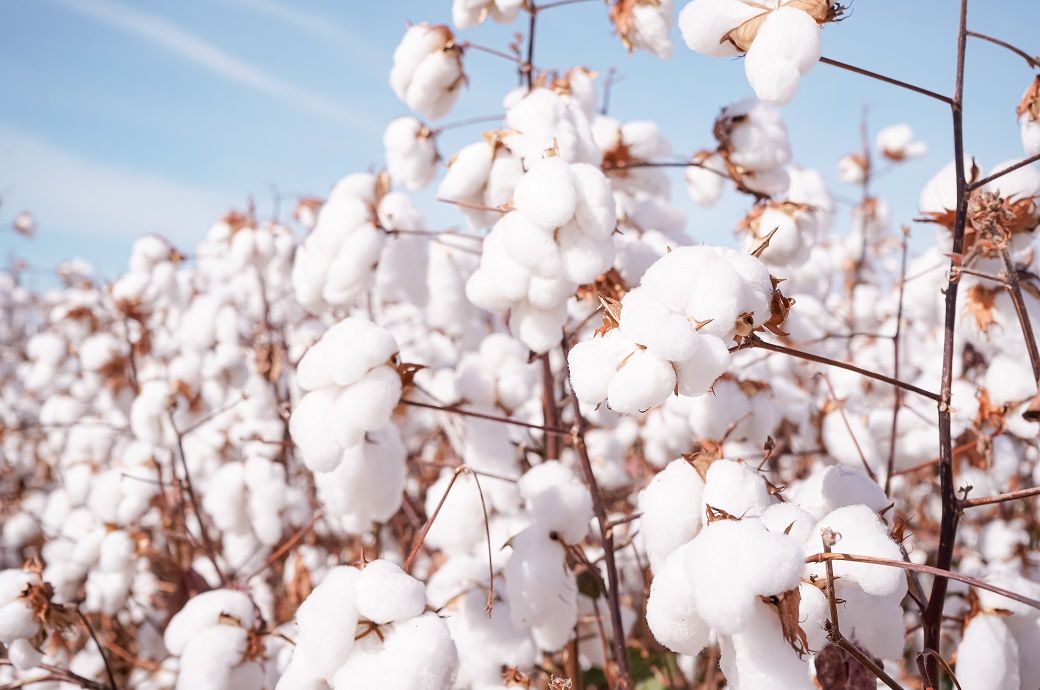
The Union Cabinet chaired by Indian Prime Minister Narendra Modi approved the Mission for Cotton Productivity for the period 2026–27 to 2030–31 to address declining growth, productivity bottlenecks and quality concerns in India’s cotton sector.
India approved a $595 million cotton productivity mission for 2026-31 to boost yields, quality and self-sufficiency amid rising cotton and yarn prices, tight domestic supply, and higher exports.
The plan focuses on better seeds, modern farming, traceability and processing, targeting higher output, improved productivity, and stronger global competitiveness.
The move comes as cotton yarn prices in key textile hubs such as Tiruppur and Mumbai have climbed sharply in recent days after cotton prices rose by ₹2,000-3,000 per candy. Traders said spinning mills were forced to raise yarn prices to offset higher raw material costs, while domestic supply remained limited because mills were increasingly prioritising exports. According to trade sources, Indian spinning mills are currently exporting nearly 60 per cent of their cotton yarn production compared to around 30 per cent a few months ago, tightening availability in the domestic market.
Against this backdrop, the government’s cotton mission aims to strengthen long-term self-sufficiency and global competitiveness in the sector under the 5F vision—Farm to Fibre to Factory to Fashion to Foreign.
The mission will focus on development of high-yielding, climate-resilient and pest-resistant cotton seeds, along with expansion of modern cultivation techniques such as High-Density Planting System (HDPS), closer spacing, integrated cotton management, and promotion of Extra Long Staple (ELS) cotton.
The government also plans to improve cotton quality through capacity building and modernisation of ginning and processing factories, alongside adoption of best processing practices. Cotton testing infrastructure across the country will be upgraded with modern and accredited facilities to support standardised quality assessment and global benchmarking.
A major component of the programme will be strengthening branding and traceability initiatives under Kasturi Cotton Bharat to position Indian cotton as a premium and sustainable fibre in global markets.
The mission additionally seeks to empower farmers through digital integration of mandis, enabling transparent price discovery, direct market access, and better price realisation through e-platforms.
The programme also includes promotion of cotton waste recycling and circular economy practices, while supporting diversification into other natural fibres such as flax, ramie, sisal, milkweed, bamboo, and banana to complement cotton production and align India’s textile sector with evolving global demand trends.
The mission will be implemented jointly by the Ministry of Agriculture and Farmers Welfare and the Ministry of Textiles. It will involve 10 institutes of the Indian Council of Agricultural Research (ICAR), one institute under the Council for Scientific and Industrial Research (CSIR), and 10 centres of the All India Coordinated Research Project (AICRP) on Cotton operating across major cotton-growing states.
Initially, 140 districts across 14 states will be covered through collaboration between state agriculture departments and ICAR. Around 2,000 ginning and processing factories will also be brought under the programme.
The government aims to increase cotton production to 498 lakh bales of 170 kg each by 2031 and raise lint productivity from 440 kg per hectare to 755 kg per hectare. Around 3.2 million farmers are expected to benefit from the initiative.
The mission also targets reducing cotton trash content to below 2 per cent under Kasturi Cotton Bharat certification and traceability initiatives, reinforcing India’s ambition to build a cleaner, premium-quality and globally competitive cotton ecosystem.
Fibre2Fashion News Desk (KUL)










Growth in output and new orders softened, with production nearing stagnation. New orders rose at the slowest pace in eight months, while export orders declined for a second straight month, reflecting a weaker trade environment, S&P Global said in a press release.
ASEAN manufacturing growth slowed in April, with the S&P Global Manufacturing PMI falling to a nine-month low of 50.7.
Output and new orders weakened, export sales declined further, and employment fell for the first time in eight months.
Supply chain pressures and rising operating costs intensified inflation.
Despite weaker momentum, firms remained optimistic.
Supply-side constraints intensified during the month. Delivery times lengthened to a 17-month high as firms increased purchasing activity, putting pressure on supply chains. As a result, inventories of both inputs and finished goods declined, indicating firms relied on existing stocks to meet demand.
Employment conditions also weakened, with staffing levels falling for the first time in eight months, albeit marginally. Meanwhile, backlogs of work continued to rise, suggesting capacity pressures persist.
Inflationary pressures strengthened further. Input costs rose at the fastest pace since March 2022, prompting firms to increase output prices at the sharpest rate in 49 months.
Maryam Baluch of S&P Global Market Intelligence said ASEAN manufacturing remained in expansion territory in April, though growth momentum weakened as output neared stagnation, demand softened, exports fell faster, and employment declined. She noted that price pressures intensified further amid rising operating costs.
“While manufacturing firms in the ASEAN region remain optimistic about continued production growth in the coming year, the overall trajectory will remain dependent on external factors, notably the ongoing conflict in the Middle East, which is also shaping the inflation picture,” added Baluch.
Fibre2Fashion News Desk (SG)
Affirming its ’Ba2’ rating, the agency said Vietnam’s institutional quality and governance were improving due to administrative, legal, and public sector reforms implemented since late-2024, and downside risks from US trade measures had eased compared with what was expected earlier.
Moody’s Ratings recently raised its outlook on Vietnam to ‘positive’ from ‘stable’, citing rising confidence in the country’s ability to strengthen its credit profile over the medium term.
Affirming its ’Ba2′ rating, it said Vietnam’s institutional quality and governance were improving due to reforms implemented since late-2024, and downside risks from US trade measures had relatively eased.
Moody’s emphasised that the country’s growth potential continues to be a primary anchor for its credit profile. This is supported by a diversified export base, recovering domestic demand and robust foreign direct investment (FDI) inflows, all of which provide a solid foundation for macroeconomic stability.
Vietnam has demonstrated a high degree of adaptability to global volatility like fluctuating energy prices, rising shipping costs and inflationary pressures stemming from geopolitical tensions. This resilience is underpinned by a stable economic foundation, a positive external balance and a highly diversified trade structure, it noted.
However, risks within the banking system, vulnerabilities in the real estate market and lingering institutional bottlenecks continue to serve as hurdles for a potential rating upgrade in the future, the rating agency cautioned.
Fibre2Fashion News Desk (DS)

He said the sharp increase in oil and gas prices has fuelled inflationary pressures, weighing on the country’s growth outlook. Despite the downgrade, the government expects economic recovery, projecting growth to rebound to 5 per cent in 2027 and average around 5.5 per cent annually through 2029.
Cambodia has lowered its 2026 growth forecast to 4.2 per cent from 5 per cent due to rising oil and gas prices amid Middle East instability and Thailand border tensions.
Inflationary pressures are weighing on the economy, though growth is expected to recover to 5 per cent in 2027.
Export-driven sectors and tourism remain vulnerable to global volatility.
Cambodia’s economy continues to rely heavily on exports of garments, footwear and travel goods, alongside tourism, agriculture and construction. Authorities cautioned that prolonged global uncertainty could further impact these key sectors and slow overall economic momentum.
Fibre2Fashion News Desk (CG)

Up to 150 former WHSmith high street stores to close

‘Project Freedom’: Trump pauses Hormuz escort mission at Pakistan, others’ request

Strait of Hormuz traffic will not normalize until late 2026: World Bank

A Brain Implant for Depression Is About to Be Tested in Humans

Pro wrestling star Steph De Lander reveals how colleague’s advice helped lead her to title triumph at ACW

‘I had £20,000 stolen and had to fight a 13-month fraud reporting rule to get it back’

-
 Tech1 week ago
A Brain Implant for Depression Is About to Be Tested in Humans
-
 Sports1 week ago
Pro wrestling star Steph De Lander reveals how colleague’s advice helped lead her to title triumph at ACW
-
Business1 week ago
‘I had £20,000 stolen and had to fight a 13-month fraud reporting rule to get it back’
-

 Entertainment1 week ago
Norway joins Type 26 Frigate Programme to boost NATO naval power
-

 Entertainment1 week ago
Melania Trump says ABC should ‘take a stand’ on late-night host Kimmel
-
 Business7 days ago
PSX plunges over 4,800 points | The Express Tribune
-

 Tech1 week ago
This Ambitious Laptop Doesn’t Leave Much Room for Your Hands
-

 Tech6 days ago
Almost half of UK businesses hit by cyber attacks | Computer Weekly