

Politics
Strait of Hormuz traffic will not normalize until late 2026: World Bank

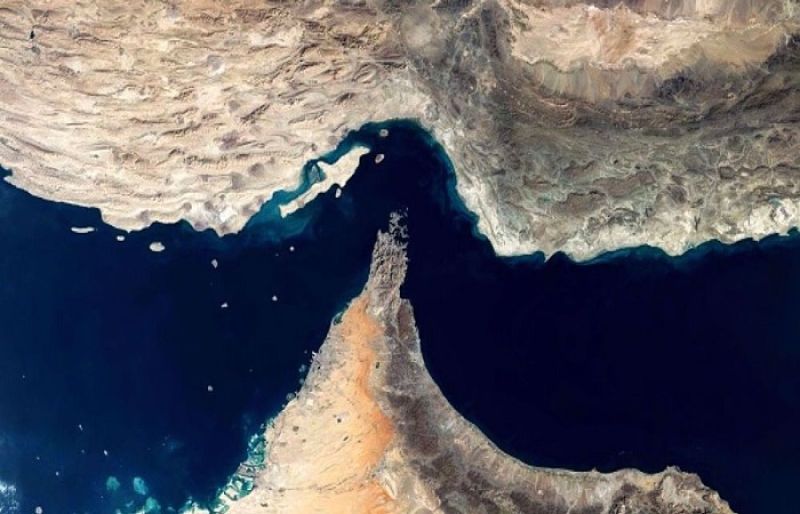
The World Bank has predicted that transportation through the Strait of Hormuz will not return to the levels prior to the US-Israeli aggression against Iran until late 2026.
In its latest report, the top bank further predicted that the average price of global commodities will rise by 16 percent this year.
According to the report, energy prices are likely to increase by 24 percent during the current calendar year, reaching their highest level since Russia’s invasion of Ukraine in 2022.
The World Bank noted that attacks on energy infrastructure and shipping disruptions in the Strait of Hormuz, which handles 35 percent of global seaborne crude oil trade, have caused the largest oil supply shock on record.
The US-Israeli aggression against Iran began on February 28 with airstrikes that assassinated senior Iranian officials and commanders, including Leader of the Islamic Republic Ayatollah Seyyed Ali Khamenei.
The Iranian armed forces responded by launching daily missile and drone operations targeting locations in the Israeli-occupied territories as well as US military bases and assets across the region.
Furthermore, Iran retaliated against the strikes by closing the Strait of Hormuz, which resulted in a significant increase in oil prices and its by-products.
In recent days, Washington has escalated its adventurism in the Persian Gulf and the Strait of Hormuz, where the US military’s presence continues to threaten regional stability and international energy routes.
Iran has repeatedly warned US warships against approaching the strategic waterway, with the Islamic Revolution Guard Corps (IRGC) maintaining firm control and showcasing its advanced asymmetric capabilities through regular missile and drone exercises.
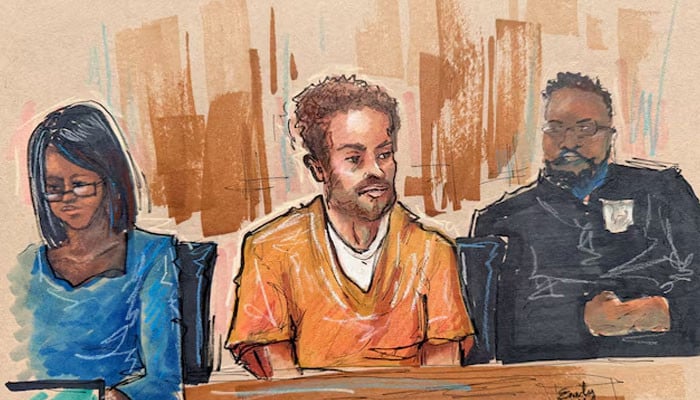

The US Department of Homeland Security identified the US-Israeli war with Iran as a potential motive for the man accused of attempting to assassinate President Donald Trump and senior members of his administration at a White House reporters’ gala last month, according to an intelligence report sent to state and local law enforcement nationwide and other federal agencies.
The report, a preliminary assessment by the Department of Homeland Security’s Office of Intelligence and Analysis dated April 27, assessed that the suspect Cole Allen had “multiple social and political grievances.” It concluded that the Iran conflict “may have contributed to his decision to conduct the attack,” citing social media posts from Allen that criticised US actions in the war.
The assessment sheds new light on the US government’s search for a motive in the foiled attack on the White House Correspondents’ Dinner on April 25.
Its conclusions, while preliminary, offer the most definitive evidence to date that the Iran conflict, which has killed thousands in the Middle East and rattled the global economy, could have been a trigger.
The report, marked as a “Critical Incident Note,” was obtained through open records requests by the transparency nonprofit Property of the People and shared with Reuters.
A DHS spokesperson declined to comment on the contents of the intelligence assessment.
“These reports notify our partners of the latest available information following significant incidents that have impacts to homeland security,” the spokesperson said.
The FBI declined to comment and the US Justice Department did not respond to requests for comment.
On Tuesday, the US Justice Department added a charge of assault on a federal officer, accusing Allen of firing at a US Secret Service agent at a security checkpoint, in addition to attempted assassination, discharge of a firearm during a crime of violence, and illegal transportation of a firearm and ammunition across state lines. He has not yet entered a plea.
FBI examines social media
US officials have so far said little about Allen’s alleged motivation, pointing only to an email Allen sent to relatives on the night of the attack. The message, which officials have called a manifesto, expressed anger at the administration and referred to his desire to target the “traitor” giving a speech, without mentioning Trump by name.
In court documents, prosecutors have alleged that Allen “disagreed” with Trump politically and “wanted to ‘fight back’ against government policies and decisions that he found morally objectionable.”
The FBI has been carrying out a detailed examination of Allen’s social media activity and digital footprint in searching for a motive for the attack, a senior law enforcement official told Reuters, speaking on the condition of anonymity.
“It’s being closely looked at,” the official told Reuters.
The examination includes a review of posts on a Bluesky social media account linked to Allen that posted and shared a range of anti-Trump messages in the weeks leading up to the attack.
The posts include criticism of the US actions in Iran but also broadsides against the Trump administration on immigration enforcement, Elon Musk, and Russia’s war in Ukraine.
The account shared a post calling for Trump to be impeached over his April 7 threat to destroy Iranian civilisation, which came hours before Trump agreed to a ceasefire. It also shared criticism of reporters who planned to attend the press dinner.
The FBI has also reviewed a 2024 post in which an account connected to Allen, while quoting a Bible verse, appears to call Trump “the devil” in response to a message from Trump’s daughter Tiffany.
The focus on Allen’s online activity is in part to stave off conspiracy theories about the motive and online activity of the suspected shooter, the official said, adding that speculation about the online activity of the man who fired at Trump during a 2024 campaign rally in Butler, Pennsylvania, had sparked widely spread conspiracy theories.
- FM Wang says China will work harder to ease Middle East tensions.
- Chinese FM says restart of hostilities in Middle East “unacceptable”.
- Beijing quietly engaging in efforts to resolve Middle East crisis.
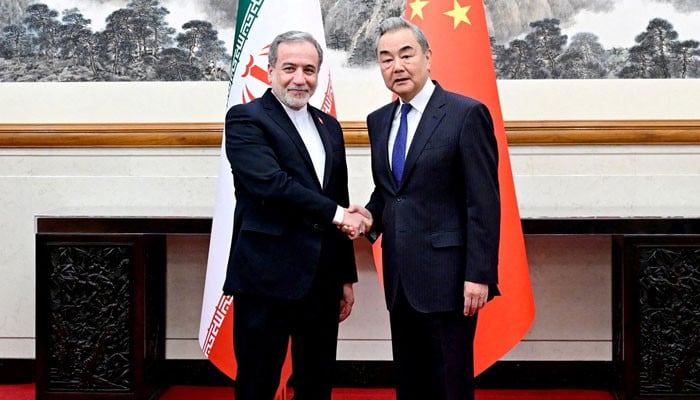
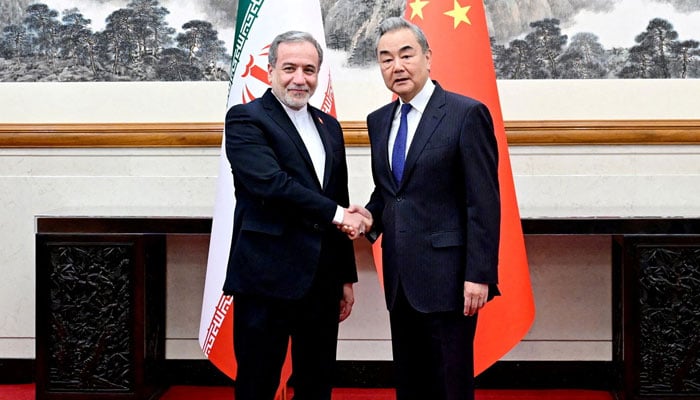
BEIJING: China’s Foreign Minister Wang Yi said Beijing would play a “greater role” in ending hostilities in the Middle East during talks with his Iranian counterpart on Wednesday, a week before US President Donald Trump is due to meet Xi Jinping.
China is a key customer for Iranian oil, defying sanctions imposed by the US, and is directly affected by the blockage of the Strait of Hormuz bordered by Iran.
Beijing has quietly engaged in efforts to resolve the weekslong crisis and its diplomacy is credited with playing an important role in the fragile ceasefire agreed between Washington and Tehran.
China “will work harder to ease tensions and end the fighting, continue to support the launch of peace talks, and play a greater role in restoring peace and tranquility to the Middle East”, Wang told Iran’s Abbas Araghchi in Beijing.
“China considers that a complete cessation of fighting must be achieved without delay, that it is even more unacceptable to restart hostilities, and that continuing to negotiate remains essential,” Wang said, according to a statement from his ministry after the talks.
Manufacturing giant China has been comparatively sheltered from fuel shortages thanks to oil reserves and renewable energy, but costs of oil-derived materials like plastic and fabric have risen significantly.
More than half of the crude imported by sea to China comes from the Middle East and mainly transits through the Hormuz strait, according to maritime analytics firm Kpler.
Analysts have warned the war’s impact on China will be felt for months.
During Wednesday’s talks Wang said China hopes “the parties concerned will respond as quickly as possible to the urgent call of the international community” for a resumption of normal and safe maritime traffic through the Strait of Hormuz.
Trump trip looms
The Wang-Araghchi talks came as Trump said the US would pause escorting commercial ships through the Hormuz Strait – which drew Iranian attacks – barely a day after it began doing so.
Trump cited a desire to reach a peace deal with Iran.
Washington demands tight controls on Tehran’s nuclear programme, which Iran has refused to agree to and has led to talks crumbling.
“On the nuclear issue, China welcomes Iran’s commitment not to develop nuclear weapons, while considering that Iran has the legitimate right to the peaceful use of nuclear energy,” Wang said.
The US leader is expected to meet Chinese President Xi in Beijing on a visit the White House said will take place May 14-15.
Beijing has not confirmed those dates.
A foreign ministry spokesperson again refused to share details when asked about Trump’s visit at a regular news conference on Wednesday.
Trump would join rulers from the Gulf, Europe and Southeast Asia that have recently landed face time with Xi, who has sought to position China as a stable partner in the face of the US- and Israeli-led conflict.
Trump’s visit would also come more than a year after his sweeping global tariffs wreaked havoc on the supply chain, causing chaos in China’s manufacturing sector.
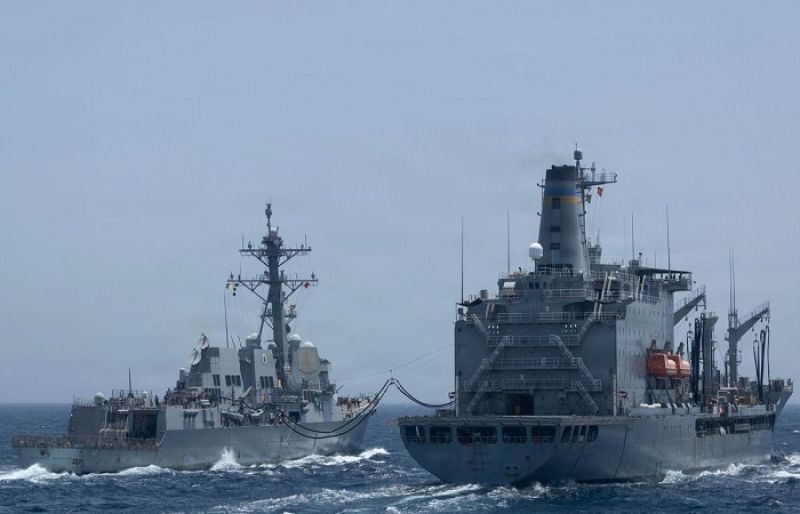
US President Donald Trump said on Tuesday he would briefly pause an operation, labelled as “Project Freedom”, to help escort ships through the Strait of Hormuz after a request from Pakistan and other countries, while citing “great progress” toward a comprehensive agreement with Iran.
Hours earlier, US Secretary of State Marco Rubio had outlined the effort that began on Monday to escort stranded tankers out of the Gulf. The strait has been virtually shut since the conflict began, blocking some 20% of world oil supplies and igniting a global energy crisis.
“We have mutually agreed that, while the Blockade will remain in full force and effect, Project Freedom … will be paused for a short period of time to see whether or not the Agreement can be finalised and signed,” Trump wrote on social media.
There was no immediate reaction from Tehran, where it was early on Wednesday morning.
Following the announcement, Prime Minister Shehbaz Sharif expressed gratitude to US President Trump for his “courageous leadership and timely announcement” regarding the pause in Project Freedom in the Strait of Hormuz.
“President Trump’s gracious response to the request made by Pakistan and other brotherly countries, particularly the Kingdom of Saudi Arabia and my dear brother Crown Prince and Prime Minister of Saudi Arabia Prince Mohammed bin Salman, will go a long way towards advancing regional peace, stability and reconciliation during this sensitive period,” he wrote on X.
PM Shehbaz noted that Pakistan remains firmly committed to supporting all efforts that promote restraint and a peaceful resolution of conflicts through dialogue and diplomacy.
“We are very hopeful that the current momentum will lead to a lasting agreement that secures durable peace and stability for the region and beyond,” he added.
Shortly after Trump’s post, US crude oil futures fell $2.30 and broke below $100 per barrel, a much-watched threshold since the conflict sent energy prices soaring two months ago.
The White House did not immediately reply to a request for comment on what progress had been made, or how long the pause would last.
Rubio and other senior administration officials said earlier on Tuesday that Iran could not be allowed to control traffic through the strait.
Iran has effectively sealed off the strait by threatening to deploy mines, drones, missiles and fast-attack craft. The United States has countered by blockading Iranian ports and mounting escorted transits for commercial vessels.
The US military said on Monday it had destroyed several Iranian small boats, as well as cruise missiles and drones.
Rubio says main operation is over
Rubio told reporters at the White House that the United States had achieved its objectives in its military campaign, which was launched on February 28 alongside Israel.
“Operation Epic Fury is concluded,” Rubio said. “We’re not cheering for an additional situation to occur.”
One of Trump’s central objectives in launching military strikes against Iran was to ensure Tehran does not develop a nuclear weapon, something Tehran has denied seeking. However, Iran has not handed over more than 900 pounds of highly enriched uranium.
While Rubio was speaking, Britain’s Maritime Trade Operations agency reported that a cargo vessel had been struck by a projectile in the strait. Further details of the incident were not immediately available.
US Defense Secretary Pete Hegseth said earlier on Tuesday that the US had successfully secured a path through the waterway and that hundreds of commercial ships were lining up to pass through. The four-week-old truce with Iran was not over, he added.
“Right now the ceasefire certainly holds, but we’re going to be watching very, very closely,” he said.
General Dan Caine, chairman of the US Joint Chiefs of Staff, said Iranian attacks against US forces fell “below the threshold of restarting major combat operations at this point”.
Asked what Iran would need to do to violate the ceasefire, Trump said: “They know what not to do.”
Pakistan’s mediation efforts continue
Pakistan has emerged as a key intermediary in efforts to revive dialogue, hosting high-level engagements between the two sides in Islamabad last month, though a second round of talks has yet to materialise.
The war has killed thousands as it has spread beyond Iran to Lebanon and the Gulf, and roiled the global economy. The head of the International Monetary Fund said on Tuesday that even if the conflict ended immediately, it would take three to four months to deal with the consequences.
Rubio said 10 civilian sailors were among those who had died in the conflict, adding that crew on vessels stranded in the waterway were “starving” and “isolated.”
Trump told reporters in the Oval Office that Iran’s military had been reduced to firing “peashooters” and Tehran wanted peace, despite public sabre-rattling.
The conflict is also pressuring Trump’s administration ahead of crucial midterm elections in November, as rising gas prices hit voters’ pockets.
Trump has said the US-Israeli attacks aimed to eliminate what he called imminent threats from Iran, citing its nuclear and ballistic missile programs and its support for Hamas and Hezbollah.
Iran has called the attacks a violation of its sovereignty and said that it has the right to develop nuclear technology for peaceful purposes, including enrichment, as a party to the Nuclear Non-Proliferation Treaty.
Diplomatic efforts to end the conflict have yet to yield results. US and Iranian officials have held one round of face-to-face peace talks, but attempts to set up further meetings have failed.
Iranian Foreign Minister Abbas Araqchi has said that peace talks were still progressing with Pakistan’s mediation.
He arrived in Beijing on Wednesday morning for talks with his Chinese counterpart on bilateral ties and regional and international developments, Iranian media reported. Trump is also due to visit China this month.


Mexico City Is Sinking. A Powerful NASA Satellite Just Exposed How Fast

Iran conflict may have motivated Trump dinner shooting suspect: report

Novo Nordisk CEO says the drugmaker is more active than ever in seeking out deals

Pro wrestling star Steph De Lander reveals how colleague’s advice helped lead her to title triumph at ACW

‘I had £20,000 stolen and had to fight a 13-month fraud reporting rule to get it back’

Norway joins Type 26 Frigate Programme to boost NATO naval power

-
 Sports1 week ago
Pro wrestling star Steph De Lander reveals how colleague’s advice helped lead her to title triumph at ACW
-
Business1 week ago
‘I had £20,000 stolen and had to fight a 13-month fraud reporting rule to get it back’
-
 Entertainment1 week ago
Norway joins Type 26 Frigate Programme to boost NATO naval power
-
 Business7 days ago
PSX plunges over 4,800 points | The Express Tribune
-

 Tech1 week ago
This Ambitious Laptop Doesn’t Leave Much Room for Your Hands
-

 Tech6 days ago
Almost half of UK businesses hit by cyber attacks | Computer Weekly
-
 Business1 week ago
BP profits more than double as oil trading booms amid Iran war
-

 Sports1 week ago
Match officials announced for HBL PSL 11 qualifier – SUCH TV