

Business
Labour must stick to Reeves’ fiscal rules to avoid market chaos, IMF warns

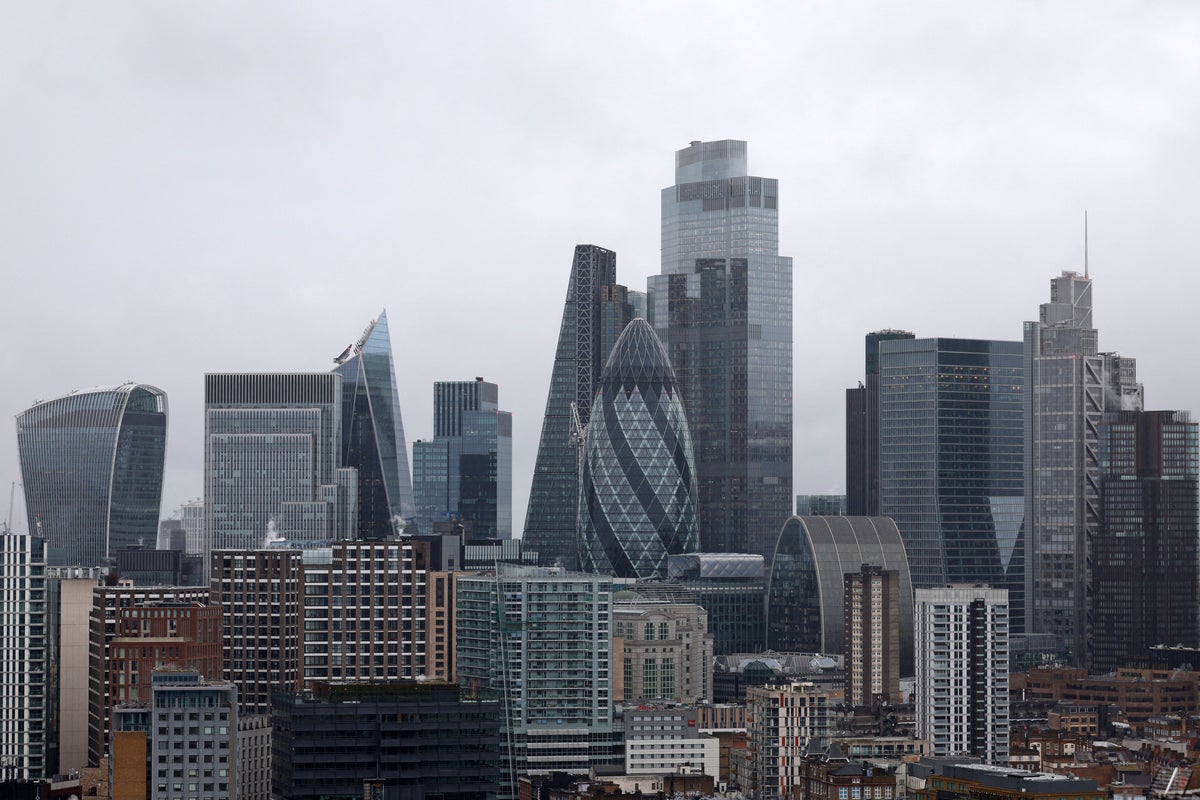
Britain must “stay the course” and stick to Rachel Reeves’ fiscal rules in order to avoid market pressures, the International Monetary Fund (IMF) has warned.
The IMF, which advises on policy and gives financial aid to member countries, backed the chancellor’s economic strategy amid what it called “domestic uncertainty” and global challenges in the wake of the US-Iran war.
It said the government’s medium-term approach “continues to strike a good balance” between deficit reduction and growth-friendly spending.
In its latest assessment, the IMG gave Britain’s economic growth outlook a modest upgrade, though conflict in the Middle East is dampening prospects, threatening rising living costs and borrowing rates.
“Staying the course on deficit reduction will be important given market pressures and elevated implementation risks,” it said.
It added: “Given elevated implementation risks, sticking to the planned deficit reduction and proactively developing contingency measures would help protect fiscal credibility.”
The UK’s borrowing costs hit a 28-year high last week, as City traders braced for a potential Labour leadership challenge from Andy Burnham.
The Greater Manchester mayor’s declaration that he would seek to return to parliament, paving his way for a leadership challenge, sparked speculation that a new Labour leader could increase spending and government borrowing.
In what may be seen as a thinly veiled attack on Labour colleagues trying to oust the prime minister, Ms Reeves said in response to the report: “Putting our stability at risk when signs of progress are emerging would leave families and businesses worse off.
“Instead, this government is getting on with the job of building an economy that is stronger, more resilient, and prepared for the future.”
She added: “The IMF upgrading its growth forecasts and backing our fiscal strategy is yet more proof that this government has the right economic plan.
“The choices I have made as chancellor mean our economy is in a stronger position as we deal with the costs of the war in Iran.”
The IMF now anticipates UK GDP will expand by 1 per cent in 2026, up from last month’s 0.8 per cent forecast, made after global energy shock warnings.
However, the forecast remains lower than the 1.3 per cent growth predicted in January, before the Middle East conflict escalated.
The latest update from the IMF comes after official figures showed the UK economy grew by 0.6 per cent in the first quarter of 2026, higher than economists were expecting and the strongest growth in a year.
However, the data showed signs of so-called “front loading” in March, suggesting that businesses and consumers were bringing forward activity ahead of expected shortages in supply or price increases.

Economists warned the pace of growth is set to stall throughout the year as the impact of the Iran war begins to show.
The IMF said the UK had been “resilient in recent years” but that the “war in the Middle East is dampening near-term prospects”.
It is projecting inflation to rise to just below 4 per cent at the end of 2026, before easing back in the second half of 2027 to fall to the 2 per cent target level by the end of the year.
Interest rates are expected to be held at their current level, 3.75 per cent, for the rest of the year, under the current outlook for energy prices.
This differs from some economists who are predicting an interest rate hike this year as they think the Bank of England will want to act to keep inflation under control.
“Once the energy price shock dissipates, growth should recover in the second half of 2027,” the IMF said on Monday.
But it added that the main risk to its forecasts was a “prolonged war in the Middle East, resulting in higher energy and food prices for an extended period, and sustained global market volatility, which would weigh on confidence and hurt economic activity”.

The shop can now make £2,000 in one day after moving to trade outdoors just one day a week.
Source link

Rupee continued its downward journey against the US dollar on Tuesday morning, falling 18 paise to 96.38 in early trade. This comes amid concerns around rising crude oil prices and ongoing Middle East tensions, that dragged down market sentiment.Since the Iran war began in late February, rupee has declined by more than 5%, trimming 2.2% in the recent week. In the previous session on Monday, rupee opened at 96.19 before slipping further to the record low of 96.39 against the US dollar. Last week, the currency had breached the 96-per-dollar mark on Friday before settling at an 95.81. Forex traders said that uncertainty in global markets has persisted due to simmering geopolitical tensions involving the US and Iran. They added that high crude oil prices are putting additional strain on emerging market economies such as India, as elevated import costs increase dollar outflows alongside ongoing foreign portfolio investor-related pressure. “We expect the rupee to trade with a negative bias amid a strong dollar and rising US treasury yields. Ongoing geopolitical tensions and FII outflows may also pressure the rupee. However, any intervention by the RBI and certain restrictions on the import of gold and silver may support the rupee at lower levels. USDINR spot price is expected to trade in a range of 96 to 96.60,” Anuj Choudhary, Research Analyst, Commodities Research, Mirae Asset Sharekhan, said. Exchange data showed that Foreign Institutional Investors remained net buyers for a third consecutive session on Monday, purchasing equities worth Rs 2,813.69 crore.Meanwhile, Dalal Street began the session on a positive note, with benchmark indices gaining 0.3% in early trading. Around 9:55, NSE Nifty50 stood at 23,682.40, up 34.90 points or 0.15%) while BSE Sensex jumped to 75,471.46, adding 156.42 points or 0.21%.

Most clothes are made in Asia, but new machines could bring some of that work back to the West.
Source link

Audlem Charity Shop boosts takings by moving outdoors

Duchess Sophie, Prince Edward make unexpected move at Chelsea Flower Show
No relief for rupee: Currency slips to 96.38 against US dollar amid Middle East tensions

-

 Entertainment6 days ago
Conan O’Brien hat tricks as Oscar host
-

 Tech1 week ago
Could Contact-Tracing Apps Help With the Hantavirus? Not Really
-

 Fashion6 days ago
Italy’s Zegna Group’s Q1 growth boosted by strong organic performance
-

 Entertainment1 week ago
Tom Brady gets back at Kevin Hart during Netflix roast
-

 Entertainment1 week ago
Martin Short: Facing tragedy with joy
-

 Sports1 week ago
Jacob Fatu unleashes vicious assault on Roman Reigns after World Heavyweight Championship loss at WWE Backlash
-

 Entertainment1 week ago
Martha Stewart: How to make an omelet
-

 Tech1 week ago
Papa Johns Is Getting Into Drone Delivery—but Not for Pizza