

Business
Business news live: FTSE 100 climbs, mortgage lenders raise interest rates


New product makes private investment accessible in pensions
Hargreaves Lansdown are to make it possible for those investing in SIPPs to access private markets for the first time.
Two Long-Term Asset Funds will be made available in partnership with Schroders so that investors can buy into the funds which focus on unlisted assets.
It should go live from mid-September and clients can invest if they have a minimum of £10,000 to put in.
SIPPs have significant tax relief advantages, while private market assets are typically less-liquid and can carry more risk for investors than some stock market-based assets.
Karl Matchett8 September 2025 13:00
Insurer Phoenix changing name to Standard Life next year
Insurer Phoenix Group has revealed plans to change its name to Standard Life as it looks to “bring its most trusted brand to the forefront”.
The firm – which has around 12 million customers and manages over £295 billion in assets under administration – said it would rename the group in March next year.
It comes after Phoenix bought the Standard Life brand in May 2021 following its purchase of Standard Life Aberdeen’s insurance arm in 2018 for £3.28 billion.
Karl Matchett8 September 2025 12:30
Four lenders who have raised mortgage rates
It’s a tricky time if you’re looking for a good mortgage rate with several lenders changing the deals upwards as of today.
- Halifax is raising fixed rates for homemover and first-time buyers products by up to 0.15%
- BM Solutions is raising rates on buy to let products fixed rates by up to 0.09%.
- The Mortgage Works has increased some five-year fixed rate buy to let products by up to 0.19%.
- HSBC are upping rates on some of their selected products too.
If you’ve been due for a remortgage deal, might be time to look at locking one in now.
Karl Matchett8 September 2025 12:00
Mortgage deals lasting only 17 days – and best deals may have gone
If you’ve been waiting to snap up a new mortgage deal (or complete on a house move) for improved rates, you might be disappointed.
Moneyfacts data shows mortgage deals were only on the market for an average of 17 days before being altered – and with swap rates now rising, the sub-4% battle looks to be over for now and some lenders have increased rates on their products already.
Affordability rules have been relaxed though so it’s worth checking in to see if your circumstances mean you can get a deal you couldn’t do previously, says Rachel Springall, finance expert at Moneyfacts.
“First-time buyers may feel it’s not quite the right time to get a mortgage if they are struggling with the cost of living. However, lenders have been relaxing their stress testing over recent weeks by boosting loan-to-income multiples, so some buyers might be surprised to find they could now get their first foot on to the property ladder. Affordable housing remains a key issue, so there is always more room to help first-time buyers, who remain the lifeblood of the mortgage market.”
Karl Matchett8 September 2025 11:39
JLR set for more disruption after hacks
Jaguar Land Rover could face at least another month of disruption as a result of the cyber hacks, one report states.
The Times write today that the company computer system is currently almost “useless” meaning that JLR are “without the ability to perform diagnostic tests”.
Services cannot be undertaken on cars therefore and the report says it will be “weeks” rather than days to fix matters.
£5m a day is the figure being put on the cost to profits while they fight the issue.
Karl Matchett8 September 2025 11:27
Biggest student loan on records nearly £300,000 – millions owe over £50,000
More than 2.6 million people have an outstanding UK student loan balance of over £50,000, according to data obtained from the Student Loans Company (SLC).
As of August 10 this year, the highest student loan balance on records was £299,645, according to figures obtained from the SLC following a freedom of information (FOI) request from Compare the Market.
Some 2,652,997 student loan customers had an outstanding balance of more than £50,000, the SLC said.
Karl Matchett8 September 2025 11:00
Mining firm aims to leap from AIM to main market
More market movement now and another gain expected for the main market on the London Stock Exchange.
Pan-African is a £1.4bn miner which is currently listed on the AIM, but now they intend to switch to the main. Their market cap would see them placed in the FTSE 250 – a similar size to Wizz Air or Curry’s, for example.
Cobus Loots, Pan African’s CEO, said:
“Our proposed listing on the Main Market of the London Stock Exchange represents a natural continuation of Pan African’s growth. Over the last decade, we have consistently grown both organically and through acquisitions whilst returning capital to our loyal shareholders. We are currently benefitting from the strong gold price environment which we expect will enable us to be fully de-geared (from a net debt perspective) during the course of FY26. We believe the proposed move from AIM to the Main Market will enable us to access a deeper pool of capital and enhance liquidity for the group as we continue our ambitious growth strategy.”
Karl Matchett8 September 2025 09:00
New IPO for London Stock Exchange
Project Glow Topco Limited, the ultimate holding company of The Beauty Tech Group Limited, announced their intention to join the main market of the London Stock Exchange.
The firm owns a range of at-home self care products which are tech-led. Last year the group reported revenue of £101.1 million.
“There are significant opportunities ahead for us and an IPO on the London Stock Exchange will provide us with access to capital, and enable us to raise awareness and incentivise staff to take the business to the next level,” said Laurence Newman, Founder and CEO of The Beauty Tech Group.
“I am very excited to embark on this next chapter as we look to build on our position as a trusted and recognised leader in the market.”
Karl Matchett8 September 2025 08:45
Number of job hunters rises at fastest rate since Covid
Recruiters have observed the steepest increase in available job candidates in nearly five years, a new report reveals.
The figures have been driven by rising redundancies and fewer employment opportunities.
This surge coincides with starting salary growth easing to its slowest pace in four-and-a-half years.
Karl Matchett8 September 2025 08:30
FTSE 100 rises, European markets strong
The FTSE 100 has started the week in positive fashion, rising 0.2 per cent this morning.
Out in front first thing is Marks & Spencer, the retailer up more than 3 per cent in early trading.
In France, there has been a lot of discussion about the state of their economy recently – the CAC 40 is up 0.5 per cent in a move mirrored across most of Europe.
Germany’s DAX is up 0.7 per cent with the Euro Stoxx 50 up 0.55 per cent.
Karl Matchett8 September 2025 08:19
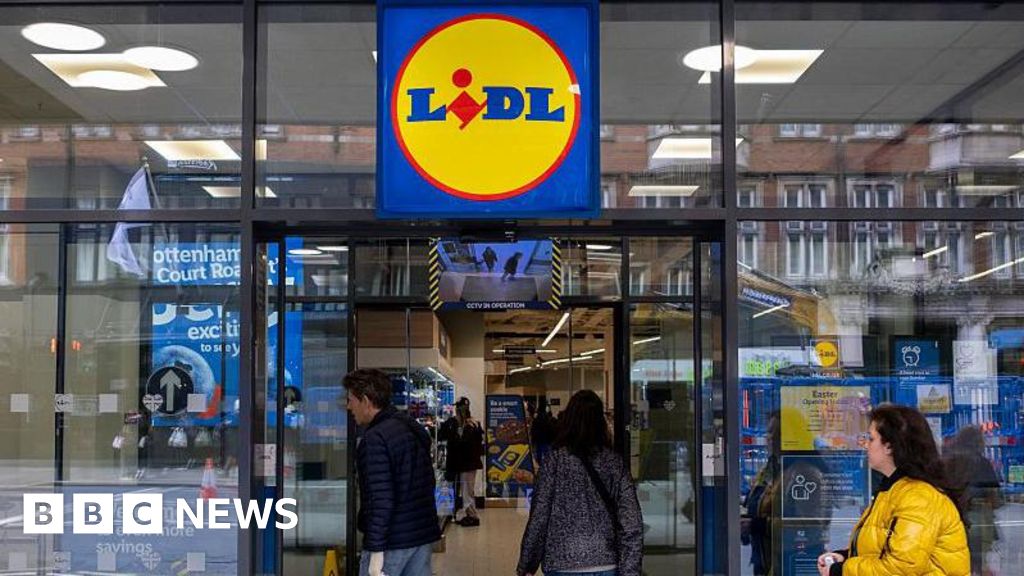
Under the changed system customers collect points rather than reward coupons, with £1 spent equalling one point.
Source link
Business
Sugarcane price hike: Govt raises FRP to Rs 365/quintal for 2026-27, farmers to benefit from higher returns – The Times of India

The government has increased the fair and remunerative price (FRP) of sugarcane by Rs 10 to Rs 365 per quintal for the 2026-27 season beginning October, PTI reported.The decision was approved by the Cabinet Committee on Economic Affairs (CCEA), chaired by Prime Minister Narendra Modi.“The FRP will be Rs 365/quintal for a basic recovery rate of 10.25 per cent,” Union Minister Ashwini Vaishnaw said after the meeting.The revised FRP is 2.81 per cent higher than the current rate of Rs 355 per quintal for the 2025-26 season.For every 0.1 per cent increase in sugar recovery above 10.25 per cent, the FRP will rise by Rs 3.56 per quintal, providing an incentive to mills for higher efficiency.To safeguard farmers supplying to mills with lower recovery rates, the government has decided that there will be no deduction in FRP for recovery below 9.5 per cent. In such cases, farmers will receive Rs 338.3 per quintal in the 2026-27 season.The production cost of sugarcane for 2026-27 has been estimated at Rs 182 per quintal, making the FRP 100.5 per cent higher than the cost.“Farmers are expected to get more than Rs 1 lakh crore,” Vaishnaw said.The move is expected to benefit nearly one crore sugarcane farmers, along with farm labourers and workers engaged in sugar mills.The FRP has been fixed based on recommendations of the Commission for Agricultural Costs and Prices (CACP) and consultations with state governments and stakeholders.The sugar sector supports the livelihoods of around five crore farmers and their families, and about five lakh workers directly employed in sugar mills, besides those involved in related activities such as transportation.Sugar mills are required to purchase sugarcane from farmers at the FRP or higher.Vaishnaw said the FRP has been increased every year over the past decade, and the latest revision will also support ethanol production from surplus sugarcane.On cane dues, he said that in the 2024-25 season, about Rs 1,02,209 crore, or nearly 99.5 per cent, of the total payable dues of Rs 1,02,687 crore had been cleared as of April 20, 2026.For the ongoing 2025-26 season, Rs 99,961 crore, or 88.6 per cent, has been paid out of total dues of Rs 1,12,740 crore.

Downing Street would not deny reports that Chancellor Rachel Reeves rowed with her US counterpart during a visit to Washington DC earlier this year.
Ms Reeves had an argument with Scott Bessent when she visited the US capital for the International Monetary Fund’s spring meetings, according to the Financial Times.
The Chancellor publicly criticised the US-led war against Iran before travelling across the Atlantic, prompting Mr Bessent to berate her on the sidelines of the gathering, the newspaper reported.
Ms Reeves reportedly hit back that she did not work for the US treasury secretary, and disliked how he had spoken to her, before reiterating her argument that America lacked clear goals going into the conflict and was not making the world safer.
On Tuesday, the Prime Minister’s official spokesman was asked if he would steer away from the reports, and appeared not to.
He did however insist Ms Reeves and her US counterpart have had “constructive” engagements since the Washington DC visit.
The spokesman said: “We would not get into private conversations. The Chancellor and the US treasury secretary have a good relationship.
“They have had constructive conversations together since the Chancellor’s visits to Washington.
“I think there is a readout from the US Department of Treasury, which made clear the productive nature of their relationship.”
The Chancellor emerged as one of the most outspoken UK Government critics of the US decision to go to war in Iran before travelling to the IMF meetings in April.
At the time, she described the war as a “folly” and said: “This is a war that we did not start. It was a war that we did not want.
“I feel very frustrated and angry that the US went into this war without a clear exit plan, without a clear idea of what they were trying to achieve.”


Oprah’s Book Club: Author Douglas Stuart reads “John of John” excerpt
Lidl’s loyalty card becomes less generous, shoppers say

Indian chief minister refuses to resign after election defeat to Modi’s BJP

-

 Tech1 week ago
A Brain Implant for Depression Is About to Be Tested in Humans
-

 Tech1 week ago
Almost 90% of women leave tech industry within 10 years | Computer Weekly
-

 Sports1 week ago
Pro wrestling star Steph De Lander reveals how colleague’s advice helped lead her to title triumph at ACW
-
 Business1 week ago
‘I had £20,000 stolen and had to fight a 13-month fraud reporting rule to get it back’
-

 Entertainment1 week ago
Norway joins Type 26 Frigate Programme to boost NATO naval power
-

 Entertainment1 week ago
Melania Trump says ABC should ‘take a stand’ on late-night host Kimmel
-

 Tech1 week ago
This Ambitious Laptop Doesn’t Leave Much Room for Your Hands
-
 Business6 days ago
PSX plunges over 4,800 points | The Express Tribune