

Sports
J.J. McCarthy’s game-day rituals: How eye black, meditation and Bob Marley get the Vikings QB ready

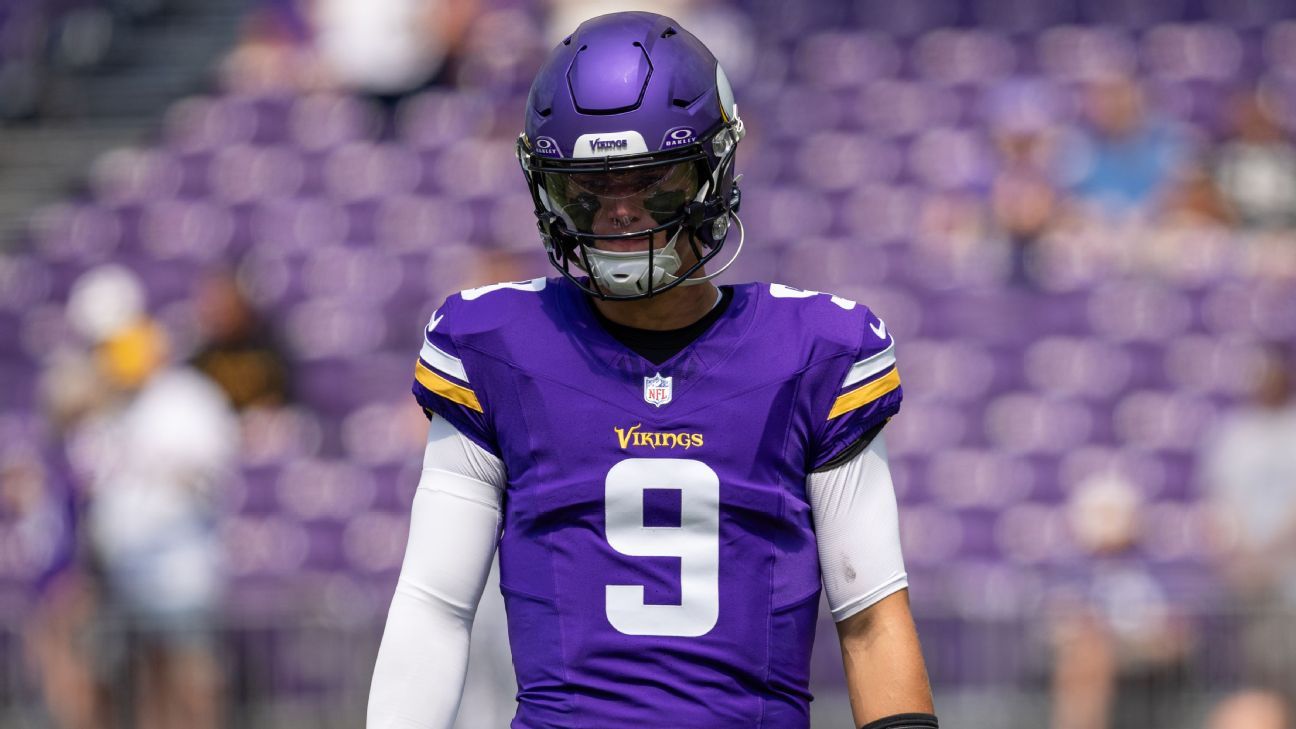
EAGAN, Minn. — In the minutes before kickoff Monday night, J.J. McCarthy and the rest of the Minnesota Vikings will retreat to their locker room for their final preparations to face the Chicago Bears (8:15 p.m. ET, ABC/ESPN). McCarthy will spend part of the time in front of a mirror, painting his cheeks with eye black to create an alter ego that has been nearly unbeatable since his days as a teenage quarterback at Nazareth Academy in Illinois.
“I kind of make this switch when game day happens,” McCarthy said. “That’s when the war paint comes on. It’s like I’m ready to die on that field, and I’m ready to do anything possible to get that win. It’s not going to look pretty, and it’s not going to look like someone just did my makeup for Halloween. It’s war paint.”
At 22, McCarthy is closer to his trick-or-treating days than any of the NFL’s 31 other starting quarterbacks. He is largely a mystery to the NFL audience after missing his rookie season because of a meniscus tear in his right knee. He has played 42 snaps and made 24 throws in two preseason games since the Vikings made him the No. 10 pick of the 2024 draft.
But the one fact on his résumé is that his teams almost always win. In two seasons at Nazareth (2018-19), one at IMG Academy (2020) and three at the University of Michigan (2021-23), McCarthy is 63-3 as a starter. He won an Illinois state 7A championship in high school and a national title in college.
McCarthy is only part of that team-wide success, but those who know him speak in reverential tones about his in-game moxie and competitiveness. Greg Holcomb, a Chicago-area quarterback trainer who first met McCarthy when the QB was in seventh grade, invoked one of the greatest basketball players during a recent discussion.
“There are so many things that take no skill whatsoever that can make you a really high-level football player,” Holcomb said. “You better have skill attached to it, but it’s the ones that have both of those things. It’s the Kobe Bryants of the world that are not only ultra-talented but are also so disciplined that they’re in the gym at 4:30 in the morning when they don’t have to be.
“J.J. has so many things in his toolbox that have nothing to do with his skill. He’s got both, so you’re looking at somebody who has the potential to be very elite. It’s almost like he’s got this eerie kind of aura about him that is just connected to success and winning.”
No one who watched the Vikings training camp this summer, or in 2024 before he suffered his injury, was reminded of Bryant. As often occurs with young quarterbacks, McCarthy produced his share of inaccurate passes, miscommunications and faulty decisions. Even so, many Vikings players acknowledged moments when they recognized the attributes that have helped McCarthy elevate teams on game day — and, in theory, can help him bridge the gaps while he continues his development.
“He definitely has the winning attitude, the dog mentality, just that killer mode,” receiver Justin Jefferson said.
Right tackle Brian O’Neill thought McCarthy’s best practices came on days when coaches inserted competitive elements, such as when the New England Patriots arrived for two days of workouts.
“I would not discount the fact that a lot of the times J.J — with whatever team he’s been on — tends to be a good version of himself on game day,” Vikings coach Kevin O’Connell said. “There’s a lot of guys that are talented. There’s a lot of guys that can light up the practice field every day, but the guys that can either take it to the game or maybe even be a better version of themselves in the game have the ‘gamer,’ or whatever tag you want to put on it. I think he’s got that trait.”
But, O’Connell added: “I think it’s important that he doesn’t just solely rely on that trait showing up to Soldier Field. I think he [needs to] pair that with the work that he puts in throughout the week.”
Face paint is one of several game-day rituals McCarthy says helps him prepare to compete. He knows that war analogies in sports can be excessive, and he doesn’t mean them literally. But during a conversation last week with ESPN, he used a proverb attributed to 17th-century Japanese writer Miyamoto Musashi to explain his game-day mindset: “It is better to be a warrior in a garden than a gardener in a war.”
McCARTHY HAS SPOKEN openly about his life with attention deficit hyperactivity disorder (ADHD), calling it his “superpower” and describing it as a condition that brings him “calm in the chaos and chaos in the calm.” Along the way, he has followed a game-day routine designed to amplify the productive elements of the condition.
The day begins with an extended version of his morning meditation. In trying to “stay as present as possible, grounded and centered,” he said he’ll rely on a variety of external stimulants. Sometimes, he’ll listen to a collection of audio tones called “963Hz.” Other times, he’ll listen to reggae icon Bob Marley. His favorite Marley tune is “Jamming.”
McCarthy also frequently uses a Shiftwave chair, a device he was first introduced to during his final season at Michigan and believes in so much that he invests in the company. Developed by former Discovery Channel host Mike North, a mechanical engineer who was searching for ways to heal a broken leg and balance his mental health, the chair is designed to apply vibrations as part of a biofeedback loop that responds to the body’s physical and mental state.
“The goal is very much putting a person into this kind of internal flow state,” North said, “where they’re able to freely flow between activate and go, and then relax, recover, reset. And so for someone like J.J., the ball snaps and you have to go. You want to be going a hundred miles an hour. But then the play’s over. You want to come down as fast as possible, think clearly, recharge, recover, and then prepare for the next play.”
McCarthy later reached out to North in hopes of learning more about how the chair works. It has multiple settings based on the circumstances, with programs that can last from five minutes to an hour.
“He told me his regimen and I wouldn’t have advised anything different for him,” North said. “It was perfect. And I was like, ‘Wow, you really understand this. You really intuitively figured out how to use this at its best.’ And I think J.J. is just an absolute superuser. He’s very tuned in. He is smart, aware, open. He’s just got this humble awareness that’s really remarkable. He’s a very enjoyable person to be around.”
The chair folds on top of itself, making it portable, and McCarthy carries it with him into the pregame locker room, even if it’s for only a few minutes of use during halftime. One way or another, however, he gets a final 10 or 15 minutes of meditation before the game begins.
JJ McCarthy reporting for work 🫡 @jjmccarthy09
📺: #LVvsMIN — 4pm ET on @NFLNetwork
📱: Stream on #NFLPlus pic.twitter.com/O751MZUoSm— NFL (@NFL) August 10, 2024
During his time at Michigan, McCarthy often conducted that meditation session in uniform while sitting under a goal post — a sight that reliably drew the attention of television cameras and photographers. In the NFL, however, he meditates in private.
“I felt like it got to be a distraction,” McCarthy said. “And that’s the last thing I want it to be. I don’t do it for a show. Obviously, I would love every kid in the world to learn how to meditate, but at the end of the day, I feel like it’s about getting the effects of that practice, not showing off the practice.”
WHAT TO MAKE of a 22-year-old quarterback who quotes 17th-century Japanese proverbs, carries a meditation chair and paints his face like a warrior? For one thing, it becomes easy to overlook how inexperienced he is in some of the basic elements of playing in the NFL.
Last Wednesday, for example, was McCarthy’s first regular-season practice as a professional. Because he was on injured reserve before the 2024 season began, he was ineligible to participate in practice — a fact that quarterback Carson Wentz learned in a hurry after signing as the team’s new backup Aug. 24. McCarthy immediately began peppering him with a series of first-day-of-class questions and later referred to him as “Coach Wentz.”
“He hasn’t even prepped for a game week in the NFL yet,” Wentz said upon his arrival. “So, he was talking about, ‘OK, what’s a normal routine? What time are we going to get there?’ All the things.”
Holcomb, the private quarterback trainer, compared McCarthy’s personality to P.J. Fleck, the University of Minnesota’s high-energy football coach.
“I had a chance to meet P.J. years ago,” Holcomb said, “and at first I was like, ‘There’s no way this dude is like this 24-7. It has to be an act.’ But all these years later, P.J. is still the same guy. J.J. has those same qualities. He’s almost, like, too happy sometimes. It can almost look obnoxious.”
Ultimately, a football locker room is an unforgiving place. Players can see through a performative façade if nothing exists behind it. In the NFL, the level of play is too high to count on good vibes and competitive spirit alone.
“It can’t be the only thing,” O’Neill said. “You can’t just show up with your eyes closed and then be like, ‘Well, I’m going to go out and ball on Sunday.’ This is the NFL and it doesn’t work like that. But I’ve felt that urgency from him [in practice] in terms of getting ready to go.”
O’Neill compared McCarthy to former Cincinnati Bengals receiver Tyler Boyd, O’Neill’s college teammate at Pitt. Boyd’s high school teams were 63-1 with four state championships.
“There was a pingpong table in the locker room, and Tyler was winning every damn time,” O’Neill said. “He just kind of reminds me of J.J. We have a basketball hoop here. J.J.’s winning every game of P-I-G that we play. There’s just something about true-live competition that I see a lot in both of those guys. His best stuff comes when there’s a big stage.”
That’s when the face paint comes out and the warrior arrives in the garden, so to speak. There have been two exceptions, however, when the moment required something different — and provided an intense example of McCarthy’s inner competitor.
McCarthy grew up a fan of Ohio State football and was crushed when coach Ryan Day did not offer him a scholarship. So, when he started for Michigan against the Buckeyes in 2022 and 2023, McCarthy played without face paint.
He later explained why to Holcomb, his private trainer.
“On game day,” Holcomb said, “he wanted Ryan Day to see his entire face when he beat him.”
And beat him he did, both times, by a combined score of 75-46.
Sports
Alex Vesia, Dodgers pitcher who lost infant daughter, gets standing ovation after scoreless return to mound
NEWYou can now listen to Fox News articles!
Perhaps for the first time in 2026, Alex Vesia felt some normalcy on Friday night.
The Los Angeles Dodgers pitcher made his return to the pitcher’s mound in his first Major League outing since his infant daughter died just five days after she was born.
Before the World Series, the left-hander left the team to deal with a “deeply personal matter” and did not pitch in the Fall Classic.
CLICK HERE FOR MORE SPORTS COVERAGE ON FOXNEWS.COM
Los Angeles Dodgers relief pitcher Alex Vesia celebrates after the seventh inning of a baseball game against the Arizona Diamondbacks, Friday, March 27, 2026, in Los Angeles. (AP Photo/Mark J. Terrill)
Days after the Dodgers won the World Series, he and his wife announced their infant daughter had died.
Vesia returned to the team during spring training and then entered the Dodgers’ game against the Arizona Diamondbacks in the seventh inning of a 4-4 tie.
It was quite the spot for Vesia to return, but given his 2.36 ERA over the last two seasons, it was no sweat. He left a runner stranded on second base and kept the D-Backs scoreless en route to the team’s 5-4 win over their division rival.
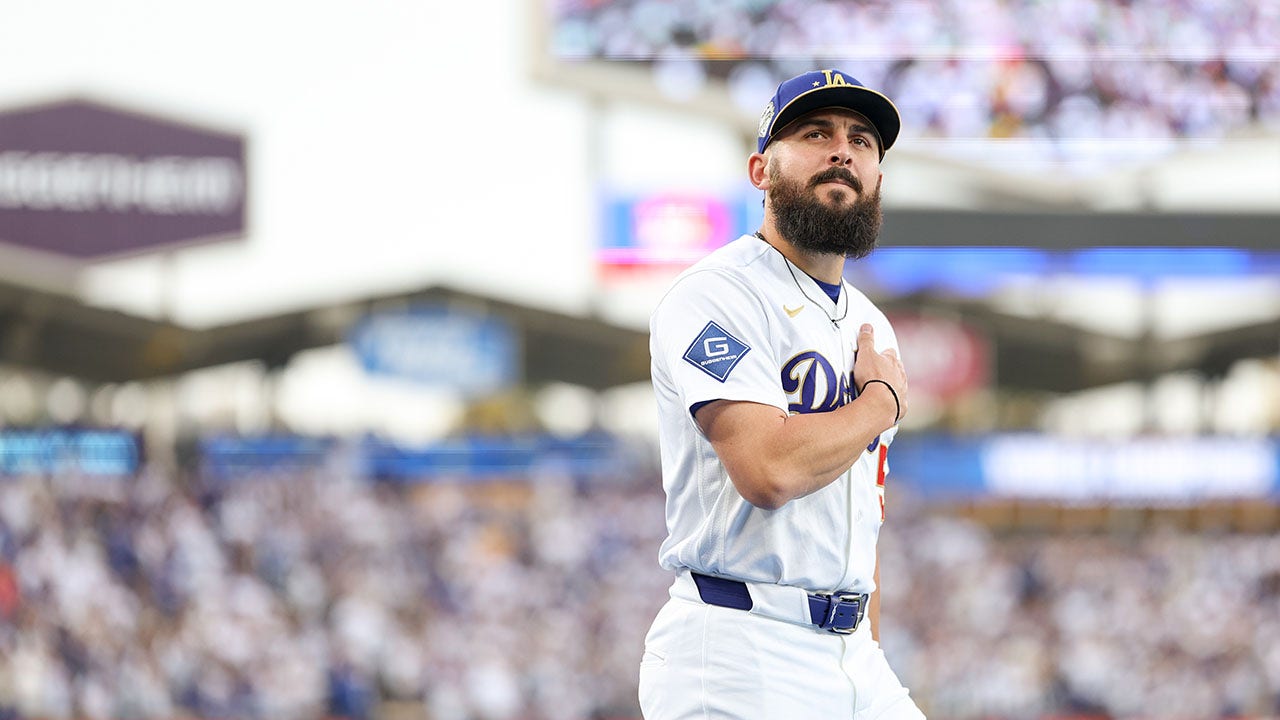
Vesia let out a yell and pointed toward the Dodgers’ family section while getting a standing ovation from the crowd.
Vesia was wearing a customized pink glove with his daughter’s name, Sterling Sol, stitched on it, along with her birthday and his wife’s first initial, K for Kayla, embroidered on the glove’s ring finger.
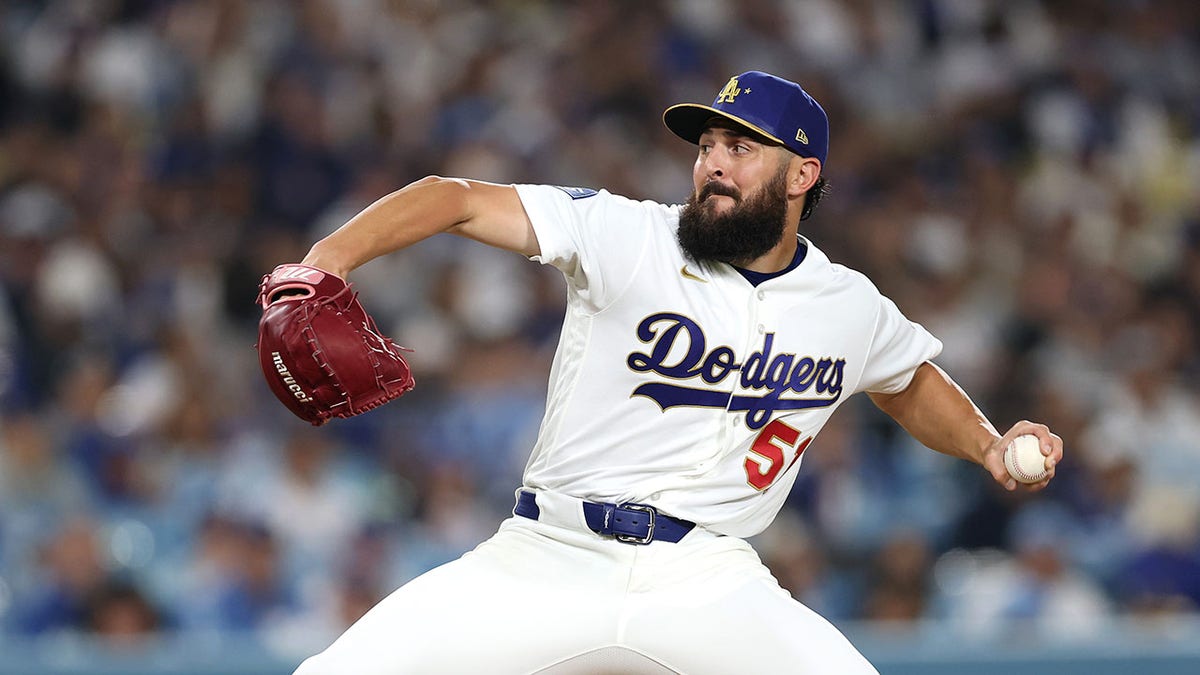
Alex Vesia of the Los Angeles Dodgers pitches against the Arizona Diamondbacks during the sixth inning at Dodger Stadium on March 27, 2026, in Los Angeles, California. (Luke Hales/Getty Images)
DODGERS PITCHER’S WIFE LIVES THROUGH ‘BITTER SWEET’ OPENING DAY MONTHS AFTER INFANT DAUGHTER’S DEATH
“What I would give to have my Sterling girl here, carrying her in my heart always,” Kayla said in an Instagram post earlier this week to celebrate a “bitter-sweet” opening day.
Sterling passed between Game 2 and Game 3 when the series was tied at one game apiece. During the Fall Classic, relievers from the Toronto Blue Jays wrote Vesia’s jersey number, 51, on their hats.
In his first news conference of the year in spring training, Vesia called his wife “the strongest person that I know” and “a support system for me every bit as much as I am for her.”
“Life can change in an instant. For us, 10 minutes is all it took,” Vesia said in February. “Sterling Sol was the most beautiful girl in the world. We got to hold her, change her diaper, read to her and love her. Our time together was far too short. Kay and I will keep those precious moments and memories to ourselves.
“Stepping away from the team, the brothers that I go to war with every day, was difficult, but it was also an easy decision because my family needed me. We still watched every pitch of the World Series, and for us in so many ways, that was a light in our darkness.
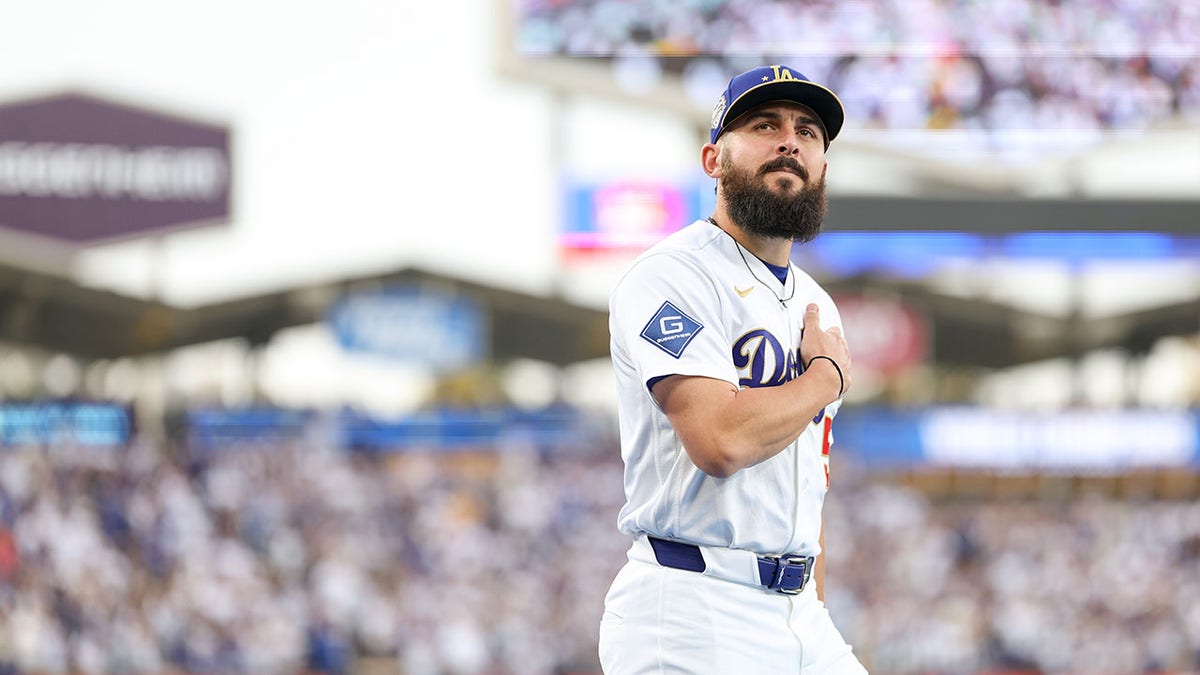
Alex Vesia of the Los Angeles Dodgers thanks the crowd during the 2025 Back-to-Back World Champions Ring Ceremony prior to the game between the Arizona Diamondbacks and the Los Angeles Dodgers at UNIQLO Field at Dodger Stadium on Friday, March 27, 2026, in Los Angeles, California. (Jessie Alcheh/MLB Photos via Getty Images)
CLICK HERE TO GET THE FOX NEWS APP
“I was not prepared to not bring my baby girl home, but we’re carrying her with us every day. It’s been hard, but we’re doing OK.”
The back-to-back reigning World Series champions are 2-0 to start the MLB season.
Follow Fox News Digital’s sports coverage on X, and subscribe to the Fox News Sports Huddle newsletter.
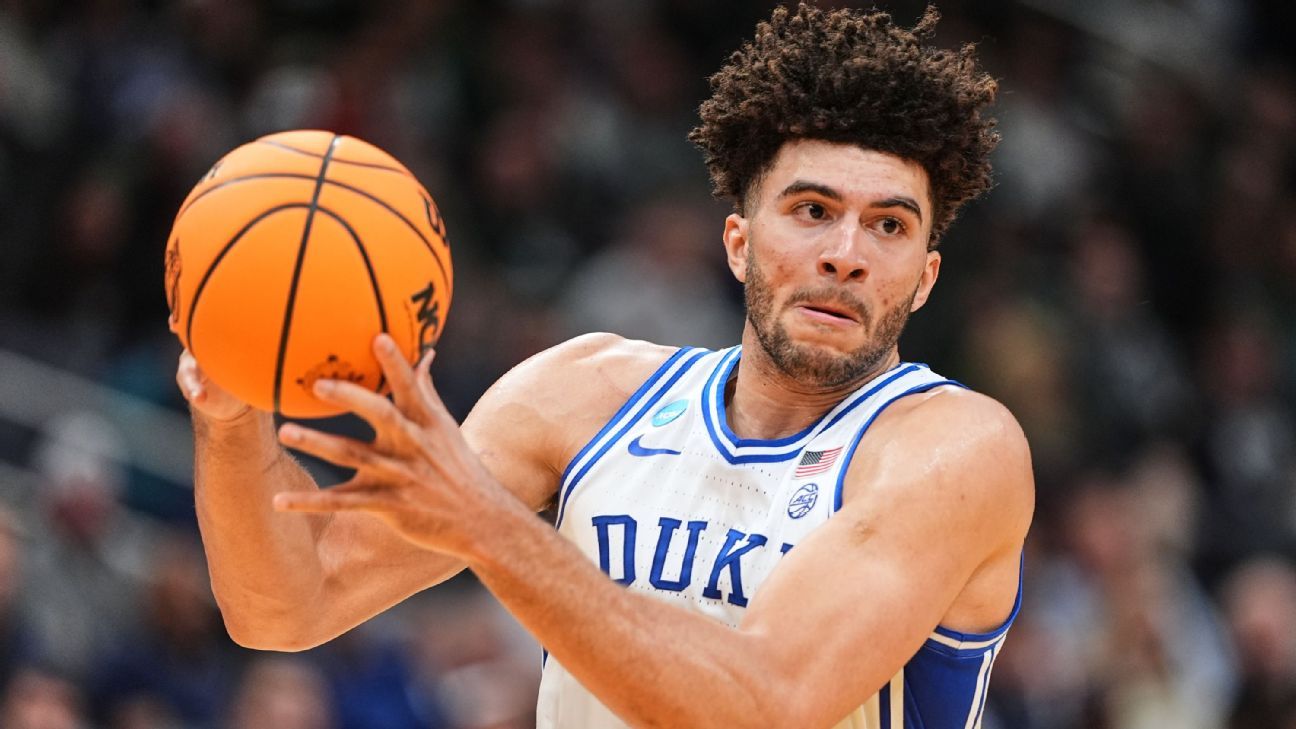
Five months into the 2025-26 season, only eight teams remain. Each team has a chance to go to Indianapolis to play in the Final Four, provided it wins one more game.
At the start of the campaign, many would have believed all of these programs had a chance to play in the penultimate weekend of the season — with the exception of 9-seed Iowa. But it might have been difficult to believe the way they all got here.
Duke played through major injuries to advance to the Elite Eight. Arizona is there without a singular star, but a team full of selfless standouts who can all lead the Wildcats in scoring on any night. Michigan has three players who are 6-foot-9 or taller in the starting rotation — a contrast to the small-ball era so many within the game have touted. Illinois is led by a freshman who was overlooked on the recruiting circuit and several European talents.
Then, there are those Hawkeyes — a team that was 3-7 in its last 10 games entering the NCAA tournament but has reached the Elite Eight for the first time in 39 years.
The truth is, however, that there’s a lot of chalk among the last eight teams. A ton of resilience, too. Let’s rank the squads in the Elite Eight.
All times Eastern
How the regional finals were set


1. Arizona Wildcats
Original seed: No. 1 (West)
Tournament results: Def. No. 16 Long Island 92-58 (first round); def. No. 9 Utah State 78-66 (round of 32); def. No. 4 Arkansas 109-88 (Sweet 16)
Arizona has been chasing greatness all season. The Wildcats not only handed John Calipari the worst NCAA tournament loss of his career in Thursday’s lopsided Sweet 16 win over Arkansas, but it was also the first time a team (Arizona) had 60 paint points and 30 free throws in a single NCAA tournament game since 2000, per ESPN Research. But that dominant effort against the SEC tournament champion is only new if you haven’t been watching college basketball. The Wildcats shot 50% from inside the arc in their season-opening win over Florida. They beat Alabama — one of the best offensive teams in America — by 21 points in December, with the Tide recording just 99 points per 100 possessions. There was a 23-point victory over Kansas in February and a 16-point triumph over Iowa State days later. The Wildcats have made a lot of statements to support the case that they’re the team to beat, the team that could be the last one standing because of its ability to play a complete game: Arizona is fourth in adjusted offensive efficiency and third in adjusted defensive efficiency. It’s also difficult for opponents to know who to target because of their depth. Veteran Jaden Bradley? Freshman star Brayden Burries? Freshman star Koa Peat — who, after a strong start to the season, faced a rough patch — is averaging 16.6 points through three NCAA tournament games.
Up next: vs. Purdue (Saturday, 8:49 p.m., TBS/truTV)

2. Michigan Wolverines
Original seed: No. 1 (Midwest)
Tournament results: Def. No. 16 Howard 101-80 (first round); def. No. 9 Saint Louis 95-72 (round of 32); def. No. 4 Alabama 90-77 (Sweet 16)
Three years ago, Dusty May didn’t want to leave Florida Atlantic because life was good in Boca Raton. He lived a few miles from campus and rode his bike to work every day. But the opportunity to lead a Big Ten powerhouse was too much to pass up, and he accepted the Michigan job in 2024. Even then, he didn’t leave it all behind. There’s a tie between the 2022-23 Owls, who made a run to the Final Four, and this year’s Wolverines, who are a win away from the school’s first run to the Final Four since 2018: interior defense. May’s FAU squad held opponents to a 46.6% clip in the paint, one of the top marks in America that season, per Synergy Sports. His Michigan team this season is clocking in at 48.9% in that metric. In Friday’s Sweet 16 win, it held Alabama — which entered the game ranked top three in offensive efficiency — to just 31 shots, 23 of which were 3-pointers. That’s a by-product of May’s suffocating interior defense, a staple of his best teams. And it’s proof the Wolverines aren’t just tough around the rim on defense; they make opponents think twice about trying to score in the post in the first place.
Up next: vs. Tennessee (Sunday, 2:15 p.m., CBS)

3. Illinois Fighting Illini
Original seed: No. 3 (South)
Tournament results: Def. No. 14 Penn 105-70 (first round); def. No. 11 VCU 76-55 (round of 32); def. No. 2 Houston 65-55 (Sweet 16)
Illinois proved with Thursday’s Sweet 16 win against Houston that it can reach a level on offense even the best defenses in America can’t stop. A 17-0 run early in the second half created separation between the two teams, with the Cougars spending the rest of the game trying to close the gap. David Mirkovic and Keaton Wagler became the first freshman teammates to record double-doubles in the NCAA tournament since freshmen became eligible for to play in the postseason in the 1972-73 season, per ESPN Research. But while Illinois’ offensive strength has been its most appealing quality, Brad Underwood’s team is a true national title contender because of its ability to stall opposing teams. Since the start of the Big Ten tournament, the Illini have been a top-25 defensive team nationally, per BartTorvik. They’re also eighth in the country in adjusted defensive efficiency and seventh in adjusted offensive efficiency since the start of the NCAA tournament. Those are important metrics to consider. Eight of the past 10 national champions were ranked top 11 in both categories. If balance is the ticket to a title, Illinois is in a good spot.
Up next: vs. Iowa (Saturday, 6:09 p.m., TBS/truTV)

4. Duke Blue Devils
Original seed: No. 1 overall (East)
Tournament results: Def. No. 16 Siena 71-65 (first round); def. No. 9 TCU 81-58 (round of 32); def. No. 5 St. John’s 80-75 (Sweet 16)
The close call against St. John’s wasn’t anything the Blue Devils hadn’t experienced: Remember the clutch effort late in a one-point win over Florida? Being tied with Michigan State near the two-minute mark not long after that? They had two tougher than expected games against Florida State in the regular season and in the ACC tournament. There was the battle with Michigan in Washington, D.C, too. Free throws sealed a win over Virginia in the ACC tournament title game. A first-round tussle with 16-seed Siena and a slow start against TCU in the second. The one constant through all of these tough games has been Cameron Boozer. He dominated at the high school, AAU and now the collegiate level. He provides his team with confidence in the most desperate situations and has the Blue Devils equipped to get through tough times — even if it’s someone else stepping up. Against the St. John’s in Friday’s Sweet 16 game, Caleb Foster somehow thrived (11 points on 5-for-7 shooting after halftime), despite having suffered a broken foot 20 days ago. Isaiah Evans (25 points) was brilliant. Maliq Brown (four blocks) did more to disrupt this game defensively than he’ll get credit for. And Cameron Boozer (22 points, 10 rebounds, three assists) was just Cameron Boozer. Nobody gets afraid on this team when adversity hits.
Up next: vs. UConn (Sunday, 5:05 p.m., CBS)

5. Purdue Boilermakers
Original seed: No. 2 (West)
Tournament results: Def. No. 15 Queens University 104-71 (first round); def. No. 7 Miami 79-69 (round of 32); def. No. 11 Texas 79-77 (Sweet 16)
Few coaches in college basketball have suffered the amount of basketball heartbreak as Matt Painter. In 2009-10, star Robbie Hummel suffered a season-ending injury late in the season that cost the Boilermakers a chance to compete for a national title. In 2019, former Purdue star Carsen Edwards scored 42 points and still couldn’t beat eventual champion Virginia in overtime. Painter once again reached the national title game in 2024 with Wooden Award winner Zach Edey — but ran into the bulldozer known as UConn on its way to its second straight national title. None of those Purdue squads, however, were as hot as this current crew. During the Boilermakers’ seven-game winning streak, Braden Smith is averaging 9.5 assists and Trey Kaufman-Renn looks like an All-American again while averaging 17.8 points. The group is second in adjusted offensive efficiency (60% from inside the arc, 38% from the 3-point line) during this stretch. And now Painter will have another shot at getting over the hump.
Up next: vs. Arizona (Saturday, 8:49 p.m., TBS/truTV)

6. UConn Huskies
Original seed: No. 2 (East)
Tournament results: Def. No. 15 Furman 82-71 (first round); def. No. 7 UCLA 73-57 (round of 32); def. No. 3 Michigan State 67-63 (Sweet 16)
Men’s college basketball has had a multitude of legendary coaches over the 60-plus years since John Wooden led UCLA in the 1960s and ’70s. Mike Krzyzewski won five national titles. Roy Williams retired with three. Rick Pitino has two rings with two different teams. Bill Self and Billy Donovan have a pair of championships. Hurley has a real chance to win his third national championship in four years, which would be an unprecedented feat in the modern history of the sport and a greater challenge than anything Wooden ever faced during his time. Because Hurley’s chasing this third title with a third different roster. The team that held off Michigan State on Friday night in the Sweet 16 does not resemble the teams he had in 2023 or 2024. Alex Karaban is the only holdover from those back-to-back title teams. There’s still a significant similarity between all three groups: They were all better when they played a free-flowing style, executed great defense and pushed the pace. It’s how the 2026 Huskies achieved an early double-digit lead over the Spartans and overcame a sloppy stretch in the second half. They also proved that, even with their recent lack of efficiency (they entered Friday ranked 74th in adjusted offensive efficiency since March 1), they can outlast and attack any opponent to advance.
Up next: vs. Duke (Sunday, 5:05 p.m., CBS)

7. Tennessee Volunteers
Original seed: No. 6 (Midwest)
Tournament results: Def. No. 11 Miami (Ohio) 78-56 (first round); def. No. 3 Virginia 79-72 (round of 32); def. No. 2 Iowa State 76-62 (Sweet 16)
It’s no secret that Texas decided Rick Barnes hadn’t kept up with the times and that the game had left him behind when the school fired him in 2015. His dismissal came after a string of first-weekend exits and a seven-year gap between his Elite Eight appearances. But when he accepted the Tennessee job that same year, Barnes — who has been a head coach since 1987 — didn’t change his philosophy. He has always believed smart shots, suffocating defense at every spot on the floor and a bruising approach to rebounding were the keys to victory and long-term success. He has coupled that attitude with a recognition that playmakers win games at the highest level. He found Dalton Knecht and Chaz Lanier in the transfer portal in back-to-back years. This year, his Vols are the top offensive rebounding team in America. Nate Ament is a projected lottery pick. Maryland transfer Ja’Kobi Gillespie has been Barnes’ most reliable addition. The formula has resulted in Tennessee’s third consecutive Elite Eight appearance.
Up next: vs. Michigan (Sunday, 2:15 p.m., CBS)

8. Iowa Hawkeyes
Original seed: No. 9 (South)
Tournament results: Def. No. 8 Clemson 67-61 (first round); def. No. 1 Florida 73-72 (round of 32); def. No. 4 Nebraska 77-71 (Sweet 16)
The 3-point line was introduced in Division I men’s basketball in the 1986-87 season by the NCAA’s rules committee. It was a wild idea at the time, from Ed Steitz, a member of the committee, whose research suggested it could revolutionize the game. That season, the Hawkeyes attempted 382 3-pointers — and made 39% of them. They went 5 for 11 from beyond the arc in their 93-91 Sweet 16 victory against Oklahoma that season. They’re now back in the Elite Eight for the first time in 39 years because they rediscovered the power of the 3. Ben McCollum’s group has already taken 818 shots from beyond the arc this season. Since March 11, nearly 50% of its field goal attempts have been 3s. It has made 37.4%, a top-40 mark nationally. Yes, the Sweet 16 win over Nebraska on Thursday was the result of the Hawkeyes’ resilience and second-half defense. But really, the only way they stayed close in the game was because of those 3s (13-for-30, 43%) — the same way the last Iowa team won this round.
Up next: vs. Illinois (Saturday, 6:09 p.m., TBS/truTV)
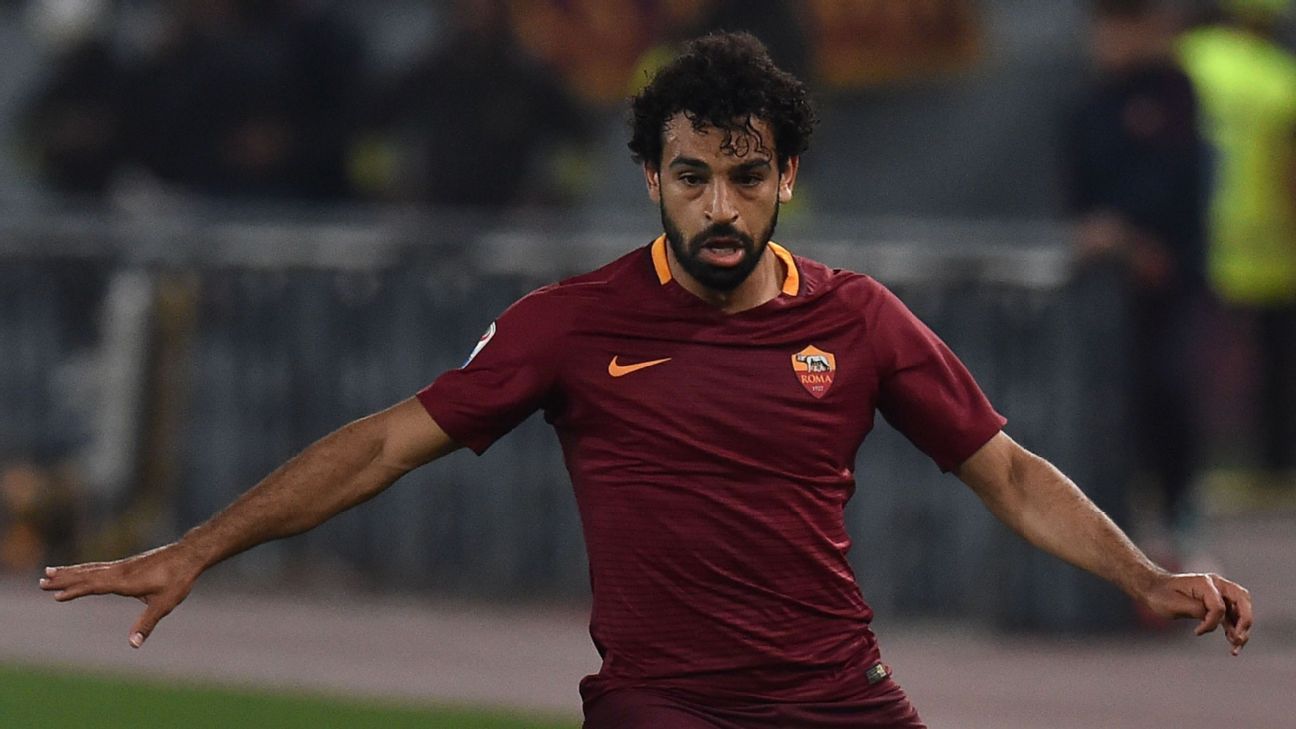
Mohamed Salah is considering a return to Roma when he leaves Liverpool in the summer, while Manchester United are on alert as midfielder Adam Wharton expects to leave Crystal Palace when the window opens. Join us for the latest transfer news and rumors from around the globe.
Transfers home page | Men’s winter grades | Women’s grades
TRENDING RUMORS
– Liverpool winger Mohamed Salah is considering a return to Roma when he moves on in the summer, as reported by Gazzetta dello Sport. Salah scored 34 goals in 83 games during a two-year stint but it will be difficult to complete a deal now as the 33-year-old earns a net €12 million-per-season, while Roma have set their cap at a net €4 million, but he could look to spend a year back in the Italian capital before deciding where to go next. Meanwhile, sources told ESPN that Al Ittihad have resumed work on a deal for the Egypt international and Al Qadsiah is the only other Saudi Pro League club capable of competing with them.
– Adam Wharton expects to leave Crystal Palace this summer amid interest from Manchester United, according to The Sun. The 22-year-old midfielder feels he is ready to make the next step in his career and wants to join a club playing in the Champions League. The Red Devils have also tracked Nottingham Forest‘s Elliot Anderson, Newcastle United‘s Sandro Tonali, Brighton & Hove Albion‘s Carlos Baleba and AFC Bournemouth‘s Alex Scott. In another report from The Sun, it is suggested that Brighton are softening their stance regarding Baleba after demanding £100 million for the 22-year-old’s transfer last summer.
– Liverpool want to bring in Bayern Munich‘s Michael Olise to replace Salah, amid interest from Real Madrid, reports Christian Falk. However, Bayern aren’t willing to let the 24-year-old leave even if an offer worth €200 million comes in, and he doesn’t have a release clause. The Bundesliga leaders also want to offer the France international a new contract even though his current deal runs until 2029.
– Manchester City midfielder Bernardo Silva is doing everything possible to join Barcelona when his contract expires in the summer, as reported by Sport. Barcelona have previously tried to sign the Portugal international during various transfer windows, but they now have doubts about the 31-year-old’s age and whether they need someone in the positions he operates best in. Barcelona sporting director Deco has asked for more time to make his decision, while Silva and his agent Jorge Mendes have indicated that they will be patient.
– Juventus are ready to make a move for Barcelona striker Robert Lewandowski, as reported by Gazzetta dello Sport. Juve have made enquiries to the 37-year-old’s entourage in recent weeks, with his contract expiring at the end of the season, and they travelled to Warsaw this week to watch Lewandowski score Poland‘s equalizer as his side came from behind to beat Albania 2-1. Juventus are evaluating him while also discussing a deal to extend Dusan Vlahovic‘s contract and try to sign Randal Kolo Muani, who is currently on loan at Tottenham Hotspur from Paris Saint-Germain.
EXPERT TAKE
1:42
Why does Liverpool’s Florian Wirtz play better for Germany?
Craig Burley reacts to Florian Wirtz’s performance in Germany’s 4-3 win over Switzerland.
OTHER RUMORS
– Newcastle United midfielder Bruno Guimaraes is likely to join Manchester United if Michael Carrick stays on as manager. (Football Insider)
– Liverpool could table an offer worth around €80 million to sign Nottingham Forest center back Murillo. (TEAMtalk)
– Manchester United are intrigued by the opportunity to sign Barcelona forward Ferran Torres. (TEAMtalk)
– Marcus Rashford is fully committed to making his loan from Manchester United to Barcelona permanent despite interest from Saudi Arabia and Aston Villa. (TEAMtalk)
– Manchester United have asked for updated information on Atalanta midfielder Ederson, although they haven’t taken any concrete steps towards a deal yet. (Rudy Galetti)
– Barcelona, Liverpool and Tottenham Hotspur are among the clubs tracking Roma center back Evan Ndicka. (Caught Offside)
– AC Milan want Genk attacking midfielder Konstantinos Karetsas, who has also received interest from Chelsea, Arsenal and Manchester United. (Tuttosport)
– AC Milan want to sign Fiorentina striker Moise Kean but will try to negotiate a formula for the deal rather than paying his €62 million release clause at one time. (Calciomercato)
– Having failed to sign Al Ittihad winger Moussa Diaby in January, Internazionale could find a deal easier to complete in the summer if the Saudi Pro League club signs Salah from Liverpool. (Gazzetta dello Sport)
– A decision on the future of Bayern Munich goalkeeper Manuel Neuer has been postponed, with a discussion expected to take place after the Bavarians have faced Real Madrid in the Champions League. (Christian Falk)
– Romelu Lukaku seems ready to leave Napoli after the World Cup. The striker has been approached by Saudi and Turkish clubs, while Anderlecht are also looking at a return. (Nicolo Schira)
– Internazionale’s search for a center back has resulted in them looking at Udinese’s Oumar Solet, Sassuolo’s Tarik Muharemovic and River Plate’s Lautaro Rivero. (Corriere dello Sport)
– Inter could offload Luis Henrique to free up the space and resources for them to sign Atalanta wing back Marco Palestra, who is currently on loan at Cagliari. (Gazzetta dello Sport)
– Real Betis are strong contenders to sign Dani Ceballos after the midfielder decided that he will leave Real Madrid. (Marca)
– Real Madrid and backup goalkeeper Andriy Lunin don’t plan to part ways, despite plenty of offers to sign him being expected in the summer. (AS)


Middle East crisis: Jubilant FoodWorks reports some Domino’s outlets affected by LPG shortage – The Times of India

Alex Vesia, Dodgers pitcher who lost infant daughter, gets standing ovation after scoreless return to mound

Men’s March Madness 2026: Ranking the remaining eight teams

-
 Business1 week ago
Flipkart group CFO to leave co amid IPO plans – The Times of India
-
 Business1 week ago
Video: The Effects of High Oil Prices
-

 Fashion1 week ago
China’s textile & apparel exports surge 17% to $50 bn in Jan-Feb 2026
-

 Sports1 week ago
Rating Adidas’ 2026 World Cup away shirts: Argentina, Spain, Mexico and more
-

 Sports1 week ago
American Conference Commissioner Tim Pernetti thanks Trump for Army-Navy game executive order
-
Tech1 week ago
The Corsair 4000D RS PC Case Keeps Your System Cool
-

 Tech1 week ago
‘Uncanny Valley’: Nvidia’s ‘Super Bowl of AI,’ Tesla Disappoints, and Meta’s VR Metaverse ‘Shutdown’
-

 Tech1 week ago
Gamers Hate Nvidia’s DLSS 5. Developers Aren’t Crazy About It, Either