

Sports
Travis Hunter effect is alive in the 2025 college football season

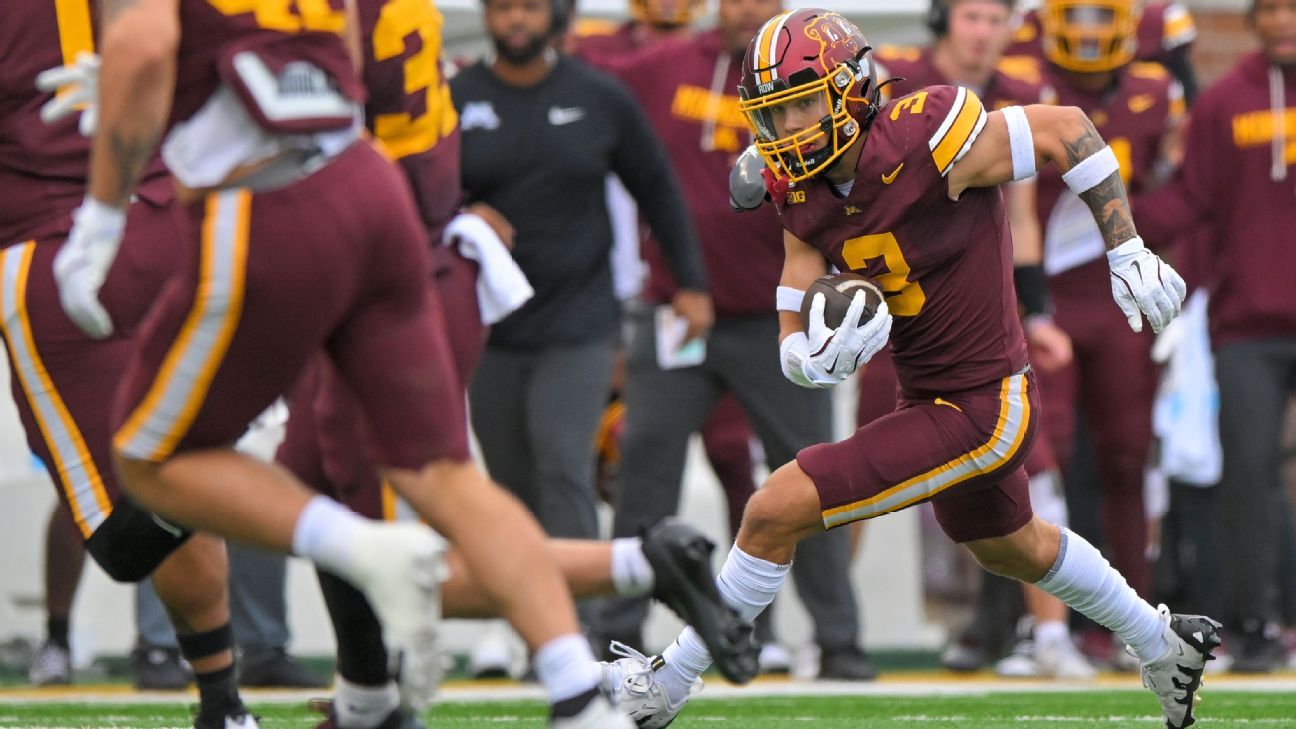
Utah‘s mission to reboot its offense started with adding a quarterback-coordinator combination from New Mexico, as Devon Dampier and Jason Beck made their way to Salt Lake City.
But the Utes also needed playmakers to surround Dampier. Their search led them to the transfer portal, naturally, but also to their own roster and, ultimately, to the other side of the ball.
Smith Snowden, who started at nickel in 2024 and had 10 passes defended, and linebacker Lander Barton, the team’s tackles leader in fall 2024 who had six passes defended, were the top options.
“Obviously Travis Hunter last year, the success he had, winning the Heisman [Trophy], that struck a chord with a lot of coaches, taking them through their roster: Who do we have that can contribute both ways?” Utah coach Kyle Whittingham told ESPN. “The bottom line is: What’s going to help you win games? It’s not the novelty of having a two-way guy. Who’s going to give us the best chance to win?”
Hunter’s surge to the 2024 Heisman at Colorado, while playing full time on both offense and defense, might have nudged coaches to expand their view of what was possible for the right players. Although Hunter did things not thought possible in the modern era of college football — he played 2,625 snaps in two seasons at Colorado, leading the FBS in both 2023 and 2024 — his success is already increasing opportunities for others.
Utah opened the season with a 43-10 win at UCLA, in which Snowden led the team in receiving and added a rushing touchdown while Barton caught a touchdown pass from Dampier. Safety Jackson Bennee also had a 17-yard reception. In Week 2, Snowden had two rushes, three catches and two tackles.
Your eyes do not deceive you… that is, in fact, CORNERBACK Smith Snowden scoring a rushing touchdown for @Utah_Football 👀#Big12FB | 📺 @CFBONFOX pic.twitter.com/Ih38m3CHze
— Big 12 Conference (@Big12Conference) August 31, 2025
“Travis Hunter really set the standard for it,” Snowden said. “He opened a lot of doors for younger athletes that can’t decide if they want to play offense or defense.”
Maybe they don’t have to anymore.
The Utes’ crew is among a small but growing group of players with the license to play both ways. Minnesota sophomore Koi Perich, a first-team All-Big Ten defensive back in 2024 who also stood out on returns, is carving out a bigger role with the Gophers offense. Vanderbilt defensive back Martel Hight, an All-SEC return specialist this past season, is on a similar path as a wide receiver.
They’re all occupying expanded roles, at least in part, because of the Travis Hunter effect.
“It’s starting to open up,” Hight told ESPN. “I’m pretty sure the coaches, they see guys doing it and it probably opens their eyes.”
DURING VANDERBILT’S WINTER conditioning session, Hight was running gassers — sprints across the width of the field — when Jerry Kill, a senior offensive advisor and chief consultant to coach Clark Lea, walked over.
“[Kill] grabbed me and said, ‘Hey, you’re going to be a starting receiver for me,'” Hight said.
Hight came to Vanderbilt as an ESPN 300 recruit and the nation’s No. 33 cornerback out of Rome, Georgia. Like many high school standouts, he played both defense and offense and even faced Travis Hunter when their Georgia high schools played.
“I scored on him, ran him over, he caught a pass on me my junior year, and it was a pretty good catch,” Hight said. “We’ve always kind of had this little back and forth. It was never any trash-talking or anything. We just kept it cordial.”
Hight, however, arrived at Vanderbilt with a clear role on defense. In 2023, he became the first freshman in team history to record a pick-six. He continued to display good ball skills on defense last year, while becoming a bigger factor on punt returns, averaging 14.7 yards with a touchdown, and earning second-team All-SEC honors. After the offseason interaction with Kill, Hight emphasized his desire to play offense to the coaches, and then began running routes with starting quarterback Diego Pavia in spring practice.
“I don’t know that we had quite the idea of how dynamic he could be for us at receiver until we started playing him there and realized that he’s really natural as a pass catcher and a route runner,” Lea said. “As we got out of spring, it was, ‘Hey, let’s see how we can take this a little further.'”
Lea reached out to new Jacksonville Jaguars coach Liam Coen, who selected Hunter at No. 2 in April’s NFL draft, about how they intended to use Hunter at the pro level. Kill, who led programs at New Mexico State, Minnesota, Northern Illinois and elsewhere during a 40-year career in college football, contacted Colorado coach Deion Sanders.
“We had a basis of understanding of what he did in college, what Jacksonville’s plan was for him in training camp,” Lea said. “But everybody’s different. We’ve got to look at Martel and think about where we think he can net out here.”
Other coaches made a similar point when asked about the effect Hunter will continue to have on college football. Hunter showed what is possible when given the chance to do it all, but very few can handle anywhere near the play load he took on at Colorado. Hunter famously logged 144 snaps in his Colorado debut at TCU, and eclipsed 120 the following week against Nebraska.
“He’s an anomaly, and you’ve got to understand that that’s not doable for 99.99% of the players,” Whittingham said of Hunter. “So going both ways is a relative statement, because if you go both ways but only play a total of 65 snaps a game, then that’s a normal workload.”
The challenge, then, is figuring out what each player can handle. Snowden played 22 snaps on both defense and offense in the opener at UCLA, as well as three on special teams.
If Utah had been in a closer game, he might have been out there more. Snowden said this past season, he averaged 55-60 snaps per game, almost all on defense.
“I could get to 70 [snaps],” he told ESPN last week. “It will vary game to game. I’m a defense specialist when it comes down to it, so defense is my position, and whatever the team needs on offense, I’m down.”
THOSE ATTEMPTING TO follow Hunter’s path this season have similar profiles.
“They’re primarily defensive guys, and they play some offense,” Whittingham explained. “It’s not very common to have it go the other way.”
Hunter came into college football as ESPN’s No. 2 recruit, and the top cornerback in the 2022 class. Although he broke the Georgia high school record for receiving touchdowns with 48 and had nearly 4,000 receiving yards, he projected as a top defensive back. Despite only 18 receptions his first college season at Jackson State, Hunter saw his receiving production spike at Colorado, and won the Biletnikoff Award as the nation’s top wide receiver this past season. As a high school senior, Minnesota’s Perich accounted for 27 touchdowns in 10 games — five on defense, four on returns and 16 on offense. He was rated as the top prospect from Minnesota and signed with the Gophers as the nation’s No. 172 recruit and No. 14 safety.
Perich made an immediate impact in 2024, becoming the first freshman in the FBS since at least 1976 to record five interceptions, at least 100 kickoff return yards and at least 100 punt return yards in a season. His 565 all-purpose yards, from returns and interceptions, ranked fourth on the team. As soon as the season finished, Minnesota’s coaching staff began carving out a role for Perich on offense.
Perich spent the spring working with both units, spending 70-75% of his time with the defense, but still attending some meetings with offensive coordinator Greg Harbaugh Jr. and co-coordinator Matt Simon. Through two games, Perich has two catches, five punt returns and five tackles.
“You can throw somebody out there and just throw him a deep ball and gimmick him, but is that really playing offense?” Minnesota coach P.J. Fleck told ESPN. “There’ll be certain [individual practice] periods dedicated to safety, certain periods where you come over and play wideout. He’s going to show me ultimately how much he can handle.”
Although Hunter’s talent set him apart, he also embraced the mental toil of toggling between position groups and learning as much as he could on both sides of the ball.
“There’s a burden in this with the player,” Lea said. “There’s a willingness that you don’t have any downtime in the building. You have to go all the time. He’s got to buy into that. Martel is so bright and confident on both sides, we’ve been able to really not hold back on anything.”
Syracuse coach Fran Brown recognizes the mental challenge as well, saying two-way hopefuls must learn an entire playbook and at least a few chapters of another. While other teams are exploring the option with more experienced players, Syracuse is assessing what it has with true freshman Demetres Samuel Jr., who is only 17 and was just 16 when he enrolled this winter.
An ESPN 300 recruit, Samuel has started Syracuse’s first two games and had eight tackles Aug. 30 against UConn. He hasn’t recorded a catch at wide receiver but is expected to have a role there.
“You can’t get down and frustrated when you don’t do well at first, you’re taking two tests, and we’re asking you to learn two things,” Brown told ESPN. “I tell him, ‘You’ve got to run. I don’t care that you just got out of that side, you’ve got to run. Up and down.’ He’s got a lot better at it lately. It takes time.”
As Minnesota and other programs decide how to divide the time for their two-way players, they must weigh what they’re gaining on offense with what they could lose on defense.
“You don’t want to do anything that starts the law of diminishing returns,” Fleck said.
Snowden and Barton were two of Utah’s most productive defenders in 2024. Barton led the Utes in tackles with 72, while Snowden had a team-high eight pass breakups. They were two of three Utah players with multiple interceptions, and each recorded a forced fumble.
Late in the season, Barton provided one of Utah’s top defensive highlights against Iowa State, catching a deflected pass, wriggling free of quarterback Rocco Becht‘s tackle attempt and then sprinting down the sideline for an 87-yard scoring return.
“My theory has always been, you master one position before you even think about playing both ways,” Whittingham said. “It’s not fair to play a guy two ways unless he has a substantial grasp of one side of the ball first. Those guys are experts at defensive play and their assignments. So really, the learning curve is on the other side.”
Minnesota’s coaches organized Perich’s schedule with efficiency in mind. Defensive coordinator Danny Collins said that Perich might get the ball thrown to him on the first play of a practice period on offense and then spend the rest of the time on defense. Or he’ll alternate between offense and defense, much like Hunter did at Colorado.
The Gophers’ depth in the secondary made the plan a bit easier to sell to Collins.
“At first, it was like, ‘Whoa, whoa, whoa, let’s hold on: This is an All-Big Ten safety,'” Collins said. “But at the same time, he’s a tremendous athlete. When the ball is in his hands, special things are going to happen, whether he’s picking it off, whether it’s a punt return. And then you think about, ‘OK, we can put him on offense and get the ball in his hands, now that’s going to help the whole team.'”
WHEN MAPPING OUT the plan for Perich at Minnesota, Fleck watched a lot of Colorado film. His goal wasn’t necessarily to identify a direct comparison, but rather to assess how the Buffs used a distinct talent like Hunter.
“In the new world, that’s the only one you get to look at,” Fleck said of Hunter. “Like, what athlete did it besides Travis Hunter? I don’t see it being trendy, because it’s too hard to be trendy. It takes a really special athlete in a really unique situation that fits. That’s what we have in Koi.”
In his NFL debut, Hunter became the second NFL player in the past 10 years to play at least 30 offensive snaps and five defensive snaps in the same game. Whether he sparks a true trend of two-way players remains to be seen. What’s clear is he has at least cracked open the door for others to try.
Like Kill at Vanderbilt, Brown also contacted Sanders about Hunter’s workload and how he approached such an added workload.
“It’s really hard,” Brown said. “People will try to go down that road. But Coach Prime is a special guy. It takes somebody special like Travis to truly, truly do it. I think Demetres has that chance.”
Hight doesn’t need much prodding about the chance to play more on offense. When he arrived at Vanderbilt, former defensive backs coach Dan Jackson floated the possibility of him taking some snaps with the offense.
After two seasons, though, he didn’t think it was going to happen, which has made this fall even sweeter.
“Honestly, I can play all day,” he said. “I’m like an energetic ball on the field. I’m having so much fun being there with the guys. I don’t really have a number [of snaps]. I’ll go until my heart stops.”
Hight thinks the more players who show they can be reliable options on both sides of the ball will reduce teams’ reliance on the transfer portal to address specific needs, like at wide receiver. But will there be a limit on how many teams explore the two-way track?
“It’s always going to be rough because you’re playing two years of football in one,” said an assistant coach from a top 10 team. “If you’re on a team that’s actually really good, it’s hard to see a guy doing part time at a position and then be better than a guy who’s doing full time.”
Lea has often thought about Hunter since exploring a two-way role for Hight, and how much the Colorado star truly influenced Vanderbilt’s decision. Ultimately, Lea kept coming back to an enduring truth about personnel.
“We can’t afford to not have our best 11 out on the field,” he said.

NEWYou can now listen to Fox News articles!
IndyCar rookie Caio Collet was involved in a terrifying crash toward the end of the Indianapolis 500 on Sunday afternoon with Felix Rosenqvist and Pato O’Ward fighting for first place.
Collet got loose in Turn 2 at Indianapolis Motor Speedway and overcorrected just enough to send his vehicle into the wall. His right rear caught fire as he skidded down the track and onto the grass.
ZERO BS. JUST DAKICH. TAKE THE DON’T @ ME PODCAST ON THE ROAD. DOWNLOAD NOW!
Caio Collet drives a Combitrans AJ Foyt Enterprises Chevrolet through turn three during practice on Miller Lite Carb Day at Indianapolis Motor Speedway in Indianapolis, Ind., on May 22, 2026. (Michael Allio/Icon Sportswire)
Emergency personnel came over to put the fire out and help Collet out of his car.
He was able to walk away from the scary wreck, but track officials called for a red flag. The red flag stopped the race and gave drivers a breather for what would be a total shootout for the final few laps.
CLICK HERE FOR MORE SPORTS COVERAGE ON FOXNEWS.COM

Caio Collet leads the field during the Indianapolis 500 auto race at Indianapolis Motor Speedway in Indianapolis on May 24, 2026. (Michael Conroy/AP)
Collet will fall down the leaderboard as he didn’t finish the race.
The A.J. Foyt Racing driver was making his first appearance in the Indy 500. He graduated into the NTT IndyCar Series after finishing second in the Indy NXT Series last year. He won three races on the Indy NXT Series in 2025.
The Brazilian came into the race in 21st place in the IndyCar standings with 70 points through six starts. He has yet to finish in the top 10 in his first season.
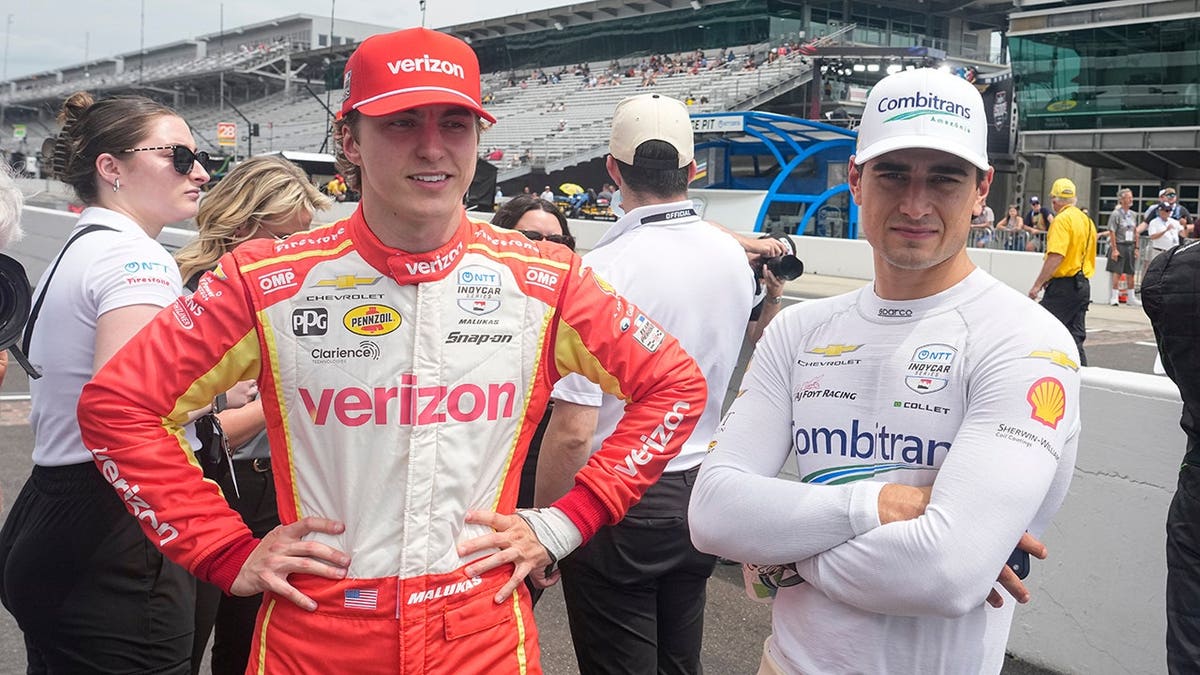
David Maluka talks with Caio Collet before practice for the Indianapolis 500 at Indianapolis Motor Speedway in Indianapolis on May 18, 2026. (Michael Conroy/AP)
CLICK HERE TO DOWNLOAD THE FOX NEWS APP
The 2026 Indy 500 already featured more than 50 lead changes and was one of the more competitive events in recent memory.
Felix Rosenqvist won the race on the final lap.
NEWYou can now listen to Fox News articles!
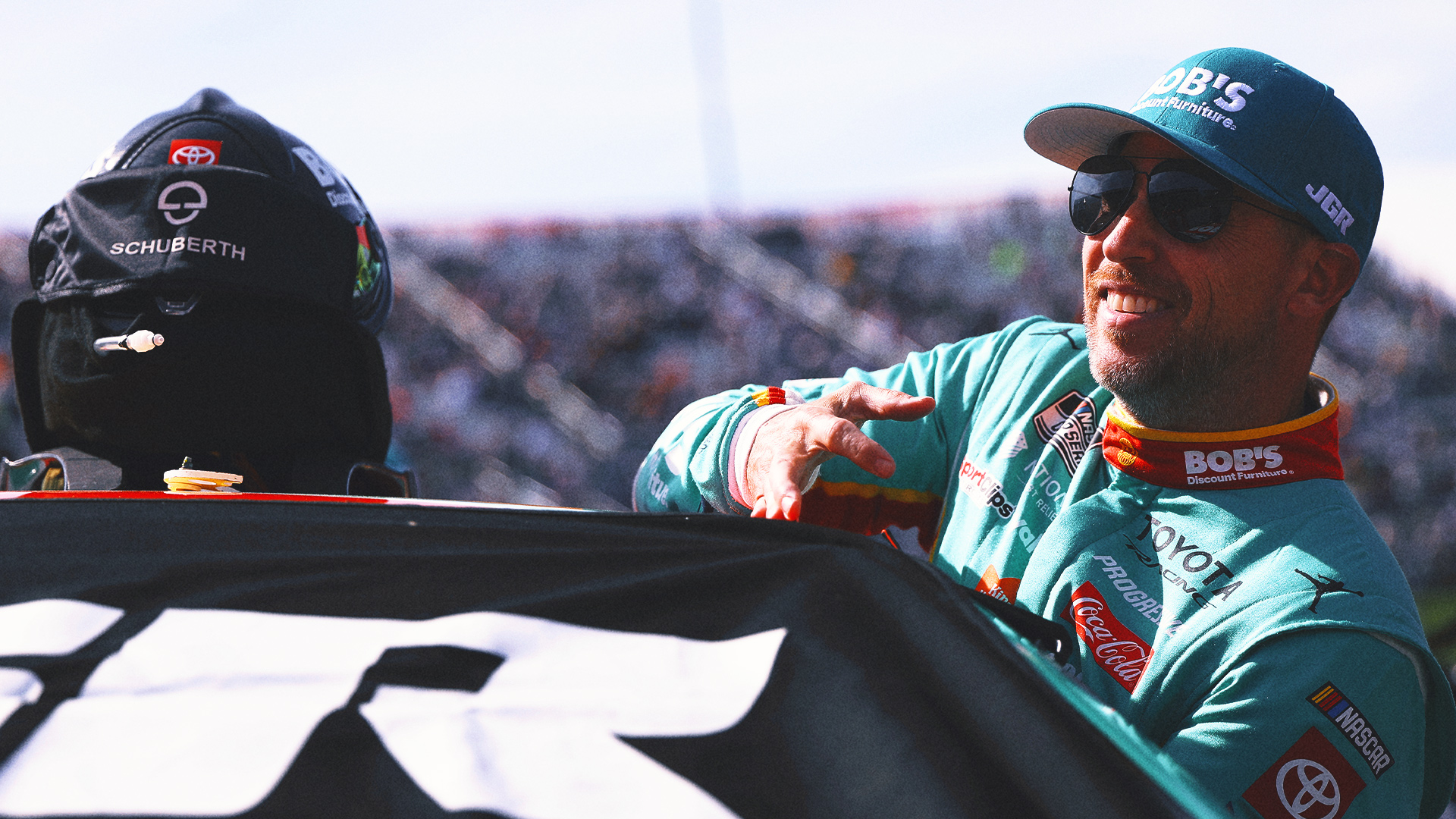
When the NASCAR Cup Series went to Charlotte for the Coca-Cola 600 in 2025, Ross Chastain got into Victory Lane after closing at +1800 to be the outright winner.
Chastain’s impressive win came after leading only eight laps on the day.
Which driver will take the checkered flag when the series goes back to Charlotte Motor Speedway on Memorial Day Weekend for one of NASCAR’s Crown Jewels?
Here are the odds at DraftKings Sportsbook as of May 24.
This page may contain affiliate links to legal sports betting partners. If you sign up or place a wager, FOX Sports may be compensated. Read more about Sports Betting on FOX Sports.
NASCAR Cup Series Coca-Cola 600
Denny Hamlin: +380 (bet $10 to win $48 total)
Tyler Reddick: +500 (bet $10 to win $60 total)
Kyle Larson: +800 (bet $10 to win $90 total)
Christopher Bell: +800 (bet $10 to win $90 total)
Chase Briscoe: +1000 (bet $10 to win $110 total)
William Byron: +1100 (bet $10 to win $120 total)
Carson Hocevar: +1100 (bet $10 to win $120 total)
Ryan Blaney: +1400 (bet $10 to win $150 total)
Chase Elliott: +1400 (bet $10 to win $150 total)
Brad Keselowski: +1800 (bet $10 to win $190 total)
Ty Gibbs: +2000 (bet $10 to win $210 total)
Ross Chastain: +2200 (bet $10 to win $230 total)
Chris Buescher: +2500 (bet $10 to win $260 total)
Bubba Wallace: +2800 (bet $10 to win $290 total)
Alex Bowman: +2800 (bet $10 to win $290 total)
Austin Dillon: +4000 (bet $10 to win $410 total)
Joey Logano: +4500 (bet $10 to win $460 total)
Connor Zilisch: +4500 (bet $10 to win $460 total)
Austin Hill: +4500 (bet $10 to win $460 total)
Austin Cindric: +5500 (bet $10 to win $560 total)
Ryan Preece: +9000 (bet $10 to win $910 total)
Ricky Stenhouse Jr.: +9000 (bet $10 to win $910 total)
Michael McDowell: +9000 (bet $10 to win $910 total)
Corey Heim: +9000 (bet $10 to win $910 total)
Erik Jones: +10000 (bet $10 to win $1,010 total)
Shane van Gisbergen: +13000 (bet $10 to win $1,310 total)
AJ Allmendinger: +15000 (bet $10 to win $1,510 total)
Daniel Suarez: +17000 (bet $10 to win $1,710 total)
Josh Berry: +18000 (bet $10 to win $1,810 total)
John Hunter Nemechek: +25000 (bet $10 to win $2,510 total)
Zane Smith: +35000 (bet $10 to win $3,510 total)
Ty Dillon: +50000 (bet $10 to win $5,010 total)
Noah Gragson: +50000 (bet $10 to win $5,010 total)
Todd Gilliland: +60000 (bet $10 to win $6,010 total)
Riley Herbst: +60000 (bet $10 to win $6,010 total)
Cole Custer: +80000 (bet $10 to win $8,010 total)
Katherine Legge: +90000 (bet $10 to win $9,010 total)
Timmy Hill: +100000 (bet $10 to win $10,010 total)
Cody Ware: +100000 (bet $10 to win $10,010 total)
Here’s what to know about the oddsboard:
The Favorite
Denny Hamlin is coming in hot off an All-Star Race win at Dover. And while it wasn’t a points race, coming into Charlotte after starting from the pole and leading 103 laps in last week’s exhibition could give him the momentum he needs to grab the checkered flag at the Coke 600. His first and only win at this race came in 2022. In 2025, he started 20th but finished 16th after posting the best lap of the day at 29.37 and leading 53 laps.
One to Watch
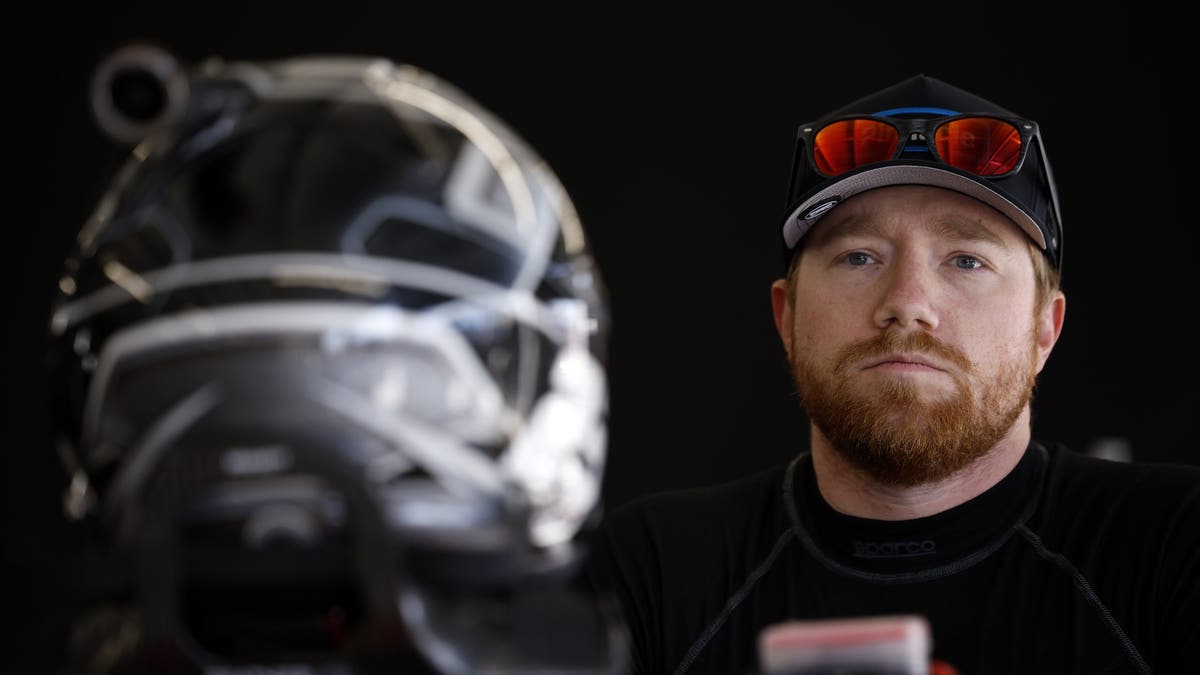
Tyler Reddick is having an incredible season. He’s gotten into Victory Lane five times, including the first three races of the year. Cup qualifying got rained out, so Reddick will start from the pole today at Charlotte in accordance with league rules. On the season, Reddick has led 201 laps and has eight finishes in the top five. In 2025, he finished the Coca-Cola 600 26th after leading only one lap.
Sports
Pakistan’s Faisal Shafi becomes first local runner to achieve provisional eighth marathon star
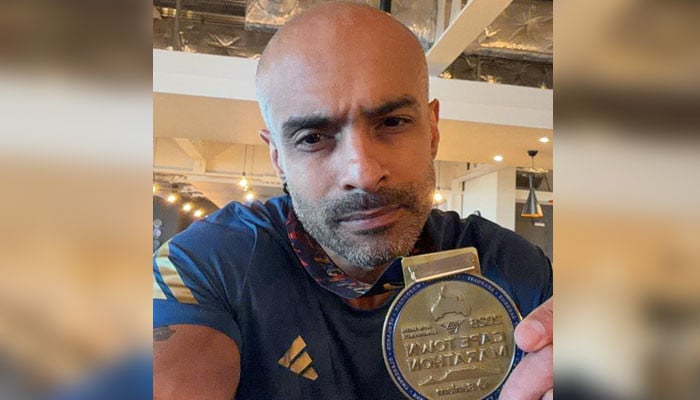
KARACHI: Pakistani runners turned the streets of Cape Town into a landmark chapter of the country’s growing marathon movement as Karachi’s Faisal Shafi and British-Pakistani runner Huma Rehman achieved the eighth star, although currently a provisional star, at the 2026 Cape Town Marathon, a race expected to become the next Abbott World Marathon Major.
Competing against a backdrop of Table Mountain, the Pakistani contingent produced a significant collective performance on the global marathon stage.
More than 27,000 runners participated in the event, but for Pakistan’s marathon running community, the spotlight belonged to a small group of runners representing the country’s running community in the world’s most scenic marathon courses.
Karachi-based Shafi emerged as the central figure of the story. Completing the 42.195-kilometre race in 3 hours, 35 minutes and 37 seconds, Shafi became the first Pakistan-based runner to complete eight World Marathon stars, a milestone considered among the rarest achievements in recreational endurance running.
“This is my eighth star,” Shafi told Geo News after crossing the finish line.
“The eighth Major was actually supposed to happen in Cape Town last year, but due to bad weather, the marathon was cancelled.”
The Cape Town Marathon currently remains in the candidacy phase for Abbott World Marathon Major status.
Organisers announced before the race that every finisher would receive a provisional Major star, similar to the pathway Sydney followed before officially becoming a Major.
Once Cape Town passes its final assessment and is officially inducted into the World Marathon Majors, the provisional star will automatically convert to a fully recognised star, retroactively counting toward your Major
The development effectively made this year’s Cape Town Marathon one of the most historically significant races outside the existing Major circuit. If officially approved, Cape Town would become the first African race to join the elite series alongside Tokyo, Boston, London, Berlin, Chicago, New York and Sydney.
For Shafi, it was beyond personal achievement.
“I am the first eight-star finisher from Pakistan and the first person to complete eight stars while living in Pakistan,” he said.
“This is a huge leap for Pakistan in marathon running because eight stars is a very elusive achievement. Even globally, only a few hundred people may have completed eight stars.”
Shafi’s run itself reflected the composure of an experienced marathoner. He crossed the halfway mark in 1:39:56 and maintained a disciplined pace through the opening 30 kilometres, consistently running between 4:44 and 4:46 per kilometre before the challenging latter stages tested the field.
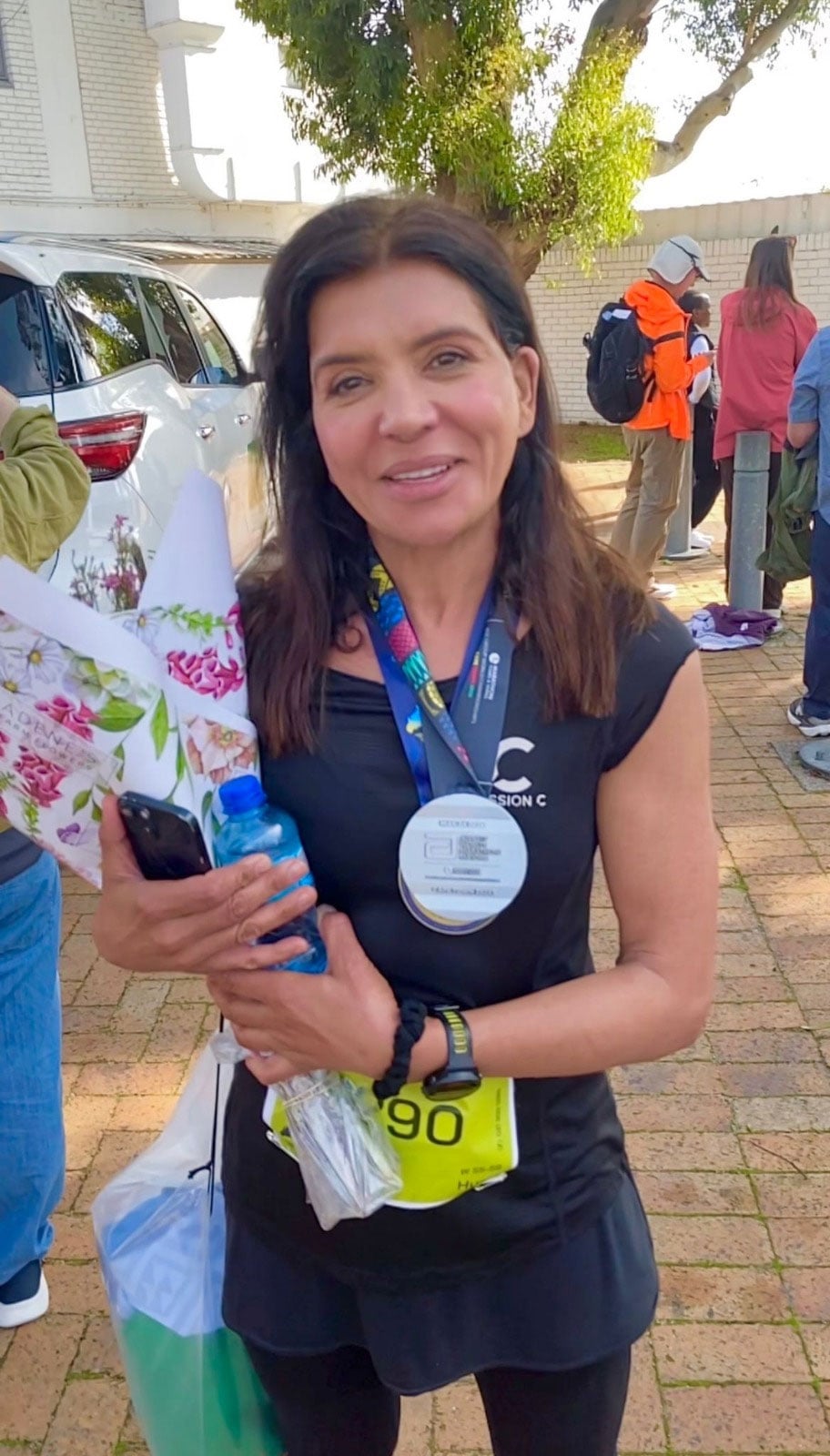
While Shafi carried Pakistan’s headline moment, British Pakistani runner Huma Rehman produced one of the strongest performances among the Pakistani-origin participants. She completed the race in an impressive 3:31:34, finishing ahead of Shafi overall and becoming the first British Pakistani runner to secure the eighth world star milestone.
Her race was a masterclass in rhythm and consistency. After reaching 5km in 25:52, Huma gradually accelerated through the course, clocking 51:36 at 10km and 1:16:45 at 15km before crossing halfway in 1:46:43. Remarkably, she maintained almost identical pacing deep into the latter stages of the race, covering 30km in 2:30:52, reaching 35km in 2:56:08 and crossing 40km in 3:20:53, averaging almost exactly five minutes per kilometer across much of the second half of the marathon, a sign of elite endurance management on a demanding course.
Pakistan and the overseas Pakistani community had six representatives in the marathon. Karachi’s Hina Shaukat produced a personal-best performance of 4:31:23, while Lahore runner Amina Sibtain completed her first-ever marathon in 4:44:51. Kashif Zulfiqar crossed the line moments later in 4:44:54.
Canadian Pakistani runner Ziyad Rahim completed the race in 6:54:33.
Hina Shaukat said that the Cape Town marathon was the proudest finish of her running career.
“It was my third marathon, and I was able to shave 40 minutes off my PR,” she said.
“My family was there at the finish line, and they made this one extra special. The photos may not look fast, but the clock definitely was. This was, undoubtedly, my proudest finish yet,” she told Geo News.
Beyond the results, however, the race symbolised something larger for Pakistan’s slowly expanding marathon running culture. Community running events in Karachi, Islamabad and Lahore have witnessed rapid growth in recent years, and Faisal Shafi believes milestones like Cape Town can inspire even more people to embrace marathon running.
“God willing, more people will now be inspired towards marathon running,” he said. “Just like the recent One Run event in Karachi, where so many people participated, I believe this sport will continue growing in Pakistan.”


Shop numbers return to growth after years of decline, say experts

Drake sets new record at ‘Iceman,’ ‘Habibti’ and ‘Maid of Honour’

Patti LaBelle on being called a legend: “I have earned it”

-

 Entertainment1 week ago
Where Pete Davidson, Elsie Hewitt stand after breakup: Details revealed
-

 Politics1 week ago
Rising diesel costs from Iran war strain US school budgets
-

 Tech1 week ago
Why Is Your Grill So Dumb? The Best Grills Set Temp Like an Oven
-

 Tech1 week ago
This Solar-Powered Smart Sprinkler Keeps My Lawn Watered Without Any Power Cables
-

 Fashion1 week ago
RMG trade bodies seek policy support from Bangladesh PM
-

 Fashion1 week ago
India calls for aligning standards, customs procedures with Africa
-

 Fashion6 days ago
Nigeria Kwara Garment Factory, KWS Garment Production Village ink pact
-
 Sports1 week ago
Pakistan steady after Das ton | The Express Tribune