

Tech
The Superyacht, the Billionaire, and a Wildly Improbable Disaster at Sea

The court delivered a devastating judgment in January 2022. In a 1,700-page ruling, the judge found that Lynch had been “aware of improprieties in Autonomy’s accounting practices” and had been “dishonestly involved in manipulating the accounts.” The systematic accounting practices weren’t just aggressive. They were, the judge concluded, a deliberate scheme to mislead. American prosecutors, who had been waiting for the UK proceedings to conclude, now had the ammunition they needed. Extradition proceedings, already in motion, gained momentum.
VI. Against All Odds
Lynch’s forced travel to the United States in May 2023 marked the beginning of an extraordinary ordeal. Federal prosecutors in San Francisco charged him in a 16-count indictment that included conspiracy to commit wire fraud, wire fraud, securities fraud, and conspiracy. If convicted on all counts, the 57-year-old faced up to 25 years in prison—effectively a life sentence.
Despite US prosecutors promising the English court that Lynch wouldn’t be incarcerated pretrial, Judge Charles Breyer immediately sent him to jail upon arrival, his lead attorney Reid Weingarten recalled. “That was probably the lowest moment.” He ended up in jail for only one day, though, after posting a $100 million bond. The mathematics of his situation became Lynch’s obsession. “What are the odds?” he would constantly ask his friends and lawyers, especially Weingarten, who found it maddening. “It was the stupidest question ever,” he would later recall. “There’s just too many variables.” At the same time, he respected Lynch’s genuine curiosity—“there was nothing he didn’t know about or didn’t want to know about,” from astrophysics to politics, culture, music, even American baseball.
The trial began in March 2024, with Lynch joined by his former VP of finance Stephen Chamberlain as codefendant. From the start, it was clear that Lynch’s team had it easier. Hussain’s conviction had taught them the playbook of US prosecutors, and they’d had years to ready a new defense. Each night, Lynch and his legal team would work out who the prosecution was going to bring the next day. They also hired a “shadow jury”—a barman and a clerk paid to sit through all 11 weeks of proceedings and register independent impressions.
Most white-collar defendants stay silent; Lynch insisted on taking the stand. He presented himself as a down-to-earth British entrepreneur who had been victimized by American corporate incompetence. He walked the jury through his working-class background, his academic achievements. When prosecutors pressed him on specific transactions, he deflected skillfully—these were matters for the finance team, he was focused on technology and strategy.
One of the most effective moments came when Lynch described the experience with HP. “I watched them take this beautiful company and just wreck it,” he told the jury, emotion creeping in. “And then they had the audacity to blame me for their incompetence.”
The verdict came on June 6, 2024. As the jury foreman read “not guilty” to all remaining charges, Lynch cried. So did his wife. Chamberlain was also acquitted on all counts. Speaking to journalists later, Lynch reflected on what he’d endured: “It’s bizarre, but now you have a second life,” he said. “The question is, what do you want to do with it?”
VII. The Celebration
As part of his recovery process, Lynch planned a long summer aboard the Bayesian, full of friends and celebration. For one particular outing in August, he invited along everyone who stayed close to him during the darkest period of his life. Christopher Morvillo, the Clifford Chance partner who had helped quarterback the US legal strategy, was there with his wife, Neda. Jonathan Bloomer, the Morgan Stanley international executive who had served as a character witness, had accepted the invitation along with his wife, Judy.
The yacht itself was a 56-meter sailing vessel with a dark blue hull and a minimalist Japanese-style interior, later referred to by The Times of London as a “masterpiece of engineering and opulence.” The yacht’s original name was Salute; Lynch rechristened it the Bayesian. The vessel was magnificent but also an anomaly: It had a single, towering aluminum mast.
The following account is drawn from official investigation reports, videos, photos, and people familiar with the accounts of the crew and survivors. The August sailing was planned as a leisurely tour of Sicily’s northern coast and Aeolian Islands. The group started in Milazzo, then spent four days exploring the volcanic archipelago. They anchored off Isola di Vulcano one day for a few hours to watch the active crater glow against the sky, visited Panarea, and enjoyed the crystal clear waters around Dattilo. It was exactly the kind of relaxed, intimate celebration Lynch had envisioned. It was also a sendoff for Hannah, an aspiring poet. The two loved to spar over meals, arguing about politics and world events, with Lynch playing the contrarian.
That weekend, Lynch received two devastating calls from Andy Kanter about Stephen Chamberlain, his Autonomy codefendant. The first call, on Saturday, Lynch answered with a happy hello—laughter and cheer audible in the background—before Kanter delivered what he called “the gravest news”: Chamberlain, a middle-aged soccer fan and avid runner, had been struck by a car while jogging and suffered a traumatic head injury. By Sunday’s call, the news was worse: The hospital was turning off life support. The group aboard the Bayesian lit a candle for Chamberlain in the church at Cefalù.






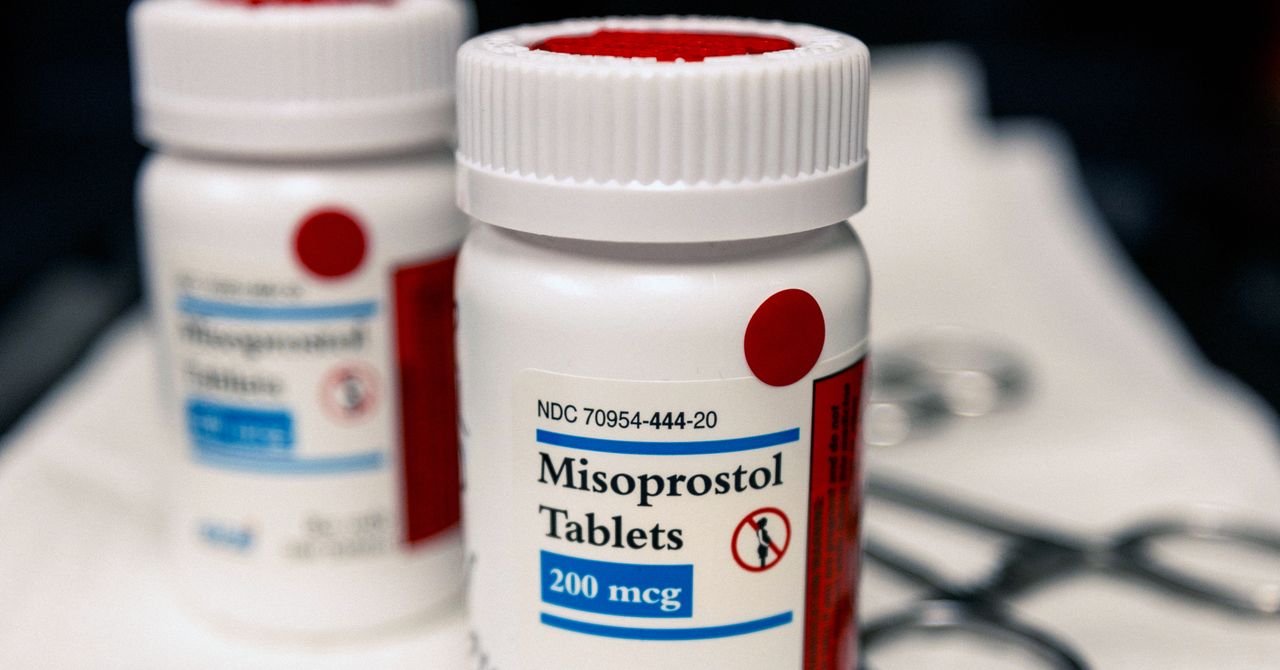
Abortion provider Carafem’s phones were ringing nonstop over the weekend after a US federal appeals court reinstated a nationwide requirement that the drug mifepristone, one of two pills used for a medication abortion, must be obtained in person. The decision, handed down on Friday, left patients unsure if they could gain access to their treatment through telehealth. “People are afraid, and they’re angry,” says Carafem’s chief operations officer, Melissa Grant. “I had people contact us saying, This can’t be true. Do you still have the medication available? Can’t you just give it to me? They were bargaining.”
With the restriction in place, Carafem quickly pivoted to a backup approach. Instead of prescribing the two-drug protocol typical for a medication abortion—mifepristone, which blocks progesterone and prevents the pregnancy from progressing, and then misoprostol, which causes the uterus to contract—the organization began prescribing misoprostol on its own. While slightly less effective than the dual-pill option, it’s been widely used in the past. “We feel comfortable prescribing it,” says Grant.
Some Planned Parenthood clinics also pivoted to the misoprostol-only regimen this weekend. “Planned Parenthood providers are doing everything they can to make sure patients know that medication abortion is still safe, legal, and available,” says Danika Severino, vice president of care and access at Planned Parenthood Federation of America.
On Monday, the Supreme Court offered a temporary reprieve, pausing the appeals court ruling for a week. The measure allows patients to once again get mifepristone through virtual clinics at least until May 11, when SCOTUS will take another look at the case. Carafem and Planned Parenthood say they are prepared to shift back to misoprostol-only if necessary. Other providers, including the digital abortion clinic HeyJane, have confirmed that they will also take that approach if necessary.
Mifepristone was developed in the 1980s in France and has been extensively studied for safety and efficacy. It was approved by the Food and Drug Administration in 2000. Under President Joseph Biden, the FDA first allowed the drug to be obtained by mail instead of in person in April 2021, during the Covid-19 pandemic. The agency permanently lifted the in-person dispensing requirement in 2023.
After the Supreme Court overturned Roe v. Wade in 2022, ending the constitutional right to an abortion, medication abortion via telehealth became a more sought-after option, especially for patients in states that adopted abortion restrictions. Approximately one in three abortions that took place in the first half of 2025 used abortion pills obtained through telehealth, according to public health nonprofit Plan C.
Access to mifepristone has become the next major battleground in reproductive health, with anti-abortion politicians and lobbyists seeking to reinstate in-person dispensing requirements on the drug and, by doing so, make medication abortion harder to obtain.
After conflicting legal rulings in 2023 sparked confusion over whether mifepristone would be available from virtual clinics, some of them planned to temporarily shift to offering misoprostol-only medication abortions. Some virtual clinics have offered single-pill options even before that. Carafem offered misoprostol-only medication abortions beginning in 2020, in an effort to provide patients with options for virtual care during the early days of Covid.
Originally developed to treat gastric ulcers, misoprostol has been used for medication abortion since the late 1980s. It remains the primary method of medication abortion in many parts of the world where access to mifepristone is limited.
“Mifepristone and misoprostol are both very safe medications, and in general, having mifepristone increases the efficacy and decreases complication rates of medication abortion,” says Rachel Jensen, a fellow with the American College of Obstetricians and Gynecologists, which endorses the misoprostol-only protocol when mifepristone isn’t available. The single-drug regimen is also endorsed by the World Health Organization, the Society of Family Planning, and the National Abortion Federation.
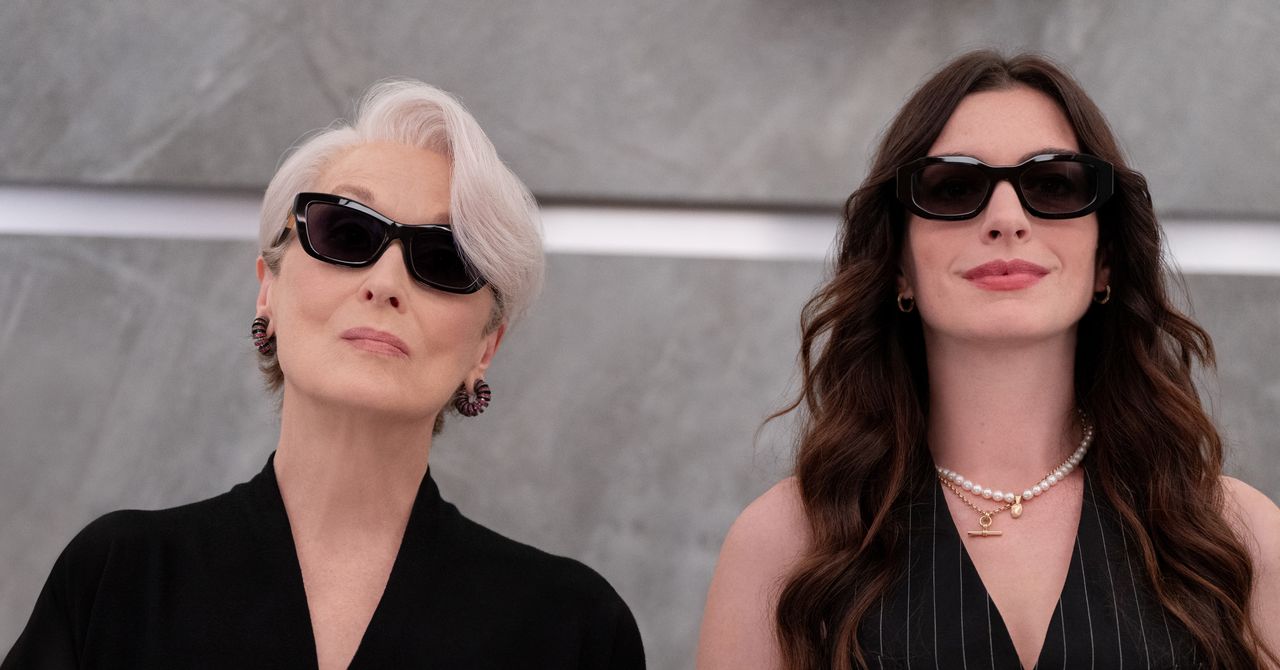
One thing is certain about The Devil Wears Prada 2: The ambitious undertaking of making a sequel of a cult status film after 20 years has succeeded, at least as far as box office figures are concerned. The numbers speak for themselves, with $77 million generated in US theaters and another $157 million in the rest of the world since its April 29 release.
In the face of such a box office smash, this installment has inspired heated debates for days about its quality and comparisons to the original. In Italy, those arguments even extend to the dubbing of the film.
The controversy stems from the choice of voice actors in the Italian version of The Devil Wears Prada 2, who are themselves a nod to continuity; it’s the same cast as the original. Connie Bismuto is back to voice Anne Hathaway as Andy, Francesca Manicone dubs Emily Blunt as Emily, Gabriele Lavia is once again Stanley Tucci’s Nigel, and above all, Maria Pia Di Meo, the actress who has been the familiar and expressive voice of Meryl Streep in practically all the Italian adaptations of recent years—including the fearsome Miranda Priestly—returned for the sequel.
While many fans were happy to revisit these familiar voices, other viewers noticed some idiosyncrasies, largely due to the advanced age of the voice actors themselves, especially Di Meo and Lavia.
Di Meo, born in 1939, is undoubtedly a master of Italian dubbing, and her performances, linked to such great Hollywood actresses as Jane Fonda, Julie Andrews, Mia Farrow, Barbra Streisand, and Streep, have made her one of the most recognizable and expressive voices of cinema in that country’s theaters.
Yet some say her performance now reveals too much of the passage of time and that there’s a disconnect between her 87-year-old voice and that of a character as energetic and sharp as Miranda (played, in the original, by a 76-year-old Streep). Could this nine-year gap be too great to bridge? The same has been said of Lavia, who dubs Stanley Tucci with a result that often sounds a bit forced.
But more than a question of age, perhaps there’s a broader discussion to be had about dubbing in general and its effectiveness in an era in which downloads first and then streaming platforms have accustomed us to seeing more and more content in the original language.
Even just listening to the trailers released online for The Devil Wears Prada 2, a native Italian speaker will notice not only that the voices that have aged into varying degrees of mismatch but also that the speed of the lines makes them hard to follow. And what about the adaptation of the dialog? “I’m a features editor at Runway,” Anne Hathaway’s Andy says proudly, but how many of those who live outside newsrooms know what a features editor is? And again, when Miranda’s second assistant says, “I have to pee, I drank a venti,” how many people outside of the US understand on the fly that she’s referring to a Starbucks drink?
Perhaps, then, what hasn’t aged so well is not so much the voices of individual dubbers but a dubbing system that no longer keeps pace—in most cases—with the speed and specificity with which the content itself is produced. In the face of this consideration, however, one cannot ignore that, at least in a market like Italy, especially at the cinema, people overwhelmingly go to see dubbed versions of movies.
So these same online debates perhaps serve to keep attention focused on how many countries outside of the US experience these films. And one that deserves not only greater respect but also a quality that isn’t fully guaranteed with today’s frenetic pace.
This story originally appeared on WIRED Italia and has been translated from Italian.
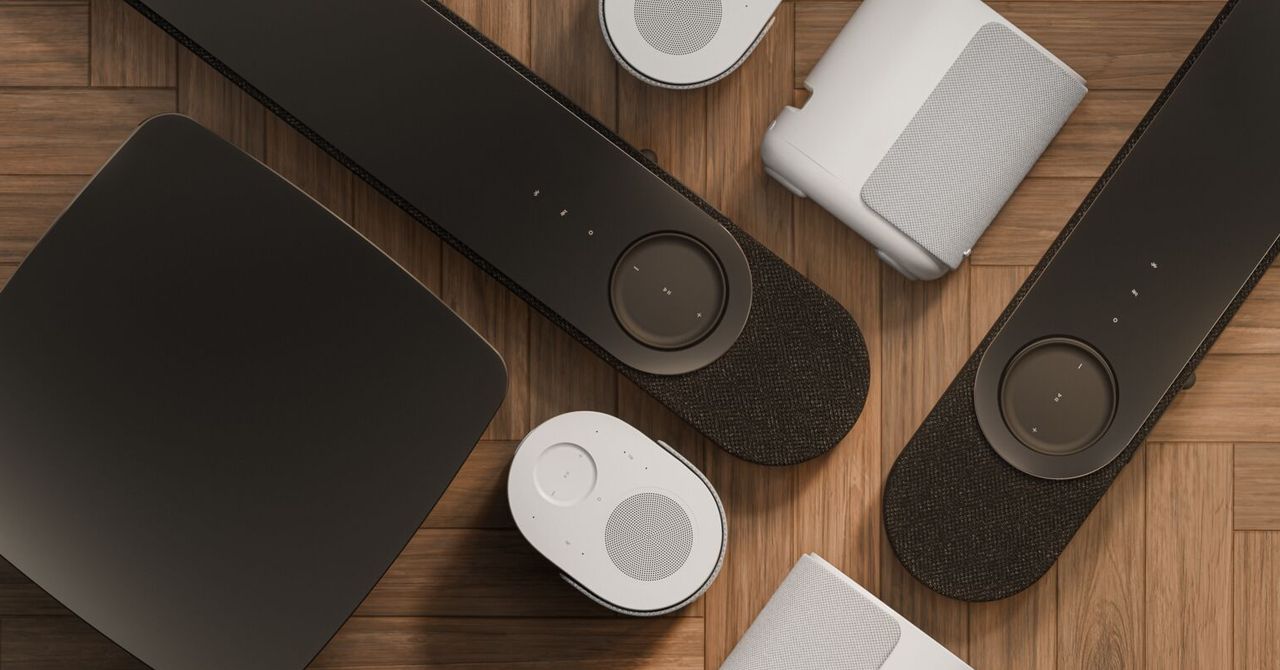
Bose has three new speakers to spice up your home listening. The company’s new “Lifestyle Collection”—designed with a snazzy fabric-wrapped grille and gentle curves—includes the Lifestyle Ultra Speaker, Lifestyle Ultra Subwoofer, and Lifestyle Ultra Soundbar. All of them can be connected to multiple units and third-party speakers via AirPlay and Google Cast for a better multi-room audio experience.
These audio products mark a “reentering” into the home speaker space for the company, bringing back the iconic Lifestyle lineup that originally debuted in 1990—known for simplicity and ease of use—which Bose subsequently discontinued in 2022.
To no surprise, Bose says the Ultra Soundbar is the “best soundbar we have ever made,” and that the Ultra Speaker might even be one of the company’s best in its storied history. The wireless speaker starts at $299, with a $349 limited-edition model in Driftwood Sand; the soundbar costs $1,099, and the subwoofer is $899. They’re available for preorder now and go on sale May 15.
These Wi-Fi-enabled speakers support AirPlay, Google Cast, Spotify Connect, and, uniquely, are the first to integrate with Alexa+ (in the US only), allowing you to ask Amazon’s chatbot to play music through the speakers via voice commands. There’s also Bluetooth support, and even an auxiliary input for connecting the Ultra Speaker to a turntable.
You can group two Lifestyle Ultra Speakers into a stereo system in the Bose app, or group them all together for a home theater system. Sadly, if you hoped to use it as a surround system with your existing Bose soundbar, the company says it’s only backward compatible with the Bass Module 700. And with the new Lifestyle Ultra Soundbar, it can only be used as a wired connection. For multi-room audio, the company has passed those grouping duties to the Google Home app for Google Cast technology, or Apple’s AirPlay for iOS users. Speaking of the app, there’s a redesigned onboarding process that purportedly makes setting up all of these speakers a breeze.
On the audio front, the Ultra Speaker notably features an upward-firing driver for Dolby Atmos–like spatial audio, along with two front-facing drivers. (It doesn’t seem to support Dolby Atmos Music at this time.) The company is also touting its CleanBass technology, which pairs Bose’s QuietPort acoustic opening with the woofer for deep sound that performs better than its size suggests, though we’ll have to hear it for ourselves to see if it lives up to Bose’s claims.


Telehealth Abortion Is Still Possible Without Mifepristone

FDA withdrew studies finding Covid, shingles vaccines were safe

Longtime entertainment publicist was 82

-

 Tech1 week ago
A Brain Implant for Depression Is About to Be Tested in Humans
-

 Sports1 week ago
Pro wrestling star Steph De Lander reveals how colleague’s advice helped lead her to title triumph at ACW
-

 Tech1 week ago
Almost 90% of women leave tech industry within 10 years | Computer Weekly
-
 Business1 week ago
‘I had £20,000 stolen and had to fight a 13-month fraud reporting rule to get it back’
-
 Entertainment1 week ago
Norway joins Type 26 Frigate Programme to boost NATO naval power
-
 Business6 days ago
PSX plunges over 4,800 points | The Express Tribune
-

 Entertainment1 week ago
Melania Trump says ABC should ‘take a stand’ on late-night host Kimmel
-
 Tech1 week ago
This Ambitious Laptop Doesn’t Leave Much Room for Your Hands