

Business
Govt Giving Mudra Loan Of Rs 3 Lakh On Payment Of Rs 36,500 As Legal Insurance Charges? Check Truth Behind The Viral Post

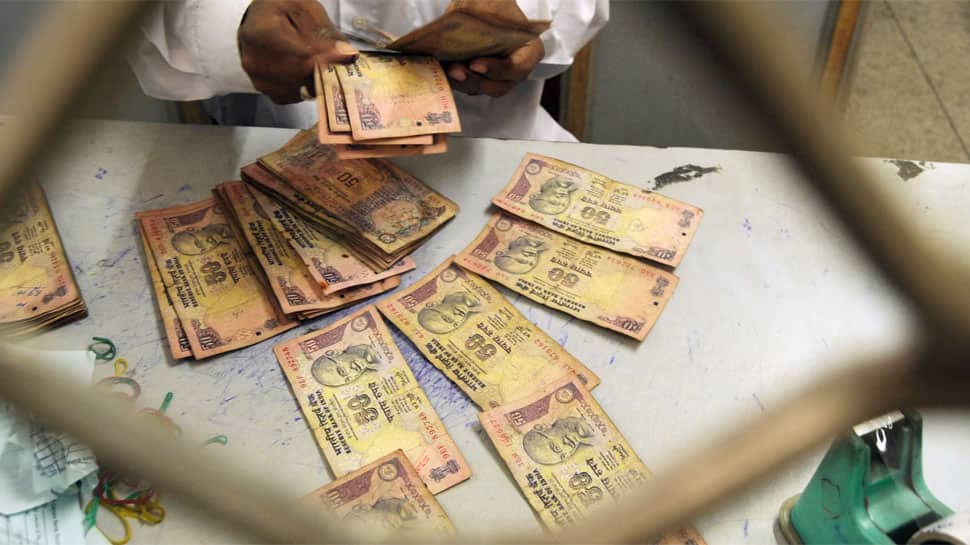
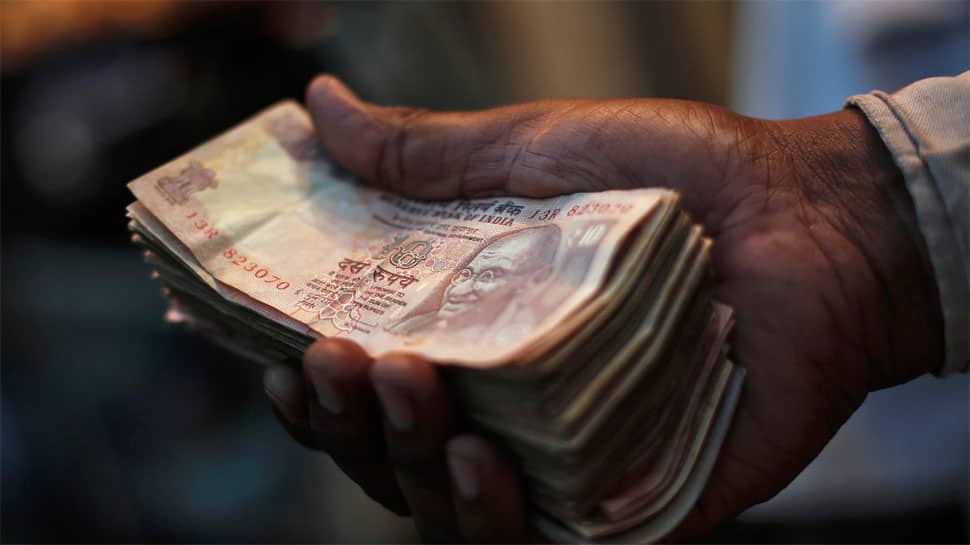
New Delhi: A viral post is doing the round in the social media. From what appears to be a fake approval letter, it claims the grant of a loan of Rs 3,00,000 under the PM Mudra Yojna on payment of ₹36,500 as legal insurance charges.
“An amount of Rs 3,000,00 only can be financed with loan interest rate of 2 percent. You need to pay legal assurance charge of Rs 36,500,” said the viral post.
(Also Read: GST Rules On Old Unsold Packs Of Products)
Busting the fake letter, PIB Fact Check has said that the letter is fake, adding that Finance Minister Nirmala Sitharaman has not issued this letter.
MUDRA Loan Limit Raised From Rs 10 Lakh To Rs 20 Lakh In Tarun Category
Giving the much needed boost to the SME and MSME sector, Finance Minister Nirmala Sitharaman announced to hike the limit of Mudra Loan to Rs 20 lakh from Rs 10 lakh in the Tarun category, in her Budget 2024.
The Pradhan Mantri MUDRA Yojana (PMMY) scheme was launched by the Modi government in April 2015 to provide loans up to Rs 10 lakh to the non-corporate, non-farm small/micro enterprises.
PMMY loans are extended by Member Lending Institutions viz. Scheduled Commercial Banks, Non Banking Finance Companies and Micro Financial Institutions, registered with Mudra Ltd.
(Also Read: 8th Pay Commission 14-Point Update)
Under the Pradhan Mantri Mudra Yojana (PMMY), Scheme by banks and Micro Finance Institutions (MFIs) Loans are extended in three categories:
Shishu (loans upto Rs. 50,000);
Kishore (loans from Rs. 50002 to Rs. 5 lakh);
Tarun (loans from Rs.5 lakh to Rs. 10 lakh)
After the Budget 2024 announcement, Mudra loan under Tarun category will be hiked to Rs 20 lakh.



The U.S. Food and Drug Administration approved Eli Lilly‘s GLP-1 pill, the company said, a major milestone for the Indianapolis-based drugmaker and one that will test the market for new weight-loss medications.
Lilly said the once-daily pill, Foundayo, will start shipping from direct-to-consumer platform LillyDirect on Monday and will be available at pharmacies and on telehealth platforms “shortly after.” People with insurance coverage could pay $25 a month with a coupon from Lilly, while people paying out of pocket could pay between $149 and $349, depending on the dose.
The approval comes just a few months after Lilly submitted the drug to the FDA as part of a program that grants speedy reviews for drugs that are considered national priority interests. That means Lilly will introduce its Foundayo only about three months behind Novo Nordisk’s Wegovy pill, setting the stage for the next battle between the rival drugmakers in the next frontier for GLP-1 drugs.
“It’s a big moment,” Eli Lilly CEO Dave Ricks said in an interview with CNBC. “We’ve obviously been working in this category of medicines for a while with the first GLP-1 medication 20 years ago and improving ever since. Here is an option that’s not more effective … but it’s more accessible, it’s easier to fit into your daily routine.”
Lilly licensed the molecule, orforglipron, from Japanese drugmaker Chugai in 2018, paying just $50 million upfront for global rights to the drug. But there are still questions about how big the drug will become. It doesn’t produce as much weight loss as Lilly’s best-selling shot Zepbound. Millions of people are already used to the routine of injecting themselves once a week.
Eli Lilly Foundayo GLP-1 weight loss pill.
Courtesy: Eli Lilly
Analysts estimate Foundayo sales will reach $14.79 billion by 2030, according to FactSet. That compares to expectations of $24.68 billion for the weight-loss drug Zepbound and $44.87 billion for Mounjaro, which is marketed for diabetes in the U.S. and obesity and diabetes in the rest of the world.
Ricks said shots haven’t been as big of a barrier to uptake as Lilly once thought they would be. He still sees Foundayo as an attractive option for people who would rather take a pill or who are searching for a lower price than the injectables.
He sees it playing a role in maintenance, for people who achieve their goal weight with a shot and want to keep the weight off. And he sees Foundayo as a way to “reach the planet” without manufacturing constraints or cold-chain requirements that come with Zepbound.
Foundayo is a small molecule whereas Zepbound and Wegovy are peptides, which require more intensive manufacturing processes, a barrier Ricks thinks will hinder generic versions of Wegovy that have recently launched in some other countries like India.
“[Foundayo] does allow for scalability, and that will allow us to launch this globally on the first instance,” Ricks said. “So today, you can get the oral [Wegovy] in the U.S., but you really can’t get it elsewhere. This will be marketed around the world. As soon as we have regulatory approvals, we essentially have as much scale as we need to supply the world with an oral GLP-1 inhibitor.”
Lilly expects approval for Foundayo in more than 40 countries over the next year. The company since 2020 has invested more than $55 billion in manufacturing, which includes opening new sites and expanding existing plants to produce the pill.
In the U.S., Lilly will compete with Novo’s newly launched Wegovy pill. Early demand for that pill has been stronger than expected, with Novo reporting more than 600,000 prescriptions in March.
Novo CEO Mike Doustdar told CNBC in February that one of the earliest takeaways from the launch is that the pill appears to be expanding the obesity treatment market, drawing in new patients rather than converting existing ones from injections. Ricks agreed with that assessment and said Lilly doesn’t care whether people take Foundayo or Zepbound.
“We want people to be on the medicine that meets their health goals,” Ricks said. “If it has Lilly on the box, that’s the goal we have.”
Novo plans to argue that the Wegovy pill is more effective than Foundayo. The Wegovy pill showed around 16.6% weight loss on average in a late-stage trial, while Lilly’s oral drug caused roughly 12.4% on average in a separate study, when analyzing patients who stayed on treatment. Lilly’s Zepbound has consistently shown it can help people lose more than 20% of their body weight.
Meanwhile, Lilly plans to tout the fact that Foundayo can be taken any time without any restrictions, while the Wegovy pill needs to be taken first thing in the morning on an empty stomach with only a few ounces of water.
Where the two drugs are the same is the starting price. The lowest doses of both drugs will cost $149 for cash-paying customers thanks to an agreement the companies struck with the Trump administration last fall. And price is the most important factor for patients, said Dr. Nidhi Kansal, an obesity medicine doctor at Northwestern Medicine.
“Unfortunately, price is what is driving the decision making between clinicians and patients for these drugs because they’re all excellent drugs and we have lots of options now, but it’s still a financial decision at the end of the day,” Kansal said.
The lower price point and the approachability of a pill versus a shot opens up the market to casually interested patients, said BMO Capital Markets analyst Evan David Seigerman. Seniors on Medicare will be able to access Foundayo and other GLP-1 obesity medicines for $50 a month starting this summer as part of Lilly and Novo’s deals with the Trump administration. Ricks expects a “pretty robust” response to the program, which Lilly built into its financial guidance for the year.
Analysts say a successful launch of Foundayo is key to Lilly’s stock recovering from recent weakness. The company’s shares have fallen about 14% this year after a meteoric rise that briefly made Lilly the first trillion dollar market cap health-care company. Sales are a lagging indicator, so analysts will be tracking prescriptions to monitor uptake of the pill, said Cantor Fitzgerald analyst Carter Gould.
“If scripts are going in the right direction, and you’re seeing the continued gains, my guess is people will look through any sort of choppiness around [the first or second quarter],” Gould said.
Another factor for Lilly’s performance this year is a forthcoming readout for its more potent obesity shot, retatrutide. The company has already shared some late-stage data on that drug, but the most important trial is one studying the treatment specifically for weight loss. If retatrutide lives up to its expectations, Lilly would be on its way to creating a portfolio of obesity medicines.
“The future will be more choices, and that’s a great thing,” Ricks said. “And we hope Lilly is the one presenting those choices.”
Business
UPI transactions hit record Rs 29.53 lakh crore in March; volumes cross 22.6 billion – The Times of India
Unified Payments Interface (UPI) transactions touched a record high in March, with both value and volume hitting new peaks, driven by festive spending and financial year-end activity, according to PTI.Data released by the National Payments Corporation of India (NPCI) showed that UPI transactions totalled Rs 29.53 lakh crore in value during March, up 19 per cent from Rs 24.77 lakh crore in the same month last year.On a month-on-month basis, transaction value rose 10 per cent from Rs 26.84 lakh crore recorded in February.In volume terms, UPI registered 22.64 billion transactions during the month, marking a 24 per cent increase from 18.3 billion transactions a year ago. The volume was 20.39 billion in February.Average daily transactions stood at 730 million, with an average daily value of Rs 95,243 crore, as spending picked up during festivals such as Holi and Eid.“The sustained growth in the digital payment ecosystem in India is an affirmation of the penetration of real-time payment systems in the day-to-day life of the people. UPI processed 22.64 billion transactions worth 29.53 lakh crore in March 2026, marking its emergence as one of the trusted payment systems in the country,” said Anand Kumar Bajaj, MD & CEO of PayNearby.UPI now accounts for around 85 per cent of all digital transactions in India and contributes nearly 50 per cent of global real-time digital payments.The platform is operational in seven countries, including the UAE, Singapore, Bhutan, Nepal, Sri Lanka, France and Mauritius, with its entry into France marking its first expansion into Europe.NPCI, an initiative of the Reserve Bank of India and the Indian Banks’ Association, operates UPI, enabling real-time peer-to-peer and merchant payments across the country.
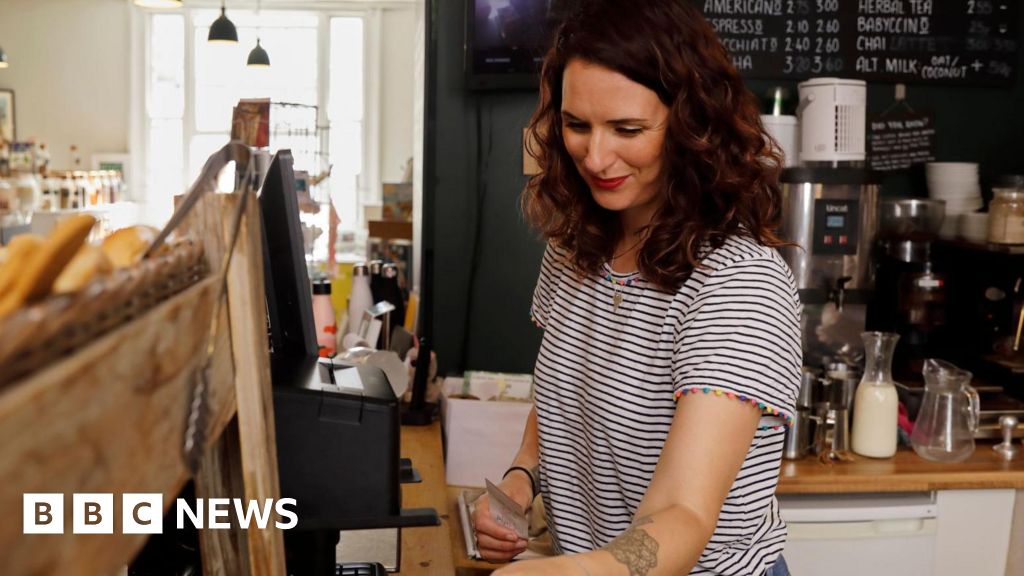
But Spencer says his business is being squeezed from every angle – as well as minimum wage, he has had increases in business rates, national insurance, and statutory sick pay. He also expects energy bills to go up because of the war in the Middle East.

FDA approves Eli Lilly’s GLP-1 pill, opening the next phase of the weight loss drug market

The New Era of Militia Influencers
UPI transactions hit record Rs 29.53 lakh crore in March; volumes cross 22.6 billion – The Times of India

-

 Politics1 week ago
Afghanistan announces release of detained US citizen
-

 Sports1 week ago
Broadcast industry CEO says consolidation is ‘essential’ to compete for NFL soaring media rights prices
-

 Entertainment1 week ago
UN warns migratory freshwater fish numbers are spiralling
-

 Tech1 week ago
Can a Home Appliance Fix the Problem of Soft-Plastic Waste?
-
 Business1 week ago
Property Play: Home flippers see smallest profits since the Great Recession, real estate data firm says
-
 Business1 week ago
Gold prices soar in Pakistan – SUCH TV
-

 Fashion1 week ago
ICE cotton slips on weaker crude, profit booking
-
 Business1 week ago
More women are entering wealth management, but few are in advisory roles, study finds