

Business
Belfast: New wave of US investment to create up to 1,000 jobs

Barry O’ConnorBBC News NI
 AFP via Getty Images
Belfast, along with London, Edinburgh and Manchester, is set to benefit from a wave of new US investment into the financial services sector.
Bank of America intends to create up to 1,000 new jobs in the city, marking its first operation in Northern Ireland.
Citigroup has also pledged investment across its UK sites, including a further commitment to growing its presence in Northern Ireland.
The US firms, which also include PayPal and S&P Global, have announced the investments, worth more than £1.25 billion, ahead of President Donald Trump’s state visit to the UK next week.
Belfast ‘centre of excellence’
The opening of the new Bank Of America facility is set to establish Belfast as “a key hub”, reinforcing the city’s position as a “centre of excellence for financial technology and security operations”, the UK’s Department for Business and Trade (DBT) said.
The department added the investment is a “major milestone that underscores the region’s growing role in global financial services”.
In 2023, the bank announced it would fund a three-year digital skills and employability programme, delivered by Belfast Met, for 600 people from socially and economically disadvantaged backgrounds.
On Saturday, a Bank of America spokesperson told BBC News NI there will be a “gradual build up” of its new Belfast operation.
Recruitment for the first roles “will start soon” and the bank “will also shortly conclude on location”, he added.

 Getty Images
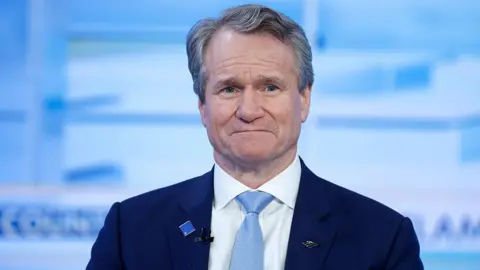
Chief Executive Brian Moynihan said Bank of America was “pleased” to extend its investment in the UK “with the creation of a new Belfast operations facility to support our global business”.
“The early US-UK trade agreement that the president and the prime minister began discussing in February has provided the business community with the certainty and framework it needs to strengthen transatlantic commerce,” he added in a statement.
‘International confidence’
The Bank of America facility in Belfast “will house cutting-edge anti-money laundering systems and cyber security operations”, and is expected to create “high-skilled jobs in Northern Ireland’s growing fintech sector”, a DBT spokesperson told BBC News NI.
The investment “underscores international confidence in Belfast’s talented workforce and advanced digital infrastructure”, strengthens the city’s reputation as an “international financial services destination” and supports economic growth, they added.
 PA Media
Deputy First Minister Emma Little-Pengelly said the Bank of America investment “is a hugely significant sign of confidence in Northern Ireland, building on a “growing, global reputation for highly skilled and professional services for big international companies”.
“Highly skilled jobs and a real show of faith and confidence in our economy,” she wrote on social media.
“The bank has referenced the new UK-USA trading agreements and arrangements as a facilitator for this investment. It is hugely welcome that Northern Ireland will get a significant benefit from this UK-wide investment. Exciting times ahead.”
 Getty Images
In a statement, Chancellor Rachel Reeves said the commitment from “America’s leading financial institutions” demonstrates “the immense potential of the UK economy, our strong relationship with the US and the confidence global investors have in our plan for change“.
The investments “will create thousands of high-skilled jobs from Belfast to Edinburgh, kickstarting the growth that is essential to putting money in working people’s pockets across every part of the United Kingdom”, Reeves added.
Business and Trade Secretary Peter Kyle said the announcements “reinforce the UK’s position as the world’s leading investment destination”.
“Our financial services sector is at the heart of a modern, dynamic industrial strategy.
“Strengthening ties with the US boosts our economy, creates jobs, and secures our role in global finance… These investments reflect the strength of our enduring ‘golden corridor’ with one of our closest trading partners.”
Citigroup also investing in NI
US banking giant Citigroup has also confirmed it is investing an additional £1.1bn across its UK operations, alongside “a further commitment to growing its presence in Northern Ireland”, the DBT added.
“The bank is already one of the top employers in Belfast now employing over 4,000 people – firmly establishing Belfast as a major technology powerhouse.”
 Donal McCann
Citigroup Chief Executive Jane Fraser added: “Citi’s commitment to the UK runs deep. This is home to many of our most senior leaders and nearly 14,000 colleagues across London, Belfast, Edinburgh and Jersey.
“We’re proud to be serving 85% of the FTSE 100 and to have stood beside UK companies through every market cycle, raising capital, financing growth and helping them compete on the world stage.
“The UK isn’t simply one of our largest markets; it is core to Citi’s foundation as a truly global bank.”

Motorists are facing higher fuel prices ahead of Easter break due to the conflict in the Middle East, the RAC says.
Source link
Business
E-cheques coming soon? RBI unveils Payments Vision 2028, plans wider oversight of digital players – The Times of India
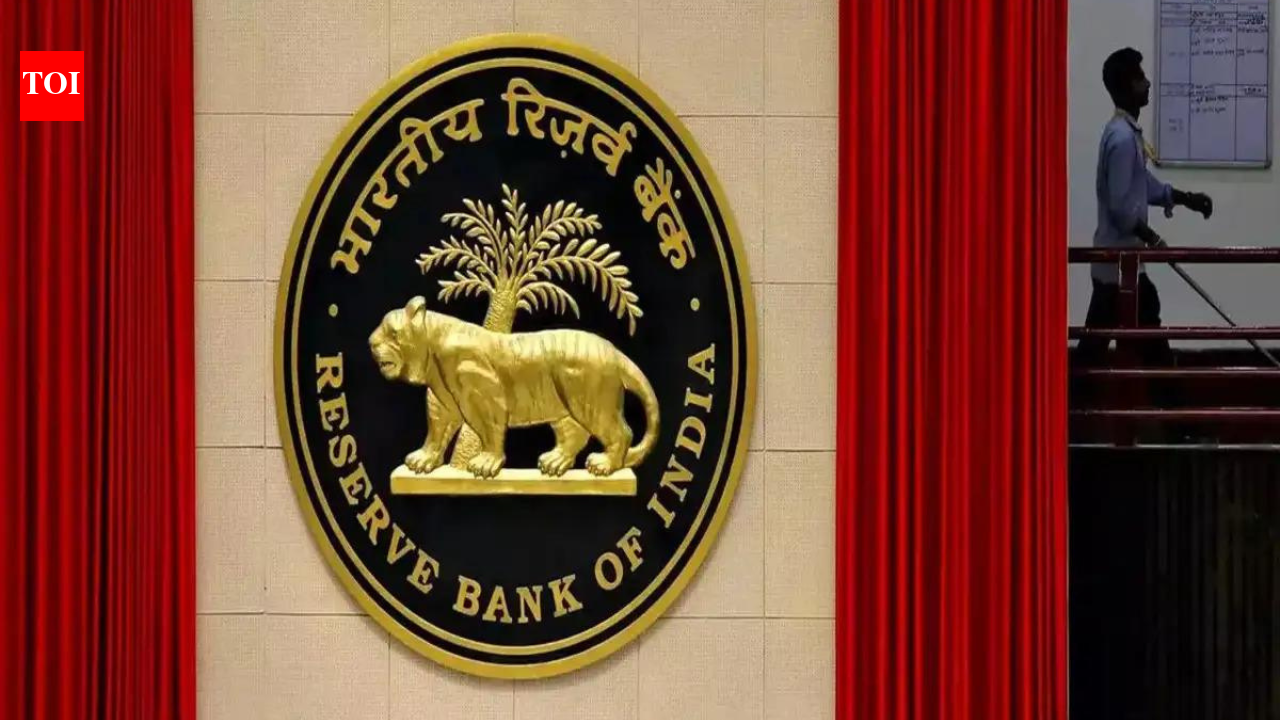
The Reserve Bank of India (RBI) on Friday unveiled its ‘Payments Vision 2028’ document, outlining a roadmap that includes exploring electronic cheques, expanding regulatory oversight to digital platforms, and strengthening safeguards in the fast-growing payments ecosystem, PTI reported.The central bank said it will examine the introduction of e-cheques to combine the advantages of paper instruments with the speed and reliability of digital payments. “To leverage the unique benefits of paper-based instruments and the speed and reliability of electronic payments, and cater to new business use cases, the introduction of electronic cheques in India shall be explored,” the RBI said.Alongside, the RBI is considering widening the regulatory ambit to include entities such as e-commerce marketplaces and centralised platforms that play a growing role in facilitating digital transactions.“In addition, e-commerce marketplaces and centralized platforms have been assuming significant responsibilities that could have implications on the orderly functioning of the payments ecosystem. These aspects shall be examined in detail and, if required, the scope of direct regulations shall be extended to cover such entities,” the document said.The vision document also proposes allowing users to enable or disable transactions across digital payment modes, similar to controls available for card transactions.To address fraud risks, the RBI is exploring a “shared responsibility framework” under which both the issuing bank and the beneficiary bank would share liability in cases of unauthorised digital transactions.The central bank also plans to review cheque design and security features, introduce a Domestic Legal Entity Identifier (DLEI) framework for better transaction traceability, and bring in a Cyber Key Risk Indicators (KRI) framework for non-bank payment system operators.Other initiatives include exploring white-label solutions in the Aadhaar Enabled Payment System (AePS), developing interoperability in the Trade Receivables e-Discounting System (TReDS), and introducing a ‘Payments Switching Service’ to ease customer migration across platforms.The RBI said it will also review the cross-border payments ecosystem to improve efficiency and streamline authorisation processes, alongside publishing periodic reports on global and domestic payment trends.Additionally, the central bank aims to enhance access to payment data and reimagine the card payments ecosystem by promoting secure tokenisation, improved transparency in pricing, and greater choice for users and merchants.

Hyderabad: Pharma player Hetero on Friday said it has rolled out exports of its generic semaglutide injection portfolio as part of a multi-year plan to widen access to treatments for type 2 diabetes and obesity in more than 75 countries.The Hyderabad-based pharmaceutical company said initial rollouts are under way in Africa, Asia and the Middle East, with additional launches planned in other markets subject to regulatory approvals.The injectable therapies will be sold under the brand names Truglyx, Rolmodl and Moto G. Semaglutide belongs to the GLP-1 class of medicines, which are used in diabetes care and weight management.Hetero said the export launch is part of its broader strategy to improve access to advanced cardio-metabolic therapies, particularly in emerging markets.The company said the products will be offered in multi-dose disposable pen devices designed in line with innovator formats and will be available in several strengths, including 0.25 mg, 0.5 mg, 1 mg, 2 mg, 1.7 mg and 2.4 mg, allowing dosing flexibility for both diabetes and obesity treatment.Hetero said it is also awaiting approval from India’s Central Drugs Standard Control Organisation (CDSCO) after completing clinical trials in type 2 diabetes and obesity and plans an India launch after regulatory clearance.Hetero managing director Dr Vamsi Krishna Bandi said the company aims to provide high-quality, affordable generic semaglutide through a single global product platform backed by its manufacturing and development capabilities.He said Hetero would use its commercial networks across Asia, the Middle East, Africa and Latin America to support supply and access. The Hyderabad-headquartered Hetero operates in more than 145 countries and employs over 30,000 people.


Iran’s soccer team honors victims of elementary school airstrike

Tiger Woods arrested at crash scene on suspicion of DUI, sheriff says

Mentor calls Ryan Gosling to ‘Days of Our Lives’ set

-
 Business7 days ago
Flipkart group CFO to leave co amid IPO plans – The Times of India
-

 Fashion7 days ago
China’s textile & apparel exports surge 17% to $50 bn in Jan-Feb 2026
-

 Sports1 week ago
Rating Adidas’ 2026 World Cup away shirts: Argentina, Spain, Mexico and more
-
 Business1 week ago
Video: The Effects of High Oil Prices
-

 Sports1 week ago
American Conference Commissioner Tim Pernetti thanks Trump for Army-Navy game executive order
-

 Fashion1 week ago
The hidden $1.62 war tax now embedded in every garment you source
-
Tech1 week ago
The Corsair 4000D RS PC Case Keeps Your System Cool
-

 Tech1 week ago
‘Uncanny Valley’: Nvidia’s ‘Super Bowl of AI,’ Tesla Disappoints, and Meta’s VR Metaverse ‘Shutdown’