

Fashion
Already the start of major maneuvers at Kering?


Published
September 15, 2025
Luca de Meo seems intent on reshuffling the deck at Kering. At the French luxury group’s annual general meeting in September, the new Italian boss, who joins from Renault, took a straight line to express his vision. The new roadmap will be announced in early 2026, but he and his team will be making adjustments before the end of the year, he explained.
An understatement. Luca de Meo is due to officially take up his post this Monday at the Paris headquarters of the parent company of Gucci, Saint-Laurent, Bottega Veneta, McQueen, Boucheron and Balenciaga, and has already begun the big maneuvers.
According to WWD and Miss Tweed, Francesca Bellettini, the former CEO of Saint-Laurent, who has been Kering’s Deputy CEO in charge of house development since September 2023, will be in charge of the group’s core business. In this role, all the group’s general managers now report to her. Within the management committee, which was headed by François-Henri Pinault (who remains chairman of the Board as of September 15), Jean-Marc Duplaix was the other deputy managing director, in charge of operations.
This appointment to Gucci’s general management, if confirmed, would imply the departure of Stefano Cantino. Recruited from Louis Vuitton in May 2024 as deputy CEO of Kering’s flagship fashion house, which was then headed by Jean-François Palus, Cantino took over as CEO of Gucci on January 1. If these changes are confirmed, the Italian will have held the reins of the Roman house for only nine months.
For Bellettini, this potential move would be a major challenge, as de Meo has made no secret of the urgent need to turn around the group’s flagship, which accounts for some 40% of global sales in the first half of 2025, as much as a return to its roots. Having been with the group for over twenty years, the Italian executive initially joined Gucci in 2003, where she was director of strategic planning and associate director of merchandising, before transferring to Bottega Veneta and then helping Saint-Laurent grow, first at the end of the Slimane era and then with Anthony Vaccarello.
Media reports announcing this change of challenge for the director suggest that these moves could be made official at the beginning of the week.
This article is an automatic translation.
Click here to read the original article.
Copyright © 2025 FashionNetwork.com All rights reserved.










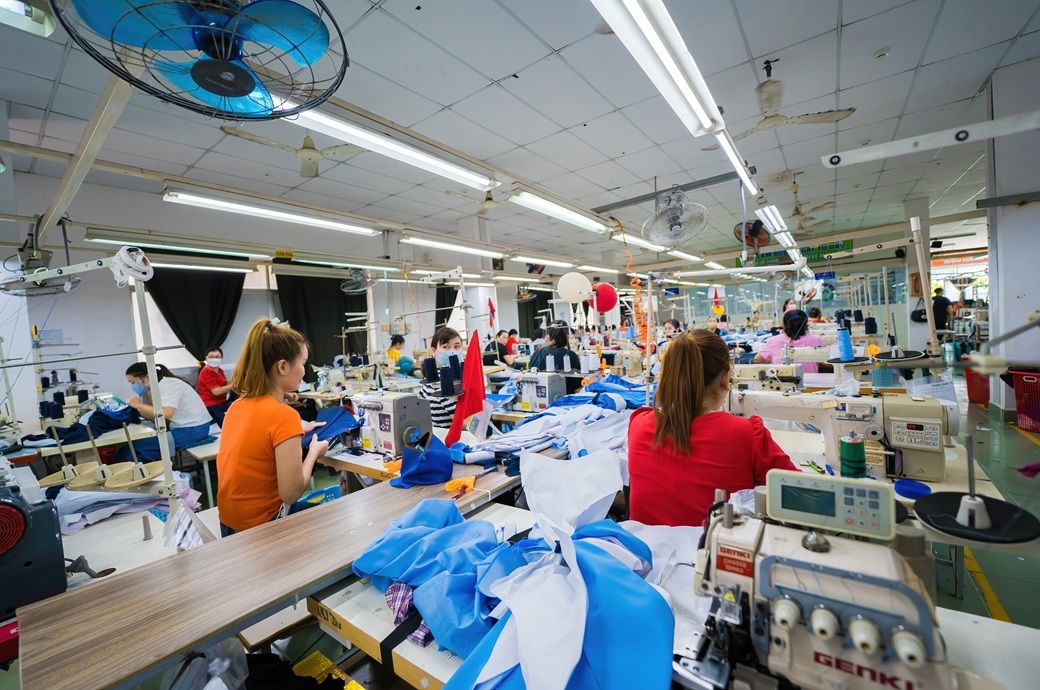
Growth in output and new orders softened, with production nearing stagnation. New orders rose at the slowest pace in eight months, while export orders declined for a second straight month, reflecting a weaker trade environment, S&P Global said in a press release.
ASEAN manufacturing growth slowed in April, with the S&P Global Manufacturing PMI falling to a nine-month low of 50.7.
Output and new orders weakened, export sales declined further, and employment fell for the first time in eight months.
Supply chain pressures and rising operating costs intensified inflation.
Despite weaker momentum, firms remained optimistic.
Supply-side constraints intensified during the month. Delivery times lengthened to a 17-month high as firms increased purchasing activity, putting pressure on supply chains. As a result, inventories of both inputs and finished goods declined, indicating firms relied on existing stocks to meet demand.
Employment conditions also weakened, with staffing levels falling for the first time in eight months, albeit marginally. Meanwhile, backlogs of work continued to rise, suggesting capacity pressures persist.
Inflationary pressures strengthened further. Input costs rose at the fastest pace since March 2022, prompting firms to increase output prices at the sharpest rate in 49 months.
Maryam Baluch of S&P Global Market Intelligence said ASEAN manufacturing remained in expansion territory in April, though growth momentum weakened as output neared stagnation, demand softened, exports fell faster, and employment declined. She noted that price pressures intensified further amid rising operating costs.
“While manufacturing firms in the ASEAN region remain optimistic about continued production growth in the coming year, the overall trajectory will remain dependent on external factors, notably the ongoing conflict in the Middle East, which is also shaping the inflation picture,” added Baluch.
Fibre2Fashion News Desk (SG)
Affirming its ’Ba2’ rating, the agency said Vietnam’s institutional quality and governance were improving due to administrative, legal, and public sector reforms implemented since late-2024, and downside risks from US trade measures had eased compared with what was expected earlier.
Moody’s Ratings recently raised its outlook on Vietnam to ‘positive’ from ‘stable’, citing rising confidence in the country’s ability to strengthen its credit profile over the medium term.
Affirming its ’Ba2′ rating, it said Vietnam’s institutional quality and governance were improving due to reforms implemented since late-2024, and downside risks from US trade measures had relatively eased.
Moody’s emphasised that the country’s growth potential continues to be a primary anchor for its credit profile. This is supported by a diversified export base, recovering domestic demand and robust foreign direct investment (FDI) inflows, all of which provide a solid foundation for macroeconomic stability.
Vietnam has demonstrated a high degree of adaptability to global volatility like fluctuating energy prices, rising shipping costs and inflationary pressures stemming from geopolitical tensions. This resilience is underpinned by a stable economic foundation, a positive external balance and a highly diversified trade structure, it noted.
However, risks within the banking system, vulnerabilities in the real estate market and lingering institutional bottlenecks continue to serve as hurdles for a potential rating upgrade in the future, the rating agency cautioned.
Fibre2Fashion News Desk (DS)

He said the sharp increase in oil and gas prices has fuelled inflationary pressures, weighing on the country’s growth outlook. Despite the downgrade, the government expects economic recovery, projecting growth to rebound to 5 per cent in 2027 and average around 5.5 per cent annually through 2029.
Cambodia has lowered its 2026 growth forecast to 4.2 per cent from 5 per cent due to rising oil and gas prices amid Middle East instability and Thailand border tensions.
Inflationary pressures are weighing on the economy, though growth is expected to recover to 5 per cent in 2027.
Export-driven sectors and tourism remain vulnerable to global volatility.
Cambodia’s economy continues to rely heavily on exports of garments, footwear and travel goods, alongside tourism, agriculture and construction. Authorities cautioned that prolonged global uncertainty could further impact these key sectors and slow overall economic momentum.
Fibre2Fashion News Desk (CG)


I’ve Tried Every Digital Notebook. These Are the Best Ones

ASEAN manufacturing momentum eases in April amid rising cost pressures
Oil prices drop below 100 dollars a barrel on renewed hopes over peace deal

A Brain Implant for Depression Is About to Be Tested in Humans

Pro wrestling star Steph De Lander reveals how colleague’s advice helped lead her to title triumph at ACW
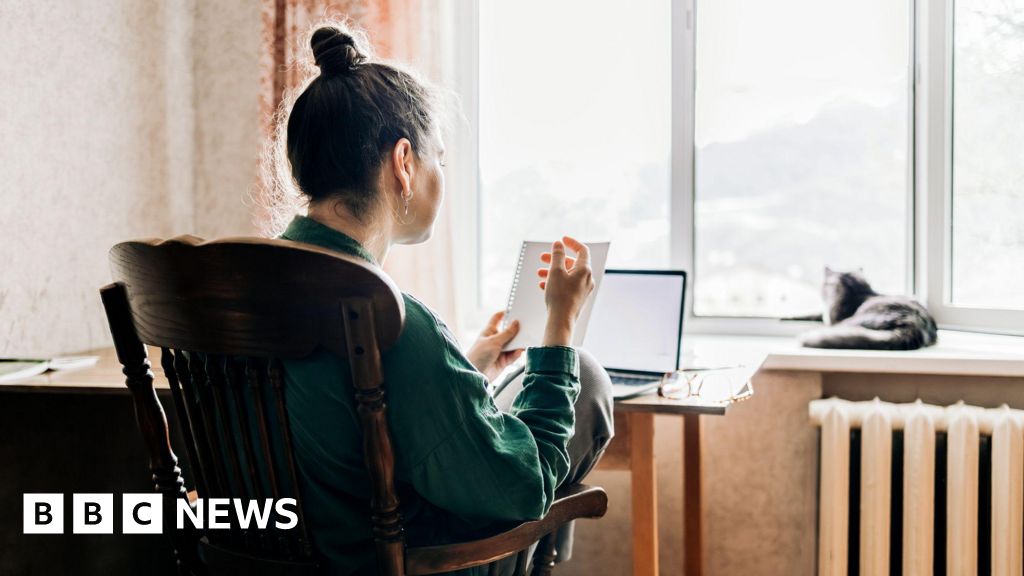
‘I had £20,000 stolen and had to fight a 13-month fraud reporting rule to get it back’

-
 Tech1 week ago
A Brain Implant for Depression Is About to Be Tested in Humans
-
 Sports1 week ago
Pro wrestling star Steph De Lander reveals how colleague’s advice helped lead her to title triumph at ACW
-
Business1 week ago
‘I had £20,000 stolen and had to fight a 13-month fraud reporting rule to get it back’
-

 Entertainment1 week ago
Norway joins Type 26 Frigate Programme to boost NATO naval power
-

 Entertainment1 week ago
Melania Trump says ABC should ‘take a stand’ on late-night host Kimmel
-

 Tech1 week ago
Are tech leaders risking a cyber resourcing crisis? | Computer Weekly
-
 Business6 days ago
PSX plunges over 4,800 points | The Express Tribune
-

 Tech1 week ago
This Ambitious Laptop Doesn’t Leave Much Room for Your Hands