

Fashion
Burel Factory launches its first ‘Pet Collection’ of clothing and accessories

Translated by
Nazia BIBI KEENOO
Published
September 16, 2025
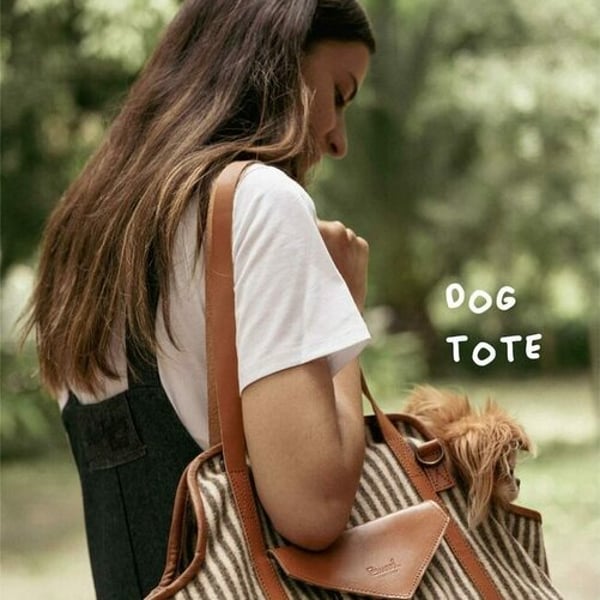
Burel Factory has just announced the launch of its new Wool & Pet collection, featuring clothing and accessories for pets, now available on the Serra da Estrela-based brand’s website.
“Introducing Burel Factory’s first pet collection — Wool & Pet, where timeless craftsmanship meets tail-wagging comfort,” the Beira-based artisan brand states in a press release. “Designed with the same care, quality and natural materials, your four-legged friends can now enjoy durable performance on outdoor walks and cozy comfort indoors.”
“Made from burel wool with leather detailing, each piece is carefully crafted to deliver durability, comfort and timeless design — whether for a stroll in the park or a cuddle on the sofa. A perfect collection for your beloved companions.”
“Burel Factory takes a pioneering step into the pet world with its first collection, where each piece reflects the brand’s unique identity, using the iconic burel — natural, hard-wearing and sustainable — to create accessories that blend contemporary design with comfort, enhancing your pet’s well-being,” the brand states on its website, Burelfactory.com.

The Wool & Pet collection, a first for Burel Factory in this category, features nine items: an adjustable neck-and-chest cover (Pet Cover), lined with wool flannel, priced at €69; a hands-free leash (Hands-Free Leash), adjustable to five positions for hand, waist or shoulder use, with carabiners at both ends for side adjustment and collar attachment, priced at €31; an adjustable burel and leather collar (Collar), priced at €32; a burel pet bed (Pet Bed), with removable lining and filling for easy washing, plus a leather handle, priced at €107; an adjustable harness (Harness), which attaches to the leash via a D-ring in two positions (chest and back), and is adjustable in width and length, priced at €47; an adjustable collar with a reversible bandana (Collar with Bandana), priced at €38; a reversible vest, adjustable at the neck and chest (Pet Reversible Puffer), priced at €77; a burel fabric pouf for the home (Pet Pouf), with removable filling for easy washing and a leather handle, priced at €105; and, finally, a multipurpose blanket for lying on or covering (Pet Blanket), with leather trim, priced at €65.
All items are crafted on Portugal’s highest mountain, drawing on the ancestral savoir-faire of Portuguese shepherds. They are offered in colors inspired by the mountain landscape, with two or three options available for each product.

This article is an automatic translation.
Click here to read the original article.
Copyright © 2025 FashionNetwork.com All rights reserved.







Current account excluding gold and energy indicated net deficit of $3.9 billion, while goods saw a deficit of $9.5 billion.
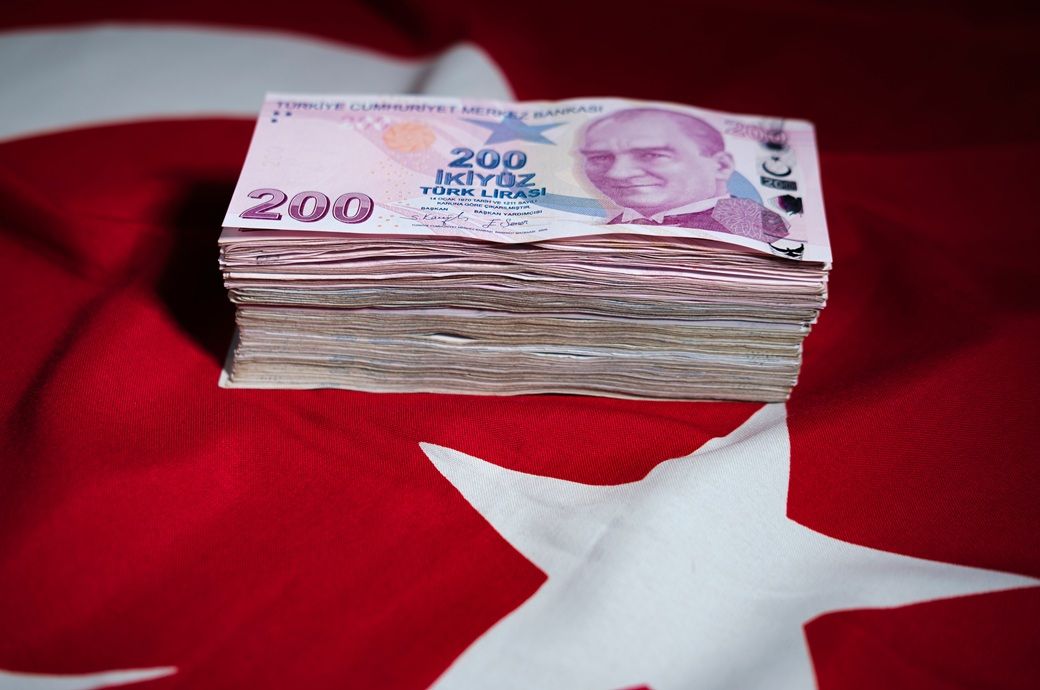
Turkiye recorded a current account deficit (CAD) of $9.6 billion in March, the country’s central bank said.
Treasury and Finance Minister Mehmet Simsek said the CAD is expected to widen this year, due to high energy and non-energy commodity prices.
Simsek said the deterioration is likely to remain temporary and manageable, thanks to stronger macroeconomic fundamentals and policy gains.
According to annualised data, current account deficit recorded as $39.7 billion (2.6 per cent of gross domestic product) in March, while the goods deficit recorded as $77.8 billion.
Simsek said the deterioration is likely to remain temporary and manageable thanks to stronger macroeconomic fundamentals and policy gains, domestic media outlets reported.
Turkiye is heavily reliant on imported energy, whose prices spiralled due to the Middle East conflict.
Simsek said elevated global commodity prices would put pressure on the external balance, but emphasised that the government’s economic programme had improved resilience against such shocks.
He said foreign direct investment (FDI) inflows totalled $1 billion in March, bringing annualised foreign direct investment to $12.6 billion.
The new investment incentive package under discussion in parliament now is expected to strengthen the country’s financing structure and support long-term capital inflows, he added.
Fibre2Fashion News Desk (DS)
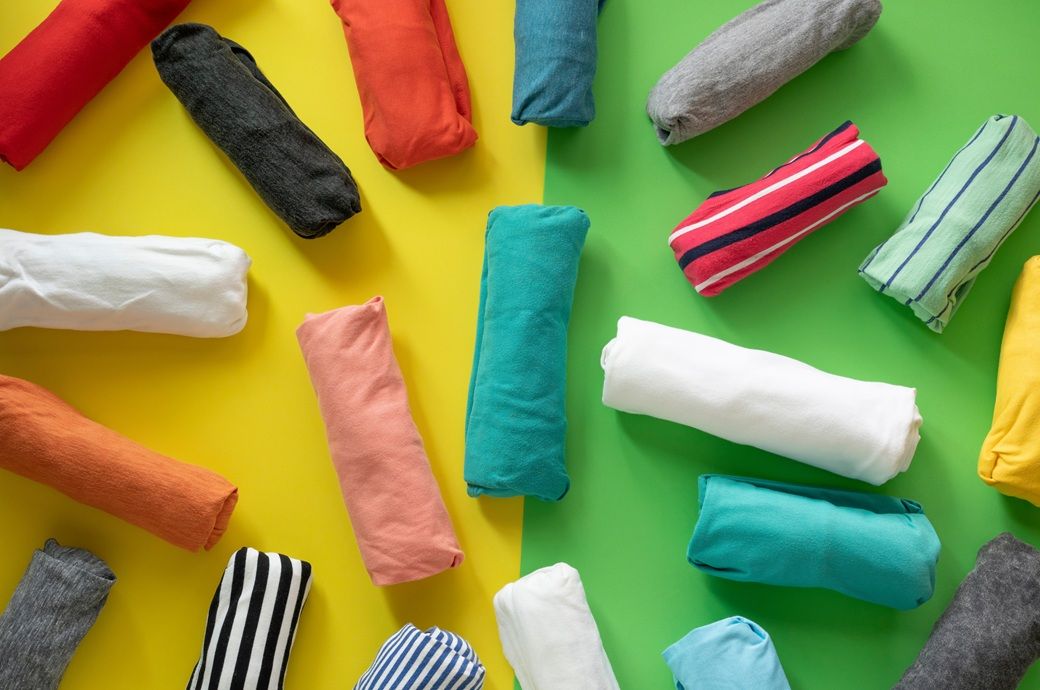
During the first quarter of ****, the UK’s imports of textile fabrics eased down *.** to £*,*** million (~$*,*** million), against £*,*** million in January-March **** but slightly higher from £*,*** million in the fourth quarter of ****. Its imports of fibre were noted at £** million (~$***.** million) steady as £** million in Q*, **** but slightly lower than £** million in Q*, ****.
During the third month of this year, the country’s clothing imports declined *.** per cent to £*.*** billion (~$*.*** billion), compared with £*.*** billion in March ****. But the inbound shipment was slightly higher month on month compared with £*.*** billion in February ****.

Higher rents, utility bills and fuel prices are eating away at already thin profit margins, it found.
High inflation is cutting deep into Bangladesh consumer spending, with weak demand turning one of the biggest concerns for businesses, DCCI said.
Higher rents, utility bills and fuel prices are eating away at already thin profit margins.
DCCI’s economic position index revealed that consumers have sharply reduced spending as the cost of living continues to rise.
SMEs are feeling the pressure the most.
The chamber’s economic position index (EPI) revealed that consumers have sharply reduced spending as the cost of living continues to rise, putting pressure on retailers, transport operators and other service providers.
Small and medium enterprises (SMEs) are feeling the pressure the most as they struggle to manage higher operating costs without losing customers.
Businesses also cited difficulties in obtaining bank loans, while delays in licensing and other regulatory procedures are adding to costs.
The DCCI report identified a shortage of skilled workers, particularly in technical and customer service roles, as another challenge for the sector.
The country’s inflation rose to 9.04 per cent in April from 8.71 per cent in March, according to official statistics.
Fibre2Fashion News Desk (DS)


CDC says American tests positive for Ebola in Africa, risk in the U.S. remains low
Elon Musk just lost another lawsuit. Will he keep fighting?

India will become history if it attempts any future misadventure, warns defence czar

-

 Entertainment6 days ago
Conan O’Brien hat tricks as Oscar host
-

 Tech1 week ago
Could Contact-Tracing Apps Help With the Hantavirus? Not Really
-

 Fashion5 days ago
Italy’s Zegna Group’s Q1 growth boosted by strong organic performance
-

 Entertainment1 week ago
Martin Short: Facing tragedy with joy
-

 Entertainment1 week ago
Tom Brady gets back at Kevin Hart during Netflix roast
-

 Sports1 week ago
Jacob Fatu unleashes vicious assault on Roman Reigns after World Heavyweight Championship loss at WWE Backlash
-

 Entertainment1 week ago
Martha Stewart: How to make an omelet
-

 Tech1 week ago
Papa Johns Is Getting Into Drone Delivery—but Not for Pizza