

Politics
UNSC decides not to lift Iran sanctions, but still time to agree delay

- Britain, France, Germany offer delay if Iran meets conditions.
- US open to diplomacy despite voting against resolution.
- Iran’s allies propose six-month extension for negotiations.
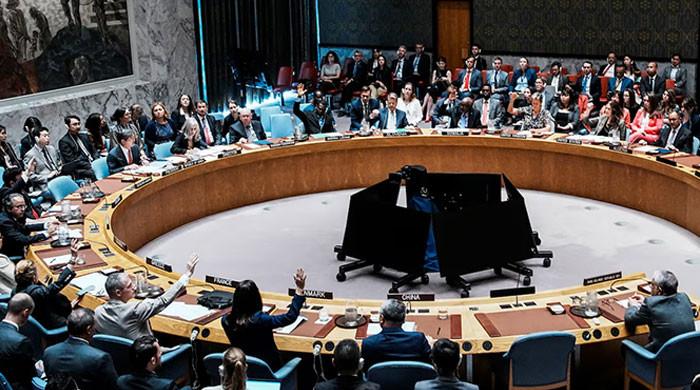
The United Nations Security Council did not adopt a draft resolution on Friday to permanently lift sanctions on Iran, but Tehran and key European powers still have eight days to try and agree to a delay.
The 15-member UN Security Council was required to vote on the draft resolution on Friday after Britain, France and Germany launched a 30-day process on August 28 to reimpose UN sanctions, accusing Tehran of failing to abide by a 2015 deal with world powers that aimed to prevent it from developing a nuclear weapon. Iran denies having any such intention.
Russia, China, Pakistan and Algeria voted in favour of the draft text on Friday. Nine members voted against, and two abstained.
The Security Council vote has now set up a week of intense diplomacy while world leaders — including Iran’s President Masoud Pezeshkian — are in New York for the annual high-level UN General Assembly.
Iran says vote outcome ‘weakens diplomacy’
“The door for diplomacy is not closed, but it will be Iran, not adversaries, who decide with whom and on what basis to engage,” Iran’s UN Ambassador Amir Saeid Iravani told reporters after the vote.
Iran’s Foreign Minister Abbas Araqchi will meet with his European counterparts in New York next week on the sidelines of the UN General Assembly, he said, adding that Friday’s divided vote showed there was “no consensus in the council”.
“This decision weakens diplomacy and risks dangerous consequences for non-proliferation,” Iravani said.
Britain, France and Germany have offered to delay reinstating sanctions for up to six months — to allow space for talks on a long-term deal on Tehran’s nuclear program — if Iran restores access for UN nuclear inspectors, addresses concerns about its stock of enriched uranium, and engages in talks with the United States.
“Without these most basic conditions being met, there is no clear path to a swift diplomatic solution,” Britain’s UN Ambassador Barbara Woodward told the council. “We are ready for further engagements, diplomatically, in the next week, and beyond, to seek to resolve differences.”
Any delay in reimposing sanctions would require a Security Council resolution. If a deal on an extension can’t be reached by the end of September 27, then all UN sanctions will be reimposed.
Iran’s foreign ministry condemned the move by the “E3” group of Britain, France and Germany to reimpose sanctions on Tehran as “illegal, unjustified and provocative,” saying it “gravely” undermined diplomatic efforts.
US remains ready to engage, says envoy
Acting US Ambassador Dorothy Shea said that while the US voted “no” on Friday, it “does not impede the possibility of real diplomacy”, adding that a return of sanctions on Iran “does not preclude later removal through diplomacy”.
“More importantly, President Trump has continued to reiterate the United States’ ongoing readiness for meaningful, direct, and timebound dialogue with Iran — be it prior to the conclusion of the snapback process on September 27, or after,” she told the council.
French UN Ambassador Jerome Bonnafont said that since the 30-day process — known as snapback —was triggered, the foreign ministers of Germany, France and Britain had met twice with their Iranian counterpart.
“Our hand remains outstretched to find a negotiated solution,” he told the council before the vote.
Separately, Iran’s strategic allies Russia and China finalised a draft Security Council resolution late last month that would extend the 2015 deal for six months and urge all parties to immediately resume negotiations. But they have not yet asked for a vote.
Russia and China, which are also parties to the 2015 Iran nuclear deal, have both rejected the Europeans’ bid to reimpose UN sanctions on Iran.
China’s UN Ambassador Fu Cong said the attempt to trigger snapback was “detrimental to the diplomatic effort towards an early resumption of talks, and may even bring about catastrophic consequences that are impossible to foresee and forfeit years of diplomatic efforts in one stroke”.
- Khamenei terms wave of protests “American conspiracy”.
- Iran’s supreme leader says will not spare domestic criminals.
- DPM Dar expresses hope for peace and stability in region.
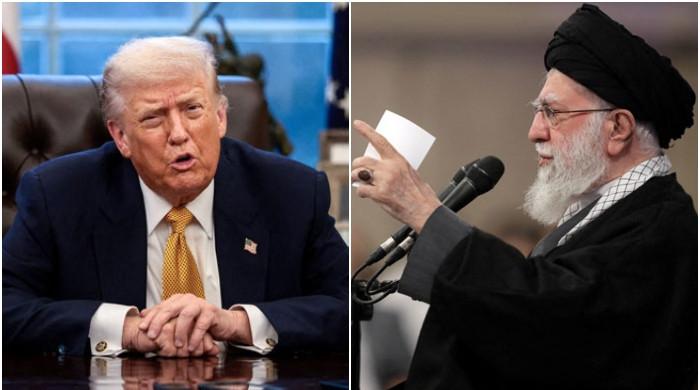
Iran’s supreme leader Ayatollah Ali Khamenei on Saturday accused US President Donald Trump of being responsible for “casualties” during a protest wave in the country.
“We hold the American president guilty for the casualties, damages and accusations he has levelled against the Iranian nation,” he told a crowd of supporters during an address marking a religious holiday.
“This was an American conspiracy,” he said, adding that “America’s goal is to swallow Iran… the goal is to put Iran back under military, political and economic domination”.
He further said authorities “must break the back of the seditionists” after a crackdown on the protest wave.
“We do not intend to lead the country to war, but we will not spare domestic criminals… worse than domestic criminals, international criminals, we will not spare them either,” he added.
“By God’s grace, the Iranian nation must break the back of the seditionists just as it broke the back of the sedition.”
It is pertinent to mention here that more than 3,000 people have died in Iran’s nationwide protests, rights activists said on Saturday, while a “very slight rise” in internet activity was reported in the country after an eight-day blackout.
The protests erupted on December 28 over economic hardship and swelled into widespread demonstrations calling for the end of clerical rule in the country, culminating in mass violence late last week.
Tensions in Iran, however, subsided after three weeks of protests under an internet blackout. The capital Tehran, however, has been comparatively quiet for four days, said several residents reached by Reuters.
Drones were flying over the city, but there were no signs of major protests on Thursday or Friday, said the residents, who asked not to be identified for their safety.
Separately, Deputy Prime Minister Ishaq Dar held telephonic conversation with Iran’s Foreign Minister Abbas Araghchi today.
They discussed the current situation in Iran and the wider region.
DPM Dar expressed hope for peace and stability, and both sides agreed to continue bilateral consultations on matters of mutual interest.
Earlier, US President Donald Trump thanked Iran’s leaders for cancelling what he said were hundreds of planned executions of protesters after a crackdown.
Taking to his social media platform, he said the mass hangings had been called off and praised Tehran for the move.
US President Donald Trump, whose repeated threats to act had included a vow to “take very strong action” if Iran executed protesters, said Tehran’s leaders had called off mass hangings.
“I greatly respect the fact that all scheduled hangings, which were to take place yesterday (Over 800 of them), have been cancelled by the leadership of Iran. Thank you!” he posted on social media.
- Venezuela’s Machado gave her Nobel medal to Trump.
- Donald Trump says he intends to keep the medal.
- Original laureate recorded in history as prize recipient.
OSLO: The Nobel Peace Prize remains inseparably linked to the person or organisation that won it, though the medal can be given away, the Norwegian Nobel Committee said on Friday, a day after last year’s winner gave her medalto US President Donald Trump.
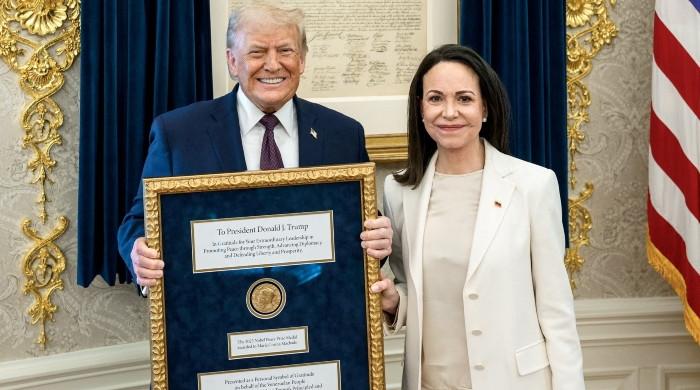
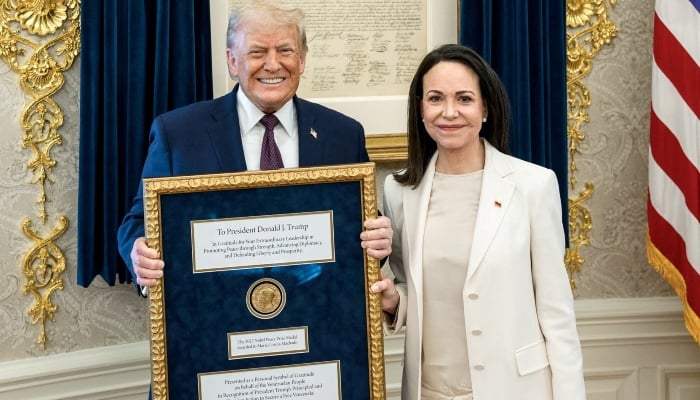
Venezuelan opposition leader Maria Corina Machado gave her medalon on Thursday to Trump, who thanked her for it. The White House released a photo of Trump and Machado, with Trump holding up a gold-coloured frame displaying it, and a White House official said Trump intends to keep it.
Machado’s award also consists of a diploma and 11 million Swedish crowns ($1.19 million).
“Regardless of what may happen to the medal, the diploma, or the prize money, it is and remains the original laureate who is recorded in history as the recipient of the prize,” the award body said in a statement.
“There are no restrictions in the statutes of the Nobel Foundation on what a laureate may do with the medal, the diploma, or the prize money. This means that a laureate is free to keep, give away, sell, or donate these items,” it added.
‘Inseparably linked’
The medal and the diploma are physical symbols confirming that an individual or organisation has been awarded the prize, said the five-strong award committee.
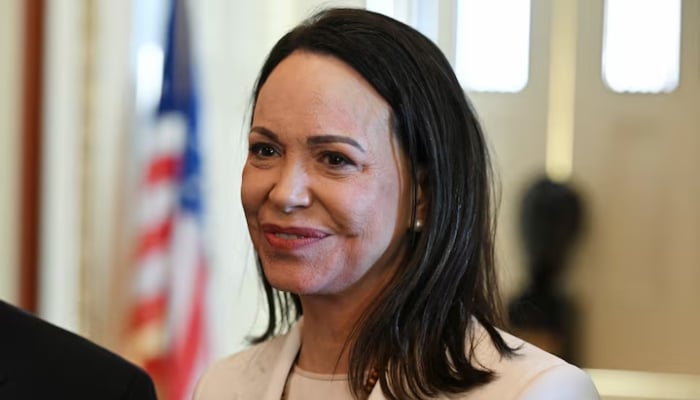
“The prize itself – the honour and recognition – remains inseparably linked to the person or organisation designated as the laureate by the Norwegian Nobel Committee,” it said.
The committee, which did not refer to Trump and Machado by name in its statement, said it does not comment on a laureate’s statements, decisions or actions after the prize is announced.
It was not the first time a Nobel laureate has given away the medal. In 1943, Nobel literature laureate Knut Hamsun gave his to Nazi propaganda minister Joseph Goebbels.
In 2022, Nobel Peace laureate Dmitry Muratov sold his medal for $100 million to raise money for the UN children’s fund Unicef to help Ukrainian refugee children.
In 2024, the widow of former UN Secretary-General Kofi Annan donated his 2001 Nobel Peace Prize medal and diploma to the UN office in Geneva.


US President Donald Trump purchased about $100 million in municipal and corporate bonds from mid-November to late December, his latest disclosures showed, including up to $2 million in Netflix and Warner Bros Discovery bonds just weeks after the companies announced their merger.
Financial disclosures posted on Thursday and Friday showed the majority of Trump’s purchases were municipal bonds from cities, local school districts, utilities and hospitals.
But he also bought bonds from companies including Boeing, Occidental Petroleum and General Motors.
The investments were the latest reported assets added to Trump’s expanding portfolio while he is in office.
It includes holdings in sectors that benefit from his policies, raising questions about conflicts of interest.
For example, Trump said in December that he would have a say in whether Netflix can proceed with its proposed $83 billion acquisition of Warner Bros Discovery, which faces a rival bid from Paramount Skydance.
Any deal to acquire Warner Bros will need regulatory approval.
A White House official, who spoke on the condition of anonymity, said on Friday that Trump’s stock and bond portfolio is independently managed by third-party financial institutions and neither Trump nor any member of his family has any ability to direct, influence or provide input regarding how the portfolio is invested.
Like many wealthy individuals, Trump regularly buys bonds as part of his investment portfolio.
He previously disclosed at least $82 million in bond purchases from late August to early October.


George Kittle’s wife shares live reaction to husband’s Achilles injury: ‘Doesn’t make any f—ing sense’

Disney dominated the 2025 box office. Here’s how it could keep the crown in 2026

Trump ‘guilty for casualties’ in Iran protests: Khamenei

-

 Tech5 days ago
New Proposed Legislation Would Let Self-Driving Cars Operate in New York State
-
 Sports6 days ago
Clock is ticking for Frank at Spurs, with dwindling evidence he deserves extra time
-
Sports1 week ago
Commanders go young, promote David Blough to be offensive coordinator
-

 Entertainment4 days ago
X (formerly Twitter) recovers after brief global outage affects thousands
-
 Fashion6 days ago
South India cotton yarn gains but market unease over US tariff fears
-
 Fashion6 days ago
China’s central bank conducts $157-bn outright reverse repo operation
-
 Business1 week ago
SoftBank reduces Ola Electric stake to 13.5% from 15.6% – The Times of India
-

 Sports6 days ago
US figure skating power couple makes history with record breaking seventh national championship