

Fashion
France’s richest man, LVMH’s Arnault, slams proposed billionaire tax


By
Reuters
Published
September 21, 2025
Bernard Arnault, the boss of luxury goods group LVMH and France’s richest man, has attacked a proposed 2% tax on billionaires as an assault on France’s economy and denounced the plan’s architect as a far-left ideologue.
The tax, which would target wealth above 100 million euros ($117 million), has gained political traction in France, where Prime Minister Sébastien Lecornu faces pressure from the Socialist Party to include it in the 2026 budget or face a confidence vote that could topple his government.
“This is clearly not a technical or economic debate, but rather a clearly stated desire to destroy the French economy,” Arnault told Britain’s Sunday Times.
He accused the plan’s architect, economist Gabriel Zucman of being “first and foremost a far-left activist” who uses “pseudo-academic competence” to promote an ideology aimed at dismantling the liberal economic system, which Arnault described as “the only one that works for the good of all”.
Zucman, a professor at France’s École Normale Supérieure and the University of California, Berkeley, rejected the accusations.
“I’ve never been an activist for any movement or party,” he said on X, adding his work was grounded in research, not ideology.
Zucman was among 300 economists who publicly backed the economic platform of the left-wing Nouveau Front Populaire alliance ahead of last year’s legislative elections.
He has recently argued in media appearances that the ultra-rich pay proportionally less tax than many other citizens — a gap the proposed levy aims to close.
The tax has broad public support, with an Ifop poll commissioned by the Socialist Party this month showing 86% approval.
© Thomson Reuters 2025 All rights reserved.







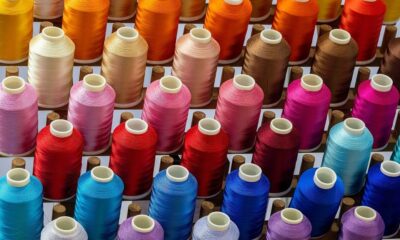




Cotton can do more – a lot more. Cutting-edge textiles and high-tech products made from 100% cotton prove just how power-fully performance and sustainability can come together. That very surge of innovation is front and centre at the 38th Bremen Cotton Conference, taking place March 25–27, 2026, at Bremen’s Parliament on the historic market square – culminating in a bold and dedicated closing session on Friday. In the spotlight: per-formance upgrades for pure cotton, smart strategies for circular textile waste solu-tions, and pioneering concepts for demanding technical applications. From natural fi-bre–reinforced composites to highly effective flame-retardant solutions, cotton steps out of the closet and shows the future potential woven into every fibre.
The 38th Bremen Cotton Conference, set for March 25–27, 2026, will spotlight cotton’s transformation into a high-performance, sustainable material.
Experts will present innovations in cotton functionalisation, circular textile waste conversion, natural fibre composites and halogen-free flame-retardant systems, highlighting cotton’s expanding role in advanced technical applications.
Cotton is so much more than just a T-shirt. As a renewable resource, it’s biodegrada-ble, free from microplastics, naturally breathable, and delivers comfort you can actually feel. But this fibre has long since broken free from the fashion rack. Cotton is evolving into a versatile high-tech material.
Thanks to advanced finishing technologies, functional coatings, innovative hybrid yarns, and bio-based material blends, its range of applications is expanding fast – far beyond traditional textiles. For companies, that means real opportunity: replacing fos-sil-based resources with sustainable alternatives, staying ahead of regulatory de-mands, and unlocking new high-performance markets. Cotton is transforming from a natural product into a true engine of innovation.
Cotton Textile Waste as a Resource
Future-ready innovation means thinking across the entire product lifecycle. Production scraps, offcuts, and post-consumer textiles are not just a growing waste problem — they are also a valuable and largely untapped resource. In his presentation, Dr. Mat-thew Farrell of Cotton Incorporated (USA) demonstrates how cotton textile waste can be converted into glucose. Since these materials consist primarily of cellulose — aside from dyes and finishes — they can be broken down into their sugar building blocks through hydrolysis.* The resulting glucose serves as a bio-based platform feedstock for a wide range of value-added products. Drawing on two processes developed in recent years, Farrell illustrates how used cotton textiles can be integrated into viable circular economy concepts.
* Note: During hydrolysis, cellulose chains are broken down into glucose using water — often supported by acids or enzymes.
Natural Fibre Systems and Flame Retardancy
At the same time, the market for natural fibre-reinforced composites is expanding rap-idly, as industry and research increasingly turn to renewable, lightweight, and re-source-efficient materials. Natural fibres generally offer a lower carbon footprint than glass or carbon fibre reinforcements and are especially attractive for applications driven by clear sustainability targets. However, fire performance presents specific chal-lenges. As plant-based fibres are inherently combustible, natural fibre composites of-ten exhibit less favourable fire behaviour than their glass- or carbon-fibre-reinforced counterparts. Meanwhile, regulatory and safety requirements are becoming more strin-gent: beyond flammability itself, parameters such as heat release rate, smoke devel-opment, and smoke toxicity are moving into sharper focus.
At the Bremen conference, Dr. Thomas Mayer-Gall from the German Institutes of Tex-tile and Fibre Research North-West (DTNW), Krefeld, will present newly developed, halogen-free flame-retardant systems from DTNW research designed for these de-manding applications.
More Performance from 100% Cotton
Complementing the circularity perspective, Seth Winner of Cotton Incorporated turns the spotlight on enhancing the performance of textiles made from pure cotton. The goal: to elevate 100% cotton fabrics with targeted functional upgrades — improving breathability, thermal insulation, and stretch, among other properties.
He will present innovative approaches that enable the precise functionalization of cot-ton textiles, using both new and established technologies to unlock the full perfor-mance potential of pure cotton.
Innovation Meets Circularity
Against the backdrop of rising demands for resource efficiency, circular economy so-lutions, and product safety, the closing session of the Bremen Cotton Conference sends a strong message. It delivers fresh, hands-on impulses for manufacturers, fin-ishers, and developers — and showcases the remarkable innovative power of cotton.
Cotton is no longer just a traditional apparel fibre. It is evolving into a high-performance raw material platform for technical and sustainable applications — with strategic rele-vance for the textile and materials industries of tomorrow.
Note: The headline, insights, and image of this press release may have been refined by the Fibre2Fashion staff; the rest of the content remains unchanged.
Fibre2Fashion News Desk (MS)
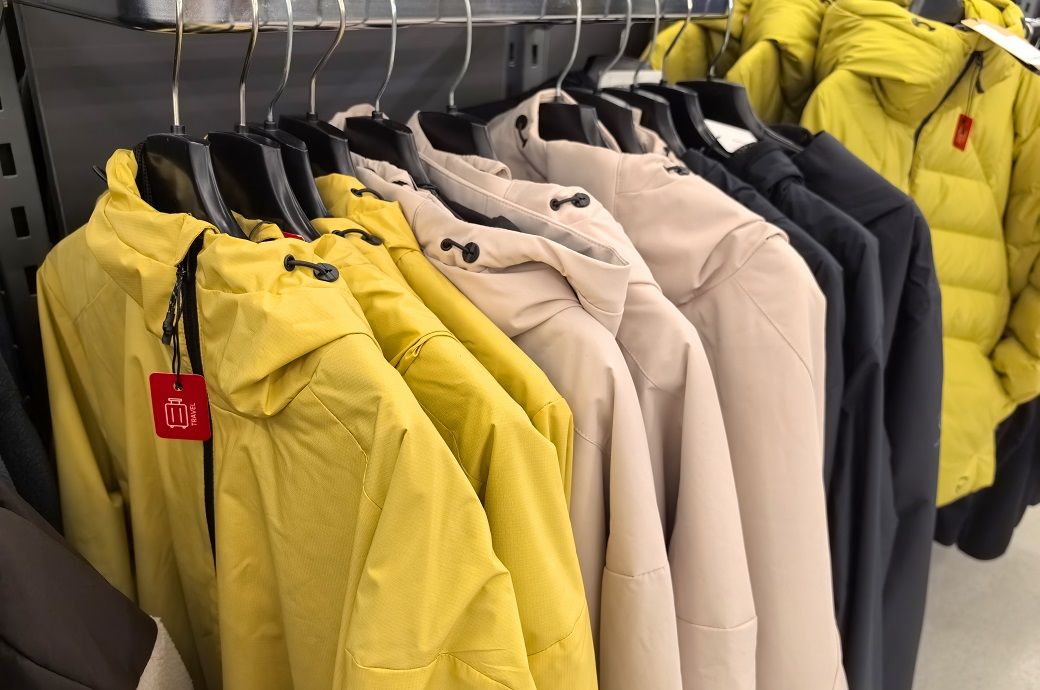
Exports of knitted and crocheted garments (HS Chapter **) fell *.* per cent to $*.*** billion from $**.*** billion a year earlier, as retailers trimmed replenishment volumes. Woven apparel and accessories (HS Chapter **) recorded a steeper fall of *.* per cent to $*.*** billion, compared with $*.*** billion in ****, reflecting weaker demand for higher-value fashion categories and formalwear.
December **** data signalled a slower contraction relative to the annual trend. Knitted and crocheted apparel exports rose *.* per cent year on year to $***.*** million from $***.*** million in December ****, supported by seasonal restocking. In contrast, non-knitted apparel declined *.* per cent to $***.*** million from $***.*** million. Combined shipments under HS ** and HS ** edged down *.** per cent to $*.*** billion.

Fashion demand in 2026 remains intact but more selective, with consumers spending cautiously and prioritising value, durability and versatility.
Intentional purchasing and promotion sensitivity are reshaping pricing dynamics and margin structures.
Polarised consumer behaviour is pushing brands to rebuild trust, justify full price and align sustainability with longevity.
Source link


Cotton innovation to take centre stage at Bremen conference 2026

Asian stocks today: Kospi drops 1.6% as Middle East tensions weigh on markets – The Times of India

Nepal counts votes after key post-uprising election

-
 Business1 week ago
Attock Cement’s acquisition approved | The Express Tribune
-

 Fashion1 week ago
Policy easing drives Argentina’s garment import surge in 2025
-

 Politics1 week ago
What are Iran’s ballistic missile capabilities?
-
 Business7 days ago
India Us Trade Deal: Fresh look at India-US trade deal? May be ‘rebalanced’ if circumstances change, says Piyush Goyal – The Times of India
-

 Politics1 week ago
US arrests ex-Air Force pilot for ‘training’ Chinese military
-
 Business7 days ago
Greggs to reveal trading amid pressure from cost of living and weight loss drugs
-

 Sports1 week ago
Sri Lanka’s Shanaka says constant criticism has affected players’ mental health
-

 Sports7 days ago
LPGA legend shares her feelings about US women’s Olympic wins: ‘Gets me really emotional’