

Business
Government approves Gatwick second runway plan


Gatwick Airport’s £2.2 billion second runway plan has been given the go-ahead by Transport Secretary Heidi Alexander.
In the privately-financed project, the West Sussex airport will move its emergency runway 12 metres north, enabling it to be used for departures of narrow-bodied planes such as Airbus A320s and Boeing 737s.
This will enable it to be used for about 100,000 more flights a year.
Ms Alexander backed the scheme as a “no-brainer” for economic growth, a Government source said, suggesting flights could take off from the new full runway before 2029.
The Cabinet minister is satisfied with adjustments made, covering issues such as noise mitigation and the proportion of passengers who would travel to and from the airport by public transport.
It comes after the Planning Inspectorate initially rejected the airport’s application and earlier this year recommended Ms Alexander should approve the project if the changes were made.
New commitments include Gatwick’s management setting its own targets for the proportion of passengers who travel to the airport by public transport, rather than a legally binding target.
Residents affected by more noise will be able to ask Gatwick to cover the costs for triple-glazed windows.
Homeowners living directly beneath the new flight routes who choose to sell could have their stamp duty and reasonable moving costs paid, as well as estate agent fees of up to 1% of the purchase price.
Gatwick says its plans will create £1 billion per year in economic benefits, and generate an additional 14,000 jobs.
A Government source told the PA news agency: “The Transport Secretary has cleared Gatwick expansion for take-off.
“With capacity constraints holding back business, trade and tourism, this is a no-brainer for growth.
“This Government has taken unprecedented steps to get this done, navigating a needlessly complex planning system, which our reforms will simplify in future.
“It is possible that planes could be taking off from a new full runway at Gatwick before the next general election.
“Any airport expansion must be delivered in line with our legally binding climate change commitments and meet strict environmental requirements.”
Local campaigners opposed to expansion are concerned about the impact on surface transport, noise, housing provision and wastewater treatment, but the airport insists it has conducted “full and thorough assessments” of those issues.
CAGNE, an umbrella aviation community and environment group for Sussex, Surrey and Kent, said it stands ready to serve a judicial review funded by residents and environmental bodies.
The group said: “We know this Government cares little for the environmental impact aviation is having on our planet and Gatwick’s neighbours, but not to demand that Gatwick pays for the infrastructure, the onsite wastewater treatment plant, and noise impact is unlawful in our book.”
The Labour Government’s backing of a third runway at Heathrow Airport in its bid to grow the economy has also drawn criticism from environmental groups and opposition politicians.
Green Party leader Zack Polanski described ministers’ support of a second Gatwick runway as a “disaster”.
He said in a statement: “It ignores basic climate science and risks undermining efforts to tackle the climate crisis.
“Labour keeps wheeling out the same nonsense about growth, but at what cost? What this really means is more pollution, more noise for local communities, and no real economic benefit.”
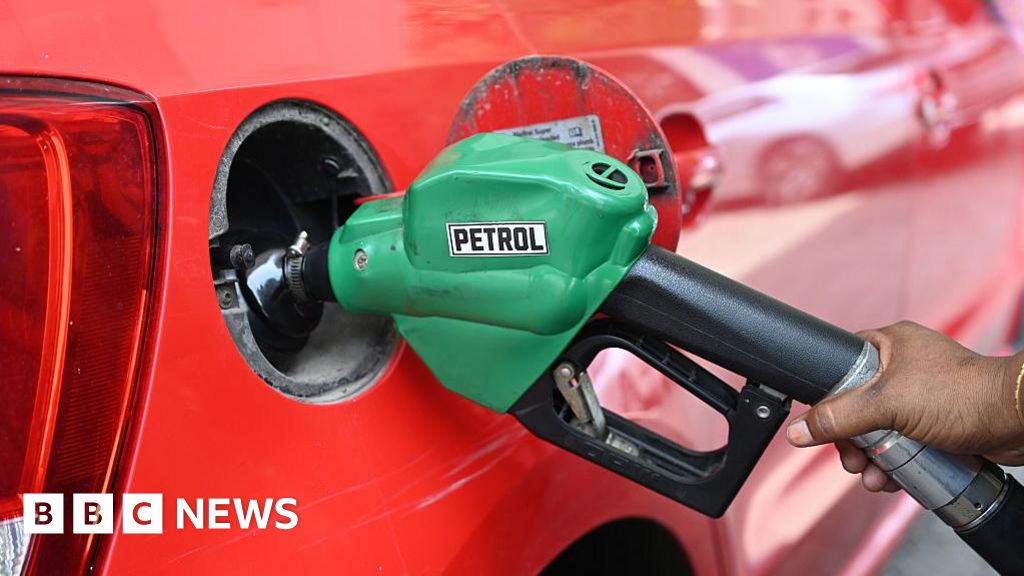
Trump said on Saturday that an agreement would include the reopening of the Strait of Hormuz, without giving further details.
Source link
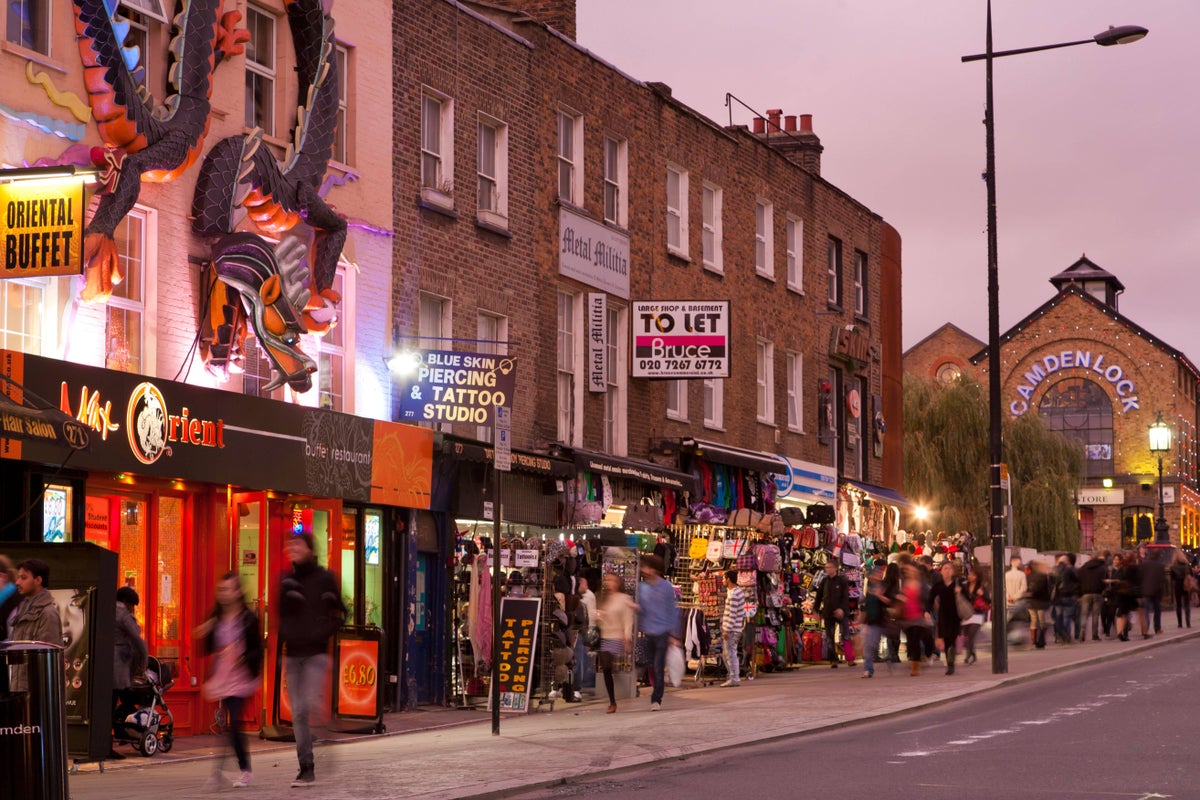
UK high streets and shopping destinations are showing signs of recovery as more than 13 retail stores opened each week over the past year, according to new figures.
However, England and Wales have still seen more than 6,000 retail premises vanish from local communities over the past five years.
Analysis of Valuation Office Agency data by tax firm Ryan, found that there were 507,810 retail premises across England and Wales at the end of 2025.
It said the figures showed that a recent contraction across the sector has appeared to stabilise, with a 723 net increase in the number of retail stores compared with a year earlier.
Property numbers increased across every region of England and Wales, with the exception of the North West, which saw a decline of 41.
It suggests that parts of the sector are now beginning to rebalance following significant structural contraction seen since the pandemic.
The creation of new retail units also comes as many retail real estate firms, such as Hammerson, have turned empty large units, often former department stores, into a greater number of smaller units.
Other retail groups, such as John Lewis, have moved away from ambitions to transform some retail property for other uses such as rental accommodation.
Nevertheless, the retail sector is still facing pressure from higher business rates for many firms, increased labour costs and concerns over consumer sentiment.
The data also shows that there has also been significant decline over the past few years, with a net reduction of 6,045 retail properties since the end of 2020.
London recorded the largest five-year regional reduction, with 1,266 retail premises disappearing over the period, followed by the South East (-1,191), North West (-719) and North East (-672).
The figures show retail premises which have permanently disappeared from communities altogether, having either been demolished or converted for alternative use.
The figures come as Ryan’s 2026 annual business rates review highlighted that the retail sector saw a 9.3% increase in rateable values at the 2026 business rates revaluation despite the major shift in the retail landscape since the pandemic.
Alex Probyn, practice leader for Europe and Asia-Pacific property tax at Ryan, said: “The pandemic accelerated structural changes that were already emerging across the retail sector, including changing consumer behaviour, hybrid working patterns and a reduced reliance on traditional retail floorspace in many locations.
“Many locations were arguably over-retailed before Covid and high streets have evolved towards more mixed-use environments, with retail space being rebalanced alongside growing demand for residential, leisure, hospitality and service-led uses.
“The revaluation outcome does suggest a large proportion of retail premises have seen bigger increases in their assessments than underlying market conditions and rental evidence would have led occupiers to expect.
“Retailers should therefore carefully review and, where appropriate, challenge their assessments.”

Indians sharply cut back on overseas travel spending in March, with remittances for foreign trips dropping by more than $212 million from the previous month, according to Reserve Bank of India data. The fall in outbound travel expenditure came amid rising oil prices linked to the Middle East conflict and persistent pressure on rupee, even as travel remained the single largest component of outward remittances under the Liberalised Remittance Scheme (LRS).In March, travel-related remittances fell to $1.09 billion from $1.3 billion in February and $1.65 billion in January. The decline came at a time when the West Asia conflict pushed oil prices higher and weakened rupee to record lows. Amid the situation, Prime Minister Narendra Modi urged citizens to cut down on foreign travel and adopt measures such as carpooling. Lower overseas travel spending could reduce foreign exchange outflows and help ease pressure on rupee.According to the RBI’s data on outward remittances by resident individuals, travel continued to account for the largest share of money sent abroad under the LRS in March. Total remittances during the month stood at $2.59 billion.The RBI tracks overseas spending across categories including travel, studies abroad, maintenance of close relatives, overseas investments, and property purchases. Under the LRS framework, resident individuals, including minors, can remit up to $250,000 in a financial year for permitted current or capital account transactions.Within the travel segment, the biggest component remained the ‘other travel’ category, which covers holiday spending and international credit card settlements. Indians spent $623.05 million under this category in March, accounting for nearly 57 per cent of total travel-related remittances during the month.Expenditure linked to education travel, including hostel and fee payments, stood at $450.16 million. Business travel, pilgrimage, and overseas medical treatment together accounted for $21.39 million.The data also showed a rise in remittances meant for the maintenance of close relatives abroad. Such transfers increased to $389.78 million in March from $266.18 million in February.At the same time, spending under the ‘studies abroad’ category declined. This category includes payments made for educational services accessed remotely without travelling overseas, such as correspondence courses. Remittances under this head stood at $151.71 million in March, compared to $175.68 million in February and $267.42 million in January.For the financial year 2024-25, Indians remitted a total of $29.56 billion under the LRS. Travel made up the largest portion of this amount at $16.96 billion.The RBI figures further showed that investments by Indians in overseas equity and debt instruments rose significantly to $440.22 million in March from $265.99 million in February.Meanwhile, outward remittances for the purchase of immovable property overseas declined to $38.68 million in March, down from $51.36 million a month earlier.


Meghan Markle makes statement as William scones remark takes unexpected turn

Net employment in Australia drops by 18,600 MoM in April: ABS

Zayn Malik thanks fans after ‘epic’ Konnakol Tour opening night

-

 Entertainment1 week ago
Where Pete Davidson, Elsie Hewitt stand after breakup: Details revealed
-

 Politics1 week ago
Rising diesel costs from Iran war strain US school budgets
-

 Tech1 week ago
Why Is Your Grill So Dumb? The Best Grills Set Temp Like an Oven
-

 Tech1 week ago
This Solar-Powered Smart Sprinkler Keeps My Lawn Watered Without Any Power Cables
-

 Fashion6 days ago
Nigeria Kwara Garment Factory, KWS Garment Production Village ink pact
-

 Fashion7 days ago
Turkiye’s current account deficit expected to widen in 2026: Minister
-

 Sports1 week ago
Pakistan steady after Das ton | The Express Tribune
-

 Entertainment1 week ago
Princess of Wales praised as ‘step ahead’ of royal family