

Fashion
Amber Le Bon joins mum Yasmin as face of George at Asda’s new campaign


Published
September 22, 2025
Yasmin Le Bon is returning as the face of the latest George at Asda collection for the new season but this time she’s also starring with her daughter Amber.
Launching 22 September, the collection is priced from £8-£45 and the appearance of Le Bon senior and junior is key because George said it “blends modern and timeless style, celebrating individuality and cross-generational fashion”.
The campaign was shot in the Cotswolds countryside by photographer Simon Emmett. It focuses on statement outerwear, utility jackets, soft checks, laidback denim, and tactile textures evoke the ease of rural life while remaining effortless and wearable for every day.
George added that “at 60, Yasmin continues to prove that style is timeless, while Amber brings a fresh perspective, showing how the same pieces can be styled across generations. Together, they embody the emotional thread of inherited style, fashion as a shared language, passed down but always made one’s own”.
While Asda is currently undertaking a turnaround and has struggled to ignite sales growth, its George fashion offer is one of its most successful categories, so much so that it’s been experimenting with a pilot standalone George store.
Only this summer it was also reported that the retailer wants to overtake Primark in UK clothing retail and is doubling down on its focus on the George brand.
Copyright © 2025 FashionNetwork.com All rights reserved.











The April figure was far below market forecasts of a 15,000 gain.
Full-time jobs dropped by 10,700 in April after a sharp rise in March.
Australia’s net employment fell by 18,600 month on month in April.
The April figure was far below market forecasts of a 15,000 gain.
Full-time jobs dropped by 10,700 in April after a sharp rise in March.
The unemployment rate rose to 4.5 per cent in April, the highest since November 2021, while the labour force participation rate eased to 66.7 per cent.
The unemployment rate rose to 4.5 per cent in April, the highest since November 2021. The labour force participation rate eased to 66.7 per cent.
The official statistical agency observed that a drop in female employment—the first since August 2025—drove the overall fall.
Fibre2Fashion News Desk (DS)

The Indian PET resin market witnessed significant week-on-week fluctuations during March-May ****. During the first week of March, Asia domestic India PET bottle flakes prices were assessed near $*.** per kg and remained largely stable on a weekly basis. However, during the second week of March, prices sharply increased to around $*.** per kg, reflecting a week-on-week rise of nearly ** per cent amid tight domestic supply conditions and reduced producer operating rates. In the third and fourth weeks of March, prices increased further to nearly $*.** per kg, marking an additional weekly gain of around * per cent. The bullish momentum continued into the first week of April, when prices touched nearly $*.** per kg, reflecting another week-on-week increase of approximately * per cent.
From mid-April onward, the market entered a correction phase as downstream polyester demand remained weak, and buyers shifted towards cautious procurement activity. During the second and third weeks of April, prices eased gradually towards $*.** per kg, indicating a weekly decline of around *–* per cent. The softer trend continued through late April and early May, with prices declining towards $*.** per kg and later $*.** per kg due to subdued polyester operating rates and sufficient domestic availability. By May **, ****, Asia domestic India PET bottle flakes prices were assessed around $*.*** per kg, reflecting an overall decline of nearly * per cent from the April peak, while Asia FOB India PET Bottle Flakes prices were reported near $*.*** per kg during the same period.
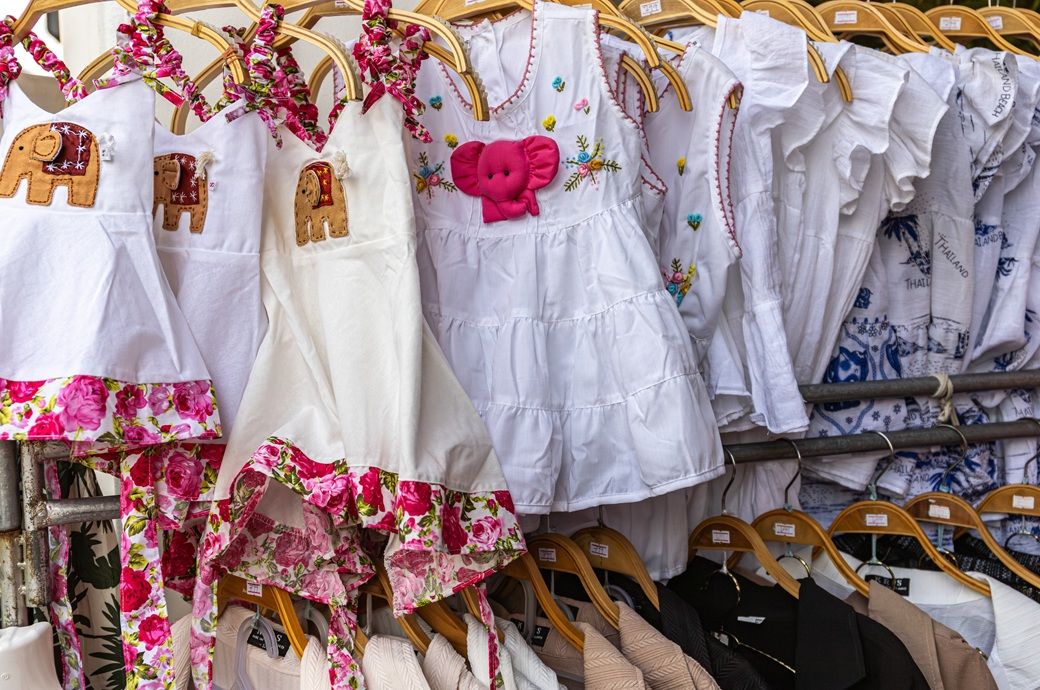
The country imported apparel worth $**.*** million during January-March ****, up **.* per cent from $**.*** million in the corresponding period of ****. The latest figures indicate that inbound apparel shipments have remained on a steady growth path since ****, according to *fashion.com/market-intelligence/texpro-textile-and-apparel/” target=”_blank”>sourcing intelligence tool TexPro.
The Russia-Ukraine war has had a significant economic impact on Georgia. The conflict triggered a large influx of Russian and Ukrainian migrants, which initially acted as an economic boon for the country. It fuelled rapid growth, lifted consumer spending, and increased demand for housing, services, textiles, and apparel. However, the war also deepened geopolitical polarisation and accelerated Georgia’s economic and energy reliance on Moscow.


Net employment in Australia drops by 18,600 MoM in April: ABS

Zayn Malik thanks fans after ‘epic’ Konnakol Tour opening night

Travis Head and wife Jessica suffer online abuse after Kohli spat

-

 Entertainment1 week ago
Where Pete Davidson, Elsie Hewitt stand after breakup: Details revealed
-

 Politics1 week ago
Rising diesel costs from Iran war strain US school budgets
-

 Tech1 week ago
Why Is Your Grill So Dumb? The Best Grills Set Temp Like an Oven
-

 Tech1 week ago
This Solar-Powered Smart Sprinkler Keeps My Lawn Watered Without Any Power Cables
-
 Fashion6 days ago
Nigeria Kwara Garment Factory, KWS Garment Production Village ink pact
-
 Fashion7 days ago
Turkiye’s current account deficit expected to widen in 2026: Minister
-

 Fashion1 week ago
India’s Pearl Global’s FY26 revenue crosses $521 mn milestone
-

 Sports1 week ago
Pakistan steady after Das ton | The Express Tribune