

Business
All Amazon Fresh grocery stores in UK set to close

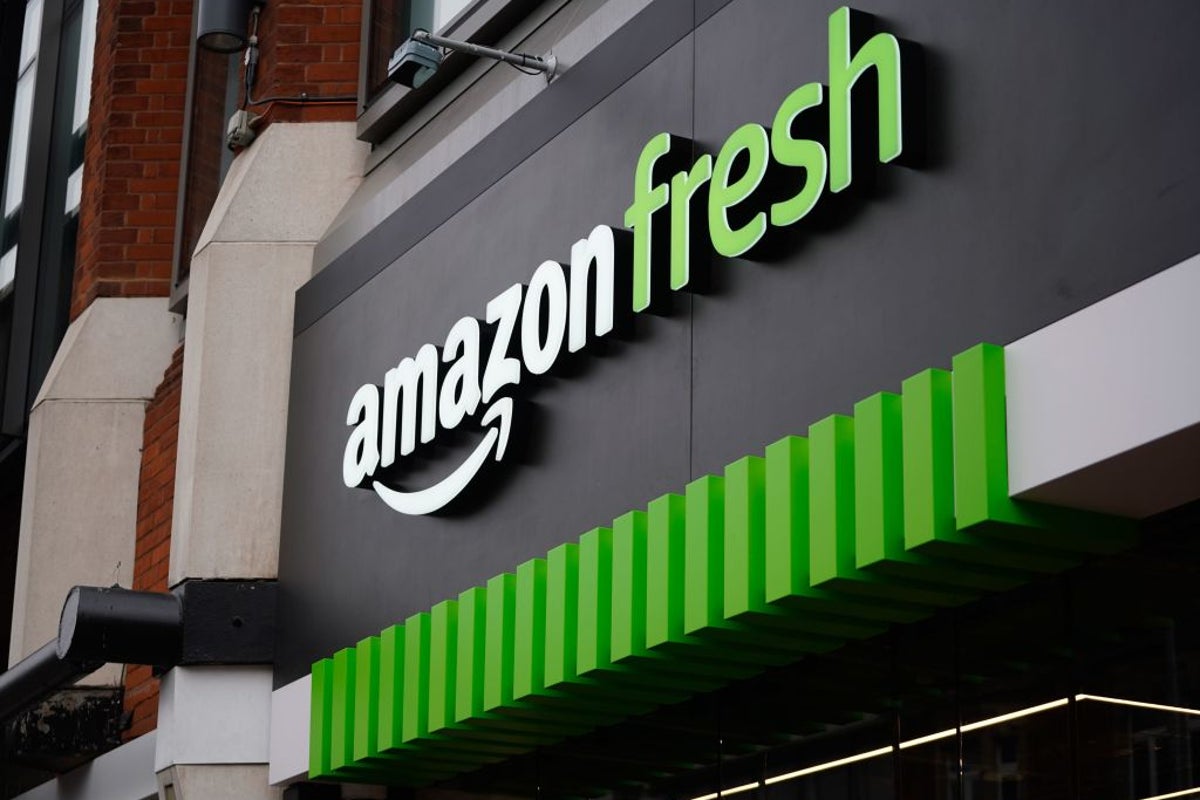
Amazon plans to close all 19 of its grocery shops across the UK, putting as many as 250 jobs at risk.
The firm will look to convert up to five of the Amazon Fresh shops, noted for their walk-in walk-out style with no checkouts, into Whole Foods stores.
Amazon said the move is part of a wider overhaul of its UK grocery operations, which will shift focus more towards its online business. Its bosses have said that the firm is still “deeply invested” in the UK.
The US-based company said on Tuesday that it had launched a consultation process proposing the closure of the Amazon Fresh UK stores.
It is consulting with employees at the sites, which employ around 250 staff. However, it said not all employees are set to be affected by the closures, and it plans to offer those who are new roles in other parts of the business.
Recently, the company pledged to invest £40bn in Britain across the next three years.
The Fresh brand was first launched in 2021, opening its first till-less store in Ealing, with technology that allowed customers to walk out with their shopping without having to use a checkout. Shoppers used an app to enter the store and were then billed to the platform when they left, with a range of cameras and other technology used to work out which products they purchased.
However, the group slowed down significant growth ambitions for the business as shopper demand waned at the end of the coronavirus pandemic.
As part of the proposals, five shops could transition to Amazon’s Whole Foods Market brand, which focuses on organic produce. It said the conversion plan, along with two further new sites, is expected to grow the Whole Foods business to 12 stores by the end of next year.
On Tuesday, Amazon also said it plans to double the number of Prime subscription members with access to at least three of the retailer’s grocery options, through its partners Morrisons, Iceland, Co-op and Gopuff.
It also said it will introduce fresh groceries including dairy, meat and seafood to its website from next year.
John Boumphrey, country manager for Amazon UK, said: “Since 2008, we’ve worked hard to innovate to help our customers save time and money when shopping for groceries and household essentials.
“We continue to invent and invest to bring more choice and convenience to UK customers, enabling them to shop for a wide range of everyday essentials and groceries with low prices and fast delivery through Amazon.co.uk, Amazon Fresh, and Whole Foods Market stores, alongside our third-party grocery partners, including Morrisons, Co-op, Iceland, and Gopuff.”
Amazon is estimated to employ more than 75,000 people in the UK, the majority across its warehouse and delivery operations.
In future up to 2,000 new jobs could be created at new warehouses in Hull and Northampton.
It has been reported that Amazon Fresh contributed $5bn (£3.7bn) in revenues during one quarter in 2024, but this is across all grocery sales online and in physical stores, as well as being global rather than just UK-focused.
Amazon paid £1bn in UK taxes on revenues of over £29bn last year.
Last week, Amazon announced it would offer employees a pay rise above inflation levels, increasing its minimum wage to £14.30 an hour.

These highly skilled, highly educated foreign workers have been documenting the challenges of trying to build a career in the U.S. “If I don’t find a job, I have to leave the country.” “I sent out 907 applications.” “Have I ever truly relaxed in America?” They need an H-1B visa, which is given through a lottery system that allows U.S. companies to hire highly skilled international professionals for up to six years, in industries like tech and medicine. But the Trump administration has made changes to the program, requiring companies to pay a high fee and enforcing new rules that prioritize higher-paid foreign workers, in an effort to make more jobs available to Americans. This has forced some foreigners to rethink their career plans. “I think the U.S. is still the golden standard.” Wen-Hsing Huang came to the U.S. from Taiwan in 2022 for the tech scene, and was hired by Amazon on an H-1B visa. “I want to use my talents to change the world, and I think the United States was the best platform to do that.” Ananya Joshi came from India to attend a master’s program in Chicago in 2022. “So it was actually my my father’s dream that I had inherited because my father couldn’t go because of his financial situation.” Haina, a Chinese national, fell in love with the U.S. while studying in New York. She got her H-1B in 2022. “I remember there were a lot of companies, they would be able to sponsor.” Haina said she’s experienced a recent shift, where it has become harder to find companies that sponsor H-1B visas. “This time when I was job searching, I didn’t realize it could be a deal breaker. I just had my second interview of 2026, and it was a pretty short call.” (Recruiter) “I don’t think we’re eligible or able to do sponsorship for this role at the moment.” “They don’t even really get to know if I’m qualified, am I experienced, or anything. The decision is already made at that point.” “Please, please make sure that the company you’re about to work for has experience handling international hires.” Joshi said a start-up she interned with during grad school rescinded their promise to sponsor her H-1B visa. “Ask for everything in writing. And then there were jobs that were contract jobs. They would just reject me. They would only need people with a green card or a U.S. citizenship.” Even with an H-1B and a six-figure salary, Huang said he felt himself becoming anxious, as tech layoffs ramped up and Trump’s immigration policies kept changing. “I woke up every morning with this knot in my stomach, because my entire life depended on the policy I couldn’t control. The United States seems not very welcoming to immigrants that contribute to this country.” “The signals are, like, pretty clear at this point. They want to make this H-1B, is, like, risky and also, like, harder.” Hello, everyone.” Despite that, Haina says she’s determined to keep looking for a job until she’s forced to leave the country. “The pressure about where I’m going to be in the next of my career or, like, my life. I sort of like lost the ability to enjoy my life or just be happy.” “So I had to leave the U.S. Of course, I expanded my search beyond the U.S. Found a job in Germany.” Joshi packed up her life and started a new role with a European biotech firm in January. “I think I left at a good time, because there would have been more stress. I would have been stuck in a loop.” “It’s an endless cycle of anxiety.” After quitting his job at Amazon, Huang is now back in Taiwan, planning to launch his own company. “To bet on building an A.I. company that gives me complete control over my time, location and future. Staying in the United States is no longer the only way to achieve my American dream.”

Following the recent surge in petrol and diesel prices, the government has announced another increase in the price of kerosene, further adding to the financial burden on consumers.
According to an official notification, the price of kerosene has been increased by Rs 34.8 per liter. With this latest adjustment, the new price of kerosene has reached Rs 467.48 per liter.
The notification states that the revised price has come into effect from today. Prior to this increase, kerosene was being sold at Rs 433.40 per liter.
The continued rise in fuel prices, including kerosene, is expected to significantly impact low-income households, particularly in rural areas where kerosene is widely used for cooking and lighting.

Many readers have experienced the ordeal of cancelling a subscription.
Source link


Transfer rumors, news: Four Premier League clubs want Rogers
Video: Skilled Foreign Workers Think About Leaving the U.S.

US manufacturing performance improves in March 2026

-

 Fashion1 week ago
Ho Chi Minh City bizs adjust production plans, seek new supply chains
-

 Sports7 days ago
Illinois defense gets tough, ousts Houston to reach Elite Eight
-

 Entertainment7 days ago
Lee Sang-bo dies at 45: Funeral details revealed
-

 Fashion6 days ago
EU apparel imports slump 15.48% YoY in Jan; Bangladesh hardest hit
-

 Fashion1 week ago
India’s Gen Z to drive half of fashion market by 2030: Reedseer
-

 Sports5 days ago
2026 NCAA men’s hockey tournament: Schedule, results
-
 Business7 days ago
How do you spot a fake online review?
-

 Fashion7 days ago
China rolls out tariff cuts on Congo imports from April 1