

Politics
UN rights office says Israeli settlement plan breaks international law

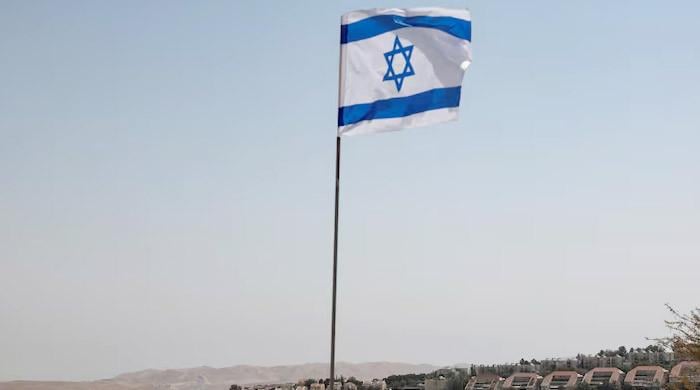
- Israeli minister vows project will “bury” idea of Palestinian state.
- UN warns plan will fragment West Bank into isolated enclaves.
- 700,000 Israeli settlers live among 2.7 million Palestinians in area.
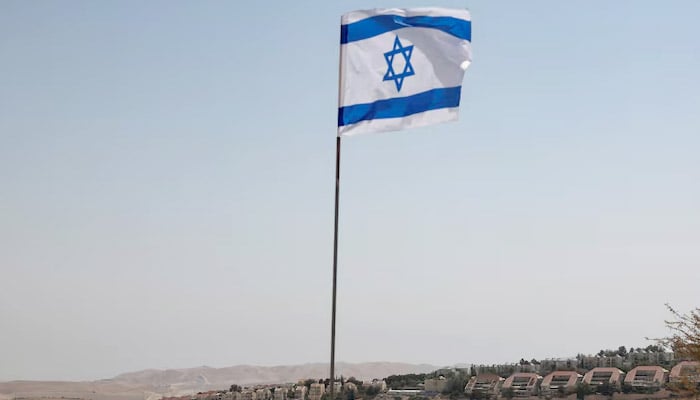
The UN human rights office said on Friday an Israeli plan to build to build thousands of new homes between an Israeli settlement in the West Bank and near East Jerusalem was illegal under international law, and would put nearby Palestinians at risk of forced eviction, which it described as a war crime.
Israeli far-right Finance Minister Bezalel Smotrich on Thursday vowed to press on a long-delayed settlement project, saying the move would “bury” the idea of a Palestinian state.
The UN rights office spokesperson said the plan would break the West Bank into isolated enclaves and that it was “a war crime for an occupying power to transfer its own civilian population into the territory it occupies”.
About 700,000 Israeli settlers live among 2.7 million Palestinians in the West Bank and East Jerusalem. Israel annexed East Jerusalem in 1980, a move not recognised by most countries, but it has not formally extended sovereignty over the West Bank.
Most world powers say settlement expansion erodes the viability of a two-state solution by breaking up territory the Palestinians seek as part of a future independent state.
The two-state plan envisages a Palestinian state in East Jerusalem, the West Bank, and Gaza, existing side by side with Israel, which captured all three territories in the 1967 Middle East war.
Israel cites historical and biblical ties to the area and says the settlements provide strategic depth and security, and that the West Bank is “disputed,” not “occupied”.
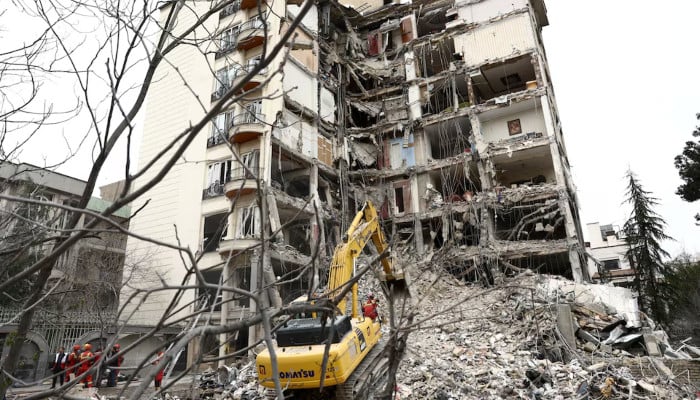
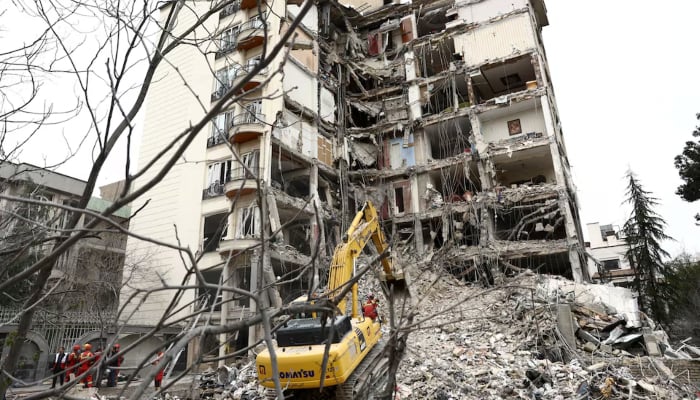
For Tehran resident Fatemeh, the highlight of her day in a city beset by deadly daily US-Israeli strikes in the now month-long war is to make the short journey to her local cafe.
“When I make it to a cafe table, even for a few minutes, I can almost believe the world hasn’t ended,” said the 27-year-old dental assistant.
“It feels like stepping out of this damn war and into an ordinary day, or at least imagining a world that isn’t filled with the constant fear of losing your life, or where you stay alive but lose a loved one or everything you have,” she told AFP.
If a lull in the bombing allows a better night’s sleep, Fatemeh said she will put on make-up and dress up to make her visit to the cafe extra special.
“And then I go back home, back to the reality of living through war, with all its darkness and weight,” she said.
Residents of Tehran who spoke to AFP’s team covering the war in Paris painted a picture of a city that is still clinging to some routine, with cafes and restaurants open, no shortages reported in supermarkets or petrol stations, and people trying to keep up some vestige of a social life.
But they know that life is anything but normal with the US and Israel maintaining a relentless pace of bombardment on the capital since the war started on February 28 with the martyrdom of Supreme Leader Ayatollah Ali Khamenei and other top officials.
There are security checkpoints on what were peaceful streets, the internet has been blocked or drastically slowed for everything except domestic services, and windows are taped up to prevent them shattering in case of attack.
As well as fear of being killed or losing a loved one in an attack, people are gripped by anxiety over the future, over what kind of country they will live in and how they will make ends meet amid a collapsing economy.
The people who agreed to share messages with AFP gave only their first names for fear of the consequences were they to be identified by authorities.
‘Only thing left’
“These days, I mostly stay at home and only go out if I absolutely have to. The only thing left from my life routine before the war that helps me keep my spirit up is cooking,” said Shahrzad, 39.
But she added: “Sometimes I find myself crying in the middle of it. I miss ordinary days… A life where I didn’t have to constantly think about explosions, death, or losing my loved ones.
“I try to stay strong for my daughter… But when I think about the future, I can’t form any clear picture in my mind that I can hold on to with hope.”
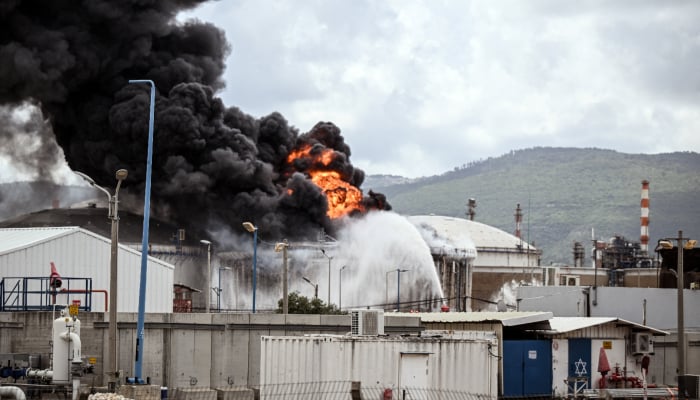
People in Tehran have, over the last week, been trying to make the best they can out of the main traditional Persian holiday of Nowruz, a festival that normally sees people leave the city or celebrate at home with family.
“There is no famine, everything is available. Cafes are open, and we still go out to cafes,” said Shayan, 40, a photographer. “There is gasoline, water and electricity.”
“But there is a sense of helplessness in all of us. We don’t know what to do, and there’s really nothing we can do.
“There was no real Nowruz atmosphere at all, but we tried to force ourselves,” he said.
While shops and restaurants are open until 9pm, “many people don’t go out after the afternoon”, he added.
‘I miss a peaceful night’s sleep’
Elnaz, 32, a Tehran-based painter, said when attacks did relent and she had time to think, she remembered how much she missed “living a simple life”.
“We miss the simplest things, going out at night, or just being able to go to another part of the city.
“I miss something as ordinary as shopping somewhere other than the small grocery store or bakery on my street.
“I miss reading in a cafe, going to the park… all those very, very simple things.”
She added: “And more than anything, I miss a peaceful night’s sleep.”
Elnaz said that on some nights the attacks are so intense it feels like “all of Tehran is shaking”.
“Everything goes back to one state — survival. Thinking only about staying alive with all the people I love. My friends, my family, and the people of my city, who look kinder than ever in this difficult time,” she said.
Kaveh, 38, a visual artist, said a piece of a missile struck about 50 metres from his house a few days ago.
“I brought it home with me. I want to make something out of it when I get the chance,” he said, recalling that dust was falling from the sky and several windows were shattered immediately.
He described how, at night in some areas, groups of people who back the clerical system drive around, honking and gathering, “while just a few streets away, there are checkpoints where cars and phones of normal people are being searched”.
“If you have something to do in the city, you’ll likely pass through multiple checkpoints in a single day — each run by different groups. Cars are searched, phones are checked, and months of accumulated frustration are taken out on people at these checkpoints.
“These are just parts of our daily reality under these circumstances,” he said.
The morose atmosphere, residents say, has been compounded by unseasonably rainy weather that contrasts with the spring sunshine people are used to enjoying at Nowruz.
Portraits of children killed in attacks are displayed in squares, while giant flags of the Islamic Republic cover buildings that have been reduced to ruins.
“In the end, for many people, the most important concern is the future of Iran and its people, and what might actually improve the situation,” said Kaveh.


US President Donald Trump said the United States could end its military attacks on Iran within two to three weeks, and Tehran did not have to make a deal as a prerequisite for the conflict to wind down.
The remarks underscored the shifting and at times contradictory statements from Washington about how the war, now in its fifth week, might end.
“We’ll be leaving very soon,” Trump told reporters at the White House on Tuesday, saying the exit could take place “within two weeks, maybe two weeks, maybe three.”
Asked if successful diplomacy with Iran was a prerequisite for the US to conclude what it has dubbed “Operation Epic Fury”, Trump said it was not.
“Iran doesn’t have to make a deal, no,” he said. “No, they don’t have to make a deal with me.”
The White House later said Trump would address the nation “to provide an important update on Iran” at 9pm EDT on Wednesday (0100 GMT on Thursday).
Washington previously threatened to intensify military operations if Tehran did not accept a 15-point US ceasefire framework that had among its core demands that Iran commit not to pursue nuclear weapons, halt all uranium enrichment and fully reopen the Strait of Hormuz.
Earlier on Tuesday, US Defence Secretary Pete Hegseth said Trump was willing to make a deal with Iran to end the war that has killed thousands, spread across the region, disrupted energy supplies and threatened to send the global economy into a tailspin.
The United Arab Emirates is preparing to help the US and allies open the Strait of Hormuz by force, the Wall Street Journal reported late on Tuesday, in an effort to end the effective closure of the shipping lane through which about a fifth of the world’s daily oil and liquefied natural gas supply usually passes.
The UAE is seeking a UN Security Council resolution for the action and suggested the US occupy strategic islands, according to the report.
While the United States has said talks with Iran were ongoing, Iranian Foreign Minister Abbas Araqchi said on Tuesday that he has been receiving direct messages from US special envoy Steve Witkoff but they do not constitute “negotiations”, Qatar’s Al Jazeera TV cited him as saying.
The messages include threats or exchanged views delivered through “friends,” he added.
Iran’s Revolutionary Guards on Tuesday hit back with a new threat against US companies in the region starting on Wednesday.
It listed 18 businesses, including Microsoft, Google, Apple, Intel, IBM, Tesla and Boeing, that would be targeted from 8pm Tehran time.
When asked if he was concerned about threats to the companies, Trump said no.
War continues to rage
The war has also revived conflict between Israel and the Iran-backed Lebanese group Hezbollah.
At least seven people were killed and 24 wounded in two Israeli strikes in the Beirut area, the Lebanese health ministry said on Wednesday, in attacks that hit vehicles in Beirut’s southern outskirts and in an area just south of the capital.
Israel’s military said on Wednesday it carried out two separate strikes targeting a senior Hezbollah commander and another senior member of the Iran-aligned group in the Beirut area. It did not identify them or say whether they had been killed.
There was no immediate comment from Hezbollah on the strikes.
With the conflict in the Middle East showing no sign of easing, Pakistan is seeking to mediate in the war.
The foreign ministers of China and Pakistan on Tuesday called for an immediate ceasefire, urging peace talks to be held as soon as possible after they met in Beijing.
Iran has remained defiant despite heavy US and Israeli attacks for the past month, as neighbours have been pulled into the conflict.
Syrian state television reported that explosions heard in Damascus were the result of Israeli air defences intercepting Iranian missiles.
A weather station’s radar and building in the Iranian port of Bushehr were put out of service on Tuesday after being hit twice in US-Israeli attacks, a regional official told state media.
The Mobarakeh steel plant in the central city of Isfahan was attacked for the second time in a week, according to the semi-official Tasnim news agency, and parts of the Sefiddasht Steel Complex in the city of Borujen were targeted, according to the Fars news agency.
Reuters could not immediately verify the battlefield reports.
Higher oil and fuel prices have started to weigh on US household finances and are a political headache for Trump and his Republican Party before the November midterm elections.
The US national average retail price of gasoline crossed $4 a gallon for the first time in over three years on Monday, data from price-tracking service GasBuddy showed.
Two-thirds of Americans believe the US should work to end its involvement in the Iran war quickly, even if that means not achieving the goals set out by the Trump administration, a Reuters/Ipsos poll found.
- Communication with plane lost at about 6pm local time.
- Search team has found the site of the catastrophe.
- Six crew members, 23 passengers on board were killed.
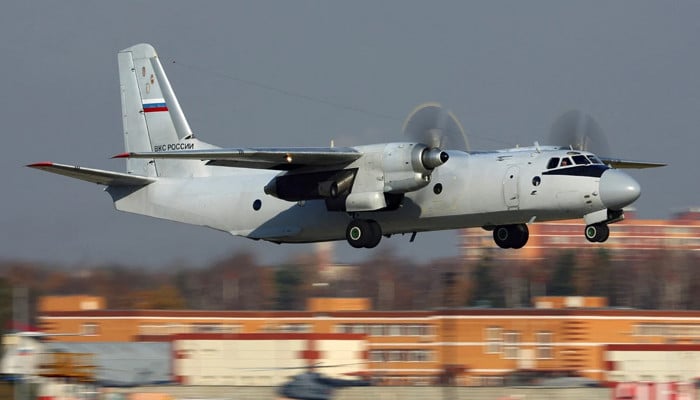
A Russian An-26 military transport plane crashed into a cliff in Crimea, killing 29 people on board, due to a possible technical malfunction, Russia’s defence ministry said early on Wednesday, according to news agencies.
TASS news agency, quoting the ministry, said communication with the aircraft was lost at about 6pm local time (1500 GMT) on Tuesday on a planned flight over Crimea. The peninsula, covered in sweeping mountains leading down to the coast of the Black Sea, was annexed by Russia from Ukraine in 2014.
“The defence ministry reported that a search team found the site of the catastrophe,” TASS reported. “According to a report from the site, six crew members and 23 passengers on board were killed.”
The ministry report did not say how many people were on board, but it made no mention of any survivors on the An-26, a light tactical military transport that has for decades been a mainstay that can carry cargo and up to 40 passengers over short and medium distances.
“There was no impact on the aircraft,” TASS quoted the ministry as saying, implying that objects like missiles, drones and birds were not involved.
“The preliminary cause of the crash is a technical malfunction. A commission from the military is working at the site,” it said.
Russia’s defence ministry did not respond immediately to a request for comment outside normal business hours.
The An-26 has been in service since the late 1960s and has also been used by airlines to carry freight, but the model has been involved in a number of deadly crashes over the last decade.
A Ukrainian An-26 crashed during a technical flight in Ukraine’s southeastern Zaporizhzhia region in 2022, killing one person. Another aircraft crashed on a training flight in northeastern Ukraine in 2020, killing all but one of the 27 people on board.
Eight people, including five Russians, were killed when an An-26 crashed in South Sudan in 2020. Four of 10 people on board were killed when an An-26 crashed on landing in Ivory Coast in West Africa in 2017.


The New Era of Militia Influencers

UPI transactions hit record Rs 29.53 lakh crore in March; volumes cross 22.6 billion – The Times of India

Taylor Swift, Travis Kelce wedding planning comes to life: Details

-

 Politics1 week ago
Afghanistan announces release of detained US citizen
-

 Tech1 week ago
Can a Home Appliance Fix the Problem of Soft-Plastic Waste?
-

 Sports1 week ago
Broadcast industry CEO says consolidation is ‘essential’ to compete for NFL soaring media rights prices
-

 Entertainment1 week ago
UN warns migratory freshwater fish numbers are spiralling
-
 Business1 week ago
Property Play: Home flippers see smallest profits since the Great Recession, real estate data firm says
-
 Business1 week ago
Gold prices soar in Pakistan – SUCH TV
-

 Fashion1 week ago
ICE cotton slips on weaker crude, profit booking
-
 Business1 week ago
More women are entering wealth management, but few are in advisory roles, study finds