

Politics
Essential takeaways from Trump’s 20-point Gaza ceasefire blueprint


WASHINGTON: US President Donald Trump published on Monday a 20-point peace proposal for Gaza that would end the war between Israel and Hamas and require the return of all hostages living and dead within 72 hours of a ceasefire.
The plan leaves many details for negotiators to hash out and hinges on acceptance by Hamas fighters who launched the war against Israel on October 7, 2023. It refers to a redeveloped Gaza as “New Gaza.”
Here are the main elements of the plan that resulted from intense negotiations in recent weeks between Trump and his team, and Israeli and Arab leaders:
- If both sides agree to the proposal, the war will end immediately. Israeli forces will withdraw partially to prepare for a hostage release. All military operations will be suspended and battle lines will be frozen in place until conditions are met for the “complete staged withdrawal” of Israeli forces.
- Within 72 hours of Israel publicly accepting the proposal, all hostages, alive and dead, will be returned. Once all hostages are released, Israel will free 250 Palestinian prisoners serving life sentences plus 1,700 Gazans arrested after the start of the conflict on October 7, 2023. For every Israeli hostage whose remains are released, Israel will release the remains of 15 dead Gazans.
- Once all hostages are freed, members of Hamas “who commit to peaceful coexistence” and give up arms will be given amnesty. Members of Hamas who wish to leave Gaza will be provided with safe passage to receiving countries.
- Upon acceptance of this agreement, full aid will be immediately sent into the Gaza Strip, with quantities consistent with the levels mandated under a January 19, 2025, accord. Aid deliveries will proceed without interference from Israel or Hamas through the United Nations and related agencies.
- A “deradicalised” Gaza will not pose a threat to its neighbours and will be “redeveloped” for the benefit of Gazans.
- The Trump plan envisions a “Board of Peace” of international overseers led by Trump himself and including former British Prime Minister Tony Blair in an undefined role. Gaza will be governed under the temporary transitional governance of a “technocratic, apolitical” committee made up of Palestinians and international experts, to be overseen by the Board of Peace. This group will set the framework and handle the funding for the redevelopment of Gaza until the Palestinian Authority has undergone major reforms.
- A Trump economic development plan to rebuild Gaza will be created by convening a panel of experts “who have helped birth some of the thriving modern miracle cities in the Middle East.” A special economic zone will be established with preferred tariff and access rates to be negotiated with participating countries.
- Under the plan, no one will be forced to leave Gaza, which has sustained heavy damage during the war, and those who wish to leave will be free to do so and free to return. “We will encourage people to stay and offer them the opportunity to build a better Gaza,” the plan says.
- Hamas and other factions would agree to have no role whatsoever in governing Gaza, directly or indirectly. All military infrastructure, including tunnels and weapons production facilities, will be destroyed. Independent monitors will supervise the demilitarisation of Gaza.
- “New Gaza will be fully committed to building a prosperous economy and to peaceful coexistence with their neighbours,” according to the plan.
- Regional partners will work to ensure that Hamas and related factions comply with their obligations and that New Gaza poses no threat.
- The US will work with Arab and international partners to develop a temporary International Stabilisation Force to immediately deploy in Gaza.
- Israel will not occupy or annex Gaza. The Israeli Defence Forces will progressively hand over the Gaza territory it occupies to the International Stabilisation Force.
- The plan is vague on a pathway to Palestinian statehood. It says that while Gaza redevelopment advances and when the Palestinian Authority is reformed, “the conditions may finally be in place for a credible pathway to Palestinian self-determination and statehood, which we recognise as the aspiration of the Palestinian people.”
- The US will establish a dialogue between Israel and the Palestinians to agree on a “political horizon for peaceful and prosperous co-existence.”
Politics
Super-rich pay up to $350,000 for private jet evacuations as Middle East conflict escalates
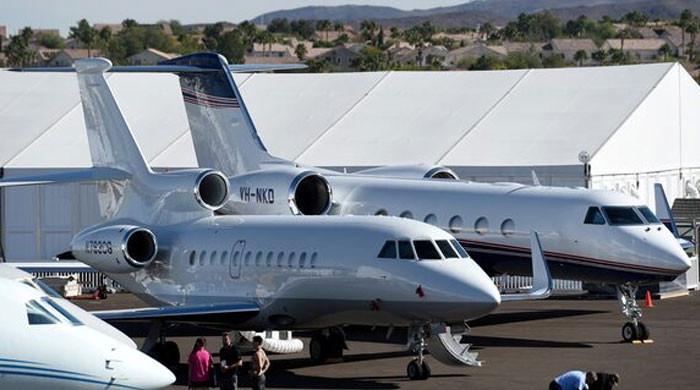
- Sharp rise in demand pushing private jet prices higher.
- Wealthy elites are fleeing to Saudi Arabia from Gulf countries.
- Riyadh eases visa rules amid ongoing Middle East crisis.
Private jet prices to evacuate Gulf countries are soaring after Middle East conflict escalates following the assassination of Iran’s Supreme Leader Ayatollah Ali Khamenei in the joint strikes launched by the US and Israel.
The Middle East conflict expanded with no end in sight, with Israel attacking Iran and Tehran firing missiles and drones at the “US interests and bases” across the Gulf states.
Global airlines cancelled flights across the Middle East after the US and Israel launched strikes on Iran, driving private jet rental prices to record highs amid the travel chaos.
In view of the prevailing situation, wealthy elites are fleeing to Saudi Arabia to evacuate the Gulf, as Iranian missiles and drones rained over Abu Dhabi, Dubai, Qatar, and Bahrain —previously perceived to be safe countries.
Riyadh is becoming a key exit route for those looking for a safe route out of the Middle East, as the airport in the Saudi Arabia capital is one of few still operating.
Private security companies are reportedly booking fleets of SUVs to transport people on the 10-hour drive to Riyadh from Dubai and then are chartering private planes.
Among those being evacuated are senior executives at global finance firms and high-net-worth individuals who were holidaying in the region or were there on a business trip.
The sharp rise in demand for an emergency exit is pushing prices for SUVs and private jets up, as it has been reported that private jets from Riyadh to Europe now cost up to $350,000 (£260,000), The Daily Mail reported.
Saudi Arabia is seemingly the safest country to currently get out of the Middle East, after routes out of Oman were closed following Iran’s strike on the port and an oil tanker in the country on Sunday.
Riyadh hosts one major international airport – the King Khalid International Airport, about 35km from the city centre. The airport has five passenger terminals and usually flies to Europe, America, Asia, the Middle East and Africa.
Visa rules have also loosened in Saudi Arabia, meaning many nationalities can get a visa upon arrival rather than in advance, making it appealing as an emergency exit route for many.
Saudi’s defence ministry confirmed two drones were intercepted and destroyed earlier today.
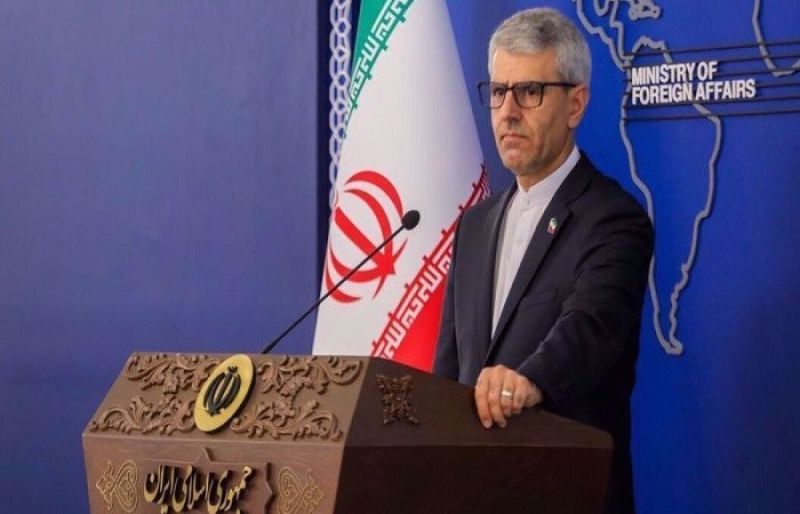

Iran’s foreign ministry spokesman says confronting US-Israeli threats leaves the country no option but military retaliation, while stressing it has no issue with the American people.
In an interview with the US public radio (NPR) published on Sunday, Esmaeil Baghaei discussed the country’s positions on the current developments following the recent US-Israeli aggression.
“This is an unjust war imposed on our nation, and we have no other choice other than fighting against this injustice,” he said.
He emphasized that these military actions are unwarranted and unprovoked, and pointed out they arrived while the US and Iran were making progress in diplomatic negotiations over nuclear issues.
Baghaei stated that the conflict is the United States administration’s preferred war.
He noted that according to the Omani mediator’s remarks on Friday, a deal was close, and Iran was slated to meet the American delegation in Vienna the previous day to discuss technical details—emphasizing that Iran did not initiate the war.
He referred to the assassination of the Leader of the Islamic Revolution Ayatollah Seyed Ali Khamenei, saying, “he was not only a political leader. He was also a high-ranking religious jurist with tens of millions of followers, even outside Iran, across the region.”
In response to a question on who is leading the country now, the Iranian diplomat explained that an interim council now governs Iran, composed of the head of the judiciary, the president, and a member of the council of experts, which will be responsible for electing a new leader.
Responding to a question about whether Iran’s leadership can withstand aggressive US sanctions, President Trump’s calls for regime change, Israeli pressure and domestic opposition, Baghaei said a foreign power cannot dictate changes to a nation’s system of governance.
He added that Iranians have historically united against foreign aggression and domination, fighting to protect their freedom, independence, dignity and sovereignty.
Reacting to the death of at least three Americans, Baghaei said “I have said many times that we have no problem with the American people. And we believe that this is not their war.”
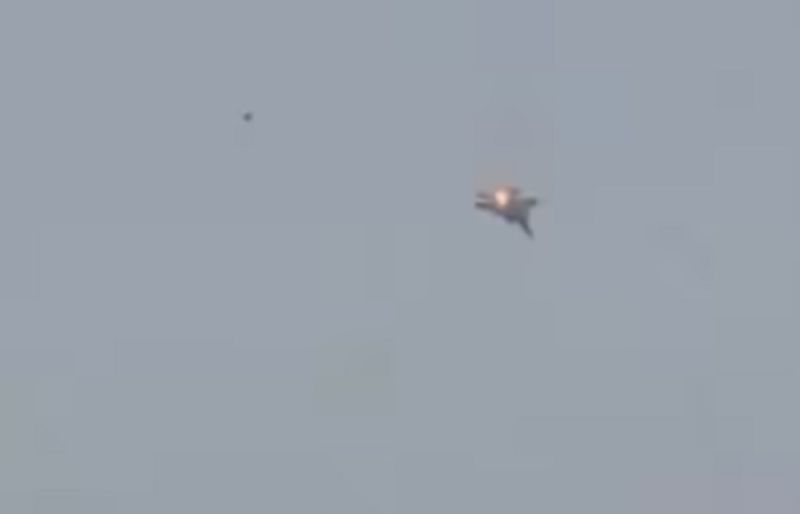

Iranian Armed Forces have shot down an advanced US F-15 fighter jet near the border with Kuwait – the first downing of an American fighter jet in the past 27 years.
“An F-15 fighter jet [belonging] to the intruding US army which intended to attack the country has been targeted by the Islamic Republic of Iran’s Air Defense and brought down,” Iran’s Khatam Al-Anbiya Air Defense Base said in a statement on Monday.
It added that the jet’s debris has been crashed in Kuwaiti soil.
Kuwait’s Defense Ministry on Monday confirmed the jet’s crash with its video footage widely being circulated in global media.
An American F-117 fighter jet was downed by former Yugoslavia during the Kosovo war some 27 years ago.
No American fighter jet has been officially destroyed since then despite significant progress made in airplane technology.
Iranian retaliatory attacks comes amid three days of aggression against the country, which has killed at least 555 people, including more than 145 children in a strike on an elementary school in Hormozgan Province in addition to Iranian officials, according to the Red Crescent Society.
The IRGC and the Army have targeted strategic sites in the Israeli-occupied territories as well as US-operated bases across West Asia, including the Fifth Fleet in Bahrain, along with key installations in Qatar and the United Arab Emirates (UAE) for their role in supporting aggression against Iran.


US’ Old Navy launches little navy, a new newborn essentials collection

Super-rich pay up to $350,000 for private jet evacuations as Middle East conflict escalates

5 key takeaways from Pete Hegseth’s Pentagon press conference on Iran-US war

-
 Politics1 week ago
Pakistan carries out precision strikes on seven militant hideouts in Afghanistan
-

 Tech1 week ago
These Cheap Noise-Cancelling Sony Headphones Are Even Cheaper Right Now
-

 Sports1 week ago
Kansas’ Darryn Peterson misses most of 2nd half with cramping
-

 Entertainment1 week ago
Viral monkey Punch makes IKEA toy global sensation: Here’s what it costs
-
Sports1 week ago
Mike Eruzione and the ‘Miracle on Ice’ team are looking for some company
-
 Business6 days ago
Households set for lower energy bills amid price cap shake-up
-
 Entertainment1 week ago
Talking minerals and megawatts
-
 Business6 days ago
Lucid widely misses earnings expectations, forecasts continued EV growth in 2026