

Entertainment
A step towards safety

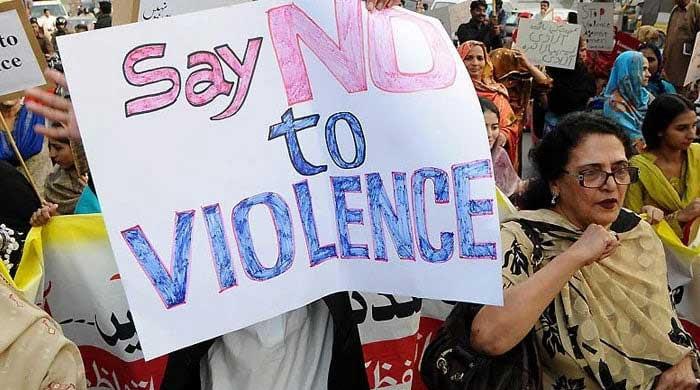
Every year, the International Day for the Elimination of Violence Against Women forces us to confront a painful truth: violence against women in Pakistan is neither rare nor distant.
It unfolds in ordinary homes, in the homes of people we know, among friends who smile through their pain and insist they are fine, and in the lives of women who continue moving through each day with strength and grace while enduring far more than they ever reveal.
Many carry emotional and physical wounds quietly because speaking often brings disbelief, judgment or shame. And for those who seek justice, the process can be as painful as the violence itself, forcing them to relive their trauma before strangers.
According to police data, more than 32,000 cases of violence against women were reported in 2024. Over 5,000 women and girls were raped, more than 24,000 were abducted, and 547 were killed in the name of honour. These numbers are disturbing, but they also show that more families are reporting crimes rather than remaining silent.
The Pakistan Demographic and Health Survey indicates that nearly one in three married women has experienced physical, emotional or sexual violence from a spouse. Conviction rates remain low, and women are often humiliated during the process. Many survivors describe the justice system as a second ordeal.
Our response must be firm, compassionate and rooted in the values we claim as a society. Islam emphasises dignity, compassion and fairness within the family, guided by the Quranic instruction to live with spouses in kindness. A home built on fear or cruelty contradicts this principle. Protecting vulnerable members of a household is both an Islamic and a Pakistani responsibility.
It is within this moral and social context that the Domestic Violence Prevention and Protection Bill 2025 was drafted and passed by the National Assembly. The bill recognises that domestic violence is not limited to physical harm. Emotional intimidation, psychological manipulation, verbal degradation and economic coercion are equally damaging forms of abuse that erode a person’s dignity and well-being.
As the author of this bill, I carried with me the voices of women who never made it to the system. I fought for this law because their silence was never a choice.
Every clause reflects a journey of resistance, persistence and the belief that lawmaking must serve those who cannot fight for themselves. From its drafting to its passage in the National Assembly, this has been one of the most challenging and deeply personal legislative journeys of my public life.
To make protection meaningful, the bill establishes protection committees across Islamabad to monitor cases and coordinate services. protection officers will assist survivors in filing complaints, obtaining medical examinations, accessing shelters, securing emergency protection orders and understanding their rights. For the first time, the burden shifts from the survivor to the state.
The bill empowers courts to issue immediate and emergency protection orders to prevent escalation and safeguard women and children. It requires hospitals, police and social welfare departments to coordinate their response so that survivors are not sent from one office to another.
Recognising that many remain in unsafe environments due to financial dependence, the bill introduces monetary relief and compensation for medical treatment, loss of income, relocation and urgent necessities.
This legislation is not confined to women. It extends protection to men, children, transgender persons, the elderly, persons with disabilities and every vulnerable individual living within a household. Domestic violence can affect anyone, and every person deserves safety and dignity inside their own home.
The bill also strengthens Pakistan’s constitutional responsibilities by upholding the right to life, dignity and equality for all citizens. It fulfils commitments Pakistan has already undertaken under CEDAW, the Convention on the Rights of the Child, the ICCPR, the Universal Declaration of Human Rights and the Sustainable Development Goals.
These are obligations Pakistan accepted willingly and proudly. Guiding this bill through the National Assembly has been one of the most meaningful responsibilities of my public life. It reflects the courage of Pakistan’s women and the vision of Shaheed Mohtarma Benazir Bhutto, who believed that the dignity of women is inseparable from the dignity of the nation.
The Senate now carries the responsibility to complete this reform. This bill is not about conflict between genders but about fairness, justice and the fundamental promise that every individual deserves safety within their own home.
Implementation is where this law will stand or fall. Even the strongest legislation is meaningless without enforcement. Pakistan cannot afford a gap between what is written and what is delivered.
Every delay in appointing protection officers, activating protection committees, notifying rules or training frontline responders leaves survivors exposed and unprotected. Implementation is the dividing line between safety and harm, between justice realised and justice denied.
This is a story of courage, responsibility and a Pakistan choosing a safer and more dignified path for all. If we commit to enforcing this law with the seriousness it demands, thousands of women, children, transgender persons, the elderly and vulnerable individuals will finally have a state that stands with them, not against them. The journey does not end here.
This is where it truly begins.
The writer is a member of the National Assembly. She holds a PhD in Law, and serves on the National Assembly’s Special Committee on Kashmir.
Disclaimer: The viewpoints expressed in this piece are the writer’s own and don’t necessarily reflect Geo.tv’s editorial policy.
Originally published in The News

Britney Spears has spoken to both her mother and her two sons following her DUI arrest earlier this week, with those closest to her now rallying around the singer in the aftermath of what sources describe as an deeply emotional night.
According to TMZ, Lynne Spears called her daughter as soon as she heard about the arrest, with the conversation between the two described as “positive” and “hopeful.”
Britney also spoke to her sons Sean Preston, 20, and Jayden James, 19, after being released from jail on Thursday morning, though she has not yet seen any family members in person.
The outreach comes at a particularly raw moment.
Spears was pulled over near the Borchard Road off-ramp in Newbury Park, Ventura County, at around 9:28 p.m. on Wednesday after officers reportedly observed her driving her black BMW “erratically at a high rate of speed.”
She was arrested on suspicion of driving under the influence of a combination of drugs and alcohol, and an insider told Page Six that officers also found an unknown substance inside her car at the time.
Her chemical test results remain pending and the investigation is ongoing. She was released at 6:07 a.m. Thursday.
Sources paint a picture of a woman who was visibly distressed throughout the process.
Spears was “crying and very tearful” while being booked, according to Page Six.
“She was incredibly emotional,” a source told the outlet. “It’s been a very hard couple of months.” The same insider said Spears “felt ashamed and embarrassed” and is “very sorry” for what happened.
“She doesn’t want to let anyone down, including her fans. The last thing she wants is to be judged publicly all over again.”
Her manager, Cade Hudson, was blunt in his public statement, calling the incident “completely inexcusable” while expressing hope that it might mark a turning point.

Maisie Peters gave her Melbourne audience an unexpected treat on Wednesday night when Ed Sheeran walked out on stage to join her for a surprise duet, a moment that clearly meant a great deal to both of them.
Sheeran, 35, appeared at Peters’ show on 4th March during her Before the Bloom Tour in Australia, performing his 2017 hit Castle on the Hill alongside the 25-year-old singer.
Peters shared a clip of the performance on Instagram, captioning it with heartfelt warmth. “Thank you @teddysphotos for singing the best song ever with me at my show in melbourne tonight,” she wrote.
“Still remember watching you play this one all 60 something gigs we did together, and it was so magical getting to join you on it for one. The best to ever do it.”
Sheeran is currently in Australia as part of his own Loop Tour, which will next take him to the Dominican Republic on 9th May before wrapping up in November.
Peters, meanwhile, is gearing up for a busy year.
Her third studio album, Florescence, is due for release in May, following her 2023 sophomore record The Good Witch.
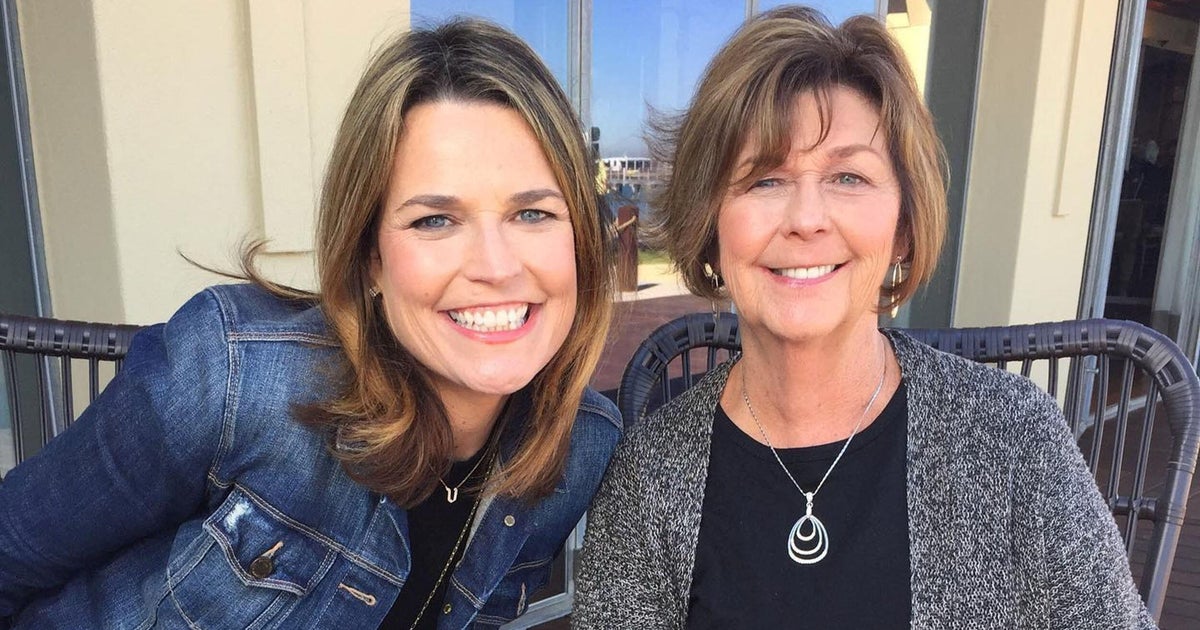
Savannah Guthrie stopped by the “Today” show studio to see colleagues on Thursday, NBC News said in a statement shared with CBS News. It was the first time Guthrie had been in the studio since her mother, Nancy Guthrie, disappeared over a month ago.
NBC said that Guthrie plans to eventually return to “Today.” The network did not specify when that might happen.
“Savannah Guthrie stopped by the studio this morning to be with and thank her TODAY colleagues,” the company said. “While she plans to return to the show on air, she remains focused right now supporting her family and working to help bring Nancy home.”
During her visit to Studio 1A, Guthrie embraced staff and crew, according to “Today.” She reportedly thanked her colleagues for “caring about my mom as much as I do,” the show said.
“I wanted you to know that I’m still standing, and I still have hope, and I’m still me,” she said. “And I don’t know what version of me that will be, but it will be.”
Courtesy NBC/Today/Handout via Reuters
“I have every intention of coming back,” Guthrie also said, according to the show. “I don’t know how to come back, but I don’t know how not to. You’re my family. And I would like to try.”
Guthrie’s last appearance on “Today” was January 30, 2026, two days before Nancy was reported missing. Guthrie has spent most of the past month with her siblings and their families in Arizona, where her mother and sister live.
Law enforcement have said they believe the 84-year-old was taken from her Tucson home overnight in the early morning hours of Feb. 1. No suspects or motive have been publicly identified. Law enforcement is continuing to analyze forensic and digital evidence related to the case.
Guthrie has shared search updates on her social media and recently said that while the family understands they may not find Nancy alive, they “still believe in a miracle.” Guthrie has offered a $1 million reward for information about her mother’s disappearance.
Possession of Nancy Guthrie’s home was recently returned to her family, and the FBI moved its command post from Tucson to Phoenix. A law enforcement source told CBS News the investigation was still continuing at full speed and that the move would allow for law enforcement to operate more efficiently for the long-term.


Save up to $600 With These Mattress Firm Coupons and Deals

Trump fires Kristi Noem as homeland secretary after storm over shootings, spending

Cotton innovation to take centre stage at Bremen conference 2026

-
 Business7 days ago
India Us Trade Deal: Fresh look at India-US trade deal? May be ‘rebalanced’ if circumstances change, says Piyush Goyal – The Times of India
-
 Business1 week ago
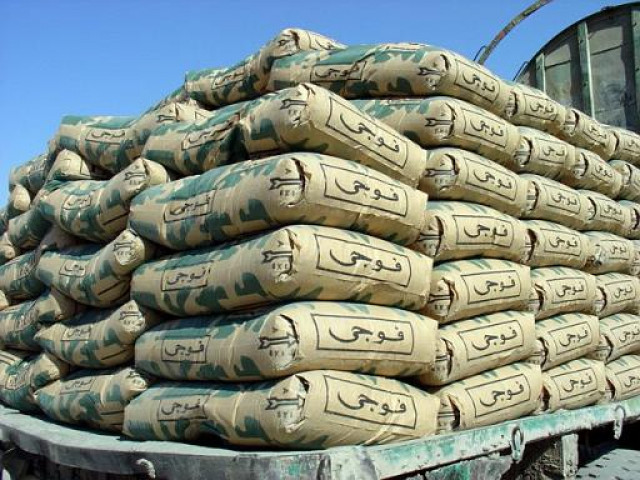
Attock Cement’s acquisition approved | The Express Tribune
-

 Fashion1 week ago
Policy easing drives Argentina’s garment import surge in 2025
-

 Politics1 week ago
What are Iran’s ballistic missile capabilities?
-

 Politics1 week ago
US arrests ex-Air Force pilot for ‘training’ Chinese military
-
 Business7 days ago
Greggs to reveal trading amid pressure from cost of living and weight loss drugs
-

 Sports1 week ago
Sri Lanka’s Shanaka says constant criticism has affected players’ mental health
-

 Sports7 days ago
LPGA legend shares her feelings about US women’s Olympic wins: ‘Gets me really emotional’