

Business
Abolition of unit exchange under net metering hits solar power users | The Express Tribune


Buyback rate for solar net generation likely to be reduced to Rs11 per unit; contract period reduced from 7 to 5 years
ISLAMABAD:
The government may face political backlash as solar net metering is almost dead in Pakistan after the National Electric Power Regulatory Authority (NEPRA) abolished exchange of electricity units in solar net metering on Monday in a blow to consumers desiring to shift to renewables.
At present, the buyback rate for solar net generation is Rs25.9 per unit which may be reduced to Rs11 per unit. The contract period has been reduced from seven to five years. The burden of IPPs capacity payments is being shifted to solar consumers now.
Discos will charge their rate for electricity which may be up to Rs50 per unit and will receive electricity from consumers at day at possible rate of Rs11 per unit.
The new buyback has not been notified but it was discussed at Rs11 per unit during discussions with stakeholders. The solar net consumers will have to pay net difference to Discos after exchange of unit regime comes to an end.
The policy will not apply to existing consumers. However, Discos have been authorised either to terminate or shift consumers to new policy after expiry of contract.
Pakistan’s power regulator has overhauled the country’s net metering regime, shifting rooftop solar and other small generators to a new “net billing” system under the NEPRA (Prosumer) Regulations, 2026, a move that fundamentally changes how electricity producers are paid and repeals the decade-old net metering framework.
Under the new rules, notified today by NEPRA, utilities will be required to purchase excess electricity from prosumers, households, businesses and industries generating up to 1 megawatt at the national average energy purchase price, while selling electricity back to them at the applicable consumer tariff, effectively ending one-to-one net metering.
The regulations apply to solar, wind and biogas systems and take effect immediately, replacing the NEPRA Alternative & Renewable Energy Distributed Generation and Net Metering Regulations, 2015. Existing prosumers will continue under their current agreements until expiry, but all future renewals will fall under the new billing structure.
NEPRA has capped the maximum size of a distributed generation facility at 1MW, and limited system capacity to the sanctioned load of the consumer, with a key technical restriction that no new connections will be allowed if generation on a transformer reaches 80% of its rated capacity. Systems of 250kW or above must undergo a mandatory load flow study.
Utilities are required to process applications within strict timelines, acknowledging requests within five working days, completing technical reviews within 15 days, and installing interconnection facilities within 15 days after payment. Prosumers must also obtain formal concurrence from NEPRA, which the regulator says will be issued within seven working days.
Financially, all interconnection costs, including meters and grid upgrades, will be borne by the prosumer, while NEPRA has introduced a non-refundable concurrence fee of Rs1,000 per kilowatt. Metering must support two-way measurement, either through a single bidirectional meter or dual meters.
The standard agreement term has been set at five years against seven years previously, renewable by mutual consent, while utilities retain the right to disconnect systems in case of faults, non-compliance, or for maintenance, with or without notice. Prosumers are barred from selling power to third parties using the utility’s network.
NEPRA has also granted itself broad powers to revise purchase rates during the life of agreements, issue binding directions, demand operational data, impose penalties, and relax or modify provisions where necessary.
The shift to net billing marks one of the most significant policy reversals in Pakistan’s renewable energy sector, redefining the economics of rooftop solar and signaling a tighter regulatory grip as the number of distributed generators continues to surge.






Motorists are facing higher fuel prices ahead of Easter break due to the conflict in the Middle East, the RAC says.
Source link

Hyderabad: Pharma player Hetero on Friday said it has rolled out exports of its generic semaglutide injection portfolio as part of a multi-year plan to widen access to treatments for type 2 diabetes and obesity in more than 75 countries.The Hyderabad-based pharmaceutical company said initial rollouts are under way in Africa, Asia and the Middle East, with additional launches planned in other markets subject to regulatory approvals.The injectable therapies will be sold under the brand names Truglyx, Rolmodl and Moto G. Semaglutide belongs to the GLP-1 class of medicines, which are used in diabetes care and weight management.Hetero said the export launch is part of its broader strategy to improve access to advanced cardio-metabolic therapies, particularly in emerging markets.The company said the products will be offered in multi-dose disposable pen devices designed in line with innovator formats and will be available in several strengths, including 0.25 mg, 0.5 mg, 1 mg, 2 mg, 1.7 mg and 2.4 mg, allowing dosing flexibility for both diabetes and obesity treatment.Hetero said it is also awaiting approval from India’s Central Drugs Standard Control Organisation (CDSCO) after completing clinical trials in type 2 diabetes and obesity and plans an India launch after regulatory clearance.Hetero managing director Dr Vamsi Krishna Bandi said the company aims to provide high-quality, affordable generic semaglutide through a single global product platform backed by its manufacturing and development capabilities.He said Hetero would use its commercial networks across Asia, the Middle East, Africa and Latin America to support supply and access. The Hyderabad-headquartered Hetero operates in more than 145 countries and employs over 30,000 people.
Business
India-US trade deal update: Piyush Goyal meets USTR Jamieson Greer, discusses next steps in BTA talks – The Times of India
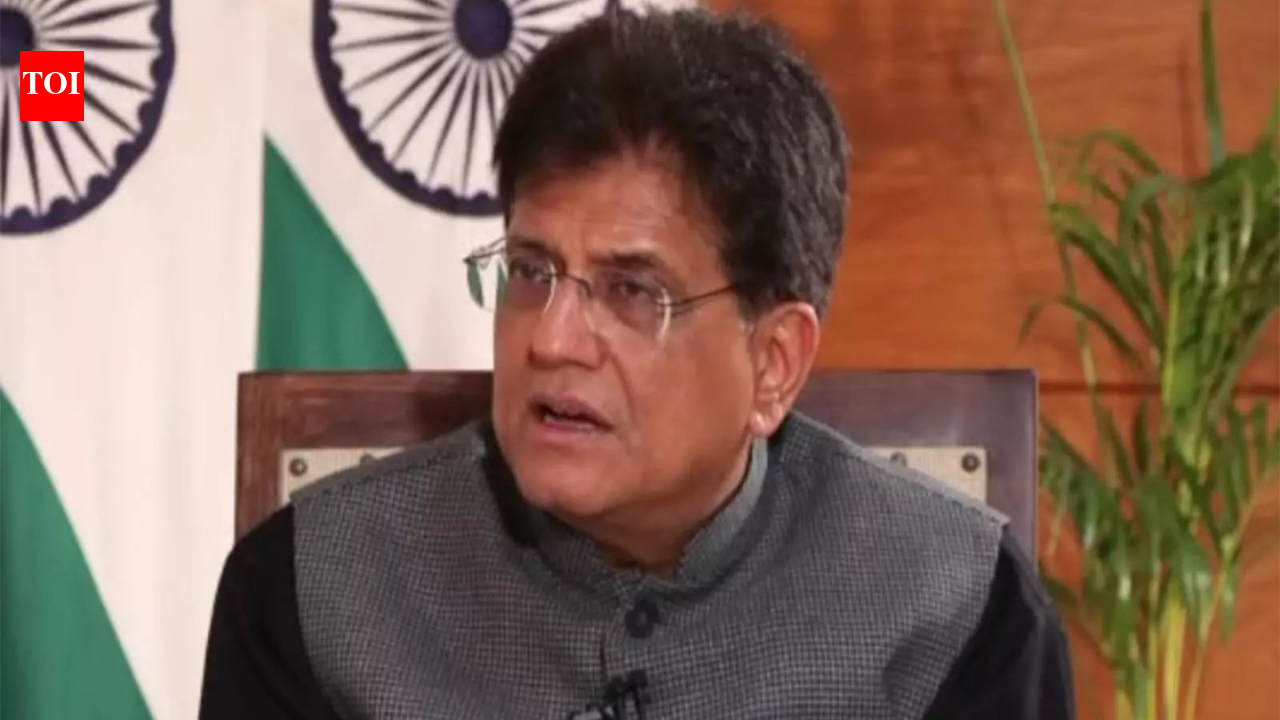
Commerce and industry minister Piyush Goyal on Friday met US Trade Representative Jamieson Greer and reviewed the next steps in negotiations for the proposed India-US bilateral trade agreement (BTA).The meeting took place on the sidelines of the 14th ministerial conference (MC14) of the World Trade Organisation in Yaounde, Cameroon, where both sides also exchanged views on issues related to the WTO agenda.“Had a very productive discussion with @USTradeRep Jamieson Greer on the sidelines of the WTO Ministerial Conference. Exchanged views on the #WTOMC14 agenda, next steps in the India-US BTA negotiations and explored ways to further deepen our economic cooperation and bilateral trade ties,” Goyal said in a social media post.The development comes amid ongoing efforts by both countries to finalise an interim trade pact. Last month, India and the US announced that they had finalised a framework for the first phase of the agreement, though it is yet to be signed.The two sides had earlier announced a trade deal on February 2, followed by a joint statement on February 7 outlining the contours of the agreement.As part of the framework, the US had agreed to reduce tariffs on Indian goods to 18%. However, the tariff structure has since undergone changes after the US Supreme Court struck down sweeping tariffs imposed under earlier measures.Following the ruling, US President Donald Trump introduced a 10% tariff on all countries for a period of 150 days starting February 24.In view of these developments, a planned meeting between chief negotiators of India and the US — aimed at finalising the legal text of the agreement — has been postponed. The pact was earlier expected to be signed this month.An official had earlier said that the interim trade agreement would be signed once the new global tariff framework of the US is fully in place.

Asda boss rejects profiteering claims as petrol price tops 150p

Britney Spears turns a new page after recent legal trauma

This Premium Sennheiser Soundbar Is $1,000 Off

-

 Entertainment1 week ago
Val Kilmer revived 1 year after death through AI
-

 Fashion7 days ago
China’s textile & apparel exports surge 17% to $50 bn in Jan-Feb 2026
-
 Business1 week ago
Video: The Effects of High Oil Prices
-
 Business7 days ago
Flipkart group CFO to leave co amid IPO plans – The Times of India
-

 Sports7 days ago
Rating Adidas’ 2026 World Cup away shirts: Argentina, Spain, Mexico and more
-

 Fashion1 week ago
The hidden $1.62 war tax now embedded in every garment you source
-

 Sports7 days ago
American Conference Commissioner Tim Pernetti thanks Trump for Army-Navy game executive order
-
Tech1 week ago
The Corsair 4000D RS PC Case Keeps Your System Cool