

Fashion
Acreage compression to cap India’s cotton output in CYi 2026: ICRA

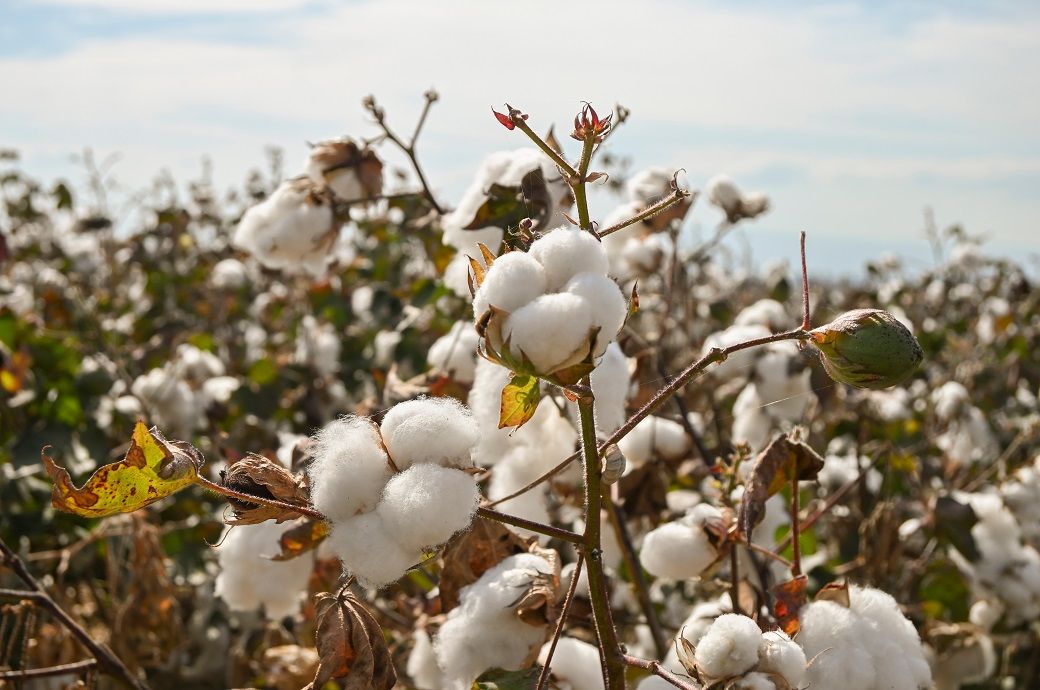
However, despite a reduction in acreage, cotton yield continues to rise, improving by 1.8 per cent year on year (YoY) in Indian cotton year (CYi) 2026.
Despite leading the world in acreage, the cotton sown area in India has been steadily declining, with levels being 20 per cent lower than the peak acreage levels of 2021, ICRA said.
Despite a reduction in acreage, cotton yield continues to rise, growing by 1.8 per cent YoY in Indian cotton year 2026.
India’s cotton output is likely to dip by 1.7 per cent YoY in CYi 2026, first advance estimates show.
The Indian CY runs from October to September, distinct from the global CY, whose duration is from August to July.
Following a 9-per cent YoY contraction in CYi2025, the acreage is seen reducing by around 3 per cent YoY in CYi 2026 due to several factors like water shortage issues in the northern region, uneven monsoons and a shift towards more profitable alternative crops in many regions.
However, cotton output is likely to dip by 1.7 per cent YoY to 29.2 million bales in CYi 2026, according to the first advance estimates released by the department of agriculture and farmers welfare, taking the output to its lowest levels in the last ten years, ICRA said in a note.
Domestic consumption, on the other hand, is expected to remain flat. While domestic demand is stable, the effects of US tariffs on Indian apparel exports on the downstream sectors is likely to affect overall consumption.
Amidst lower cotton output, the dependence on cotton imports has been rising—up by 85 per cent on a YoY basis to 1.5 million bales of 170 kg in the first five months of fiscal 2025-26 (FY26). Imports now meet over 10 per cent of demand.
Owing to weak demand and import duty waiver, cotton prices have been trading marginally below the minimum support price (MSP) since November 2024. MSP on cotton increased by 8 per cent for CYi 2026. Accordingly, the gap has widened further in recent months.
Despite the lower output, the subdued cotton yarn demand (domestic plus exports) is likely to keep the cotton price low in the next few months in India, ICRA noted.
Following a flat trend in the first half (H1) of FY26, domestic cotton fibre prices fell by 3 per cent month on month (MoM) in November 2025. Against this, average cotton yarn prices fell by 4 per cent.
ICRA anticipates a stabilisation of contribution levels at ₹98-100 per kg for FY26 due to moderation in realisation expected in H2 FY26.
ICRA’s sample set of 13 companies, which accounts for 25-30 per cent of the Indian industry’s revenue, is expected to report a 4-6 per cent decline in revenues on a YoY basis in FY26.
Additionally, margins of spinners are expected to contract by 50-100 basis points in FY26, primarily due to weaker performance expected in the second half.
Fibre2Fashion News Desk (DS)










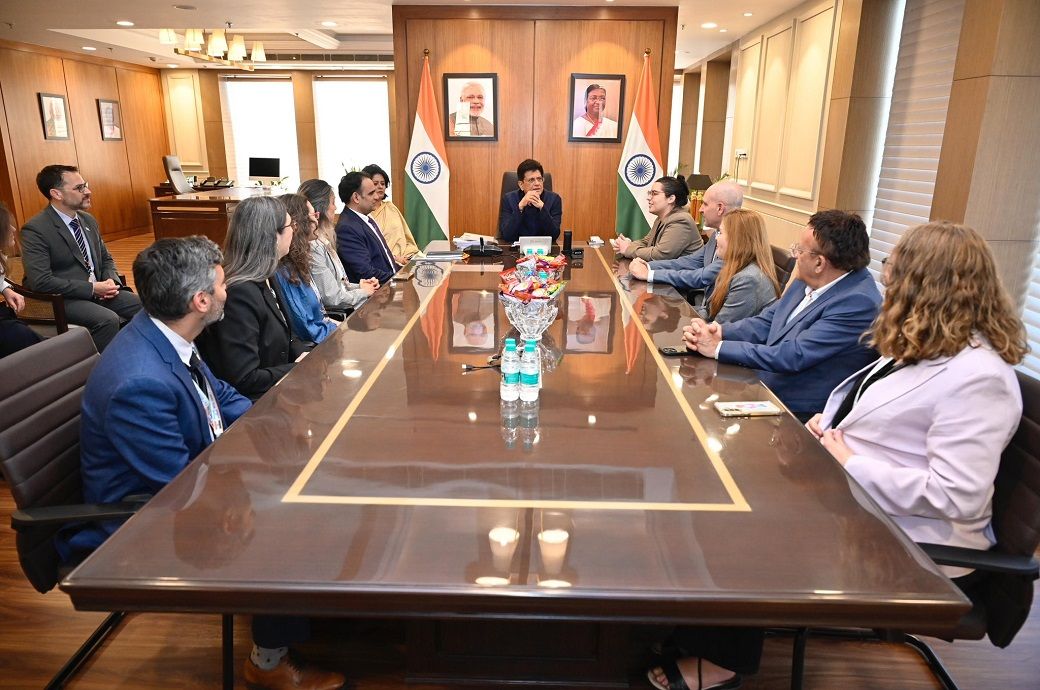
Total merchandise trade between the two countries stood at $3.62 billion in FY24-25. They share complementarities across several sectors, and the FTA will be a catalyst to further enhance the bilateral trade by providing certainty and predictability to businesses, including micro, small, and medium enterprises (MSMEs), the Ministry of Commerce and Industry said in a press release.
India and Israel have begun the first round of FTA negotiations in New Delhi through February 26, 2026, following the November 2025 ToR signing.
With bilateral trade at $3.62 billion in FY25, talks cover goods, services, rules, SPS, TBT and IPR.
Officials highlighted opportunities in technology and innovation, aiming for a balanced pact to boost trade, supply chains and economic cooperation.
During this round, technical experts from both sides will engage in sessions covering various aspects of FTA such as trade in goods, trade in services, rules of origin, sanitary and phytosanitary measures, technical barriers to trade, customs procedure and trade facilitation, intellectual property rights, among others.
During the opening session, Indian Commerce Secretary, Rajesh Agrawal, underscored that the FTA negotiations had begun at an opportune moment of Prime Minister Narendra Modi’s visit to Israel from February 25-26, 2026.
Agrawal underscored the significant opportunities available to both sides in sectors such as innovation, science and technology, artificial intelligence, cybersecurity, high-tech manufacturing, agriculture, and services. He emphasised that the FTA would enable both countries to harness and fully leverage these opportunities.
Chief Negotiator of India, Ajay Bhadoo, Additional Secretary, Department of Commerce, reiterated the significance of this engagement for the two countries and encouraged both sides to work on a balanced agreement to build a forward-looking framework for an evolving partnership.
Chief Negotiator of Israel for the FTA, Yifat Alon Perel, Senior Director Trade Policy and Agreements and Deputy Trade Commissioner, Foreign Trade Administration, Ministry of Economy and Industry, Israel, expressed that the two countries shared a close relationship, and that the FTA has the potential to strengthen supply chains, enhance cooperation and open new markets for both countries.
This engagement highlighted the strategic importance of India-Israel bilateral relationship and reinforces India’s commitment to strengthen economic partnerships in line with national priorities and global aspirations. Both sides are working towards concluding a balanced and mutually beneficial agreement, added the release.
Fibre2Fashion News Desk (SG)

New Balance reported record 2025 global sales of $9.2 billion, up 19 per cent year on year, marking its fifth straight year of double-digit growth.
North America and Europe led gains, while apparel and owned retail each crossed $1 billion.
The brand expanded manufacturing, digital and distribution capabilities, deepened athlete partnerships, and donated $17.3 million to 95 nonprofits worldwide.
Source link
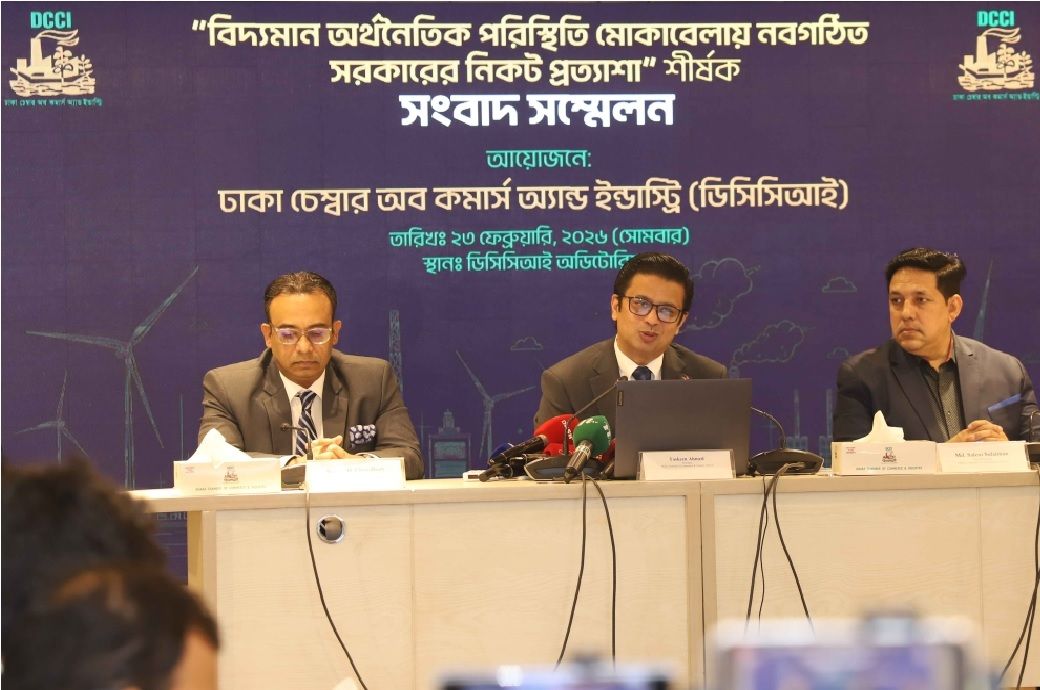
DCCI president Taskeen Ahmed told a press conference that the unchanged policy rate has forced businesses to borrow from banks at 16-17 per cent interest, creating mounting pressure.
High lending rates, unstable law and order marked by extortion, energy uncertainty, lack of coordination in revenue management and absence of policy continuity in industrial regulations are affecting the trade environment and eroding confidence in investment and business operations, trade body DCCI has said.
Rising production and distribution costs are also fuelling inflationary pressures, it noted.
“The high volume of non-performing loans (NPLs) and the reduction of the loan classification period from nine months to three months have created an undesirable situation in the financial sector, which has led to instability in the industrial sector,” he was cited as saying in a DCCI release.
“Industrial production is being hampered due to inadequate gas supply and the recent increase in gas prices for new industries and captive power plants by Tk 40 and Tk 42 per unit respectively,” he said, mentioning that both domestic demand and export targets are being missed as a result.
He also pointed to structural weaknesses in the revenue management system, saying the lack of automation leads to harassment of compliant taxpayers, while many remain outside the tax net, depriving the government of revenue and slowing collection growth.
Taskeen said delays in land acquisition, high land prices, a 41-per cent average increase in service charges by the Chattogram Port Authority and underutilisation of inland waterways have significantly raised the cost of doing business. “Rising production and distribution costs are also fuelling inflationary pressures,” he added.
As the recently-signed trade agreement with the United States does not guarantee duty-free access for the readymade garment sector, Taskeen called on the government to renegotiate the terms with the US administration.
Fibre2Fashion News Desk (DS)


Vellayan Subbiah To Exit Cholamandalam Investment Finance Under Murugappa Family Pact

India-Israel FTA talks begin to deepen bilateral trade ties

US-Iran nuclear talks to resume in Geneva against backdrop of military threat

-

 Entertainment1 week ago
Queen Camilla reveals her sister’s connection to Princess Diana
-

 Tech1 week ago
Rakuten Mobile proposal selected for Jaxa space strategy | Computer Weekly
-

 Politics1 week ago
Ramadan moon sighted in Saudi Arabia, other Gulf countries
-

 Entertainment1 week ago
Robert Duvall, known for his roles in "The Godfather" and "Apocalypse Now," dies at 95
-

 Politics1 week ago
Tarique Rahman Takes Oath as Bangladesh’s Prime Minister Following Decisive BNP Triumph
-
 Business1 week ago
Tax Saving FD: This Simple Investment Can Help You Earn And Save More
-

 Tech1 week ago
Businesses may be caught by government proposals to restrict VPN use | Computer Weekly
-

 Sports1 week ago
Usman Tariq backs Babar and Shaheen ahead of do-or-die Namibia clash