

Politics
After Venezuela, Trump eyes five new targets

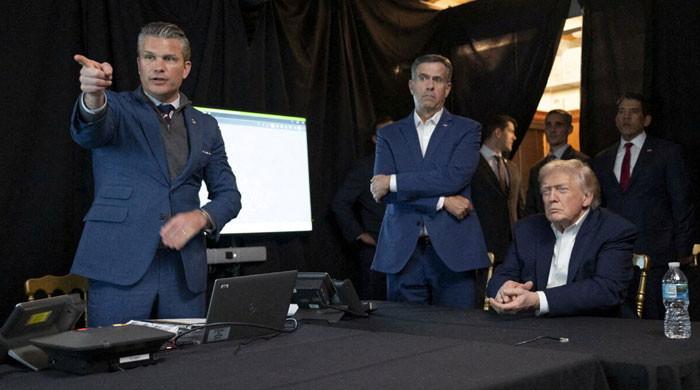

WASHINGTON: An emboldened US President Donald Trump has hinted that he has other countries in his sights after toppling Venezuela’s Nicolas Maduro, leaving the world asking: where’s next?
Trump took aim at Colombia, Cuba, Greenland, Mexico and Iran in the space of a single half-hour exchange with reporters Sunday aboard Air Force One.
Trump, who openly campaigned for last year’s Nobel peace prize and has scorned interventionism, now says he is enforcing Washington’s right to do what it pleases in his backyard.
Greenland
In the days since the Venezuela operation, Trump has doubled down on his desire to annex Greenland from Denmark.
“Trump has given us a long list of potential future conquests – but the most likely target of his administration will be Greenland,” Asli Aydintasbas, fellow at the Centre on the United States and Europe at Brookings institution, told AFP.
Trump insists Washington needs the mineral-rich, semi-autonomous territory for national security reasons, arguing Denmark is unable to protect Greenland from Russia and China.
Danish Prime Minister Mette Frederiksen has responded by warning that any move to take Greenland by force could mean the end of the US-led NATO military alliance itself.
But Washington could instead increase diplomatic pressure on its already nervy European allies, for example by insisting on a referendum in Greenland.
Colombia
Colombia has been the target of Trump’s most hardline threats. The US leader warned leftist President Gustavo Petro to “watch his ass” and said military action “sounds good to me.”
Trump accuses Petro of being in league with drug traffickers – just as he did with Maduro in the run-up to his capture.
Petro, who has traded barbs with Trump for months over the US pressure campaign against neighbouring Venezuela, responded Monday he was ready to “take up arms” in the face of Trump’s threats.
But Colombia could pose an altogether different challenge, with many armed groups left over from its civil war. Instead, Trump may be relying on Venezuela to tell other Latin American leaders to bend the knee.
“Basically he is saying ‘I can bully the country into submission,’ and saying that US hegemony must be accepted if they want to maintain their sovereignty,” Aydintasbas said.
Cuba
Trump claimed Sunday that Cuba – an enduring US foe and ally of Venezuela – was “ready to fall.”
The communist-run island a few dozen miles from Florida has long been in the sights of US Secretary of State Marco Rubio, the son of Cuban immigrants. Havana said 32 Cuban bodyguards were killed in the operation to seize Maduro.
But Trump said he believed military action against Cuba would not be necessary, predicting that the sanctions-hit nation could not survive the loss of heavily subsidised Venezuelan oil.
Mexico
Trump on Sunday told Mexico it had to “get their act together,” following months of pressure over drugs and trade on the United States’ southern neigbbour.
He said President Claudia Sheinbaum – whom he met in Washington in December at the draw for the 2026 World Cup, to be held jointly in the United States, Canada and Mexico – was a “terrific person.”
But he said he was pushing her to let him send US troops to tackle drug cartels in Mexico, an offer he said she had previously rebuffed.
Sheinbaum pushed back Monday against US claims of dominance over the region, saying the Americas “do not belong” to any power.
Iran
Iran – like Venezuela a major oil producer – faced US strikes against its nuclear programme in June and is now under renewed pressure from Trump for clamping down on protests.
Trump warned on Sunday that Tehran would “get hit very hard” if more demonstrators were killed.
Republican Senator Lindsey Graham posted a photo of Trump holding a black hat with the logo “Make Iran Great Again” as they travelled on Air Force One.
Aydintasbas, however, warned against Trump getting “too trigger happy.”
“Right now he seems to be enjoying the moment of imperial presidency, she said. “But if things start going south either in Venezuela or the Middle East, we’re going to see President Trump very quickly lose interest in this role.”
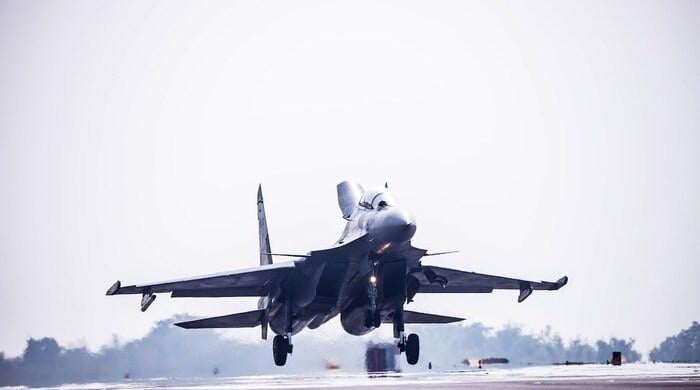
- Sukhoi Su-30MKI fighter jet crashes during training.
- Jet went missing after taking off from Jorhat airbase.
- Dead pilots identified as Sq Ldr Anuj, Flight Lieutenant Duragkar.
Two pilots from the Indian Air Force (IAF) were killed after a Sukhoi Su-30MKI fighter jet crashed in India’s northeastern state of Assam, NDTV reported, citing officials.
The Indian Air Force said on Friday that a fighter jet, which was on a training mission, crashed in the northeast Indian state of Assam.
“The Su-30MKI, which was on a training mission, crashed in the area of Karbi Anglong, Assam, approx 60 km from Jorhat,” the Indian Air Force said on X.
The aircraft had gone missing shortly after taking off from the Jorhat airbase. Communication with the Russian-origin fighter jet was lost at 7:42pm, according to officials.
The crash occurred in Assam’s Karbi Anglong district, around 60 kilometres from the airbase. The aircraft reportedly went down in a remote hilly area.
The IAF identified the deceased pilots as Squadron Leader Anuj and Flight Lieutenant Purvesh Duragkar.
“All personnel of the IAF express sincere condolences, and stand firmly with the bereaved family in this time of grief,” the Air Force said in a post on X.
Local residents in the area said they heard a loud explosion from a nearby hill and saw a ball of fire shortly afterwards.
India’s Defence Minister Rajnath Singh said he was “deeply saddened” by the loss of the two pilots in the “tragic” crash.
The Sukhoi Su-30MKI is a two-seater, long-range fighter aircraft developed by Russian manufacturer Sukhoi. It is produced under licence in India by state-run Hindustan Aeronautics Limited (HAL) for the IAF.
The aircraft was first inducted into the Indian Air Force in 1997, and the service currently operates a fleet of more than 260 Su-30MKI jets.
Similar incidents have occurred in recent years. A Sukhoi fighter jet crashed in Nashik, Maharashtra, in June 2024, while another Su-30 aircraft crashed in January 2023 shortly after taking off from the Gwalior airbase in Madhya Pradesh.
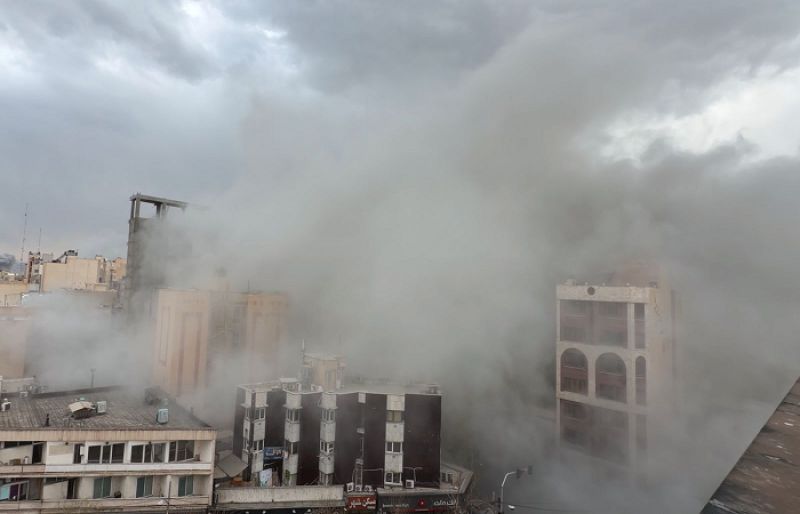

TEHRAN: The head of the Iranian Red Crescent Society, Pir Hossein Kolivand, has said that recent US-Israeli airstrikes on Iran have damaged more than 3,000 civilian properties, according to reports cited by Al Jazeera.
Kolivand stated that the strikes affected 3,643 civilian locations, including 3,090 residential homes, highlighting the significant impact on populated urban areas.
Civilian Infrastructure Hit
According to the Red Crescent chief, the attacks also caused damage to several public and service facilities, including:
528 commercial and service centres
14 healthcare and pharmaceutical facilities
9 Red Crescent sites
Officials said the majority of the destruction occurred in densely populated residential areas, raising humanitarian concerns.
Growing Humanitarian Impact
The latest figures underscore the expanding civilian toll as the conflict involving Iran, the United States, and Israel continues to intensify.
Emergency teams from the Iranian Red Crescent are currently involved in rescue, relief and medical operations in affected areas.
Authorities have not yet released updated casualty figures but say humanitarian agencies are continuing to assess the full extent of the damage.
- Hegseth acknowledges US military was investigating incident.
- Press Secy Leavitt says Iran continues to targets civilians, children.
- Rubio says US would not deliberately target a school.
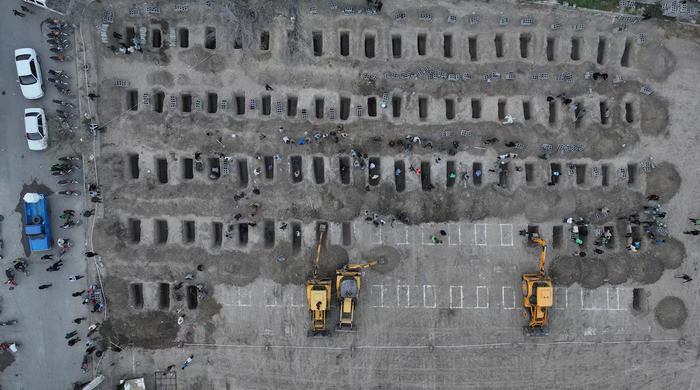
US military investigators believe it is likely that US forces were responsible for an apparent strike on an Iranian girls’ school that killed scores of children on Saturday but have not yet reached a final conclusion or completed their investigation, two US officials told Reuters.
Reuters was unable to determine more details about the investigation, including what evidence contributed to the tentative assessment, what type of munition was used, who was responsible or why the US might have struck the school.
US Defence Secretary Pete Hegseth on Wednesday acknowledged the US military was investigating the incident.
The officials, who spoke on condition of anonymity to discuss sensitive military matters, did not rule out the possibility that new evidence could emerge that absolves the US of responsibility and points to another responsible party in the incident.
Reuters could not determine how much longer the investigation would last or what evidence US investigators are seeking before the assessment can be completed.
The White House did not directly comment on the investigation, but press secretary Karoline Leavitt said in a statement to Reuters, “While the Department of War is currently investigating this matter, the Iranian regime targets civilians and children, not the United States of America.”
Asked about the incident during a news briefing on Wednesday, Hegseth said: “We’re investigating that. We, of course, never target civilian targets. But we’re taking a look and investigating that.”
US Secretary of State Marco Rubio told reporters on Monday that the United States would not deliberately target a school.
“The Department of War would be investigating that if that was our strike, and I would refer your question to them,” Rubio said.
Israeli and US forces have until now divided their attacks in Iran both geographically and by target type, a senior Israeli official and a source with direct knowledge of the joint planning said. While Israel was striking missile launch sites in western Iran, the United States was attacking such targets, as well as naval ones, in the south.
The UN human rights office, without saying who it believed was responsible for the strike on the school, called on Tuesday for an investigation.
“The onus is on the forces that carried out the attack to investigate it,” UN human rights office spokesperson Ravina Shamdasani told a press briefing in Geneva.
Images of the girls’ funeral on Tuesday were shown on Iranian state television. Their small coffins were draped with Iranian flags and passed from a truck across a large crowd towards the grave site.
Deliberately attacking a school, hospital, or any other civilian structure would likely be a war crime under international humanitarian law.
If a US role were to be confirmed, the strike would rank among the worst cases of civilian casualties in decades of U.S. conflicts in the Middle East.


The War on Iran Puts Global Chip Supplies and AI Expansion at Risk

Care Ratings projects India’s FY27 GDP growth at 7.2%

Ryan Gosling makes Eva Mendes’ birthday unforgettable in rare public appearance

-
 Business1 week ago
Attock Cement’s acquisition approved | The Express Tribune
-

 Fashion1 week ago
Policy easing drives Argentina’s garment import surge in 2025
-

 Politics1 week ago
What are Iran’s ballistic missile capabilities?
-
 Business1 week ago
India Us Trade Deal: Fresh look at India-US trade deal? May be ‘rebalanced’ if circumstances change, says Piyush Goyal – The Times of India
-
 Politics1 week ago
US arrests ex-Air Force pilot for ‘training’ Chinese military
-

 Sports7 days ago
LPGA legend shares her feelings about US women’s Olympic wins: ‘Gets me really emotional’
-
 Business7 days ago
Greggs to reveal trading amid pressure from cost of living and weight loss drugs
-

 Fashion1 week ago
Texwin Spinning showcasing premium cotton yarn range at VIATT 2026