

Politics
Air India technical incidents like fuel leaks hit 14-month high

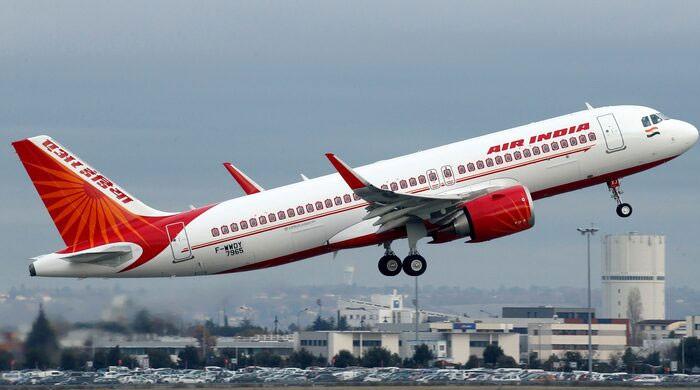
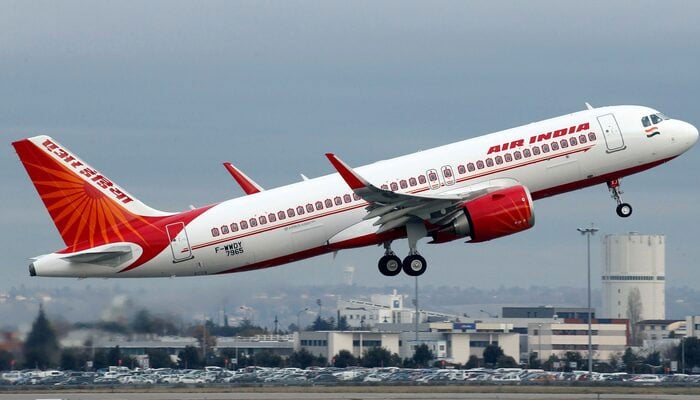
NEW DELHI: Technical incidents such as engine oil and fuel leaks affecting Air India flights reached the highest rate in at least 14 months in January, a company document shows, underscoring growing strain on the carrier’s revamp ambitions.
India’s second-largest airline has come under scrutiny from the country’s safety regulator since a crash last year killed 260 people. It has since reported many safety lapses and, in December, admitted there was a “need for urgent improvements in process discipline, communication, and compliance culture”.
In January, Air India recorded 1.09 technical incidents per 1,000 flights, quadrupling from levels of just 0.26 in December 2024, according to a document reviewed by Reuters that the carrier submitted to the Indian government in February. It did not provide earlier data.
Air India operated more than 17,500 flights in January and recorded 23 technical incidents on its international and domestic flights, according to the document, which is not public. At least 21 of those incidents were investigated formally by the airline.
“Systemic improvements (are) being introduced across flight ops, training, engineering quality, and procedural oversight to prevent recurrence,” the Air India document said.
Air India and India’s civil aviation ministry did not respond to Reuters‘ queries.
The document provided only selective comparisons to global airline industry norms based on data that is not publicly available and did not contain information on the airline’s budget subsidiary Air India Express.
Air India, which is owned by Tata Group and Singapore Airlines, has been struggling to rebuild its reputation and international network, and replace its ageing fleet that has been hobbled by supply chain delays.
Pakistan’s airspace closure for Indian carriers due to diplomatic tensions has also hit it financially and forced it to shut some long-haul routes.
India’s civil aviation ministry told lawmakers this month that 82.5% of the 166 Air India aircraft it analysed since January 2025 had recurring technical defects, compared with 36.5% for market leader IndiGo. The ministry gave no further details.
The Air India document said the technical incidents reported last month included engine stall warnings, issues related to flight control and hydraulics, and engine oil and fuel leaks.
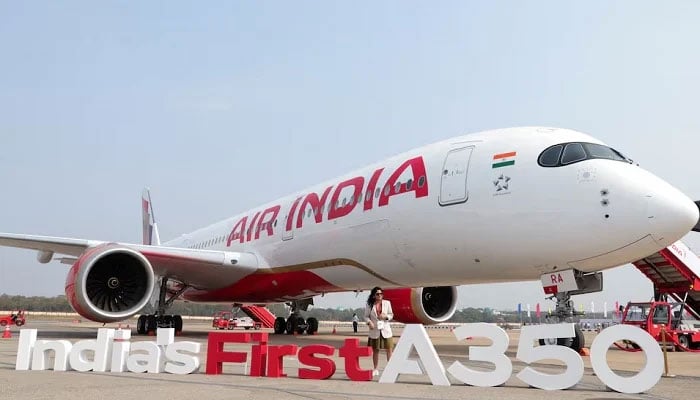
There were incidents on both its Airbus and Boeing aircraft, including five instances of fuel or engine oil leaks in the month. A Dubai-Mumbai flight on arrival found that an engine’s oil quantity was “low”.
In another incident, a Delhi-Dubai flight on January 12 was forced to turn back after takeoff due to the absence of water in the lavatory and galley, the document said.
Operational incidents, including rejected takeoffs, flying at a restricted altitude and taking off with incorrect settings, stood at 0.29 per 1,000 flights in January, more than double the level in December 2024, the document stated.
But there has been a “decrease in operational incidents” in recent months, it added.
Detailed steps to address issues
Air India has a fleet of 191 planes, but has placed orders for over 500 more aircraft.
But revamping an airline owned by the Indian government until 2022 has been a major challenge, and Air India CEO Campbell Wilson has repeatedly complained that supply chain disruptions have delayed cabin retrofits.
The Air India February document detailed steps it is taking to “drive down” the various technical issues.
To control leakage events, it has introduced a periodic inspection program for its fleet of Airbus A320s, and replaced all steering-system hydraulic hoses on all its Boeing 777s.
A periodic air-conditioning leak-check programme has also been put in place, and Air India is implementing “targeted engineering actions” to “strengthen aircraft reliability and reduce incident rates”, the document said.
Air India’s issues have also attracted international regulatory scrutiny. Britain’s aviation authority asked Air India to explain why a Boeing Dreamliner jet that was grounded on arrival in India for safety checks took off from London with a possibly faulty fuel switch, Reuters reported this month.
Air India replied that it had reminded pilots that they needed to operate in accordance with proper procedures and it had protectively replaced the throttle control module on the plane, according to a source with knowledge of the matter.
The UK Civil Aviation Authority did not respond immediately to a request for comment.
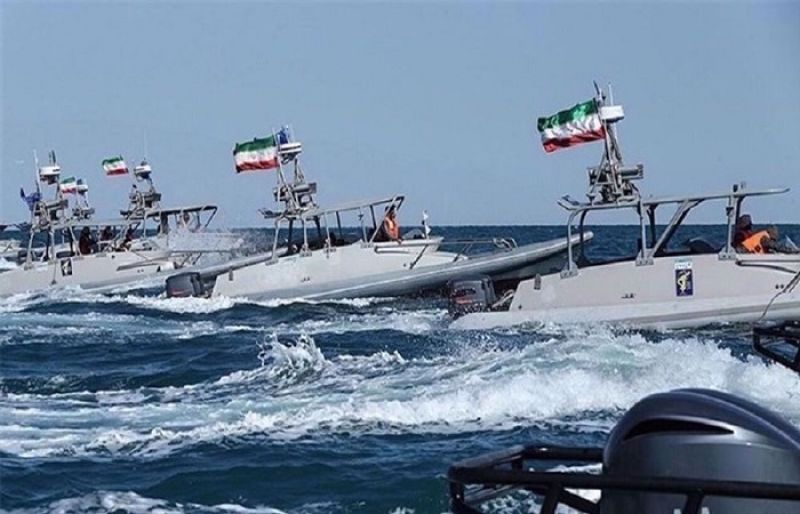
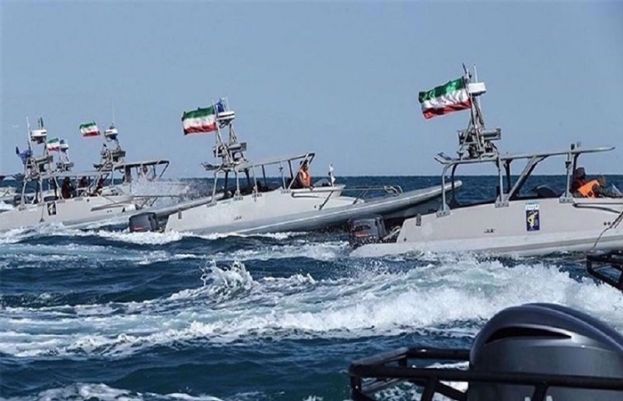
The Islamic Revolution Guards Corps (IRGC) Navy says the management of the Strait of Hormuz has entered a new stage.
The IRGC Navy made the announcement in a post on its social media account on Friday, two days after a temporary Pakistan-mediated ceasefire went into force between Tehran and Washington following the failure of the US and Israel to achieve their objectives after 40 days of war against the Iranian nation.
“The two days of silence in military battle clearly showed to friends and enemies that the management of the Strait of Hormuz has entered a new phase,” it said.
The announcement echoed Thursday’s remarks by Leader of the Islamic Revolution Ayatollah Seyyed Mojtaba Khamenei, who said Iran will “take the management of the Strait of Hormuz to a new stage.”
The United States and the Israeli regime launched their illegal act of aggression against Iran on February 28, but the Iranian armed forces responded by launching 100 waves of missile and drone operations targeting locations in the Israeli-occupied territories as well as US military bases and assets across the region.
Iranian forces also blocked the Strait of Hormuz to oil and gas tankers affiliated with the adversaries and those cooperating with them in an attempt to maintain security at the strategic waterway.
The US sought to form a coalition to open the strategic waterway, asking NATO countries to contribute naval and air assets. However, most of Washington’s allies have declined to commit forces.
Additionally, on Friday, South Korea’s Foreign Ministry said the country will send a special envoy to Iran to examine the situation in West Asia amid conflicting reports about the reopening of the Strait of Hormuz.
It added that the decision had been taken during a telephone conversation between top top Iranian and South Korean diplomats.
Meanwhile, Hamid Hosseini, spokesman for the association of Iranian oil product exporters said that the acceptance of Iran’s proposed provisions about the security and legal regime of the Strait of Hormuz as part of the truce agreement can be one of the most important diplomatic achievements in recent decades.
The strait was previously open, but now some international analysts believe that new conditions could benefit Iran, Hosseini noted.
- Vance warns Iran against trying to “play” Washington.
- Trump voices displeasure at Iran’s handling of Strait of Hormuz.
- Iran’s nuclear enrichment will be part of talks: official sources.
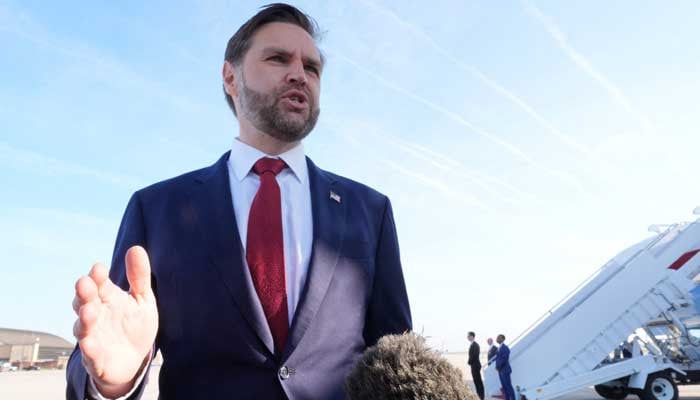
ISLAMABAD: US Vice President JD Vance warned Iran on Friday against trying to “play” Washington, as he set off for talks in Islamabad aimed at transforming a fragile ceasefire into a lasting peace deal.
Despite the temporary truce struck between the foes, deep disagreements remain as to the way forward, and both sides have accused the other of failing to properly implement the current agreement.
“If the Iranians are willing to negotiate in good faith, we’re certainly willing to extend the open hand,” Vance told reporters before taking off from Joint Base Andrews in Maryland.
But “if they’re going to try to play us, then they’re going to find the negotiating team is not that receptive”, he said.
Since the ceasefire took effect, US President Donald Trump has voiced displeasure at Iran’s handling of the strategic Strait of Hormuz, which was meant to be reopened, while Tehran has reacted angrily to Israeli attacks in Lebanon, insisting that it too falls under the agreement.
Official sources say the talks in Islamabad will cover several sensitive points, including Iran’s nuclear enrichment and the free flow of trade through the strait.
Late Friday evening, all routes leading to the Serena Hotel, the expected venue, were blocked off with heavy security, while a large banner and digital signs along the expressway heralded the “Islamabad Talks”.
Iran has suggested that its participation could hinge on a halt to Israeli attacks on Lebanon: “The holding of talks to end the war is dependent on the US adhering to its ceasefire commitments on all fronts, especially in Lebanon,” said Esmaeil Baqaei, Iran’s foreign ministry spokesperson.
Iranian officials have said the Israeli strikes had rendered the Pakistan talks “meaningless”.
Nevertheless, Iran’s powerful Revolutionary Guards signalled they were committing to the ceasefire and had “not launched anything at any country”, according to the state broadcaster.
In a barrage of social media posts that sparked fears for the shaky truce, Trump on Thursday accused Iran of doing a “very poor job” of allowing oil through the Strait of Hormuz and of breaching the terms of their ceasefire agreement.
But Vance, who is leading the US delegation alongside special envoy Steve Witkoff and Trump’s son-in-law Jared Kushner, told reporters: “We’re going to try to have a positive negotiation.”
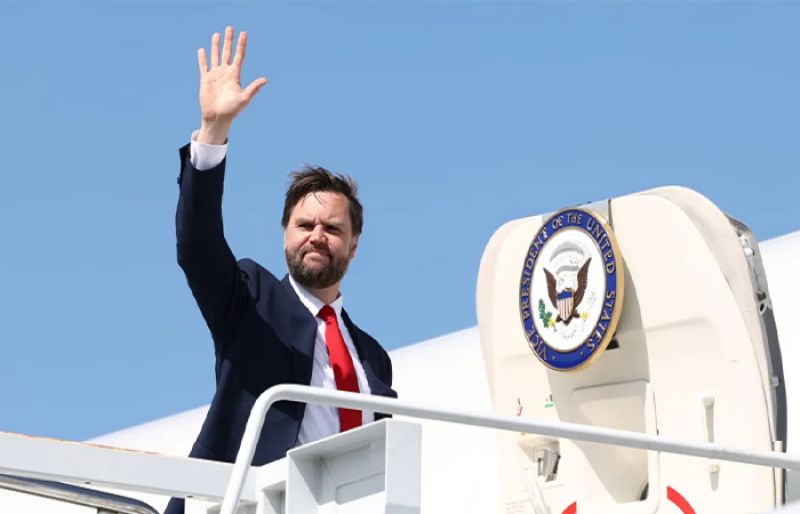
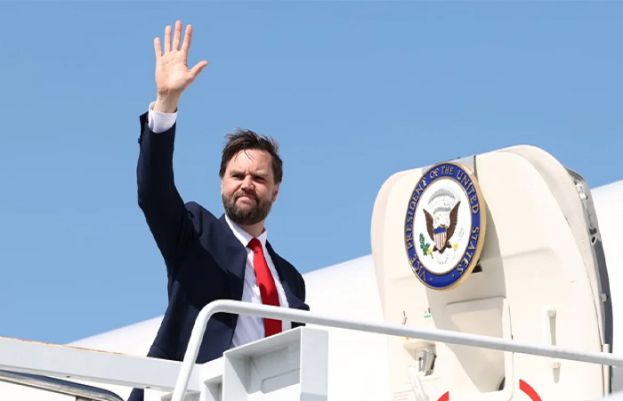
US Vice President JD Vance said on Friday he was hopeful of a “positive” outcome as he departed Washington to lead American negotiations with Iran in Pakistan. “We’re going to try to have a positive negotiation,” Vance told reporters before boarding his flight at Joint Base Andrews.
“If the Iranians are willing to negotiate in good faith, we’re certainly willing to extend the open hand. If they’re going to try to play us, then they’re going to find the negotiating team is not that receptive.”
Earlier, the White House said that Vance will head the US delegation in talks beginning Saturday in Islamabad, acting on directives from President Donald Trump.
The talks are seen as a critical step towards preventing renewed conflict after weeks of escalating hostilities.
According to officials, the US delegation will also include senior figures such as envoy Steve Witkoff and Jared Kushner, underlining the importance Washington attaches to the negotiations.
Pakistan is hosting the dialogue as part of its broader mediation effort, having played a key role in brokering a temporary ceasefire between the two sides. The talks are widely viewed as high-stakes, with the outcome likely to shape regional stability and global energy markets.
Vance, speaking before departure, expressed optimism about the negotiations, saying the United States was seeking “constructive engagement” and remained hopeful of positive outcomes.
He added that clear guidance had been provided by President Donald Trump for the talks.
Diplomatic sources say the negotiations will address key issues, including ceasefire compliance, regional security concerns, and Iran’s nuclear programme, though significant differences remain between the parties.
Analysts note that Pakistan’s role has evolved into that of an active mediator, bringing both sides to the table despite deep mistrust.
However, they caution that the process remains fragile, with risks of derailment from regional actors and unresolved disputes.
The Islamabad talks mark one of the most significant direct engagements between the United States and Iran in decades, raising cautious hopes for a broader de-escalation in the region.


WIRED’s Favorite Gas Grill is on a Pretty Good Sale Right Now

Camilla Mendes reveals plans for having kids with fiance Rudy Mancuso
[CinePlex360] Please moderate: “Trump says ‘hop

-
 Business1 week ago
Jaguar Land Rover sees sales recover after cyber attack
-
Uncategorized1 week ago
[CinePlex360] Please moderate: “Trump signals p
-

 Entertainment1 week ago
Joe Jonas shares candid glimpse into parenthood with Sophie Turner
-

 Tech1 week ago
Our Favorite iPad Is $50 Off
-

 Sports7 days ago
UConn Final Four run could trigger a $50M furniture giveaway for Massachusetts-based Jordan’s Furniture
-
 Business1 week ago
Video: Why Is the Labor Market Stuck?
-

 Entertainment7 days ago
Blake Lively reacts to harassment claims dismissal against Justin Baldoni
-

 Politics1 week ago
Iran can sustain Strait of Hormuz closure for years, will cut US military logistics: Official