

Business
Amazon Pharmacy starts offering Novo Nordisk’s Wegovy weight loss pill


Close-up of a hand holding a cellphone displaying the Amazon Pharmacy system, Lafayette, California, Sept. 15, 2021.
Smith Collection | Gado | Getty Images
Amazon announced Friday it now offers Novo Nordisk‘s Wegovy weight loss pill through its digital pharmacy.
Novo Nordisk began rolling out an oral version of its injectable obesity drug Wegovy in the U.S. on Monday, offering a starting dose for cash-paying patients at $149 per month. Patients with insurance coverage can get the pill for as low as $25 a month.
The daily pill enters the market with some of the lowest cash prices in the booming obesity and diabetes drug space, which costly weekly injections from Novo Nordisk and Eli Lilly have long dominated. Its availability on Amazon underscores Novo Nordisk’s strategy to expand beyond traditional channels and reach new patients.
Amazon said eligible customers with insurance can pay as little as $25 for a one-month supply of the drug. Its cash-pay option will start at $149 a month.
In the coming weeks, Amazon said it will also offer the Wegovy pill through its prescription vending kiosks, which are located in select One Medical clinics.
The e-commerce giant launched Amazon Pharmacy in 2020 as part of its deeper push into the multitrillion-dollar U.S. health-care industry. The service was born out of its acquisition of online pharmacy PillPack for roughly $750 million in 2018. It then bought primary-care clinic One Medical in 2022 for $3.9 billion.
Amazon has sought to attract users to its service by offering speedy delivery and price transparency. It offers same-day prescription delivery to nearly half of U.S. consumers, Amazon said.
The company hasn’t disclosed how many users Amazon Pharmacy has, but analysts have estimated it could generate about $2 billion in annual revenue.
In October, Weight Watchers said it would partner with Amazon Pharmacy to deliver weight loss medications for its members. Amazon Pharmacy has also collaborated with Eli Lilly to help deliver certain prescription medications, including its obesity drug Zepbound, purchased through the drugmaker’s direct-to-consumer website.
After its launch this week, the Novo Nordisk pill is also available at more than 70,000 U.S. pharmacies such as CVS and Costco, as well as select telehealth providers, including Ro, LifeMD, Weight Watchers, GoodRx and Novo Nordisk’s NovoCare Pharmacy.
Cash-paying patients will also be able to access the starting dose of the pill for $149 per month on President Donald Trump‘s direct-to-consumer website, TrumpRx, under a deal Novo Nordisk struck with his administration in November. The site also launches in January, though it’s unclear when.
Health experts say oral options could expand obesity treatment access in the U.S., likely reaching entirely new people who were afraid of needles or believed injections were too serious or aggressive for them to start.
Eli Lilly has a rival obesity pill that is slated to win Food and Drug Administration approval later this year.


Business
Indian electronic firms seek PLI 2.0, eye 30–35% share in global mobile production by FY31 – The Times of India

With the production-linked incentive (PLI) scheme now over, India’s electronics industry has pitched a fresh expansion plan, seeking continued government support as it eyes a strong jump in manufacturing and exports over the next five years. During discussions with the ministry of electronics and IT (MeitY), the industry said that by FY31, India could capture 30–35% of global mobile production. This would take annual output to $110–130 billion, with exports estimated at $55–70 billion. At present, according to ET, India accounts for about 15% of global mobile phone production, with manufacturing output exceeding $64 billion. Industry executives said the current production-linked incentive (PLI) scheme has played a key role in this growth. With the scheme set to end on March 31, companies are pushing for a new version to keep the momentum going. Talks are underway on a proposed PLI 2.0 scheme, which is likely to run from 2026 to 2031. Government officials said a new incentive programme is being considered, though details have not yet been finalised. The industry has also shared a roadmap with the government to meet production and export targets by FY31. “With a strong foundation, we have an opportunity to achieve 30-35% of global mobile production in the next five years,” Pankaj Mohindroo, chairman of India Cellular and Electronics Association (ICEA), told ET. “To realise this ambition, it is critical to sustain the current momentum and continue investments. We are actively engaging with the government to shape the next phase of this growth journey.” Industry players said increasing India’s global share would help strengthen the supply chain, deepen the manufacturing ecosystem and support research and development at scale. One executive said scale is more important than value addition alone for long-term sustainability. The government is also examining how much domestic value addition should be required for incentives and how exports can be increased without breaching World Trade Organization norms. Experts said the growth in production will depend largely on exports, as domestic demand is expected to weaken. India’s smartphone market could shrink by more than 13% this year due to rising memory costs, which may push device prices up by 15–40%, according to an earlier report. Data from the commerce ministry showed smartphone exports rose 47.4%, from $20.44 billion in 2024 to $30.13 billion in 2025. The United States accounted for $19.7 billion, or 65% of total exports. Meanwhile, China’s smartphone exports fell from $132.6 billion to $120.6 billion during the same period, with shipments to the US declining sharply due to fentanyl-related tariffs. India’s tariff advantage in the US market has narrowed after the US Supreme Court struck down sweeping global tariffs imposed by the Trump administration. China continues to have an advantage due to its strong supply chain and advanced manufacturing capabilities, while India is still developing these.
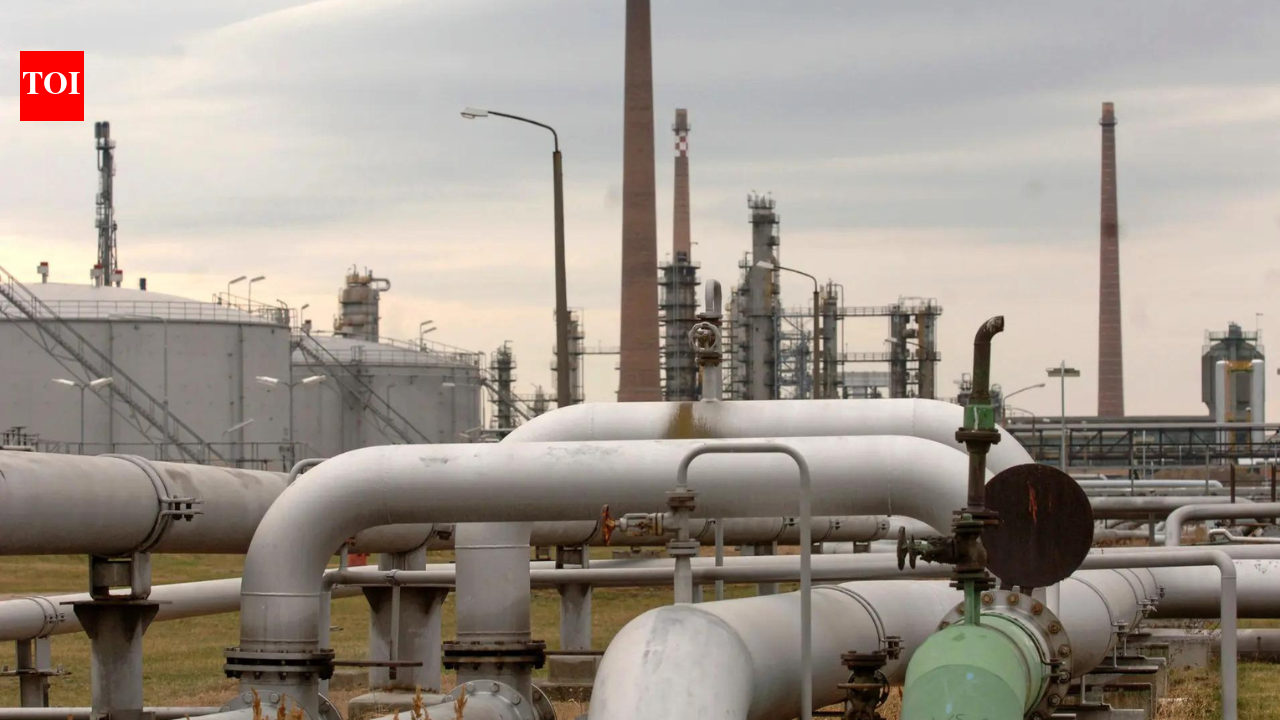
NEW DELHI: Govt on Saturday significantly increased export duties on diesel and aviation turbine fuel to dissuade oil refiners from exporting these fuels and to ensure adequate availability in the domestic market amid ongoing tensions in West Asia. The ministry of finance issued a series of notifications hiking the export duty on diesel by more than 150% – from Rs 21.5 per litre to Rs 55.5 per litre – with immediate effect. The levy on ATF, or jet fuel, was increased from Rs 29.5 per litre to Rs 42 per litre. The export duty on petrol continues to be nil. Under the revised structure, the special additional excise duty on high-speed diesel has been raised to Rs 24 per litre, while the road and infrastructure cess now stands at Rs 36 per litre, which means a large chunk will now flow to the Centre. Govt said these duties are not meant to boost revenue, but to stop fuel exporters from taking undue advantage of price differences. The Centre had, on March 27, imposed an export duty of Rs 21.5 per litre on diesel and Rs 29.5 per litre on ATF in a bid to check windfall gains, as fuel was in short supply in international markets due to a squeeze on energy supplies amid the military conflict and export curbs imposed by China. It had also slashed excise duty on diesel and petrol to shield consumers and oil companies from the impact of high crude prices. Retail prices of automobile fuels in India have not increased despite high volatility in the international crude market, while only a small part of the international price pressure has been passed on to domestic flights. The windfall tax on exports of diesel and ATF helps the Centre partly offset the impact of the excise duty cut. On March 27, govt had estimated revenue gains from export duties at around Rs 1,500 crore in a fortnight. The further hike in export duties is likely to lead to higher revenue gains. In a statement, the ministry of petroleum had said, “At a time when international diesel prices have surged sharply, the levy is designed to disincentivise exports and ensure that refinery output is directed first tow-ards meeting domestic demand.“
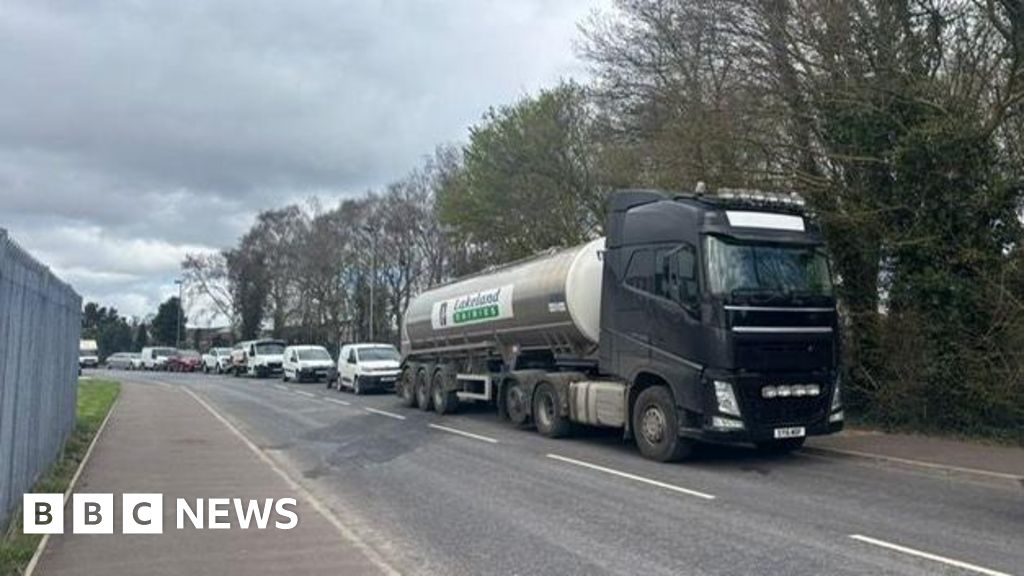
A convoy of vans, lorries, tractors, and even a limousine took part in a slow moving protest around the town centre on Saturday afternoon.
Source link


IRGC Navy warns military vessels of ‘firm response’ to attempts at crossing Strait of Hormuz
[CinePlex360] Please moderate: “Meta’s lat
Indian electronic firms seek PLI 2.0, eye 30–35% share in global mobile production by FY31 – The Times of India

-

 Entertainment1 week ago
Joe Jonas shares candid glimpse into parenthood with Sophie Turner
-

 Tech1 week ago
Our Favorite iPad Is $50 Off
-

 Sports1 week ago
UConn Final Four run could trigger a $50M furniture giveaway for Massachusetts-based Jordan’s Furniture
-

 Fashion5 days ago
India’s exports face reset as EU links trade to carbon metrics: EY
-

 Entertainment1 week ago
Blake Lively reacts to harassment claims dismissal against Justin Baldoni
-
 Business1 week ago
Video: Why Is the Labor Market Stuck?
-

 Politics1 week ago
Iran can sustain Strait of Hormuz closure for years, will cut US military logistics: Official
-

 Entertainment1 week ago
Barbie Ferreira reveals where she stands with ‘Euphoria’ girls after exit