

Fashion
Asia claims largest share of markets on Kearney FDI Confidence Index

The survey, conducted in January covering more than 500 senior executives from leading corporations worldwide, shows that companies are committed to international investment despite mounting uncertainty.
Eighty-eight per cent of respondents in the Kearney 2026 FDI Confidence Index survey said they plan to raise FDI over the next three years, signalling sustained confidence in long-term global opportunities.
Technological and innovation capabilities rank as the key factor influencing where firms choose to invest.
Asia has the largest share of markets on the index for the first time in more than a decade.
The recent escalation of conflict in the Middle East adds a layer of uncertainty to the global investment environment, with the potential to disrupt, delay or redirect FDI flows depending on how risks evolve, it observed.
Technological and innovation capabilities rank as the most important factor influencing where companies choose to invest, surpassing traditional considerations like regulatory efficiency and domestic economic performance.
Investors cite technological innovation as the strongest or tied strongest reason to invest in 10 of the 25 markets on the index, underscoring the growing importance of innovation ecosystems in attracting global capital, a release from the management consulting firm said citing the study.
The United States maintains its position as the world’s most attractive destination for FDI for the 14th consecutive year. Investors continue to cite the country’s technological leadership and economic resilience as key reasons for investing.
However, despite that, investor sentiment has softened, with net optimism about the US market’s three-year economic outlook falling by 17 points compared with last year.
Canada holds the second position for the fourth year in a row and continues to close the gap with the United States. Investors point to Canada’s natural resource base, stable economic fundamentals and growing technology capabilities as key strengths.
Asia shows particularly strong momentum in this year’s rankings. Japan rises to third place, supported by investor confidence in its innovation ecosystem and targeted investment incentives. China climbs to fourth, reflecting the scale of its domestic market and its continued progress in technology development.
More broadly, Asia claims the largest share of markets on the index for the first time in more than a decade. The shift underscores a growing investor focus on markets that combine technological capability, economic growth potential, and geopolitical relevance.
So-called ‘middle power’ economies are also gaining prominence in this year’s results. Singapore posts one of the most notable improvements in the rankings, while South Korea also climbs in the index, reflecting strong investor interest in its technological innovation and advanced industrial capabilities. These markets are viewed as strategic investment hubs, offering growing roles in global supply chains.
China, the United Arab Emirates (UAE) and Saudi Arabia rank as the top three markets on the emerging markets index for the third consecutive year, while Thailand and Malaysia post some of the largest gains in the rankings amid ongoing supply chain diversification.
Several emerging markets—including China, the UAE, Brazil, Mexico, Thailand, Malaysia and India—also appear on the global rankings, highlighting the growing overlap between global and emerging investment destinations.
Investor sentiment toward emerging markets has improved modestly year on year, with investors expressing the strongest optimism about the economic outlook for markets like the United Arab Emirates and Thailand.
The results suggest that more companies are looking beyond traditional investment hubs as they expand supply chains and pursue growth opportunities across a broader set of emerging markets.
Executives remain alert to rising global risks even as investment intentions are strong. Geopolitical tensions rank as the most likely development over the next year (36 per cent), followed by commodity price increases and political instability in developed markets (30 per cent).
At the same time, industrial policy is playing a central role in shaping investment decisions. According to the survey, 84 per cent of investors say industrial policy is extremely or very important in determining where they invest, and 57 per cent believe it has a positive impact on their company’s business performance.
However, nearly nine in 10 investors report at least moderate business risk from competing national industrial policies, underscoring the complexity created by overlapping policy frameworks.
Investors view infrastructure development and tax incentives as the most effective industrial policy tools, with roughly four-fifths saying infrastructure investment is effective in achieving economic and security goals, while enthusiasm for tariffs and export controls is significantly lower.
Fibre2Fashion News Desk (DS)












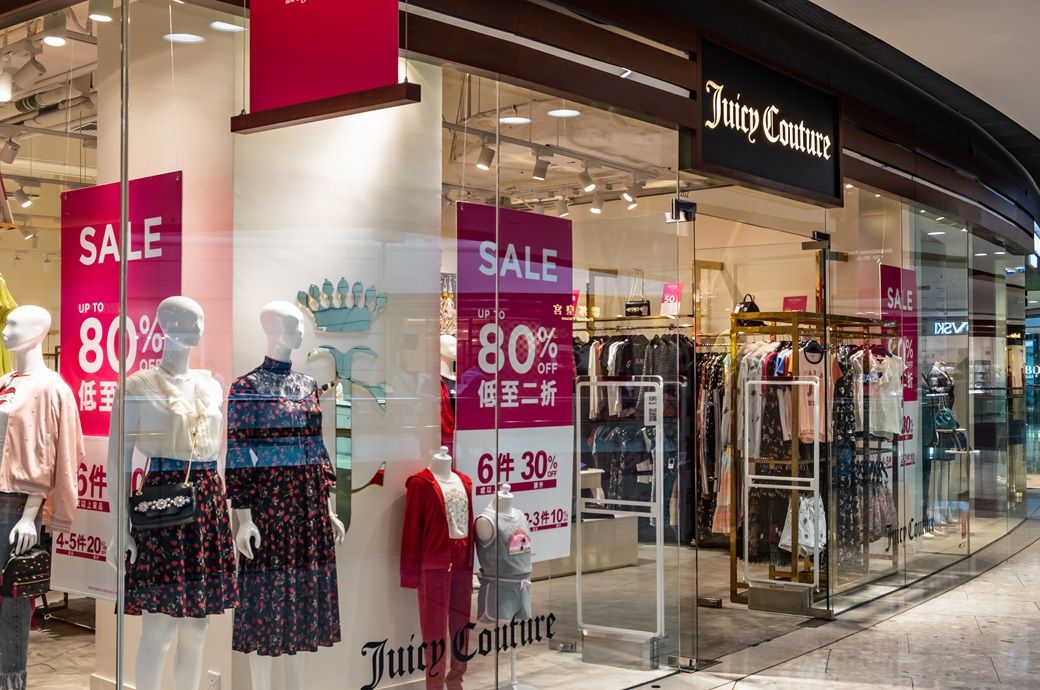
This expansion follows the remarkably successful introduction of Juicy Couture handbags and accessories in India earlier this year. Building on that momentum, the new apparel launch brings the brand’s signature California aesthetic to a new generation of Indian consumers who value authenticity and expressive dressing.
Juicy Couture is expanding into India’s apparel market as Brand Concepts Ltd. broadens its licensing deal with Authentic Brands Group.
After strong sales of handbags and accessories, the launch introduces the label’s iconic velour tracksuits, bold logos and athleisure, targeting young, fashion-conscious consumers and positioning the brand in India.
Famous for defining the ‘Airport Look’ through pop culture icons, the collection features the brand’s legendary velour tracksuits, statement-making silhouettes, signature logo moments, and elevated athleisure. The range is designed to transition seamlessly from day to night, blending high-fashion attitude with everyday comfort.
“The overwhelming response to Juicy Couture handbags in India confirmed that the Indian consumer has a deep affinity for the brand’s bold and glamorous identity,” said Abhinav Kumar, Co-Founder and CEO of Brand Concepts Ltd. “Expanding our partnership with Authentic Brands Group to include apparel is a natural evolution. We are excited to bridge the gap between international prestige and the Indian fashion scene, offering a complete Juicy Couture lifestyle experience that resonates with the energy of today’s youth.”
“India is an incredibly dynamic market, and the continued expansion of Juicy Couture reflects our commitment to growing the brand in regions where fashion-forward consumers are embracing both heritage and individuality,” said Sanjeet Mehta, EVP, Head of India at Authentic, the brand’s owner. “Together with Brand Concepts Ltd., we are building on strong early momentum to introduce Juicy Couture’s iconic apparel, bringing its signature mix of glamour, attitude, and cultural relevance to a new and engaged audience.”
Note: The headline, insights, and image of this press release may have been refined by the Fibre2Fashion staff; the rest of the content remains unchanged.
Fibre2Fashion News Desk (RM)
On a month-on-month (MoM) basis, consumer prices rose by 0.7 per cent in March, in line with the average increase typically observed during the same period over the past decade, CBS said in a press release.
Inflation in the Netherlands rose to 2.7 per cent YoY in March 2026 from 2.4 per cent in February, driven mainly by a sharp rise in motor fuel prices, which surged 18.7 per cent.
Consumer prices increased 0.7 per cent month on month.
HICP inflation stood at 2.6 per cent, broadly in line with the euro area, though energy costs rose faster domestically.
It noted that seasonal factors, such as retail discount cycles, can influence short-term price movements, particularly in categories like clothing.
The primary driver behind the rise in inflation was the sharp increase in motor fuel prices. Fuel costs surged 18.7 per cent YoY in March, a significant jump from the 2.6 per cent increase recorded in February. Diesel prices saw the steepest rise, climbing from an average of €1.834 per litre in February to €2.294 in March. Petrol prices also increased, moving from €2.039 to €2.249 per litre over the same period.
Despite rising fuel prices, CBS highlighted that broader inflation dynamics remain influenced by a mix of energy and non-energy components.
According to the European Harmonised Index of Consumer Prices (HICP), inflation in the Netherlands stood at 2.6 per cent YoY in March, up from 2.3 per cent in February. This places Dutch inflation broadly in line with the euro area average, which rose from 1.9 per cent to 2.5 per cent over the same period.
However, energy prices in the Netherlands increased at a faster pace compared to the wider eurozone, indicating relatively stronger domestic cost pressures. The latest data underscored the continued sensitivity of inflation to fuel price movements, even as broader price trends remain relatively stable.
Fibre2Fashion News Desk (SG)

For decades, labour arbitrage defined competitiveness in the global textile and apparel (T&A) industry. That model is now under strain. Across major manufacturing hubs, energy, not labour, is emerging as the most volatile and decisive cost factor, particularly in processing segments such as dyeing, printing, and finishing. As fuel, gas, and electricity prices remain elevated in ****, the industry is undergoing a structural reset:
energy is shifting from a predictable overhead to the primary driver of margin volatility.
Textile processing is one of the most energy-intensive stages in the value chain. From steam generation to heat-setting, thermal energy consumption is unavoidable and continuous. Historically, energy accounted for ~*–** per cent of total production costs in textile processing. In ****, this share is rising towards **–** per cent, depending on region and fuel mix. Dyeing and finishing units are experiencing sharp increases in steam and thermal energy costs. This rise is being driven by multiple overlapping pressures:


Meta Is Warned That Facial Recognition Glasses Will Arm Sexual Predators

GTA-maker Rockstar Games hacked again but downplays impact

Asia claims largest share of markets on Kearney FDI Confidence Index

-

 Fashion6 days ago
India’s exports face reset as EU links trade to carbon metrics: EY
-

 Politics1 week ago
Trump confirms rescue of airman whose F-15 was downed in Iran
-

 Entertainment5 days ago
Queen Elizabeth II emotional message for Archie, Lilibet sparks speculation
-

 Tech5 days ago
As the Strait of Hormuz Reopens, Global Shipping Will Take Months to Recover
-

 Tech5 days ago
Azure customers up in arms over ‘full’ UK South region | Computer Weekly
-

 Entertainment6 days ago
Lamar Odom shocking response to Khloé Kardashian account of his overdose
-

 Tech4 days ago
This AI Button Wearable From Ex-Apple Engineers Looks Like an iPod Shuffle
-

 Sports1 week ago
With Messi goal, Inter Miami open new stadium with dream moment