

Politics
At least 70 killed in Haiti massacre, rights group says, far exceeding official toll

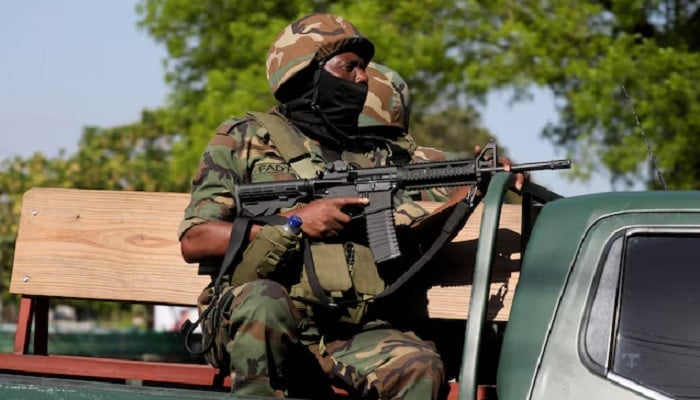
- Human rights group says 70 dead, officials say 16.
- Rights group estimates 6,000 people displaced by violence.
- UN Secretary-General’s office calls for thorough investigation.
At least 70 people were killed and 30 injured in an attack near Petite-Rivière in Haiti’s breadbasket Artibonite region, a human rights group said Monday, far higher than official estimates, which put the death toll at around 16.
Residents and officials told local media the attack began in the early hours of Sunday in rural communities around Jean-Denis, and continued into the early hours of Monday, with gang members storming the area and setting homes on fire.
The Defenseurs Plus rights group said it estimated the violence had displaced 6,000 people. The UN estimated that more than 2,000 people left their homes in the days following raids by armed gangs nearby.
Police initially reported 16 dead and 10 injured, while a preliminary report from civil protection authorities said 17 had died and 19 were wounded, mostly men.
A spokesperson for the UN Secretary-General told a press briefing that the organisation’s office in Haiti, BINUH, was closely monitoring the events and that estimates ranged from 10 to 80 people killed. He called for a thorough investigation.
“The lack of a security response and the abandonment of Artibonite to armed groups demonstrate a complete abdication of responsibility by the authorities,” Defenseurs Plus said in a joint statement with the Collective to Save the Artibonite.
An audio message circulated on social media was attributed to Gran Grif leader Luckson Elan. In the message, Elan appears to say the attack was retaliation for attacks on their base in Savien by a rival armed group.
The Artibonite department, a key agricultural area, has seen some of Haiti’s worst violence. Gang conflict has extended beyond the capital, Port-au-Prince, despite more aggressive policing and promises of more foreign support for Haiti’s security forces.
Ongoing operation
Haiti’s National Police said it deployed three armoured vehicles, which were slowed by holes that gang members had dug in the road. Officials said the armed group was fleeing the area when police arrived, and several houses were already burned down.
The injured were then taken to a local hospital, and the dead to two morgues, said police, adding they have launched an operation to track down the gang members who fled.
Defenseurs Plus estimated 50 houses were burned down.
Close to 20,000 people have been killed in Haiti since 2021, according to a recent UN report, with the death toll rising each year, as increasingly independent and powerful armed gangs have clashed with security forces and local vigilante groups.
Gran Grif and Viv Ansanm, which groups hundreds of gangs in the capital, have been designated terrorist organisations by Washington. The groups have been accused of mass killings, gang rapes, arson, theft and trafficking guns, drugs and organs.
This month, the US offered a reward of up to $3 million for information on their financial activities.
The weekend’s attack marks the latest of a series of massacres in the area, largely attributed to Gran Grif. In October 2024, a Gran Grif attack on the nearby town of Pont-Sonde left 115 dead, as armed men shot residents door to door.
More than 1.4 million people – around 12% of the Caribbean’s most populous nation – have been displaced by the conflict with armed gangs, worsening an economic crisis and access to food.


Dubai’s Roads and Transport Authority (RTA), the emirate’s transport management institution, has officially launched its autonomous taxi service, initially deploying 100 driverless vehicles across the city’s transport network.
The service began in Umm Suqeim, a residential and commercial area along Dubai’s Jumeirah coastline, and Jumeirah, a well-known upscale beachfront district popular with residents and tourists.
The taxis are operated in partnership with two Chinese autonomous driving technology companies and are available to the public via the Uber app and the Apollo Go app.
Authorities said the fleet will gradually increase in the coming years to meet growing demand for advanced transport technologies and support Dubai’s future-focused mobility strategy.
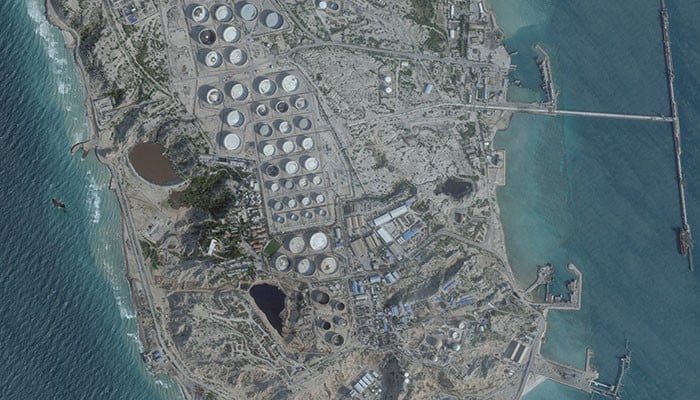
A scrubby island in the Gulf that is roughly one-third the size of Manhattan, Kharg Island is the nerve centre of the Iranian oil industry — and at the heart of US President Donald Trump’s latest efforts to pressure Tehran.
On Monday, Trump vowed that a failure by Iran to agree a deal to end the war could see the United States “completely obliterating” the export hub.
A day earlier, he had said the United States could take the island, eyed by the Pentagon for ground operations, “very easily”.
So what are Trump’s options, and how might Iran react if he presses on this pressure point?
What is Kharg Island?
It may be a mere scrap of land, but Kharg handles around 90% of Iran’s crude exports, according to a report by US bank JP Morgan.
Located in the north of the Gulf, around 30 kilometres (20 miles) from the Iranian coast and more than 500 kilometres from the Strait of Hormuz, it has no oil wells.
But it has Iran’s largest oil terminal, oil pipelines, storage tanks and related infrastructure.
It also has military facilities, some of which have already been hit by Israeli-US strikes.
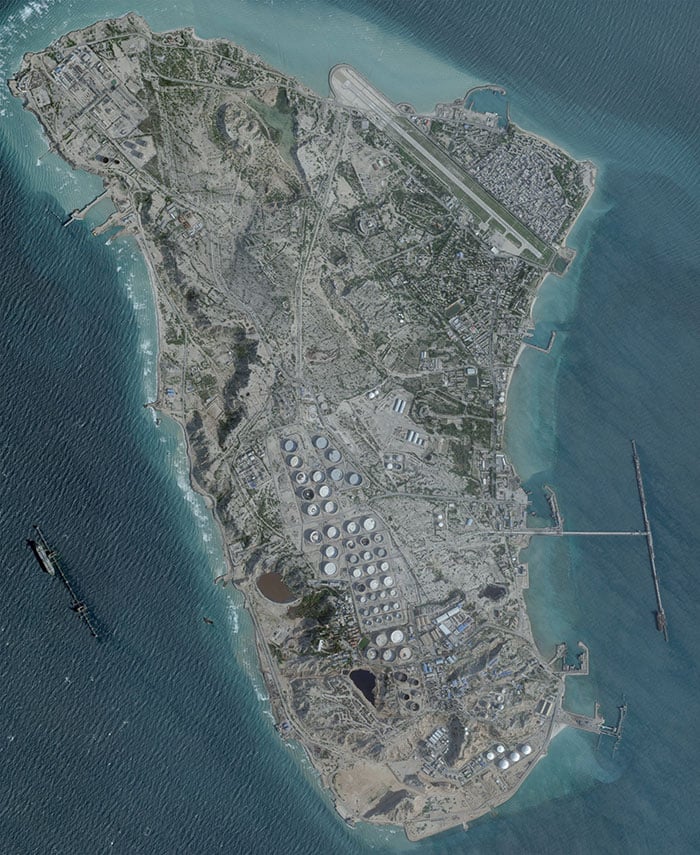
On March 13, “US forces executed a large-scale precision strike on Kharg Island”, Centcom, the US military command for the region, said.
“The strike destroyed naval mine storage facilities, missile storage bunkers and multiple other military sites. US forces successfully struck more than 90 Iranian military targets on Kharg Island, while preserving the oil infrastructure.”
Sources close to US intelligence services told US broadcaster CNN Iran had deployed additional troops and defence systems to the area in recent weeks, including MANPAD-type surface-to-air missiles and mines.
Trump’s options?
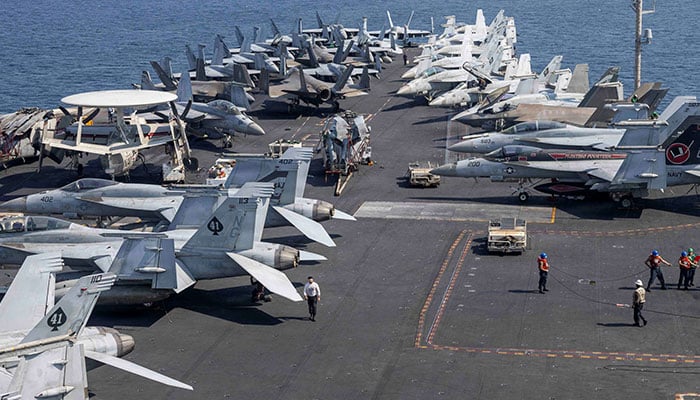
There appear to be three routes for US forces wishing to seize the island — an airborne attack, an amphibious operation, or a combination of the two.
The Pentagon is currently moving US paratroopers and Marines into the area.
“(The) US combat force build-up sets the stage for (a) potential ground offensive in Iran,” said US think tank Soufan.
Centcom’s former commander, General Joseph Votel, told The War Zone website this month it would not take that many soldiers to seize Kharg.
“On a small island like Kharg, I imagine you’d need a battalion of Marines. We are therefore talking about a force of 800 to 1,000 men, perhaps a little fewer, certainly not much more,” he said.
But taking Kharg and holding onto it “are two different things”, stressed Professor Phillips O’Brien of the University of St Andrews in Scotland.
He said the US military would struggle to retain the island within range of Iranian missiles and drones.
Just 60 kilometres away is the city of Bushehr, an important military centre “from which the Iranians defend the entire northern part of the Gulf, including Kharg”, noted Pierre Razoux of French research centre FMES.
Why do it?
Trump’s war goals remain hazy. It is unclear whether he primarily wants to force Iran to reopen shipping lanes in the Strait of Hormuz, force regime change in Tehran, or coerce the Iranians into concessions on their nuclear or ballistic missile programmes.
In the short term, capturing Kharg could give Washington leverage to force Iran to negotiate — presumably on Trump’s terms, given the country’s dependence on oil revenue, the Soufan Centre said.
It might not have much effect in reopening the Gulf to shipping, however, because Iran controls a string of other islands in the Strait of Hormuz.
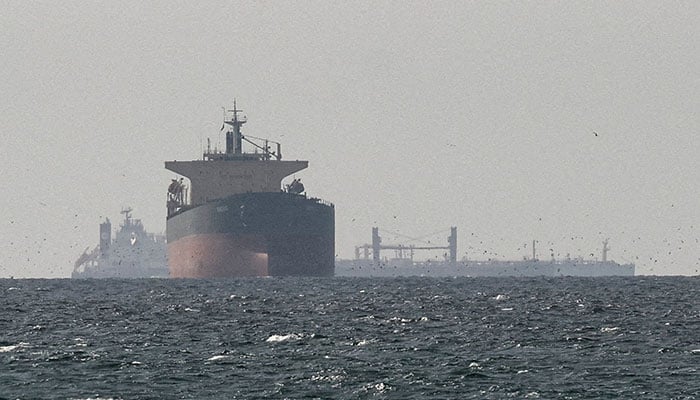
And if the Iranians choose not to cede to Trump’s demands, “What does the US do?”, O’Brien wondered.
“Does the US then, out of spite, level all the economic facilities on Kharg?
“That could easily boomerang back in American faces. It means oil prices skyrocket even more and stay high for much longer,” he said.
“It also means Iran will be incentivised to shut down the traffic in the Straits for even longer. If they cannot get their own oil out, why let anyone else’s?”
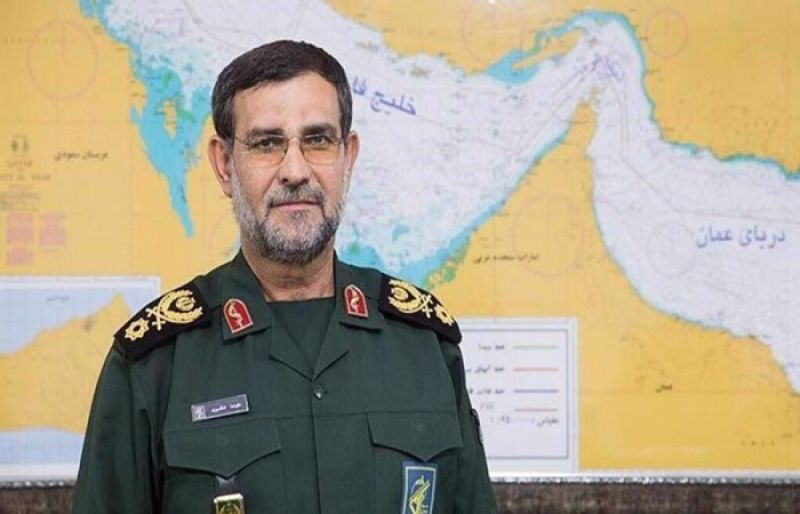
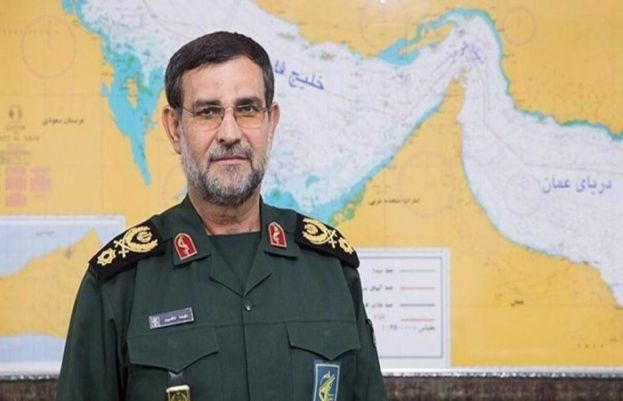
Top Iranian officials have condoled the martyrdom of Rear Admiral Alireza Tangsiri, commander of the Islamic Revolution Guards Corps (IRGC) Navy, praising his role in strengthening Iran’s maritime power and resistance.
In a statement released on Monday, the IRGC announced the martyrdom of the IRGC Navy commander following injuries sustained in the US-Israeli aggression against Iran.
The statement added that Tangsiri was wounded after operations that “inflicted heavy damage on enemy facilities and infrastructure and led to the downing of a US fighter jet.”
In his message of condolence, Leader of the Islamic Revolution, Ayatollah Seyyed Mojtaba Khamenei, hailed Rear Admiral Tangsiri as a “courageous and valiant” commander who was honored with martyrdom after years of struggle.
Citing a Quranic verse that those slain in the path of God are alive and sustained by their Lord, the Leader said his martyrdom during the ongoing Israeli-American war of aggression against the Islamic Republic of Iran stands as “a great source of pride.”
Ayatollah Mojtaba Khamenei said the sacrifice would serve as an enduring inspiration for the people of Bushehr, the youth of southern Iran, and the country’s armed forces, who have long safeguarded Iran’s independence and maritime borders, particularly in the Persian Gulf.
The Leader also expressed confidence that Iran’s path of maritime strength and resistance would continue with greater power and determination.
In a separate statement, President Masoud Pezeshkian hailed the martyred IRGC Navy commander, describing his martyrdom as “a great honor for the true men of Iran.”
In his message, the president said the “banner of dignity, resistance, and independence” is raised ever higher with the sacrifice of Iran’s brave fighters.
He praised Rear Admiral Tangsiri’s role in elevating the power, prestige, and authority of the IRGC Navy in the Persian Gulf, noting that his leadership had transformed it into a formidable force capable of standing “as a mighty barrier against aggressors and the greedy.”
Pezeshkian said the martyred commander’s effectiveness had made him “a thorn in the side of ruthless enemies,” who viewed his elimination as a major objective.
He stressed that martyrdom represents a profound honor and extended condolences to the Leader, the commander’s comrades in the IRGC and the army, and the Iranian nation.
Iranian Parliament Speaker Mohammad Bagher Ghalibaf, in a statement, described Rear Admiral Alireza Tangsiri as a shining example of courage, steadfastness, and loyalty to the Leader of the Islamic Revolution.
He noted that the martyred IRGC Navy commander’s resolve “was never shaken even in the face of the formidable assault of American warships, striking such a powerful blow to the tools of arrogance that they withdrew and docked at the farthest coasts.”
The parliament speaker further warned that “if the enemy thinks that eliminating the brave will erase courage, they may test their luck – and will face the crushing response of the successors of this honored martyr.”
Iran’s judiciary chief Gholamhossein Mohseni Ejei, in a statement, paid tribute to Rear Admiral Tangsiri, describing him as a “valiant and selfless commander of Islam” and one of the renowned heroes of the “Ramadan War,” who “turned the day of the American-Zionist aggressors into night.”
He said the IRGC Navy commander, after years of sincere struggle, attained the “great victory of martyrdom” and “the noblest form of death.”
Ejei highlighted Tangsiri’s lineage, linking him to historic resistance figures of southern Iran such as Rais Ali Delvari, and said he had dealt heavy blows to enemy forces while strengthening Iran’s defensive shield, particularly along its southern shores.
According to the judiciary chief, these efforts had effectively erased the enemy’s ambitions of a ground invasion from their strategic calculations.
He also expressed confidence that the martyred commander’s comrades in the IRGC Navy would continue his path with greater strength, neutralizing enemy aggression and acting with the same resolve in offensive operations.
Foreign Minister Abbas Araghchi hailed the martyrdom of Tangsiri as the culmination of years of dedicated service in defending the security and independence of the Islamic Republic.
Araghchi described the martyred commander as a tireless and devoted commander who led the frontlines of Iran’s dignity and military power.
“Rear Admiral Tangsiri, hailing from the brave lineage of Tangestan, elevated the strength of the IRGC Navy in the azure waters of the Persian Gulf with unparalleled prudence,” he said, “ensuring that in critical moments, it would stand as a mighty barrier against aggressors.”
He emphasized that the path of such warriors would continue with unwavering resolve, and that their sacrifice would ensure the continued honor, sovereignty, and independence of Iran.


How Trump and the oil markets move in sync: A tango in five charts

Fans make Ryan Reynolds bid $25k for hat at auction

NFL owners in favor of 18th regular-season game, but key caveat added as well

-

 Politics7 days ago
Afghanistan announces release of detained US citizen
-

 Sports7 days ago
Broadcast industry CEO says consolidation is ‘essential’ to compete for NFL soaring media rights prices
-

 Entertainment7 days ago
UN warns migratory freshwater fish numbers are spiralling
-

 Tech7 days ago
Can a Home Appliance Fix the Problem of Soft-Plastic Waste?
-
 Business6 days ago
Property Play: Home flippers see smallest profits since the Great Recession, real estate data firm says
-

 Fashion7 days ago
ICE cotton slips on weaker crude, profit booking
-
 Business7 days ago
More women are entering wealth management, but few are in advisory roles, study finds
-
 Business6 days ago
Centre plans to cut broken rice share in PDS, boost ethanol feedstock supply – The Times of India