

Business
Aurangzeb highlights Pakistan’s strategic shift to restore economic confidence – SUCH TV


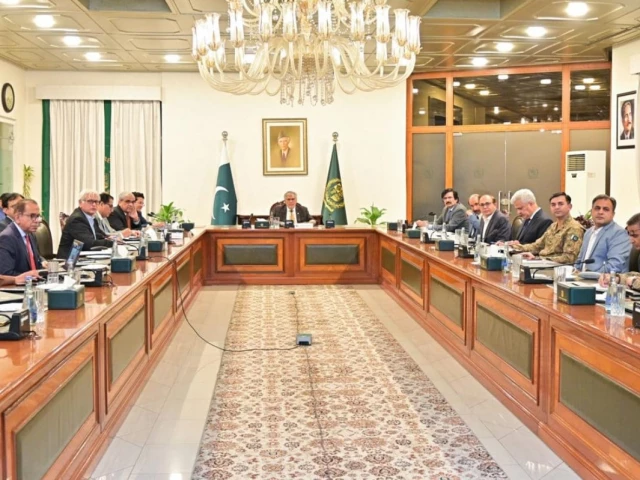
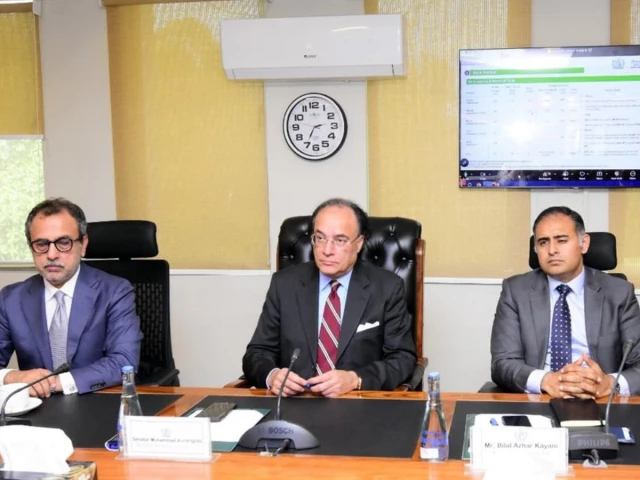
Finance Minister Muhammad Aurangzeb underscored Pakistan’s strategic shift from seeking aid-based support towards trade- and investment-led engagement to ensure long-term economic sustainability and mutually beneficial partnerships, particularly with the Gulf Cooperation Council (GCC) countries.
In an interview with CNN Business Arabia, Aurangzeb highlighted the vision of Prime Minister Shehbaz Sharif, which reflected Pakistan’s renewed economic confidence and reform momentum.
He said that Pakistan has followed a comprehensive macroeconomic stabilisation program for the past 18 months, which has delivered tangible and measurable results, while inflation has declined to single-digit levels from an unprecedented 38%.
On the fiscal front, Pakistan has achieved primary surpluses, while the current account deficit remains well within targeted limits. According to the finance czar, the exchange rate has also stabilised, and foreign exchange reserves have improved to approximately 2.5 months of import cover, reflecting strengthening external buffers.
He maintained that the country has two major external validations, which indicate Pakistan’s improving economic outlook.
Firstly, he said, all three international credit rating agencies have aligned their assessments this year by upgrading Pakistan’s ratings and outlook. On the other hand, the country has completed the second review under the IMF Extended Fund Facility, with the IMF Executive Board granting its approval earlier this week.
He stated that such developments demonstrate growing international confidence in Pakistan’s economic management and reform trajectory.
The finance minister further emphasised that macroeconomic stabilisation has been achieved through a coordinated approach combining disciplined monetary and fiscal policies with an ambitious structural reform agenda.
“Reforms are being implemented across key areas, including taxation, energy, state-owned enterprises, public financial management, and privatisation, aimed at consolidating stability and laying the foundation for sustainable growth,” Aurangzeb said.
The finance minister also highlighted the significant progress in Pakistan’s improvement of the tax-to-GDP ratio.
“During the last fiscal year, it increased to 10.3 per cent, with a clear path towards 11 per cent,” the finance minister said.
He further explained the government’s objective to reach a level of tax collection that ensures fiscal sustainability over the medium to long term.
“This is being pursued through widening the tax base by bringing previously undertaxed but economically significant sectors such as real estate, agriculture, and wholesale and retail trade into the formal net, alongside deepening compliance by reducing leakages through production monitoring systems and AI-enabled technologies. Simultaneously, the tax administration is being transformed through reforms in people, processes, and technology,” he said.
The minister further highlighted efforts to improve governance in [power] distribution companies, involve private sector expertise, advance privatisation, and reduce circular debt, which has long constrained the power sector.
“Rationalising the tariff regime is essential to making energy more competitive for industry, thereby enabling industrial revival and economic growth,” he stressed.
Senator Aurangzeb acknowledged the longstanding support of GCC countries, including Saudi Arabia, the United Arab Emirates, and Qatar, for their critical role in critical role supporting Pakistan through financing, funding, and cooperation at international financial institutions such as the International Monetary Fund.
“This relationship is now evolving towards a new phase centred on trade expansion and investment flows. Remittances continue to play a vital role in supporting the current account, with inflows reaching approximately $38 billion last year and projected to rise to $41-42 billion this year, over half of which originates from GCC countries,” he added.
He further said, “Pakistan is actively engaging with GCC partners to attract investment in priority sectors including energy, oil and gas, minerals and mining, artificial intelligence, digital infrastructure, pharmaceuticals, and agriculture.”
Expressing optimism regarding progress on a Free Trade Agreement (FTA) with the GCC, he termed the discussions at an “advanced stage”.
Senator Aurangzeb reiterated the government’s strategic direction in shifting the collective focus on trade rather than relying on aid.
“Pakistan’s future lies in fostering trade and investment partnerships rather than reliance on aid,” said the finance minister.
He also emphasised the role of foreign direct investment in supporting the higher GDP growth, generating employment opportunities, and delivering shared economic benefits for Pakistan and its partners.
“The government is fully mobilised to translate this vision into reality.” He concluded.




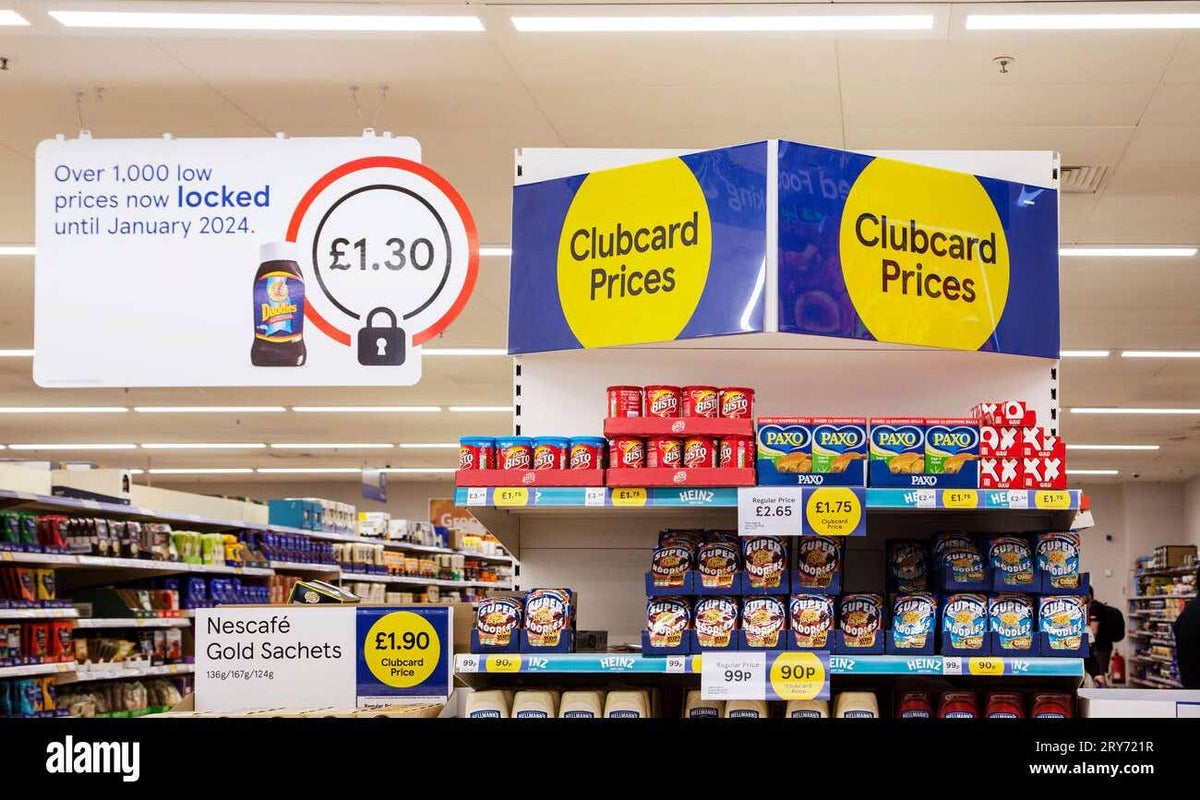
Tesco and Sainsbury’s customers are paying more than Waitrose shoppers for some common branded groceries if they are not using a loyalty scheme, analysis by Which? has found.
The watchdog compared a list of 245 branded items including Heinz, Nescafe and Mr Kipling in February, finding that it was, on average, most expensive for customers at Sainsbury’s and Tesco who were not using the Nectar or Clubcard loyalty schemes.
Which? acknowledged that most shoppers are part of a membership scheme, but said some may be unwilling to sign up to loyalty cards for reasons such as data privacy, while others have no choice because of eligibility criteria.
Tesco customers who are under 18 can not sign up to a Clubcard, although the supermarket has announced it will review this before the end of the year.
The Which? list of items was most expensive at Sainsbury’s for non-Nectar members at £942.66 – 14% more than the cheapest retailer in the study Asda, which cost £823.58.
Tesco followed behind Sainsbury’s, with its non-Clubcard price totalling 11% more than Asda at £916.56.
Which? said it did not include discounters Aldi and Lidl in the study because they did not stock a sufficiently large range of branded goods.
Both Tesco and Sainsbury’s – the UK’s two largest grocers – were more expensive for non-members of their loyalty schemes than Waitrose, which cost £899.05.
Waitrose was 9% more expensive than Asda and emerged as a “more competitive option”, Which? said.
Which? found several products that were cheaper at Waitrose, including Amoy Straight To Wok Noodles, which were on average £1.25 at both Waitrose and Morrisons but most expensive at Sainsbury’s and Tesco without a loyalty card at an average of £2.15 – a 72% difference.
Sea salt and vinegar Ryvita Thins were also cheapest on average at Waitrose at £1.25, but shoppers buying this product at Morrisons, Tesco, and Sainsbury’s without a loyalty card would all have paid an average of £2.30, making them 84% more expensive.
For customers with a Clubcard, Which? found that the same list of groceries at Tesco fell to £837.43 on average – just 2% more expensive than Asda.
Which? found various instances of branded products where the Tesco Clubcard price was the cheapest on average.
Carex Hand Wash was 95p at Tesco with a Clubcard but £1.70 at Waitrose where it was the most expensive.
Another example showed Kellogg’s Crunchy Nut cornflakes was £1.55 on average in February, while the highest average price among the supermarkets was at Waitrose where it cost £2.50.
Which? said the figures showed the “dramatic price gulf” created by loyalty pricing.
In one example at Tesco, Which? found a 200ml bottle of L’Oreal Paris Elvive Bond Repair Shampoo was double the price on average for shoppers without a Clubcard – at £13 compared to £6.50.
The higher price was also found at both Morrisons and Sainsbury’s.
Which? found that a 200g jar of Kenco Smooth coffee cost shoppers at Tesco and Sainsbury’s without a loyalty card £8.35 – the highest price on the market.
In contrast, the same jar was £7 at Waitrose and £6.32 at Asda, on average.
Similarly, Waitrose had the cheapest average price for Nescafe Gold Blend at £6.25, while non-members at Sainsbury’s were asked to pay £8.35.
Meanwhile, Which? found customers who used a Nectar card at Sainsbury’s could expect to pay only 3% more than Asda at £848.56 for the entire list of items.
Morrisons averaged 4% more expensive than Asda when using a More card and 5% more expensive without one.
Ocado was also 5% more expensive than Asda.
Which? retail editor Reena Sewraz said: “Our analysis reveals a shocking truth and shows the impact loyalty schemes have had on grocery pricing.
“Branded favourites can actually be cheaper at Waitrose than at the UK’s biggest supermarkets for shoppers who don’t use a loyalty card – something that would have seemed unthinkable until a few years ago.
“If you’ve got your heart set on specific brands, your best bet is to shop around, keep a close eye on the unit price, and stock up whenever you see a good deal – otherwise, you’re likely to end up paying way over the odds.
“While loyalty cards definitely offer some savings, if you don’t use one you’re better off heading to Asda, where the pricing is usually cheaper on a range of branded goods.”
A Sainsbury’s spokesman said: “We have invested over £1 billion in recent years to help keep prices low and we know more customers are choosing to do their shop at Sainsbury’s.
“We are committed to helping customers access great quality at lower prices and remain focused on offering outstanding value across thousands of products through our Aldi price match scheme, Nectar prices, Your Nectar Prices and our own-brand value lines.”
A spokesman for Tesco said: “It’s no secret that Tesco Clubcard unlocks exceptional savings for the 24 million UK households who have one.
“More than 80% of our sales are made with a Clubcard – but it’s just one of the ways our customers get great value.
“Though everyday low prices we keep prices consistently low on thousands of branded products, and our Aldi price match ensures shoppers can be confident they’re getting competitive prices.”
Business
MLB faces a historic shift as potential lockout, media rights and other league changes loom

Thursday’s Opening Day may be the calm before the storm for Major League Baseball.
The league’s collective bargaining agreement with its players expires at the end of this season. Owners, with the commissioner’s backing, are almost sure to push for a salary cap (which would likely come with a salary floor to get players to the negotiating table).
MLB owners have never been able to get a cap passed by the players union. It’s unclear if the end of the 2026 season will lead to a different result, but MLB Players Association Interim Executive Director Bruce Meyer told ESPN last month he expects a lockout is “all but guaranteed.”
In addition to the CBA’s expiration, there are major shifts underway for baseball media rights. One-third of the league’s teams didn’t have local TV deals in place for this season until this week.
Nine MLB teams – the Washington Nationals, Seattle Mariners, Milwaukee Brewers, St. Louis Cardinals, Miami Marlins, Tampa Bay Rays, Cincinnati Reds, Kansas City Royals, and Detroit Tigers – announced Wednesday their brand new MLB-operated team channels will be carried by DirecTV.
Most of those teams had previously been part of Main Street Sports (previously Diamond Sports Group), which operates FanDuel Sports Networks (previously Bally Sports). That entity has been teetering with liquidation, and the teams terminated their contracts with the company due to missed payments earlier this year.
A 10th team, the Atlanta Braves, is launching a new network called BravesVision. The Braves and Charter’s Spectrum announced a multiyear distribution agreement earlier this week.
MLB ideally wants the rights to all 30 teams in its control by the end of the 2028 season so that it can sell the in-market local games as a national package to a streamer. That would become the modern replacement to regional sports networks, and it would likely be a new, coveted package for streaming services such as ESPN and Amazon Prime Video.
Also at the end of the 2028 season, MLB’s national media rights for all of its packages will expire, allowing the league to redistribute games to its partners and potentially select new ones.
NBC, ESPN, Fox and a combined CBS/Turner have dominated national rights for the past few decades.
“The key in media negotiations now is having all of your rights available,” MLB Commissioner Rob Manfred told me last year. “If you have all of your content – all of your playoffs, all of your regular season – available, there will be buyers, and I’m confident there will be buyers at a higher price for us.”
Manfred has even floated the idea of expanding to 32 teams and realigning the league geographically, upending or even eliminating the American and National leagues that have existed for more than 100 years.
Soaring TV ratings
It’s, of course, unclear how much of this hypothetical change will actually come to fruition.
But the potential for transformation at MLB is greater than at any of the other Big 4 professional leagues in the U.S.
And yet, baseball isn’t struggling — on the contrary. The implementation of the pitch clock in 2023 has led to shorter games, rising attendance and higher TV ratings.
Rob Manfred, Commissioner of the MLB, attends the annual Allen and Co. Sun Valley Media and Technology Conference at the Sun Valley Resort in Sun Valley, Idaho, U.S., on July 9, 2025.
David A. Grogan | CNBC
More than 50 million people in the U.S., Canada and Japan watched Game Seven of the World Series last year – the most-watched baseball game in 34 years. MLB recently wrapped up the World Baseball Classic – a global preseason tournament – which captured nearly 11 million viewers on Fox and Fox Deportes for its final game.
MLB team valuations rose 13% from last year. The average MLB team is now worth $2.95 billion, according to CNBC Sport data.
Still, the profitability of the league is in far worse shape than it is for the NFL, NBA and NHL, according to CNBC’s calculations. In 2025, MLB’s 30 teams had an EBITDA — earnings before interest, taxes, depreciation and amortization — margin of under 2%. Team average revenue was $426 million with average EBITDA of $7 million, including non-MLB ballpark events. In contrast, the comparable margin for the NFL was 20%; the NBA, 21% and the NHL, 22%, according to CNBC’s most recent valuations.
The new CBA at the end of this season could be the first significant step toward a very different MLB. But, similar to the WNBA, which announced its new CBA earlier this week, MLB must ensure negotiations to get a new labor agreement don’t jeopardize a wave of positive momentum.
A JLR spokesperson said: “Due to a part supply challenge with a supplier, we are temporarily pausing production on certain vehicle lines at our Solihull manufacturing facility. We are working closely with that supplier to resolve the issue as quickly as possible and minimise any impact on our clients or our operations.”


China concludes Mexico tariffs create trade barriers for firms

Taylor Swift wins seven awards at iHeartRadio Music Awards 2026

How Cole Hutson is taking a role in the next wave for the Capitals

-

 Fashion1 week ago
Sales at US apparel, clothing accessories stores up 4% YoY in Jan 2026
-
 Fashion1 week ago
Spain’s Inditex FY25 sales rise 3.2% to $46.28 bn amid strong demand
-

 Entertainment1 week ago
Val Kilmer revived 1 year after death through AI
-

 Politics1 week ago
Iran strikes Tel Aviv with cluster-warhead missiles in retaliation of Larijani’s martyrdom
-

 Sports1 week ago
March Madness 2026 – How to watch in SA, start time, schedule, TV channel for NCAA championship basketball tournament
-
 Fashion1 week ago
US’ G-III Apparel’s FY26 sales fall 7% to $2.96 bn
-

 Fashion6 days ago
China’s textile & apparel exports surge 17% to $50 bn in Jan-Feb 2026
-
 Politics1 week ago
US judge directs Trump administration to bring VOA employees back