

Fashion
Australian apparel makers slash inventory to 5-year low: Report


Sales fell from $460,175 to $253,268 quarter on quarter (QoQ) as the sector navigated challenging consumer conditions, yet the aggressive destocking strategy delivered substantial margin improvement.
Lead times also improved significantly, falling to 18 days from 33 days in Q2, close to the prior-year benchmark of 17 days and slightly above the national manufacturing average of 16 days. The shift signals a return to operational normality after prolonged disruptions, Unleashed said in a press release.
Australian clothing and fashion manufacturers cut inventory by 64.7 per cent in Q3 2025 to the lowest level since 2019, while boosting margins by 8.19 per cent despite weaker sales, as per data from Unleashed.
Lead times improved and firms shifted from pandemic stockpiling to leaner, data-driven operations.
Executives said recovery signs are emerging.
The destocking move aligns with a broader manufacturing trend across Australia, where firms have shifted away from pandemic-era buffer building in favour of lean inventory strategies to protect profitability and liquidity. Nationally, small and micro manufacturers increased quarterly sales by 9 per cent to $625,400 while expanding profit margins by 3.2 per cent.
“In spite of cautious consumer spending, spiking energy prices and high labour costs, Australian small and micro manufacturers have been adapting and thriving,” said Jarrod Adam, head of production and distribution at Unleashed. “Manufacturers have found pockets of demand and capitalised on them. The real story is operational awareness; firms have focused on growing revenue and expanding profitability without tying up capital in excess stock. That’s a fundamental shift in mindset from the pandemic era of buffer building.”
The report also compared performance across the UK and New Zealand, concluding that Australian operations are leading on efficiency. Average stock on hand across industries fell to $311,200 in Q3 from $462,735 in Q2. Purchasing of raw materials also declined sharply, down 34.9 per cent to $339,371, reinforcing the shift towards disciplined, data-driven inventory control.
“The sheer velocity of the Q3 pivot is remarkable,” added Adam. “Lead times down 36 per cent, stock down 33 per cent, purchasing down 35 per cent, yet margins up nearly 4 percentage points. This is what disciplined inventory management looks like when manufacturers have real time data and the confidence to act on it.”
“It’s been a tough eighteen months, particularly for retailers, but we’re now seeing a modest recovery in market demand for the first time, which is hugely encouraging,” said Tim Deane, owner at Norsewear, a New Zealand clothing manufacturer that markets across Australia and New Zealand. “We need a sector-wide strategy to lower energy costs and better implement the use of technology to improve productivity.”
The report is based on data from over 1,000 Australian small and mid-sized manufacturers using Unleashed across categories including clothing and fashion.
Fibre2Fashion News Desk (SG)










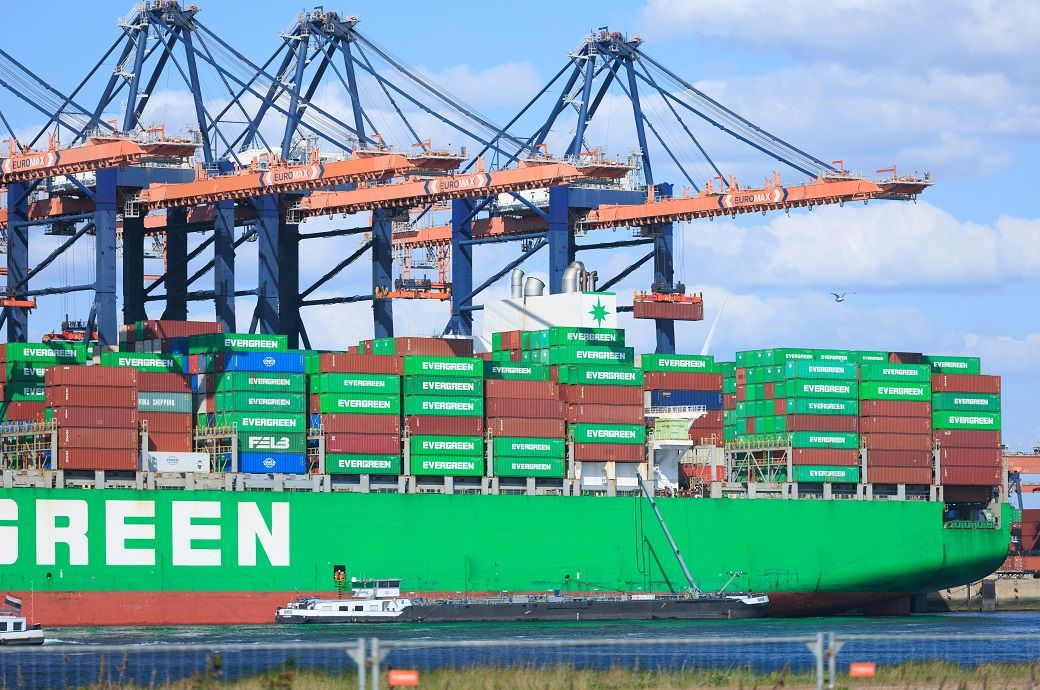
The data showed that the decline was driven mainly by weaker domestic exports, with goods produced in the Netherlands down 8 per cent YoY. In contrast, re-exports to the US rose 3.9 per cent during the period. Exports to the US have fallen every month on a YoY basis since July, CBS said in a press release.
Trade flows were influenced by uncertainty around US import tariffs. In the first half of 2025, trade between the two countries continued to grow, possibly as companies advanced shipments ahead of announced tariff measures.
Goods exports from the Netherlands to the United States fell 4.7 per cent YoY to €27.5 billion (~$33 billion) in the first ten months of 2025, driven by an 8 per cent drop in domestic exports, according to CBS.
Re-exports rose 3.9 per cent, while tariff uncertainty weighed on trade.
Imports from the US increased 1.9 per cent to €48.1 billion (~$57.7 billion).
Meanwhile, imports from the United States rose 1.9 per cent YoY to €48.1 billion (~$57.7 billion) in the first ten months of 2025.
Fibre2Fashion News Desk (SG)

The Philippines’ economic growth for the third quarter (Q3) of 2025 has been revised slightly lower, with gross domestic product (GDP) expanding 3.9 per cent year on year (YoY), down from the preliminary estimate of 4 per cent.
Gross national income growth for the quarter was also revised to 5.4 per cent from 5.6 per cent, while net primary income from the rest of the world was adjusted to 16.2 per cent from 16.9 per cent.
The Philippine Statistics Authority has revised down the country’s third-quarter 2025 GDP growth to 3.9 per cent from an earlier estimate of 4 per cent.
Gross national income growth was also lowered to 5.4 per cent, while net primary income from abroad eased to 16.2 per cent.
The PSA said the adjustments reflect its standard, internationally aligned revision policy.
The Philippine Statistics Authority said the revisions were made in line with its approved revision policy, which follows international standards for national accounts updates.
Fibre2Fashion News Desk (HU)
Operating margin improved sharply to 10.8 per cent from 4.4 per cent in FY24, while adjusted EBIT margin increased to 11.4 per cent from 10.7 per cent, marking the third consecutive year of margin expansion. The net income from continuing operations more than doubled to $502 million from $210 million, with adjusted net income rising to $537 million.
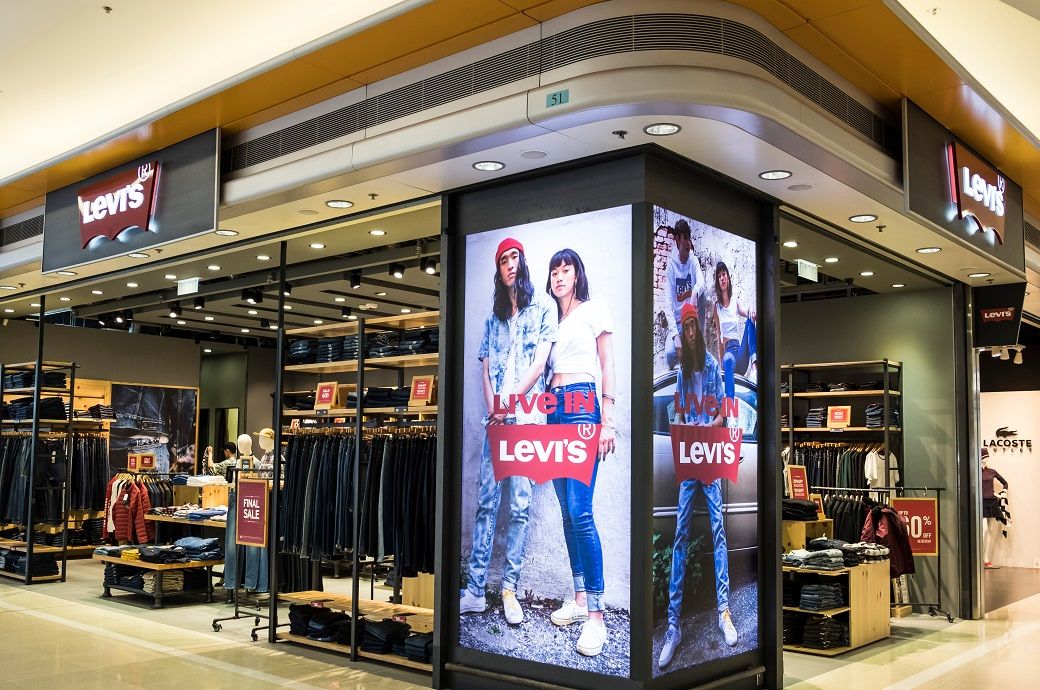
Levi Strauss & Co has delivered a strong FY25, with net revenues rising 4 per cent to $6.3 billion and organic growth of 7 per cent, alongside sharp margin expansion and higher profitability.
Q4 saw 5 per cent organic growth, led by Europe, Asia and DTC, which accounted for nearly half of revenues.
The company expects mid-single digit growth and further margin gains in FY26.
Diluted EPS from continuing operations increased to $1.26 from $0.52 in the previous year, while adjusted diluted EPS rose to $1.34 from $1.24. The company generated $530 million in operating cash flow and $308 million in adjusted free cash flow. The company returned $363 million to shareholders during the fiscal, up 26 per cent YoY, LS&Co said in a press release.
In the fourth quarter (Q4) ended November 30, 2025, the company reported net revenues of $1.8 billion, up 1 per cent on a reported basis and 5 per cent organically compared with Q4 FY24. Growth was broad-based, supported by strong momentum in Europe, Asia and Beyond Yoga, alongside high-single digit comparable growth in direct-to-consumer (DTC).
Europe recorded reported revenue growth of 8 per cent and organic growth of 10 per cent, while Asia delivered growth of 2 per cent reported and 4 per cent organically. In the Americas, revenues declined 4 per cent reported but increased 2 per cent organically, with the US business flat on an organic basis. Beyond Yoga continued to outperform, posting reported growth of 37 per cent and organic growth of 45 per cent.
DTC revenues increased 8 per cent on a reported basis and 10 per cent organically, driven by strength across all regions. E-commerce revenues rose 19 per cent reported and 22 per cent organically, with DTC accounting for 49 per cent of total quarterly revenues. Wholesale revenues declined 5 per cent reported and were flat organically.
Operating margin in the quarter was stable at 11.9 per cent, while adjusted EBIT margin declined to 12.1 per cent from 13.9 per cent a year earlier due to tariff-related pressure on gross margins and higher adjusted SG&A expenses. Gross margin stood at 60.8 per cent versus 61.8 per cent in Q4 FY24. Net income from continuing operations was $160 million, with diluted EPS of $0.4 and adjusted diluted EPS of $0.41.
“Over the past few years, we’ve taken bold steps towards becoming a DTC-first, head-to-toe denim lifestyle brand,” said Michelle Gass, president and CEO of Levi Strauss & Co. “We are well on our way toward realising our strategic ambitions. We have narrowed our focus, improved operational execution and built greater agility across the organisation. As a result, we’ve elevated the Levi’s brand and delivered faster growth and higher profitability as reflected by our Q4 and full year 2025 results. While we still have important work ahead, the company is at an inflection point—emerging as a stronger, more resilient global business ready to define the next chapter of LS&Co.”
“We are sustaining our momentum, delivering 5 per cent organic growth in the fourth quarter on top of 8 per cent growth in the prior year. Our success in denim lifestyle has enabled us to expand our addressable market, positioning us for mid-single digit growth in 2026 and beyond,” said Harmit Singh, chief financial and growth officer of Levi Strauss & Co. “Our disciplined approach to converting growth into profitability has improved adjusted EBIT margin again in 2025 for the third year in a row, and we are on track to expand margins further as we strive toward 15 per cent. Our confidence in this trajectory is reflected in a new $200 million ASR program.”
Looking ahead, the company expects mid-single digit revenue growth in fiscal 2026 alongside further adjusted EBIT margin expansion, supported by continued DTC momentum, disciplined cost management and ongoing brand strength, added the release.
Fibre2Fashion News Desk (SG)


Kylie Jenner reunites with Travis Scott for their kids’ joint birthdays

NBA execs: Kansas’ Peterson, BYU’s Dybantsa top draft prospects

Paris Hilton and Lindsay Lohan turn over a new leaf after decades-long feud

-

 Sports5 days ago
PSL 11: Local players’ category renewals unveiled ahead of auction
-

 Tech1 week ago
This Mega Snowstorm Will Be a Test for the US Supply Chain
-

 Entertainment5 days ago
Claire Danes reveals how she reacted to pregnancy at 44
-

 Tech1 week ago
‘Uncanny Valley’: Donald Trump’s Davos Drama, AI Midterms, and ChatGPT’s Last Resort
-

 Fashion1 week ago
Spain’s apparel imports up 7.10% in Jan-Oct as sourcing realigns
-

 Tech1 week ago
ICE Asks Companies About ‘Ad Tech and Big Data’ Tools It Could Use in Investigations
-

 Sports5 days ago
College football’s top 100 games of the 2025 season
-
 Fashion1 week ago
Australian wool prices climb again as exporters drive demand