

Fashion
Australian wool lifts this week on strong demand, tighter supply

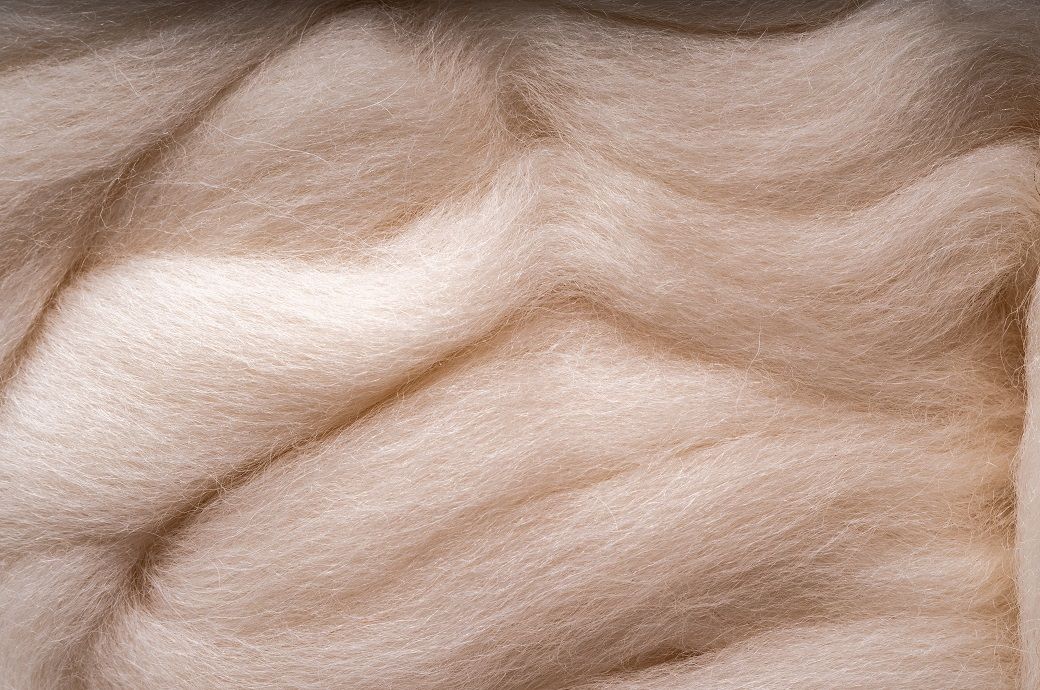
Fine wools between 16.5 and 19 microns led the rally, lifting around 15 cents on average, while medium microns (19–22 microns) also strengthened by 10–15 cents. Crossbred wools remained the only soft spot, easing 5 cents as the market enters the peak supply period for this category. Carding types held firm with gains of about 10 cents, the Australian Wool Innovation (AWI) said in its commentary for week 23 of the current wool marketing season.
Australia’s wool market strengthened this week, with the EMI rising 17 cents to 1,521 AC/kg and surpassing US$10 for the first time since October.
Fine and medium microns gained up to 15 cents, while crossbreds softened.
Tight supply, reflected in AWTA’s double-digit testing declines, and strong buyer demand lifted clearance rates to 95 per cent.
Auction dynamics also tilted in sellers’ favour. Offerings fell 15 per cent for the week, but the clearance rate rose to 95 per cent, signalling strong competition despite a strengthened Australian dollar. The AUD gained ground even with softer GDP data, supported by US dollar weakness. Although a higher AUD often pressures export competitiveness, buyer demand remained resilient.
Latest November data from Australian Wool Testing Authority (AWTA) continued to underline the tight supply backdrop bolstering prices. Wool tested during November fell 14.2 per cent year on year, while season-to-date volumes from July to November were 10.4 per cent lower. AWTA has tested 116.5 million kilograms so far this season, compared with 130.1 million kilograms a year earlier, the AWI commentary added.
Next week, 41,383 bales are rostered for sale, with all three centres operating on a Tuesday–Wednesday schedule.
Fibre2Fashion News Desk (KD)











The additional week in the fourth quarter of fiscal 2025, compared to the fourth quarter of fiscal 2024, contributed approximately $37.0 million in consolidated net sales. On a comparable week basis, net sales grew 3.4 per cent. On a reported basis including the extra week in fiscal 2025, the US retail, international, and US wholesale segments grew 9.4 per cent, 10.2 per cent, and 3.4 per cent, respectively. US retail comparable net sales increased 4.7 per cent. Changes in foreign currency exchange rates used for translation in the fourth quarter of fiscal 2025, as compared to the fourth quarter of fiscal 2024, had a favourable effect on consolidated net sales of approximately $3.0 million, or 0.3 per cent.
Carter’s reported Q4 fiscal 2025 sales of $925.5 million, up 7.6 per cent, boosted by a $37 million extra week; on a comparable basis, sales rose 3.4 per cent.
Growth spanned US retail, international, and wholesale segments.
Operating income edged up to $84.7 million, though margin dipped to 9.2 per cent.
Full-year sales increased 1.9 per cent to $2.9 billion.
Operating income increased $1.5 million, or 1.8 per cent, to $84.7 million, compared to $83.2 million in the fourth quarter of fiscal 2024. Operating margin decreased 50 basis points to 9.2 per cent, reflecting incremental tariff costs, investments in product mix and make, and higher performance-based compensation provisions, partially offset by higher pricing, lower corporate expenses, and an asset impairment charge in the prior year period.
“Carter’s delivered improved fourth quarter results with each of our business segments posting sales growth over last year. We see momentum building behind our products and demand creation initiatives, which have driven an improvement in the rate of traffic, new customer acquisition, higher realised pricing, and increased penetration of the best portions of our product assortments. All of this gives us confidence that our strategies are gaining traction,” said Douglas C Palladini, chief executive officer & president.
“2025 was a year of meaningful progress in stabilising our business while responding to significant new tariffs. We took actions to right-size our cost structure and we launched several important initiatives to improve the productivity of our merchandise assortments and store fleet. We also strengthened our balance sheet and liquidity with the successful refinancing of our long-term debt and a new asset-based revolving credit facility in place,” Palladini added.
Consolidated net sales increased $54.3 million, or 1.9 per cent, to $2.90 billion, compared to $2.84 billion in fiscal 2024, reflecting growth in our US retail and international segments that were partially offset by a decline in the US wholesale segment. The additional week in fiscal 2025, compared to fiscal 2024, contributed approximately $37.0 million in consolidated net sales. On a comparable week basis, net sales grew 0.6 per cent. On a reported basis including the extra week in fiscal 2025, the company’s US retail and international segments grew 3.5 per cent, and 6.3 per cent, respectively, while US wholesale net sales declined 2.0 per cent. US retail comparable net sales increased 1.4 per cent. Changes in foreign currency exchange rates used for translation in fiscal 2025, as compared to fiscal 2024, had an unfavourable effect on consolidated net sales of approximately $6.7 million, or 0.2 per cent, the company said in a press release.
“While we are encouraged by our progress, much work remains. Excluding the recent tariff developments, for 2026 we are planning growth in net sales as we build on the momentum of our product and demand creation strategies. We are also planning growth in operating income. We will remain focused and disciplined in our investments and overall spending and expect solid contributions from productivity initiatives. We believe the recent news regarding tariffs will be net positive for Carter’s, but it will take some time to fully understand the implications for our business and the broader marketplace. Our talented and dedicated teams and I are committed to returning Carter’s to long-term sustainable, profitable growth over time,” Palladini concluded.
Fibre2Fashion News Desk (RR)

The model will be fuelled by both domestic and foreign direct investment. The country’s tax-to-GDP ratio currently sits at the bottom level globally.
Rashed Al Mahmud Titumir, Prime Minister’s Adviser Finance and Planning, recently outlined a comprehensive road map to overhaul the country’s economic framework, setting a target to raise the tax-GDP ratio to 15 per cent by 2035, while taking the nation forward on a path of investment-led growth.
A key pillar of this transition is a significant increase in internal resource mobilisation, he said.
A key pillar of this transition is a significant increase in internal resource mobilisation, he said.
“The previous consumption-led growth model was unsustainable and had left the country burdened by a mountain of debt accumulated particularly between 2009 and 2024,” he told a recent roundtable on the government’s priorities in the short-to-medium term.
The roundtable was organised by the Centre for Policy Dialogue (CPD) and The Daily Star newspaper.
There is a need for a tax culture rooted in investment, production and employment, he was cited as saying by domestic media reports.
He identified several systemic maladies in the current revenue structure that require urgent reform.
The government intends to move from greenfield incentives (based on identity and influence) to performance-based subsidies (ex-post subsidies), he said, adding that this model, which proved successful in the garments sector, will reward actual results rather than potential.
Fibre2Fashion News Desk (DS)
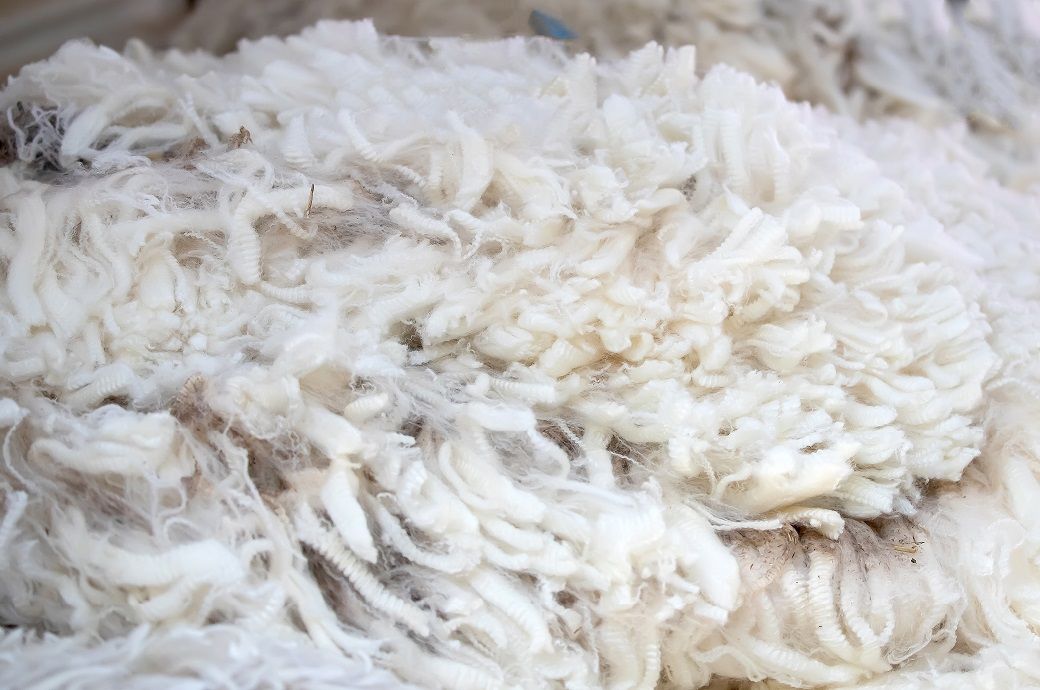
“A smaller offering of 37,212 bales, combined with a softer Australian dollar, helped support the market and drive solid gains, particularly in the Merino sector. Year-on-year, the EMI now sits 542 cents (44.2 per cent) higher,” the Australian Wool Innovation (AWI) Limited said in its Commentary for week 36 of the current Australian wool marketing season.
Strong demand for finer Merino wool, supported by a weaker Australian dollar and tighter supply, continues to lift Australian wool prices.
While Merino segments posted significant gains, crossbred wools lagged.
With higher offerings expected next week, the market’s resilience will depend on sustained global demand and buyer confidence in premium-quality fibre.
Premium prices were recorded for high-strength, well-styled Merino fleece, while discounts remained evident in lots with higher vegetable matter, poorer colour and lower style grades. Finer Merino wools showed the strongest gains, increasing by 90 to 95 cents across selling centres, with Fremantle leading the rise as these types advanced by 115 to 120 cents. Medium Merino wool also attracted solid demand, gaining around 80 to 85 cents, the AWI commentary noted.
In contrast, the crossbred segment experienced a quieter week, slipping by 5 to 10 cents. The cardings market in the eastern selling centres maintained its positive momentum, rising 35 to 40 cents, while cardings in the western region eased by 5 to 10 cents.
Following the latest price surge, next week’s offering is expected to expand as sellers respond to favourable market conditions. A total of 45,973 bales is scheduled for auction across all three centres. Fremantle and Sydney will conduct sales on Tuesday and Wednesday, while Melbourne will auction wool on Wednesday and Thursday.
Fibre2Fashion News Desk (CG)


Ben Stiller condemns use of ‘Tropic Thunder’ clip in political video

Spain, France lead World Cup 2026 Power Rankings, 100 days out

This Jammer Wants to Block Always-Listening AI Wearables. It Probably Won’t Work

Attock Cement’s acquisition approved | The Express Tribune

India Us Trade Deal: Fresh look at India-US trade deal? May be ‘rebalanced’ if circumstances change, says Piyush Goyal – The Times of India

Bobby J. Brown, “The Wire” and “Law & Order: SUV” actor, dies of smoke inhalation after reported fire

-
Business1 week ago
Attock Cement’s acquisition approved | The Express Tribune
-
Business1 week ago
India Us Trade Deal: Fresh look at India-US trade deal? May be ‘rebalanced’ if circumstances change, says Piyush Goyal – The Times of India
-
 Entertainment1 week ago
Bobby J. Brown, “The Wire” and “Law & Order: SUV” actor, dies of smoke inhalation after reported fire
-

 Fashion1 week ago
Policy easing drives Argentina’s garment import surge in 2025
-

 Politics1 week ago
US arrests ex-Air Force pilot for ‘training’ Chinese military
-

 Politics1 week ago
What are Iran’s ballistic missile capabilities?
-

 Sports1 week ago
LPGA legend shares her feelings about US women’s Olympic wins: ‘Gets me really emotional’
-

 Sports1 week ago
Sri Lanka’s Shanaka says constant criticism has affected players’ mental health