

Politics
Bangladesh political heir Tarique Rahman poised for PM

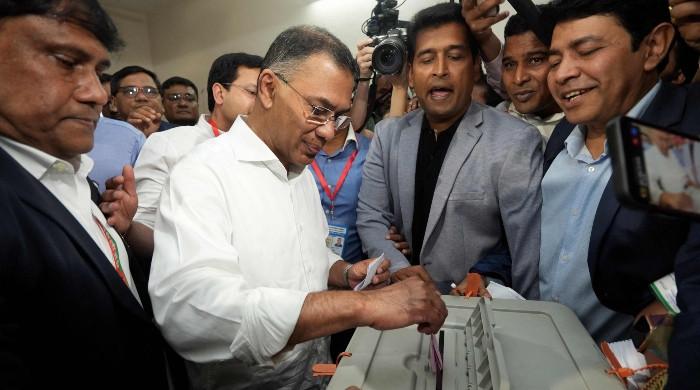
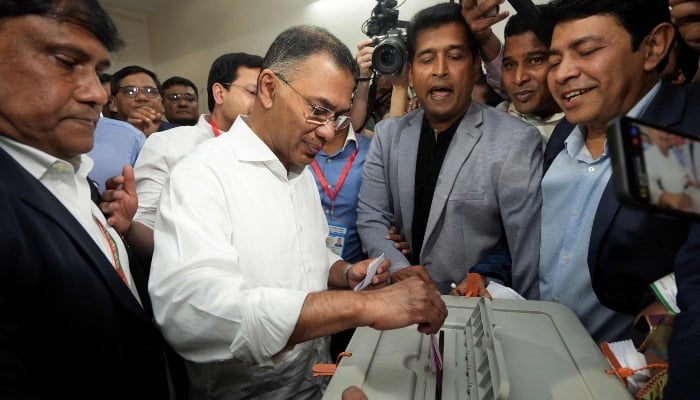
DHAKA: Long overshadowed by his parents and heir to one of Bangladesh’s most powerful political dynasties, Tarique Rahman has finally stepped into the spotlight.
At 60, the Bangladesh Nationalist Party (BNP) leader is preparing to take charge of the South Asian nation of 170 million, driven by what he calls an ambition to “do better”.
A year and a half after the deadly uprising that toppled Sheikh Hasina’s iron-fisted regime, the BNP said they had won a “sweeping victory” in parliamentary elections held on Thursday.
Official results are yet to be declared, but the United States offered congratulations to Rahman on a “historic” win.
His rise marks a remarkable turnaround for a man who only returned to Bangladesh in December after 17 years in exile in Britain, far from Dhaka’s political storms.
Widely known as Tarique Zia, he carries a political name that has shaped every stage of his life.
He was 15 when his father, President Ziaur Rahman, was assassinated in 1981.
Tarique’s mother, Khaleda Zia — a three-time prime minister and a towering figure in Bangladeshi politics for decades — died aged 80 in December, just days after his return home.
‘My country’
Speaking to AFP two days before the vote, Rahman vowed to build on their legacy.
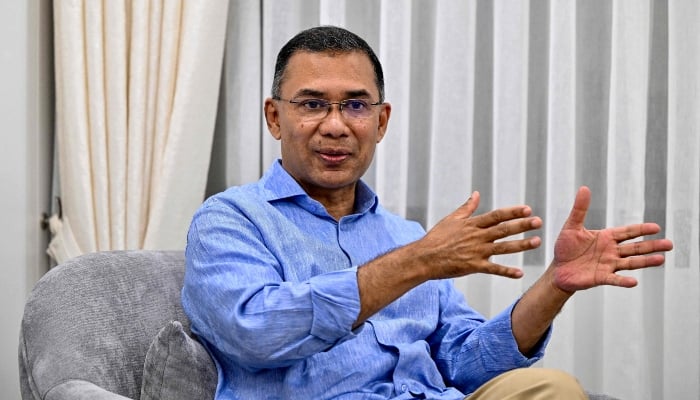
“They are them, I am me,” he said from his office, beneath gold-framed portraits of his late parents. “I will try to do better than them.”
He described the “mixed feelings” that overwhelmed him when he arrived home in December — the joy of returning, swiftly eclipsed by grief at his mother’s death.
“This is my country, I was born here, I was raised here — so naturally, that was a very happy feeling,” he said.
Instead of celebrating, however, he had to bid farewell to his ailing mother, who had long been in intensive care.
“When you come home after so long, any son wants to hug his mother,” he said. “I didn’t have that chance.”
Within days of landing in Dhaka, he assumed leadership of the BNP and its election campaign.
The still grieving heir took to the stage, microphone in hand, rallying vast crowds.
‘Unnerves many’
His father, Ziaur Rahman, an army commander, gained influence months after a 1975 coup when founding leader Sheikh Mujibur Rahman — Sheikh Hasina’s father — was murdered.
It entrenched a rivalry between the two families that would define the country’s politics for decades. Ziaur Rahman himself was killed in 1981.
Rahman grew up in his mother’s political orbit as she went on to become the country’s first female prime minister, alternating power with Hasina in a long and bitter duel.
“In her seats, I used to go and I used to campaign,” Rahman said. “So this is how slowly and gradually I started getting involved in politics.”
But his career has also been shadowed by allegations of corruption and abuse of power.
A 2006 US embassy cable said he “inspires few but unnerves many”.
Other cables labelled him a “symbol of kleptocratic government and violent politics” and accused him of being “phenomenally corrupt”.
Arrested on corruption charges in 2007, Rahman says he was tortured in custody.
He fled to London the following year, where he faced multiple cases in absentia. He denied all charges and dismissed them as politically motivated.
But he also told AFP he offered an apology.
“If there are any mistakes which were unwanted, we are sorry for that,” he told AFP.
After Hasina’s fall, Rahman was acquitted of the most serious charge against him — a life sentence handed down in absentia for a 2004 grenade attack on a Hasina rally — which he had always denied.
Married to a cardiologist and father to a daughter, a lawyer, he led a quiet life in Britain.
That changed with his dramatic return and hero’s welcome in December, accompanied by his fluffy ginger cat, Jebu, images of which have gone viral on Bangladeshi social media.
He admits the task ahead is “immense”, rebuilding a country he says was “destroyed” by the former regime.
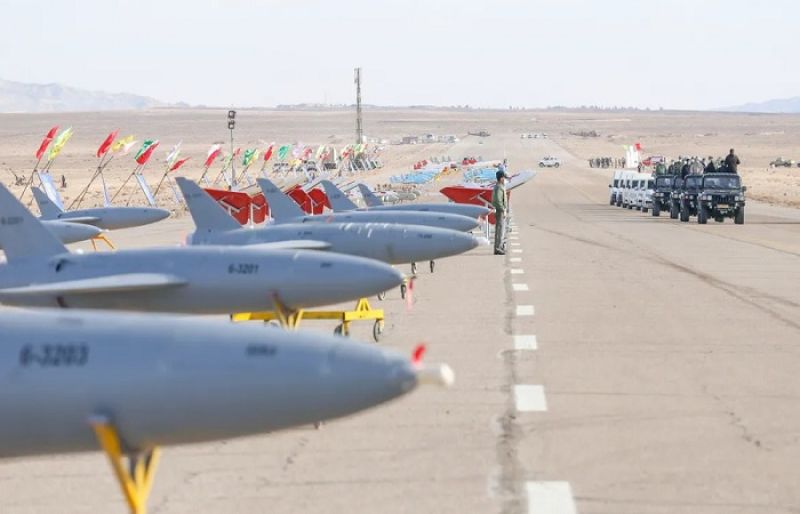
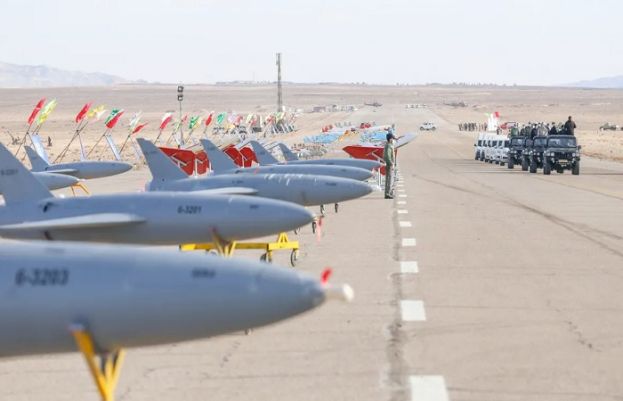
Iran’s Army launched large-scale drone operation early Tuesday on Israeli petrochemical infrastructure near Dimona, a US naval maintenance hub in the United Arab Emirates (UAE), and American radar and housing facilities in Kuwait.
“In response to the aggressions of the American-Zionist enemy against the Iranian petrochemical industries and other infrastructure, the power generation unit and fuel storage source of the petrochemical industry in the south of the occupied territories near Dimona, the US Navy maintenance center in Jebel Ali port in the UAE, and radar systems and housing buildings of American forces at the Ahmed Al Jaber Air Base in Kuwait have been targeted by heavy drone attacks,” the Army said in a statement.
The Dimona industrial zone is of high sensitivity to Israeli economy and security. It hosts the regime’s largest chemical complex in the Negev desert.
The power generation unit and fuel storage facility are located there, and the chemicals produced are used for certain military purposes, the Army said.
The US Navy maintenance center at Jebel Ali port in the UAE is one of the largest docking ports for American naval vessels in the region. It provides critical support and repair services to the US fleet.
The Ahmed Al Jaber Air Base in Kuwait hosts American military personnel. It houses radar systems and hangars capable of accommodating various military aircraft. The US Air Force’s 332nd unit is stationed there.
Iran’s Army dedicated the Tuesday operation to “anonymous soldiers, creative engineers, diligent workers, and all those involved in the Iranian oil, petrochemical and energy industries.”
“Pioneers who, during the war, with their steadfastness, expertise and exemplary sacrifice, prevented the halt of the production cycle, light and hope in this land”.
The United States and Israel imposed their illegal, unprovoked war on Iran on February 28. They assassinated Leader of Islamic Revolution Ayatollah Seyyed Ali Khamenei and targeted nuclear sites, schools and hospitals.
Nearly 100 waves of missile and drone strikes under Operation True Promise 4 have been pounding the Israeli-occupied territories and the United States’ assets in the region on a daily basis.
- Two police officers suffer light injuries during 10-minute shootout.
- Assailants arrive from Izmit; one linked to terrorist group: officials.
- Erdogan condemns attack, vows to maintain security environment.
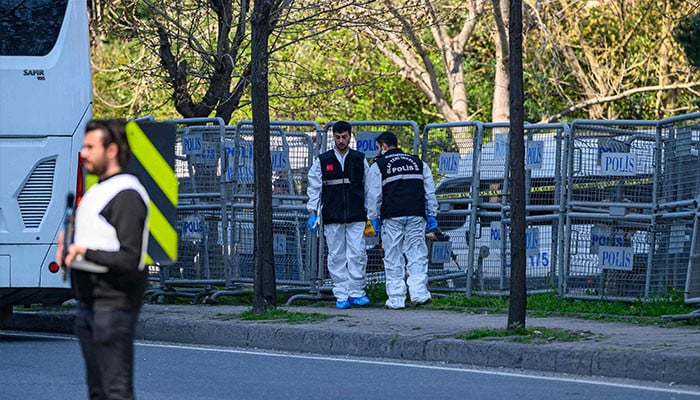
A gunman was killed and two others wounded in a shootout on Tuesday with police outside the Israeli consulate in Istanbul, Turkish officials said, adding that two officers were lightly wounded.
Governor Davut Gul confirmed the killing of one of the assailants during the attack that took place around 12:15pm (0915 GMT).
It was not immediately clear if the intended target was the Israeli consulate. No Israeli diplomats “are currently on Turkish soil”, a source familiar with the matter told AFP.
Israeli diplomatic missions had been evacuated “not only in Turkiye but throughout the region for security reasons” shortly after the October 7, 2023, attacks by the Palestinian resistance group Hamas on Israeli soil, according to the same source.
Israel said it would not be cowed down while Turkish President Recep Tayyip Erdogan condemned the “treacherous attack” and vowed to fight “all kinds of terrorism”.
“We will not allow … provocations to harm Turkiye’s climate of security,” Erdogan said in a televised speech.
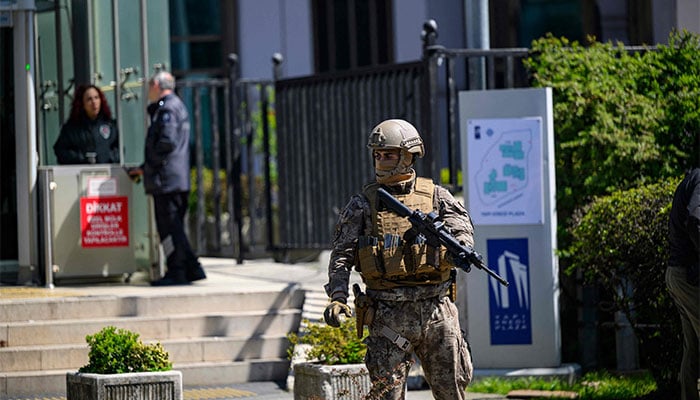
“We appreciate the Turkish security forces’ swift action in thwarting this attack. Israeli missions around the world have been subjected to countless threats and terrorist attacks. Terror will not deter us,” the Israeli foreign ministry posted on X.
Turkiye’s Interior Minister Mustafa Ciftci said the assailants came in a rented vehicle from Izmit, a city about 86 kilometres (50 miles) away and that one of them was linked to an “organisation that exploits the region”.
The ministry later clarified that the dead gunman “had connections with a terrorist group” and said two policemen were “slightly injured”.
The remaining two assailants were brothers and one has a drug record, it added.
Footage showed one attacker armed with an automatic rifle, dressed in beige cargo pants and black top and carrying a backpack.
“I saw gunfire suddenly break out … It went on for quite a while,” a witness who wished to remain anonymous told AFP.
‘People panicked’
“I saw a police officer collapse. People panicked,” he said.
Turkish officials would not immediately reveal the group but local media said it could be Daesh, whose members clashed with police in Yalova — which lies on the Sea of Marmara about 90 kilometres (55 miles) southeast of Istanbul.
Daesh militants opened fire on police in Yalova in December, killing three officers and wounding nine.
Turkish police have stepped up nationwide raids against Daesh militants, rounding up 125 suspects after that attack.
Television images on Tuesday showed police officers opening fire near a busy thoroughfare and an injured person being carried away on a stretcher.
Turkish media reported that the shootout lasted for about 10 minutes.
A large police presence was deployed in front of the consulate, located in the Levent business district on the European side of Istanbul, AFP journalists witnessed.
They also saw bloodstains on the ground in an adjacent parking lot.
The immediate vicinity of the consulate sees heightened security measures even under normal circumstances, as the area is cordoned off by police barriers.
Istanbul public prosecutor’s office has launched an investigation while the state-run TRT television reported that three suspects were detained.
“The United States condemns in the strongest terms today’s attack on the Israeli Consulate in Istanbul,” US Ambassador to Turkey Tom Barrack said on X.
“Attacks on diplomatic missions are attacks on the international order — and an assault on the principles that bind nations together,” he added, while commending Turkiye and Turkish security forces for “their swift and decisive response”.
Daesh has carried out deadly attacks in Turkey including one at a nightclub in Istanbul that killed 39 people in 2017.


Tensions in the Middle East have disrupted the delivery of imported goods from Dubai, leading to an increase in prices of computers, laptops and related spare parts in local markets.
Supply delays have pushed up costs for consumers, while repair work has also become more expensive, affecting citizens relying on electronic devices.
Traders cited shipment disruptions as a key factor behind the rising prices.


McKennie equals career best with goal in Juve win; Napoli edge Milan

Queen’s trusted aide shares heartfelt truth after saying goodbye to Palace

Non-Vegetarian Thali Price March 2026: Home-cooked non-veg thali gets cheaper in March, veg meal cost stays flat: Report – The Times of India

-
Uncategorized5 days ago
[CinePlex360] Please moderate: “Trump signals p
-
Uncategorized1 week ago
[CinePlex360] Please moderate: “Further tariff
-

 Tech4 days ago
Our Favorite iPad Is $50 Off
-

 Entertainment4 days ago
Joe Jonas shares candid glimpse into parenthood with Sophie Turner
-

 Fashion6 days ago
China’s Anta Sports posts record $11.62 bn revenue in 2025
-

 Sports4 days ago
UConn Final Four run could trigger a $50M furniture giveaway for Massachusetts-based Jordan’s Furniture
-
 Business6 days ago
UPI transactions hit record Rs 29.53 lakh crore in March; volumes cross 22.6 billion – The Times of India
-
 Politics4 days ago
Iran can sustain Strait of Hormuz closure for years, will cut US military logistics: Official