

Politics
Bangladesh president, feeling ‘humiliated’, wants to step down halfway through term

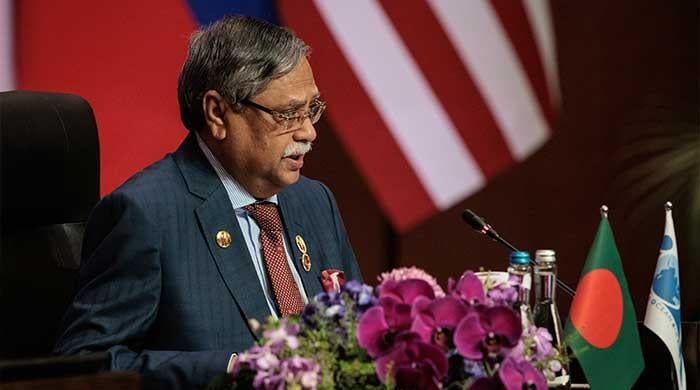
Bangladeshi President Mohammed Shahabuddin said on Thursday he plans to step down midway through his term after February’s parliamentary election, telling Reuters he has felt humiliated by the interim government, led by Nobel laureate Muhammad Yunus.
As head of state, Shahabuddin is commander-in-chief of the armed forces, but the role is largely ceremonial, and executive power rests with the prime minister and cabinet of the mainly Muslim country of 173 million people.
However, his position gained prominence when a student-led uprising forced long-time premier Sheikh Hasina to flee to New Delhi in August 2024, leaving him as the last remaining constitutional authority after parliament was dissolved.
Shahabuddin, 75, had been elected unopposed for a five-year term in 2023 as a nominee of Hasina’s Awami League party, which has been barred from contesting the February 12 election.
Bangladesh president says Yunus sidelined him
“I am keen to leave. I am interested to go out,” he said in a WhatsApp interview from his official residence in Dhaka, in what he said was his first media interview since taking office.
“Until elections are held, I should continue,” Shahabuddin said. “I am upholding my position because of the constitutionally held presidency.”
He later said that despite his personal desire to resign, he would let the next government decide his future.
“If they tell me they plan to choose their own president, I will step aside,” he said late on Thursday.
Opinion polls suggest the Bangladesh Nationalist Party (BNP) of former prime minister Khaleda Zia and Jamaat-e-Islami will be the frontrunners to form the next government. They were part of a coalition that ruled between 2001 and 2006.
The president said Yunus had not met him for nearly seven months, his press department had been taken away and, in September, his portraits were removed from Bangladeshi embassies around the world.
“There was the portrait of the president, picture of the president in all consulates, embassies and high commissions, and this has been eliminated suddenly in one night,” he said. “A wrong message goes to the people that perhaps the president is going to be eliminated. I felt very much humiliated.”
Shahabuddin said he had written to Yunus about the portraits, but no action was taken. “My voice has been stifled,” he added.
Yunus’ press advisers did not immediately respond to a request for comment.
President in contact with army chief
The president said he was in regular touch with Army Chief General Waker-uz-Zaman, whose troops stood aside in August 2024 amid deadly protests against Hasina, sealing the fate of the veteran politician. Shahabuddin said Zaman had made it clear he had no intention of grabbing power.
Bangladesh has a history of military rule, but Zaman has said he wants democracy to return.
Shahabuddin said that, although some student protesters had initially demanded that he resign, no political party had asked him to do so in recent months.
Asked if Hasina, who had governed for 20 years, had tried to contact him after fleeing, Shahabuddin declined to answer. He said he had been independent since becoming president, not affiliated to any party.
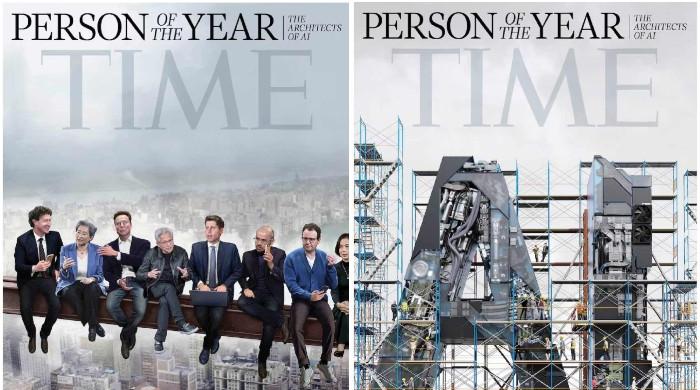
Time magazine named the “Architects of AI” as its Person of the Year on Thursday, highlighting the US tech titans whose work on cutting-edge artificial intelligence is transforming humanity.
Nvidia’s Jensen Huang, OpenAI’s Sam Altman and xAI’s Elon Musk are among the innovators who have “grabbed the wheel of history, developing technology and making decisions that are reshaping the information landscape, the climate, and our livelihoods,” Time wrote.
One of two covers of the magazine is a homage to the famous 1932 photograph of ironworkers casually eating lunch on a steel beam above New York City.
In the Time illustration, sitting astride the city are Meta’s Mark Zuckerberg, AMD chief Lisa Su, Musk, Huang, Altman as well as Google’s AI boss Demis Hassabis, Anthropic’s Dario Amodei and Stanford professor Fei-Fei Li.
“Racing both beside and against each other, they placed multibillion-dollar bets on one of the biggest physical infrastructure projects of all time,” the magazine said of the group.
“They reoriented government policy, altered geopolitical rivalries, and brought robots into homes. AI emerged as arguably the most consequential tool in great-power competition since the advent of nuclear weapons.”
Alongside popular AI models like ChatGPT and Claude, Time credited investors like SoftBank CEO Masayoshi Son, who has plunged billions of dollars into the technology.
Time’s Person of the Year selection is an acknowledgement of the year’s most influential figure.
The title last year went to president-elect Donald Trump. Others have included singer Taylor Swift and Ukrainian leader Volodymyr Zelensky.
‘Gravitational center of 2025’
According to the magazine, which is owned by Silicon Valley billionaire Marc Benioff, 2025 was the year AI shifted from promise to reality and when ChatGPT usage more than doubled to 10% of the world’s population.
“This is the single most impactful technology of our time,” Huang, CEO of chipmaker Nvidia — the most valuable company in the world — told Time.
He predicted that AI will eventually grow the global economy from $100 trillion to $500 trillion.
But the magazine also pointed to AI’s darker side.
Lawsuits have alleged that chatbots contributed to suicides and mental health crises, sparking debates about “chatbot psychosis,” where users may devolve into delusions and paranoia.
In one case, the California parents of 16-year-old Adam Raine are suing OpenAI after he took his own life. They claim that ChatGPT provided information about suicide methods.
Time noted too looming job displacement as more companies race to replace workers with AI models.
Yet the magazine notably steered away from using AI to generate its cover art, opting instead for human artists.
Thomas Hudson, chief analyst at US research firm Forrester, said the Person of the Year choice rightly reflected AI’s heavy influence this year.
“AI has been the gravitational center of 2025 for the economy and the source of endless discussions on how it will shape the future of our societies,” he said in a statement.
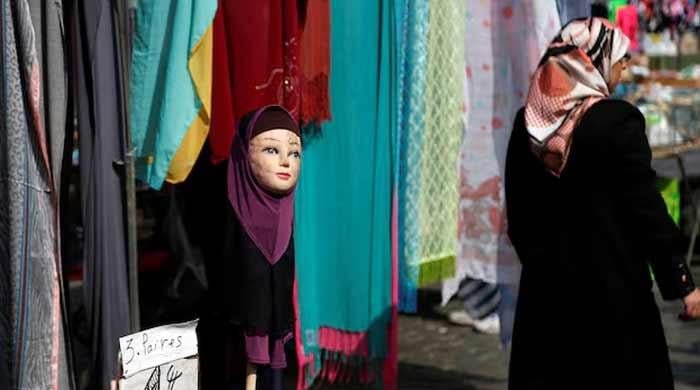
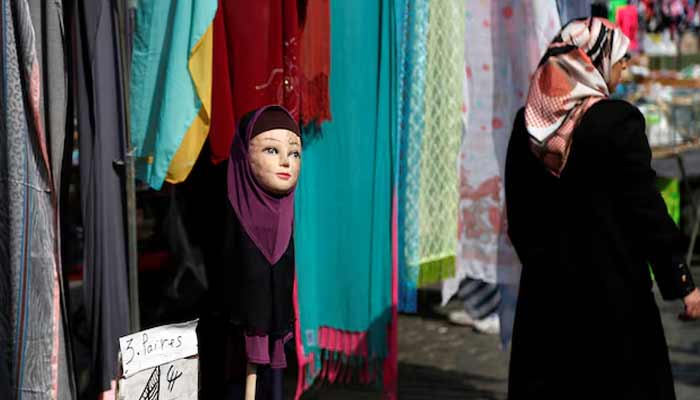
Austrian lawmakers on Thursday voted by a large majority in favour of a law banning headscarves in schools for girls under 14, a move rights groups and experts say is discriminatory and could deepen societal division.
Austria’s conservative-led government — under pressure with anti-immigration sentiment running high — proposed the ban earlier this year, arguing it is aimed at protecting girls “from oppression”.
In 2019, the country introduced a ban on headscarves in primary schools, but the constitutional court struck it down.
This time, the government insisted that its law is constitutional, though experts have suggested it could be seen as discriminating against one religion — Islam — and putting children in an uncomfortable position.
The law prevents girls younger than 14 from wearing headscarves that “cover the head in accordance with Islamic traditions” in all schools.
After a debate on Thursday, only the opposition Green Party voted against the ban.
Ahead of the vote, lawmaker Yannick Shetty of the liberal NEOS said the headscarf “is not just an item of clothing” but “sexualises girls”.
“When a girl […] is told that she must hide her body […] to protect herself from the gaze of men, it’s not a religious ritual, but oppression,” Integration Minister Claudia Plakolm said when presenting the bill.
The ban, which applies to “all forms” of the Islamic veil, including hijabs and burqas, would take full effect with the start of the new school year in September, Plakolm said.
From February, an initial period would be launched during which the new rules would be explained to educators, parents and children with no penalties for breaking them.
But for repeated non-compliance, parents would face fines ranging from $175 to $930.
The government said that about 12,000 girls would be affected by the new law.
‘Stigmatised’
Rights groups and activists have long argued that banning headscarves still amounts to telling a woman what to wear, instead of allowing her the freedom to decide on her own.
Organisations, including Amnesty International Austri,a have criticised the bill.
Amnesty said it “constitutes blatant discrimination against Muslim girls” and described it as an “expression of anti-Muslim racism”.
Such measures risk “fuelling existing prejudices and stereotypes against Muslims”, the group warned.
The draft law has also drawn criticism from the IGGOe, the body officially recognised as representing the country’s Muslim communities.
It said the ban “jeopardises social cohesion”, saying “instead of empowering children, they are stigmatised and marginalised”.
Angelika Atzinger, managing director of the Amazone women’s rights association, said a headscarf ban “sends girls the message that decisions are being made about their bodies and that this is legitimate”.
Her comments appeared in a statement published by the anti-racism group SOS Mitmensch, which also opposes the proposed law.
Austria’s anti-immigration, far-right Freedom Party (FPOe) said the ban did not go far enough, however. They want it extended to all students, teachers and other staff.
In France, authorities banned school children in 2004 from wearing signs of religious affiliation such as headscarves, turbans or Jewish skullcaps, on the basis of the country’s secular laws, which are meant to guarantee neutrality in state institutions.
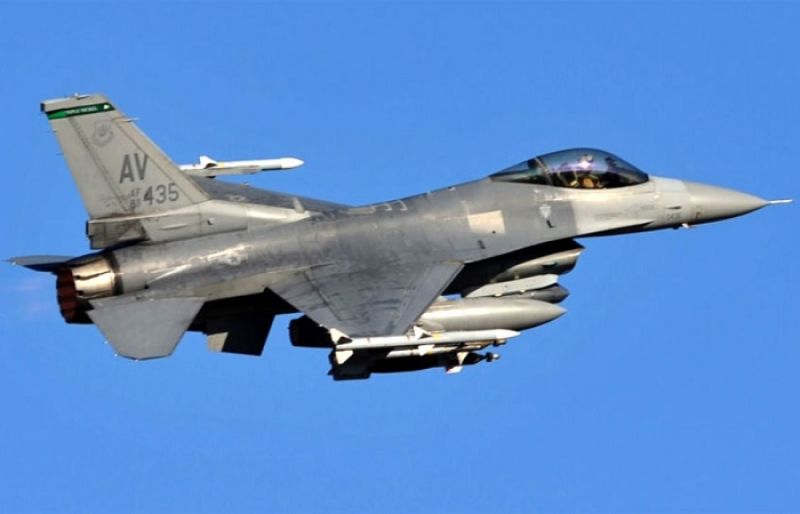

The United States (US) has approved the “release and export” of a $686 million support package to upgrade Pakistan’s F-16 fighter aircraft, according to letters sent by the US Defense Security Cooperation Agency (DSCA) to Congress.
The DSCA notification, issued under Section 36(b) of the Arms Export Control Act, states that Congress must be informed in advance of certain proposed arms sales. The agency said the package is intended “to retain interoperability with US and partner forces in ongoing counterterrorism efforts.”
The DSCA said the sale supports US foreign policy and national security objectives. It added that the upgrades would help Pakistan “meet current and future threats by updating and refurbishing its fleet.”
The package includes major defense equipment valued at $37 million, notably 92 Link-16 systems and six Mk-82 inert 500-lb general-purpose bomb bodies, along with $649 million worth of non-major defense items.
The updates are expected to “provide more seamless integration and interoperability between the Pakistan Air Force and the US Air Force in combat operations, exercises, and training,” the DSCA wrote.
It further noted that the refurbishment would extend the aircrafts’ service life “through 2040 while addressing critical flight safety concerns.”
The letters state that Pakistan has demonstrated its commitment to maintaining its military forces and “will have no difficulty absorbing these articles and services into its armed forces.”
A final determination concluded that Pakistan can provide “substantially the same degree of protection for the sensitive technology” as the United States.


Crypto Magnate Do Kwon Sentenced to 15 Years in Prison

Director Carl Rinsch found guilty of scamming $11M from Netflix and buying luxury cars, watches and mattresses

RFK Jr.’s Health Department Is Pondering a National Men’s Health Initiative

-

 Politics5 days ago
17 found dead in migrant vessel off Crete: coastguard
-

 Sports6 days ago
Australia take control of second Ashes Test | The Express Tribune
-
Uncategorized1 week ago
[CinePlex360] Your site has updated to WordPres
-
 Business1 week ago
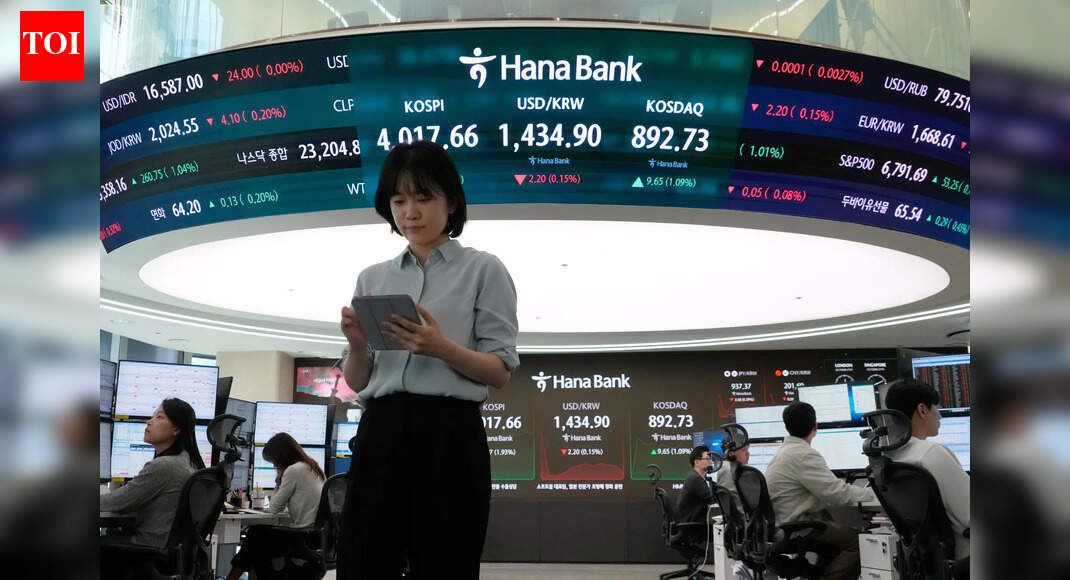
Asian stocks today: Markets trade mixed ahead of US economic data; HSI nears 1% loss; Nikkei adds over 800 points – The Times of India
-

 Entertainment1 week ago
Sabrina Carpenter recalls ‘unbelievable’ experience with pal Taylor Swift
-

 Fashion1 week ago
Bangladesh’s economic outlook cautiously optimistic: Govt
-
 Fashion4 days ago
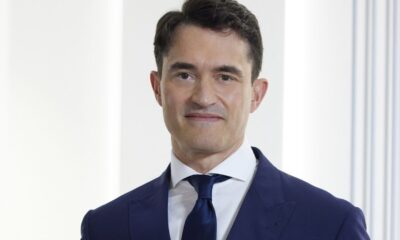
Germany’s LuxExperience appoints Francis Belin as new CEO of Mytheresa
-

 Tech1 week ago
The Trump Administration Wants Immigrants to Self-Deport. It’s a Shit Show