

Fashion
Bangladesh RMG exporters need to absorb 40% EU tariff post 2029: Study

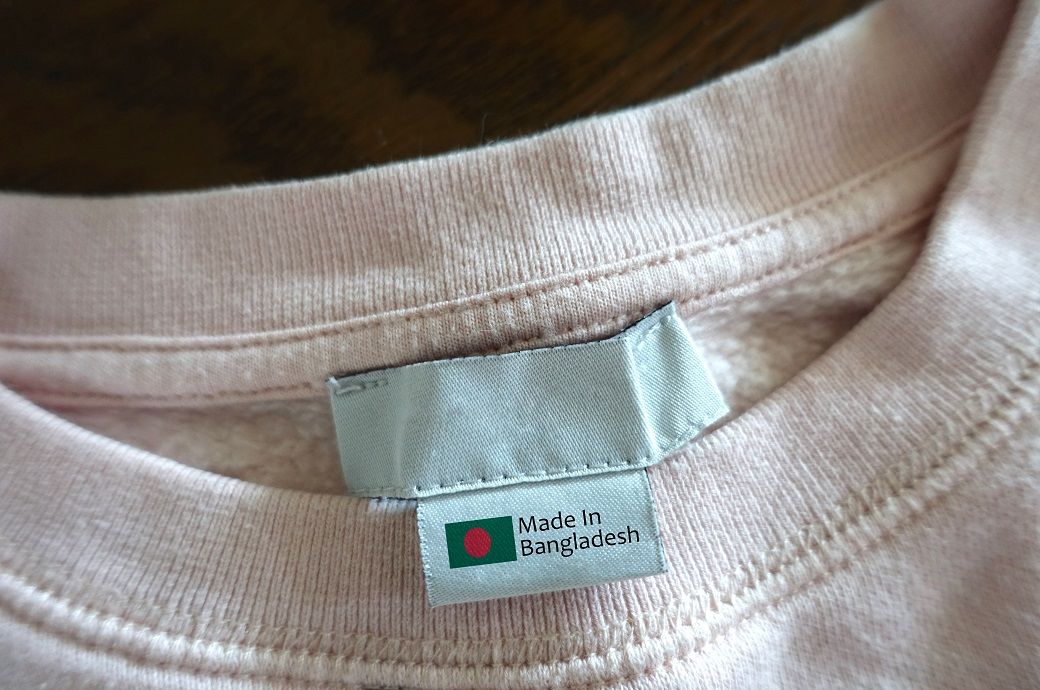
After 2029, Bangladesh may face 12-per cent tariffs on exports to the EU, while Vietnam, Pakistan and Sri Lanka would face zero tariffs due to free trade agreements and the Generalised System of Preferences Plus (GSP+) scheme, the study by Dhaka University noted.
“For every 10 per cent tariff imposed by the EU, Bangladeshi exporters will lower pre-tariff prices by about 4 per cent to remain competitive,” Deen Islam, an associate professor at Dhaka University who presented the study at a recent seminar, was quoted as saying by a domestic media outlet.
Bangladesh apparel exporters need to absorb about two-fifths of the tariff they may face after the grace period for graduating from the LDC status to export to the EU, according to a recent study.
After 2029, Bangladesh may face 12-per cent tariffs on exports to the EU, while Vietnam, Pakistan and Sri Lanka would face zero tariffs, it noted.
An appreciating currency has been eroding competitiveness.
The seminar was organised by the Research and Policy Integration for Development and the International Growth Centre at the Dhaka University.
The study also showed that the top ten apparel items have an average weighted price of about 36 per cent lower than that of China and Vietnam.
He said even Cambodia, another LDC, achieves a higher average price than Bangladesh.
Bangladesh is scheduled to graduate from the LDC category in 2026, with a transition period allowing temporary continuation of specific trade preferences.
Experts said that LDC graduation could pose a threat, as exporters might bear a large share of the tariff costs; however, early and coordinated preparation could soften the transition’s impact.
An appreciating currency has been eroding competitiveness, the study found.
The woven sector is more vulnerable due to its heavy reliance on imported raw materials, it noted.
Islam added that Bangladesh should immediately establish a dedicated trade negotiation pool or a specialised wing within the government to conduct trade talks in a professional and coordinated manner.
Fibre2Fashion News Desk (DS)










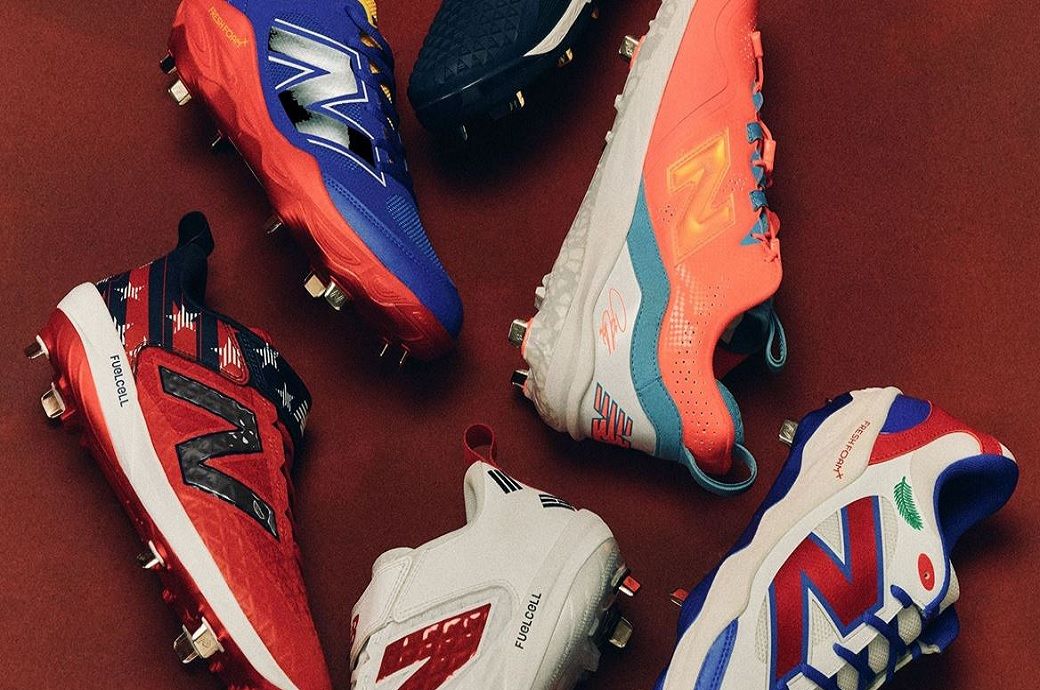
The Puerto Rico-inspired cleat introduces a vibrant new Lindor v3 colorway created with powerhouse shortstop Francisco Lindor featuring a repeating Coquí frog pattern of Puerto Rico’s national animal. The Japan model debuts as an Ohtani v1 colorway honoring Shohei Ohtani and incorporating Japan’s national colors and the Flag of Japan through a navy boot with a striking metallic red New Balance “N” Lock logo.
New Balance has introduced its International Baseball Pack, a series of performance cleats celebrating the heritage of its global athletes.
The collection includes country-inspired versions of the Lindor v3, Ohtani v1, 3000 v7, 4040 v8 and Velo v4.
Designs pay tribute to Francisco Lindor, Shohei Ohtani and others, featuring national colours, symbols and cultural details.
“I wanted the design to honor the spirit of the island I love,” said Francisco Lindor, New Balance athlete. “The Coquí frog’s sound is such an iconic symbol for Puerto Ricans, and bringing that to life on the Lindor v3 makes this cleat truly meaningful to me.”
Additional cleats in the collection include designs celebrating New Balance athletes Cal Raleigh (USA), José Altuve (Venezuela), Jeremy Peña (Dominican Republic), and Ha-Seong Kim (South Korea).
“As fans of baseball first, we have deep appreciation for the distinct styles and rhythm of play that each culture brings to the game,” said Matt Nuzzo, Sr. Product Manager, American Football and Baseball Footwear at New Balance. “The International Baseball Pack celebrates and reflects the pride of our international roster. Being able to celebrate spirit of our athlete’s home countries was incredibly meaningful to us.”
Note: The headline, insights, and image of this press release may have been refined by the Fibre2Fashion staff; the rest of the content remains unchanged.
Fibre2Fashion News Desk (RM)
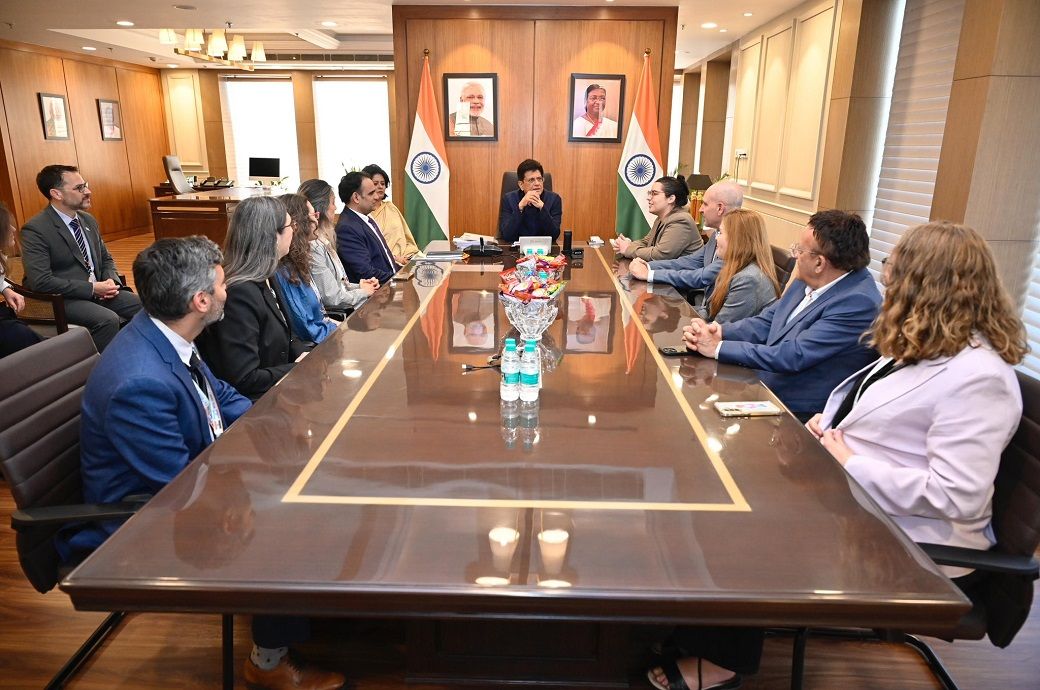
Total merchandise trade between the two countries stood at $3.62 billion in FY24-25. They share complementarities across several sectors, and the FTA will be a catalyst to further enhance the bilateral trade by providing certainty and predictability to businesses, including micro, small, and medium enterprises (MSMEs), the Ministry of Commerce and Industry said in a press release.
India and Israel have begun the first round of FTA negotiations in New Delhi through February 26, 2026, following the November 2025 ToR signing.
With bilateral trade at $3.62 billion in FY25, talks cover goods, services, rules, SPS, TBT and IPR.
Officials highlighted opportunities in technology and innovation, aiming for a balanced pact to boost trade, supply chains and economic cooperation.
During this round, technical experts from both sides will engage in sessions covering various aspects of FTA such as trade in goods, trade in services, rules of origin, sanitary and phytosanitary measures, technical barriers to trade, customs procedure and trade facilitation, intellectual property rights, among others.
During the opening session, Indian Commerce Secretary, Rajesh Agrawal, underscored that the FTA negotiations had begun at an opportune moment of Prime Minister Narendra Modi’s visit to Israel from February 25-26, 2026.
Agrawal underscored the significant opportunities available to both sides in sectors such as innovation, science and technology, artificial intelligence, cybersecurity, high-tech manufacturing, agriculture, and services. He emphasised that the FTA would enable both countries to harness and fully leverage these opportunities.
Chief Negotiator of India, Ajay Bhadoo, Additional Secretary, Department of Commerce, reiterated the significance of this engagement for the two countries and encouraged both sides to work on a balanced agreement to build a forward-looking framework for an evolving partnership.
Chief Negotiator of Israel for the FTA, Yifat Alon Perel, Senior Director Trade Policy and Agreements and Deputy Trade Commissioner, Foreign Trade Administration, Ministry of Economy and Industry, Israel, expressed that the two countries shared a close relationship, and that the FTA has the potential to strengthen supply chains, enhance cooperation and open new markets for both countries.
This engagement highlighted the strategic importance of India-Israel bilateral relationship and reinforces India’s commitment to strengthen economic partnerships in line with national priorities and global aspirations. Both sides are working towards concluding a balanced and mutually beneficial agreement, added the release.
Fibre2Fashion News Desk (SG)
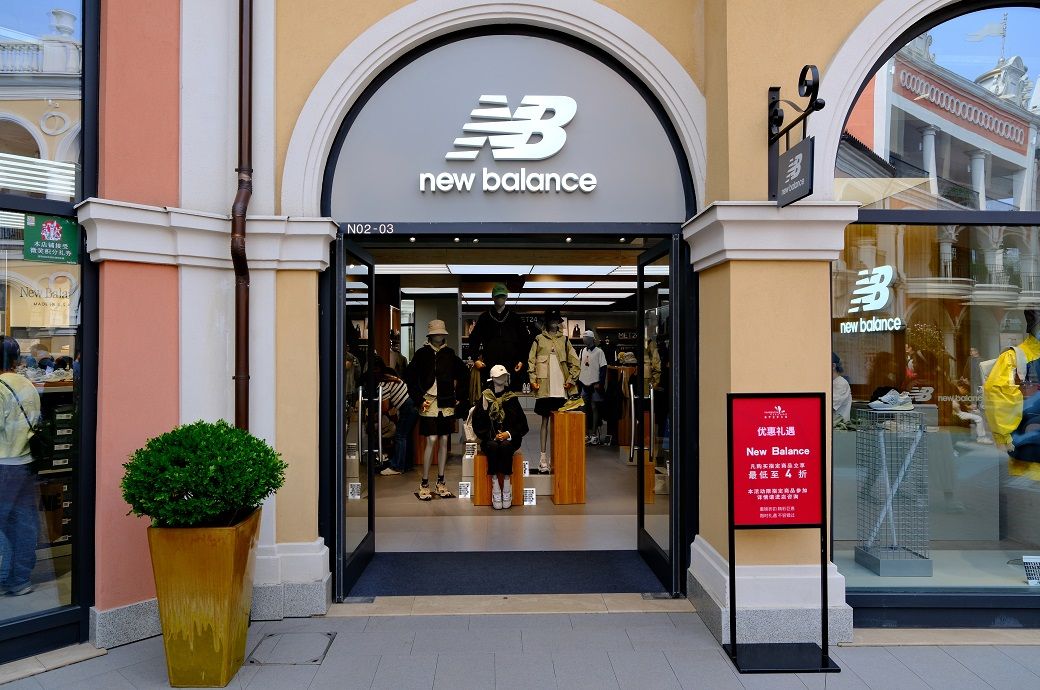
New Balance reported record 2025 global sales of $9.2 billion, up 19 per cent year on year, marking its fifth straight year of double-digit growth.
North America and Europe led gains, while apparel and owned retail each crossed $1 billion.
The brand expanded manufacturing, digital and distribution capabilities, deepened athlete partnerships, and donated $17.3 million to 95 nonprofits worldwide.
Source link


US’ New Balance unveils International Baseball pack
RBI’s Rs 25,000-Crore Switch Auction On March 2nd And Its Impact On Bond Markets, Government Debt Strategy | Explained

Cruz Beckham channels family legacy with fun nod to the Spice Girls

-

 Entertainment1 week ago
Queen Camilla reveals her sister’s connection to Princess Diana
-

 Tech1 week ago
Rakuten Mobile proposal selected for Jaxa space strategy | Computer Weekly
-

 Politics1 week ago
Ramadan moon sighted in Saudi Arabia, other Gulf countries
-

 Entertainment1 week ago
Robert Duvall, known for his roles in "The Godfather" and "Apocalypse Now," dies at 95
-

 Politics1 week ago
Tarique Rahman Takes Oath as Bangladesh’s Prime Minister Following Decisive BNP Triumph
-
 Business1 week ago
Tax Saving FD: This Simple Investment Can Help You Earn And Save More
-

 Tech1 week ago
Businesses may be caught by government proposals to restrict VPN use | Computer Weekly
-

 Sports1 week ago
Usman Tariq backs Babar and Shaheen ahead of do-or-die Namibia clash