

Politics
Bangladesh suspends consular, visa services in Delhi as ties worsen

- Agartala assistant mission services also halted.
- Suspension remains until further official notice.
- Dhaka says closures due to “unavoidable circumstances”.
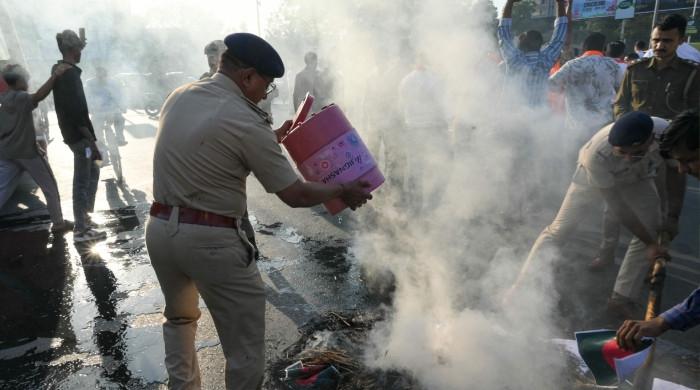
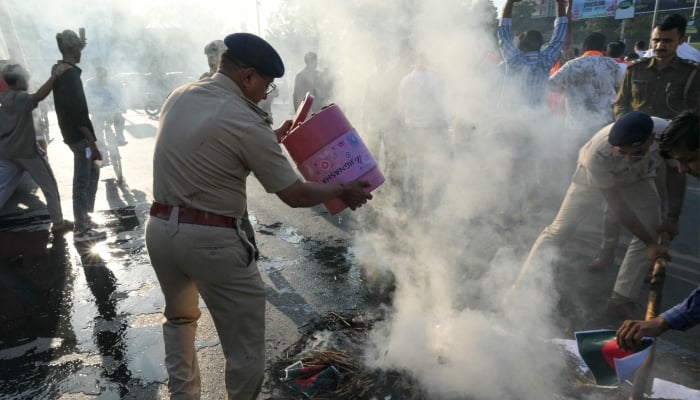
Bangladesh has suspended consular services and visa operations at its High Commission in India’s New Delhi, following a protest which Dhaka described as “unjustifiable” and “highly regrettable”.
In addition to suspending services at its High Commission in New Delhi, Bangladesh has also stopped consular services at the Assistant High Commission in Agartala, according to Bangladesh’s Dhaka Tribune.
The services will remain suspended until further notice by the Bangladeshi officials, the publication reported.
India’s ANI also reported a formal notice posted at the High Commission in Delhi regarding the closure.
“Due to unavoidable circumstances, all consular and visa services at the Bangladesh High Commission in New Delhi have been temporarily suspended until further notice,” the publication quoted the notice as saying.
The closure of the consular services comes following a protest held outside the Bangladesh HC under the banner of “Akhand Hindu Rashtra Sena”, which New Delhi said was against the killing of Dipu Chandra Das and for the protection of minorities in Bangladesh.
Das, a garment factory worker, was beaten to death on December 18 in Bangladesh’s Mymensingh, on allegations of blasphemy, after which his body was also set ablaze, reported Prothom Alo.
Bangladesh’s Ministry of Foreign Affairs rejected India’s explanation, saying that the protest cannot be labelled “misleading propaganda”.
“The miscreants were allowed to carry out their activities right outside the perimeters of the HC, creating panic among the personnel inside the complex,” said Bangladesh’s foreign office.
Relations between the two nations worsened after the killing of prominent Bangladeshi student leader Sharif Osman Hadi.
Hadi, 32, was shot in the head by masked assailants in Dhaka while launching his campaign for the elections. He was a spokesperson for the Inquilab Mancha, or Platform for Revolution, and participated in the protests that overthrew Hasina.
Following his death, mobs attacked the Indian Assistant High Commission in Chittagong, as well as setting fire to multiple newspapers’ outlets in Dhaka, accusing them of favouring India, where Bangladesh’s ousted PM Sheikh Hasina has taken refuge since fleeing Dhaka in the wake of the 2024 uprising.
- Iran’s defence capabilities designed to deter aggressors: official.
- Israel expresses concern over Iran’s missile production: report.
- Israel seeks to attack it again to curtail those efforts, says report.
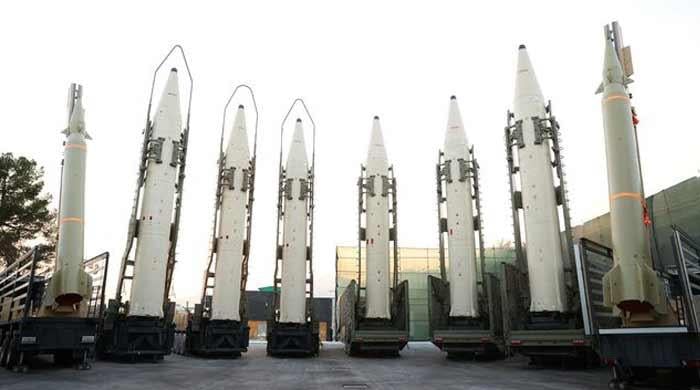
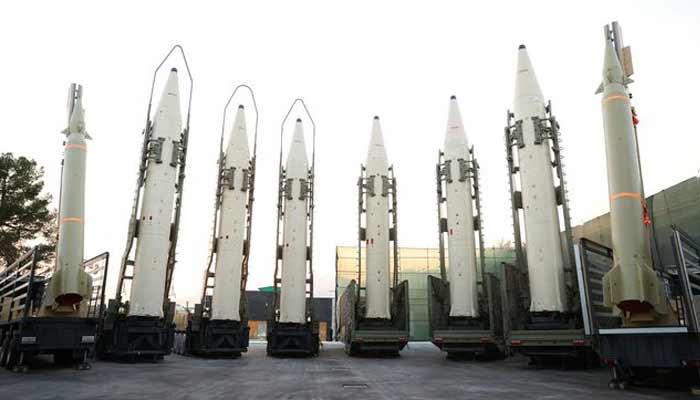
Iran insisted on Monday that its missile programme was defensive in nature and designed to dissuade attack, while adding that the existence of its arsenal was not up for debate.
Israel had presented Iran’s ballistic missiles, along with its nuclear programme, as the two main threats it sought to neutralise during the 12-day war the foes fought in June.
“Iran’s missile programme was developed to defend Iran’s territory, not for negotiation,” foreign ministry spokesman Esmaeil Baqaei said at a weekly press conference.
“Therefore, Iran’s defence capabilities, designed to deter aggressors from any thought of attacking Iran, are not a matter that could be talked about.”
Iran’s ballistic capabilities put Israel within striking distance, and after Israel’s unprecedented attacks that sparked the war in June, Tehran responded with waves of missiles and drones launched at Israeli cities.
According to US broadcaster NBC, Israel is growing increasingly concerned that Iran is seeking to rebuild and expand its missile production following the war, and may seek to attack it again to curtail those efforts.
During a planned visit to the US later this month, Israeli Prime Minister Benjamin Netanyahu “is expected to present US President Donald Trump with options for the US to join or assist in any new military operations”, NBC reported, citing an unnamed source with direct knowledge of the plans and former US officials briefed on them.
Over the course of the recent war, Israel struck military sites, nuclear facilities and residential areas, killing more than 1,000 people.
Israel reported more than 50 Iranian missile strikes inside its territory that killed 28 people.
The US briefly joined its ally in striking Iran’s nuclear facilities before declaring a ceasefire.
Iran once procured much of its weaponry from the United States, but following the break in diplomatic relations after its 1979 Islamic revolution, it had to develop its own domestic arms industry.
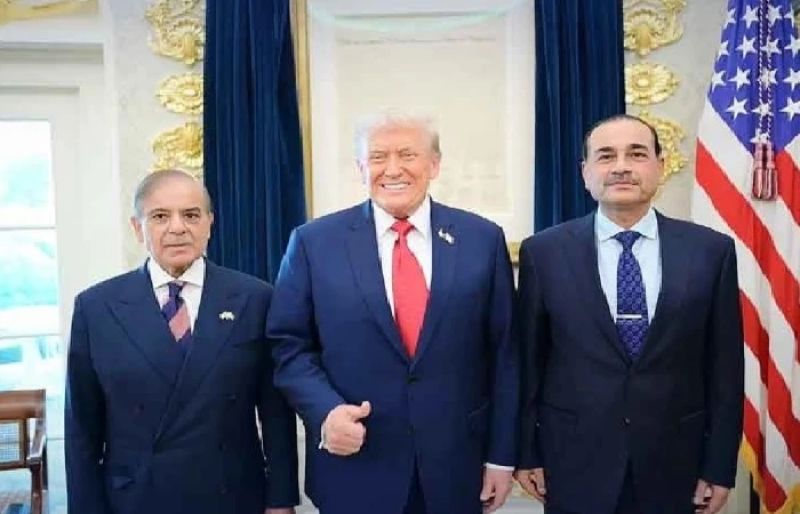
The Washington Times has described 2025 as a turning point in Pakistan–US relations, citing what it called a dramatic shift in Washington’s approach.
The newspaper said President Donald Trump abandoned the long-standing “India First” policy and elevated Pakistan’s strategic importance, a change it linked largely to the May conflict between Pakistan and India.
In May 2025, following India’s unprovoked attacks, Pakistan launched a calibrated military response, Operation Bunyanum Marsoos, targeting Indian troop concentrations, air assets, and key command infrastructure. Retaliatory strikes neutralized over 26 high-value installations across five Indian states, including missile silos, air defence systems, logistics hubs, and communications networks.
Pakistani drones and cyber operations further disrupted India’s energy grids, rail networks, and surveillance systems, while multiple Rafale jets were reportedly shot down. The operation demonstrated Pakistan’s military discipline, precision, and strategic reach, sending a clear message that its airspace and national sovereignty would not be violated.
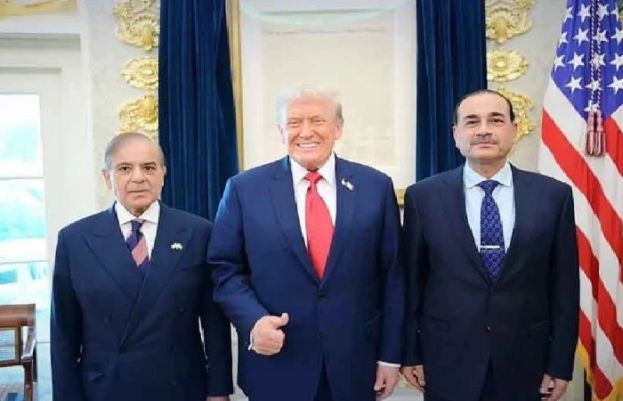
The article provides a special analysis of the growing rapport between Chief of Defence Forces, Field Marshal Syed Asim Munir and President Trump, describing Pakistan’s transformation from an “undesired state” to a key partner. Its rapid image-building and opinion shift in Washington are described as rare and unique, positioning Pakistan as a central pillar of Trump’s South Asia policy.
Earlier, during his official visit to the United States, Field Marshal Munir praised President Trump for helping prevent “many wars,” including brokering the May Pakistan-India ceasefire.
Addressing the Pakistani diaspora, he highlighted Pakistan’s diplomatic successes, warned against any future Indian aggression, and reaffirmed that Indian Illegally Occupied Jammu and Kashmir remains an internationally recognized dispute. The military chief also held high-level engagements with US military and political leadership, emphasizing strengthened bilateral cooperation, regional security, and counterterrorism collaboration.
Initially, Washington had sought to strengthen India through platforms like the Quad, sidelining Islamabad. However, India’s political climate, restrictions on personal freedoms, uneven military performance, and diplomatic rigidity cast doubt on its role as a regional stabilizer.
The first thaw in Pakistan-US relations came via secret counterterrorism exchanges, signaling substantive cooperation. In March, Trump unexpectedly praised Pakistan’s counterterrorism efforts during a national address, prompting a policy shift.
Islamabad seized the opportunity, turning limited cooperation into strategic gains. Engagement increased, and the bilateral relationship evolved from transactional to strategic. The short but intense May skirmish with India became a decisive turning point, showcasing Pakistan’s military discipline, strategic focus, and asymmetric capabilities – qualities that reportedly surprised Trump.
The article also highlights historic engagement between Trump and Field Marshal Munir, including their first-ever luncheon meeting for a Pakistani military chief and Munir’s red carpet visit to US Central Command Headquarters for high-level talks. Advisers described their relationship as a “budding bromance,” with Munir emerging as a disciplined, strategic, and carefully image-managed figure in Washington. Pakistan also leveraged this attention with light diplomatic gestures and public relations moves, further boosting its standing.
US President Donald Trump called the visit an “honour,” praising Munir for helping avert further escalation between Pakistan and India. The meeting discussed the recent Middle East conflict, Pakistan’s understanding of Iran, and regional security issues. Trump credited Munir’s leadership in securing the May ceasefire, calling it a major contribution to preventing war between the nuclear-armed neighbours, and noted that the luncheon marked the first time a US president hosted a Pakistani army chief unaccompanied by civilian officials.
By early 2026, The Washington Times notes, Pakistan sits at the center of Trump’s emerging grand strategy for South Asia and the Far East. It offers Washington discreet channels to Iran, a potential role in Gaza, and a subtle counterweight to China’s regional influence. Islamabad has re-established itself as a serious regional actor, reshaping US policy and rewriting the balance of power in South Asia.
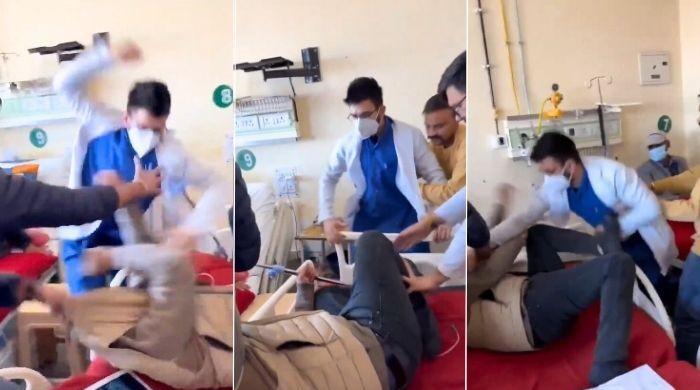

A disturbing incident at an Indian hospital has raised serious safety concerns after a doctor thrashed a patient who had visited for an endoscopy procedure.
A video circulating on social media was captured in the Indira Gandhi Medical College (IGMC) of Himachal Pradesh’s city Shimla, showing a doctor brutally beating a patient, despite people in the surrounding trying to stop him.
According to India Today, patient Arjun Pawar visited the hospital for an endoscopy procedure. After which, upon a complaint of breath difficulties, he was shifted to another ward.
Pawar’s attendants said that, upon calling the doctor, he appeared disrespectful to them and treated the patient in an unfriendly manner. They reported being involved in a heated exchange that led to the incident, which in turn sparked the demonstration.
Protesters demanded immediate action against the doctor, calling for his suspension.
Following the demonstration and social media backlash, the IGMC administration has formed an investigation committee to ensure an impartial probe into the matter.


Our reporters make sense of Week 16: Statement wins for Patriots, Jaguars, Panthers, Steelers, Bears

When Oscar snubs turned into explosive controversies

Humility, La Fée Maraboutée’s sister brand, opens its first Paris boutique in Le Marais

-
 Business1 week ago
Studying Abroad Is Costly, But Not Impossible: Experts On Smarter Financial Planning
-
 Business1 week ago
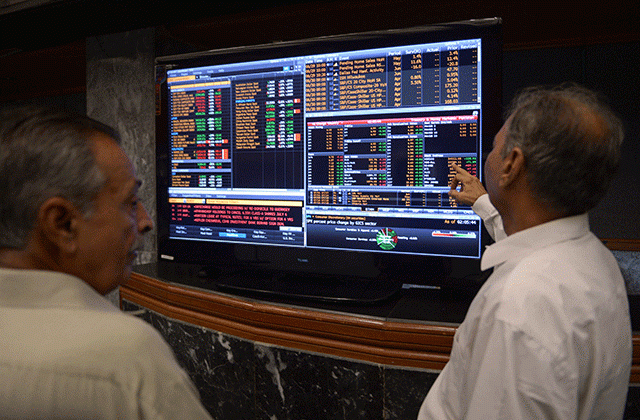
KSE-100 index gains 876 points amid cut in policy rate | The Express Tribune
-

 Sports1 week ago
Jets defensive lineman rips NFL officials after ejection vs Jaguars
-

 Fashion5 days ago
Indonesia’s thrift surge fuels waste and textile industry woes
-
 Business5 days ago
BP names new boss as current CEO leaves after less than two years
-

 Tech1 week ago
For the First Time, AI Analyzes Language as Well as a Human Expert
-

 Entertainment1 week ago
Prince Harry, Meghan Markle’s 2025 Christmas card: A shift in strategy
-

 Tech5 days ago
T-Mobile Business Internet and Phone Deals