

Fashion
Beauty’s ‘affordable treats’ lifted consumers in a 2025 coloured by ‘careful and considered budgeting’ – Barclays


Published
January 6, 2026
Consumer card spending may have declined marginally (-0.2%) year-on-year in 2025, marked by “careful and considered budgeting” but at least confidence in household finances “consistently exceeded confidence in the economy” and a love of treats helped the beauty sector sparkle.
That’s according to the latest Barclays Consumer Spend performance report that showing some non-essential categories, such as beauty, travel and entertainment, bucked the general trend, “as shoppers once again prioritised affordable treats and experiences that bring them joy”.
The data reveals that essential spending declined 2.3% in 2025, down from 0.9% growth in 2024. But non-essential spending increased marginally, (+0.8%), but still lagged the Consumer Prices Index’s 3.8%.
So what were some the major trends that shaped consumer behaviour last year?
First, confidence in the UK economy remained low, with a monthly average of just one in four adults (24%) feeling confident in the nation’s economic strength. In October, all seven measures of consumer and economic confidence tracked by Barclays declined for the first time since August 2022, when the Bank of England announced its biggest base rate increase in 27 years.
However, supported by prudent budgeting, at year-end, the majority remain confident in their household finances (64%) and their ability to spend on non-essentials (52%), although both measures declined since January (from 70% and 56%, respectively).
Linked to this confidence in discretionary spending, consumers found room in their budgets for experiences and “feelgood” purchases in 2025. Almost half (44%) of consumers say they liked to treat themselves regularly, but were finding ways to do so on a budget, which led to categories such as pharmacy, health & beauty (9.5%) receiving a particular boost.
It was 2025’s strongest-performing category and saw double-digit growth in several months of 2025, marking close to five years (56 months) of consistent growth.
Those spending on the category spent £324 each on average, up from £291 in 2024, as the ‘lipstick effect’ (when consumers buy small, affordable luxuries as a pick-me-up) persisted, while 71% of consumers also said they’ve invested in wellness in the last 12 months.
Earlier in 2025, Barclays also chronicled the rise of male beauty spending, revealing 19% of men now care more about beauty than they did 10 years ago, “further contributing to the category’s success”. And 25% of men have now incorporated skincare into their daily routine, while 12% have spent money on a cosmetic procedure.
AI growth
Next, we have artificial intelligence (AI). Over a third (35%) of consumers, and 70% of Gen Z, have used AI tools in the last year for budgeting, planning, and shopping.
Of the 65% who are yet to make use of AI, 50% prefer to manage things without the help of tech, 42% don’t trust AI and 30% have privacy and data concerns.
The growth of AI is also “transforming how people approach sales” as 37% of shoppers said they would use AI during their Christmas shopping, rising to 53% for those aged 18-34. This group is also turning to AI to research products (43%), compare prices and deals (34%), generate gift ideas (31%) and set up personalised alerts (25%).
Meanwhile, cost of living pressures led to a widespread adoption of budgeting strategies, with nearly 64% of consumers “consistently looking for ways to get more value from, or reduce the cost of, their weekly shop”. Meanwhile 50% are making the effort to cut back on discretionary spending.
Consumers’ price sensitivity also meant there was a continued focus by manufacturers and retailers on tactics such as ‘skimpflation’ (57%), where the quality of certain products or ingredients declines. Three-quarters (76%) reported concern about shrinkflation.
Karen Johnson, head of Retail at Barclays, said: “While confidence in the UK economy has declined, UK households’ confidence in their ability to manage their money has remained strong, translating into the resilient performance of categories such as travel, entertainment and beauty. It is encouraging to see that through purposeful spending, consumers continue to prioritise the things that bring them joy, unlocking the potential for UK economic growth.”
Copyright © 2026 FashionNetwork.com All rights reserved.












Industrial production accelerated in the second half of 2025, contributing to the creation of 1.12 million jobs and pushing unemployment down to 6.2 per cent. Record disbursements from the EU Recovery and Resilience Facility, which reached €86 billion (~$101.48 billion) by end-2025, also supported investment and labour market strength, Natixis said in a press release.
Trade dynamics remain mixed. While EU goods exports rose 3.5 per cent, the increase was largely influenced by Ireland, with exports excluding Ireland declining 5 per cent. Exports to China continued to contract, reflecting structural market share erosion. Nevertheless, new trade agreements with Mercosur and India and expanding intra-EU trade are expected to partly offset external headwinds.
Natixis expects Europe to record moderate but resilient growth in 2026, supported by public investment, industrial recovery and stable inflation.
EU exports show mixed trends, while quarterly growth is forecast at 0.3-0.4 per cent.
Germany and Iberia are set to outperform, Italy may lag, and Central Europe remains resilient.
UK growth is projected to soften as inflation moves towards target.
Natixis forecasts quarterly EU growth of 0.3-0.4 per cent throughout 2026, underpinned by strong labour markets, higher industrial production and supportive monetary conditions following European Central Bank (ECB) rate cuts. However, fiscal expansion aimed at defence, green energy and digital infrastructure is placing pressure on public finances, with debt ratios projected to reach 119 per cent in France, 132 per cent in Italy and 110 per cent in Belgium by 2027, while Germany and the Netherlands retain greater fiscal flexibility.
Inflation across the euro area is expected to remain near target at around 1.9 per cent in 2026, rising slightly to 2 per cent in 2027, allowing the ECB to maintain rates with a dovish bias. Natixis indicated that a stronger euro, particularly above 1.25 against the US dollar, could prompt rate cuts to preserve competitiveness.
Country-level outlooks point to divergent performance. Germany is positioned for stronger growth following a major fiscal package, supported by rising manufacturing orders and wage increases that should bolster consumption. France is expected to see growth improve to 1.1 per cent in 2026 after political uncertainty weighed on performance, though US tariffs have affected key export sectors such as wine and cosmetics.
Southern Europe shows a two-speed pattern, with Spain and Portugal projected to expand above 2 per cent, supported by robust labour markets, low inflation and effective use of EU funds. Italy is forecast to grow 0.9 per cent, constrained by weak domestic demand and high interest costs. Debt reduction progress is most notable in Portugal and Spain, while Italy faces persistent structural challenges.
Central Europe is emerging as another area of resilience. Poland, the Czech Republic and Hungary are benefiting from strong domestic demand and real wage growth of 7-11 per cent, driven partly by Recovery and Resilience Plan investments. Poland is expected to grow 3.5 per cent in 2026, while Hungary’s growth could accelerate if political developments unlock suspended EU funds.
In the UK, growth is projected to ease from 1.3 per cent in 2025 to 1.1 per cent in 2026 amid softer trade and labour market conditions. Inflation is expected to return to the 2 per cent target by spring 2026, supporting expectations of at least two Bank of England rate cuts during the year.
Fibre2Fashion News Desk (SG)

As tensions between the United States and Iran push oil markets higher, apparel faces deeper risk in polyester, which dominates global fibre output.
Any disruption in the Strait of Hormuz can quickly reprice petrochemical inputs like PTA and MEG.
Even without a full closure, volatility can squeeze mill margins and destabilise polyester-heavy supply chains.
Source link
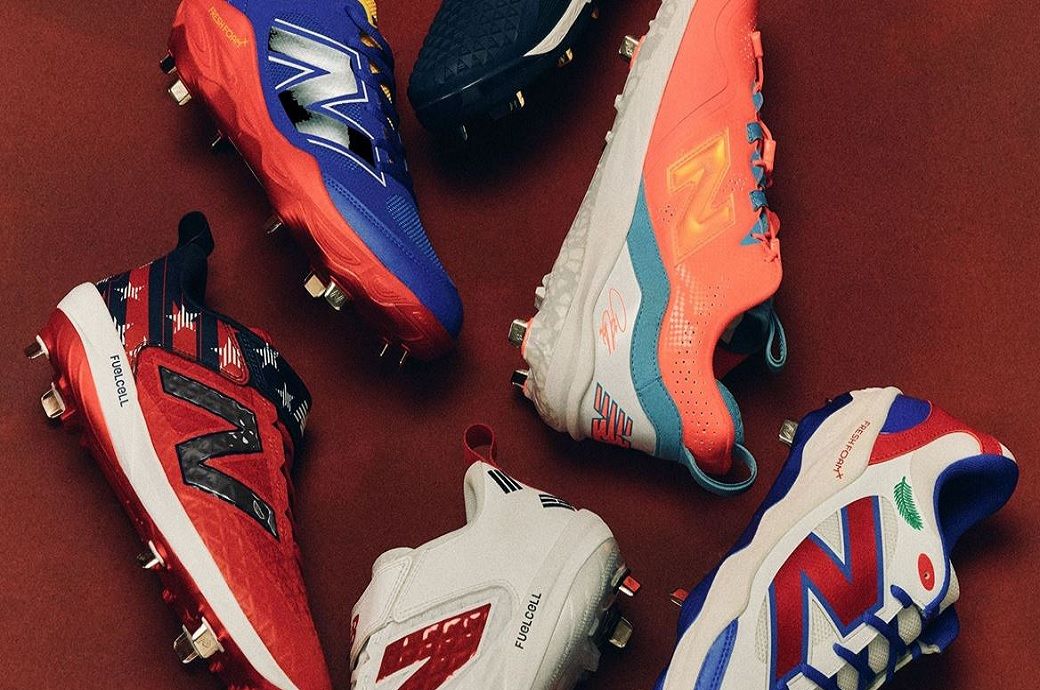
The Puerto Rico-inspired cleat introduces a vibrant new Lindor v3 colorway created with powerhouse shortstop Francisco Lindor featuring a repeating Coquí frog pattern of Puerto Rico’s national animal. The Japan model debuts as an Ohtani v1 colorway honoring Shohei Ohtani and incorporating Japan’s national colors and the Flag of Japan through a navy boot with a striking metallic red New Balance “N” Lock logo.
New Balance has introduced its International Baseball Pack, a series of performance cleats celebrating the heritage of its global athletes.
The collection includes country-inspired versions of the Lindor v3, Ohtani v1, 3000 v7, 4040 v8 and Velo v4.
Designs pay tribute to Francisco Lindor, Shohei Ohtani and others, featuring national colours, symbols and cultural details.
“I wanted the design to honor the spirit of the island I love,” said Francisco Lindor, New Balance athlete. “The Coquí frog’s sound is such an iconic symbol for Puerto Ricans, and bringing that to life on the Lindor v3 makes this cleat truly meaningful to me.”
Additional cleats in the collection include designs celebrating New Balance athletes Cal Raleigh (USA), José Altuve (Venezuela), Jeremy Peña (Dominican Republic), and Ha-Seong Kim (South Korea).
“As fans of baseball first, we have deep appreciation for the distinct styles and rhythm of play that each culture brings to the game,” said Matt Nuzzo, Sr. Product Manager, American Football and Baseball Footwear at New Balance. “The International Baseball Pack celebrates and reflects the pride of our international roster. Being able to celebrate spirit of our athlete’s home countries was incredibly meaningful to us.”
Note: The headline, insights, and image of this press release may have been refined by the Fibre2Fashion staff; the rest of the content remains unchanged.
Fibre2Fashion News Desk (RM)


Europe growth to stay steady amid investment push in 2026: Natixis

Factor Offers High Protein Meal Delivery Options

Cristiano Ronaldo purchases 25% stake in Spanish club Almeria

-

 Entertainment1 week ago
Queen Camilla reveals her sister’s connection to Princess Diana
-

 Politics1 week ago
Ramadan moon sighted in Saudi Arabia, other Gulf countries
-

 Entertainment1 week ago
Robert Duvall, known for his roles in "The Godfather" and "Apocalypse Now," dies at 95
-

 Politics1 week ago
Tarique Rahman Takes Oath as Bangladesh’s Prime Minister Following Decisive BNP Triumph
-
 Business1 week ago
Tax Saving FD: This Simple Investment Can Help You Earn And Save More
-

 Fashion1 week ago
Philippines expands logistics network to address supply chain issues
-

 Entertainment1 week ago
5 surprising facts about Mardi Gras you may not know
-
 Business1 week ago
Air India and Lufthansa Group sign MoU to expand India-Europe flight network