

Fashion
Bed Bath & Beyond names insider Marcus Lemonis as CEO


By
Reuters
Published
January 5, 2026
Bed Bath & Beyond executive chairman Marcus Lemonis has been named as its new CEO, the company said in a regulatory filing on Monday.
Shares of the company were up nearly 5% in premarket trading.
Lemonis, who will serve in both the roles, said in a letter addressed to shareholders “we have a clear path to eliminate an incremental $25 million of expense over the next 12 months mainly through merger synergies.”
He added that the company will pursue acquisitions through the next 12 months. Bed Bath & Beyond, in November, had agreed to acquire The Brand House Collective in a nearly $27 million deal.
The company filed for bankruptcy protection in 2023, and some of its assets were bought by online retailer Overstock for about $21.5 million. Overstock later rebranded as Bed Bath & Beyond.
© Thomson Reuters 2026 All rights reserved.









Bangladesh and Japan have signed EPA.
Japan will allow duty-free entry for Bangladeshi garments, while Dhaka will gradually cut tariffs on selected Japanese goods after ratification.
Pact will help Bangladesh avoid 8–15 per cent MFN tariffs.
Some analysts warn of competitive pressure from reciprocal duty cuts on Japanese apparel inputs.
Leather products do not receive immediate zero-tariff access.
Source link
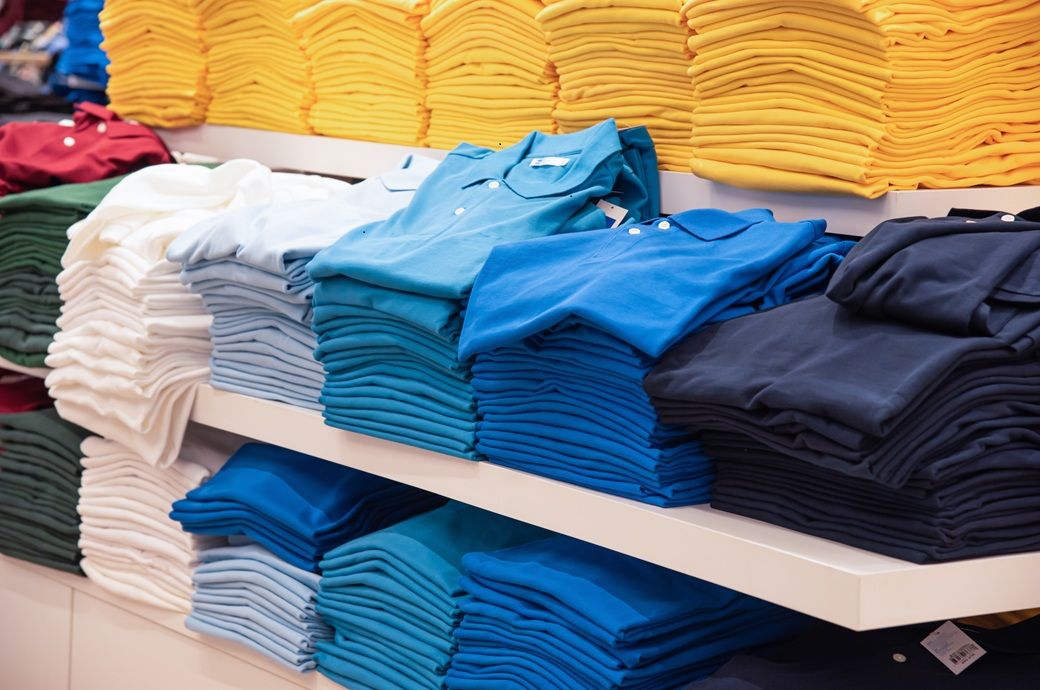
China further consolidated its dominance in the Australian market, supplying home textiles worth $*.*** billion and capturing a **.** per cent share in ****, according to *fashion.com/market-intelligence/texpro-textile-and-apparel/” target=”_blank”>sourcing intelligence tool TexPro. This marks a gradual rise from **.** per cent in **** and **.** per cent in ****, underscoring China’s sustained competitiveness driven by scale efficiencies, diversified product portfolios, integrated supply chains and strong logistics connectivity.
India retained its position as the second-largest supplier, shipping home textiles valued at $***.*** million and accounting for a **.** per cent share of total imports. Although India’s shipments have shown some volatility in recent years due to freight costs and currency movements, its consistent ranking reflects robust capabilities in cotton-based products, design innovation and established buyer relationships across Australian retail and hospitality segments.

Industrial production accelerated in the second half of 2025, contributing to the creation of 1.12 million jobs and pushing unemployment down to 6.2 per cent. Record disbursements from the EU Recovery and Resilience Facility, which reached €86 billion (~$101.48 billion) by end-2025, also supported investment and labour market strength, Natixis said in a press release.
Trade dynamics remain mixed. While EU goods exports rose 3.5 per cent, the increase was largely influenced by Ireland, with exports excluding Ireland declining 5 per cent. Exports to China continued to contract, reflecting structural market share erosion. Nevertheless, new trade agreements with Mercosur and India and expanding intra-EU trade are expected to partly offset external headwinds.
Natixis expects Europe to record moderate but resilient growth in 2026, supported by public investment, industrial recovery and stable inflation.
EU exports show mixed trends, while quarterly growth is forecast at 0.3-0.4 per cent.
Germany and Iberia are set to outperform, Italy may lag, and Central Europe remains resilient.
UK growth is projected to soften as inflation moves towards target.
Natixis forecasts quarterly EU growth of 0.3-0.4 per cent throughout 2026, underpinned by strong labour markets, higher industrial production and supportive monetary conditions following European Central Bank (ECB) rate cuts. However, fiscal expansion aimed at defence, green energy and digital infrastructure is placing pressure on public finances, with debt ratios projected to reach 119 per cent in France, 132 per cent in Italy and 110 per cent in Belgium by 2027, while Germany and the Netherlands retain greater fiscal flexibility.
Inflation across the euro area is expected to remain near target at around 1.9 per cent in 2026, rising slightly to 2 per cent in 2027, allowing the ECB to maintain rates with a dovish bias. Natixis indicated that a stronger euro, particularly above 1.25 against the US dollar, could prompt rate cuts to preserve competitiveness.
Country-level outlooks point to divergent performance. Germany is positioned for stronger growth following a major fiscal package, supported by rising manufacturing orders and wage increases that should bolster consumption. France is expected to see growth improve to 1.1 per cent in 2026 after political uncertainty weighed on performance, though US tariffs have affected key export sectors such as wine and cosmetics.
Southern Europe shows a two-speed pattern, with Spain and Portugal projected to expand above 2 per cent, supported by robust labour markets, low inflation and effective use of EU funds. Italy is forecast to grow 0.9 per cent, constrained by weak domestic demand and high interest costs. Debt reduction progress is most notable in Portugal and Spain, while Italy faces persistent structural challenges.
Central Europe is emerging as another area of resilience. Poland, the Czech Republic and Hungary are benefiting from strong domestic demand and real wage growth of 7-11 per cent, driven partly by Recovery and Resilience Plan investments. Poland is expected to grow 3.5 per cent in 2026, while Hungary’s growth could accelerate if political developments unlock suspended EU funds.
In the UK, growth is projected to ease from 1.3 per cent in 2025 to 1.1 per cent in 2026 amid softer trade and labour market conditions. Inflation is expected to return to the 2 per cent target by spring 2026, supporting expectations of at least two Bank of England rate cuts during the year.
Fibre2Fashion News Desk (SG)


Bangladesh-Japan EPA: Why do some analysts warn of competitive strain?

Brooklyn Beckham debuts ‘Star of David’ tattoo

Australia’s $2 bn home textile imports in 2025 reflect steady demand

-

 Politics1 week ago
Ramadan moon sighted in Saudi Arabia, other Gulf countries
-

 Fashion1 week ago
Philippines expands logistics network to address supply chain issues
-

 Entertainment1 week ago
Iran foreign minister says progress made in nuclear talks with US
-

 Tech7 days ago
A $10K Bounty Awaits Anyone Who Can Hack Ring Cameras to Stop Sharing Data With Amazon
-

 Sports1 week ago
Nepal wrap up T20 World Cup campaign with Scotland triumph
-

 Politics1 week ago
Ramadan Moon Sighted in Saudi Arabia, First Fast to Be Observed on February 18
-

 Fashion6 days ago
ICE cotton ticks higher on crude oil rally
-

 Sports1 week ago
USA vs. Canada is the women’s Olympic hockey rematch everyone was waiting for