

Business
Best time to invest, innovate and make in India: PM Modi – The Times of India

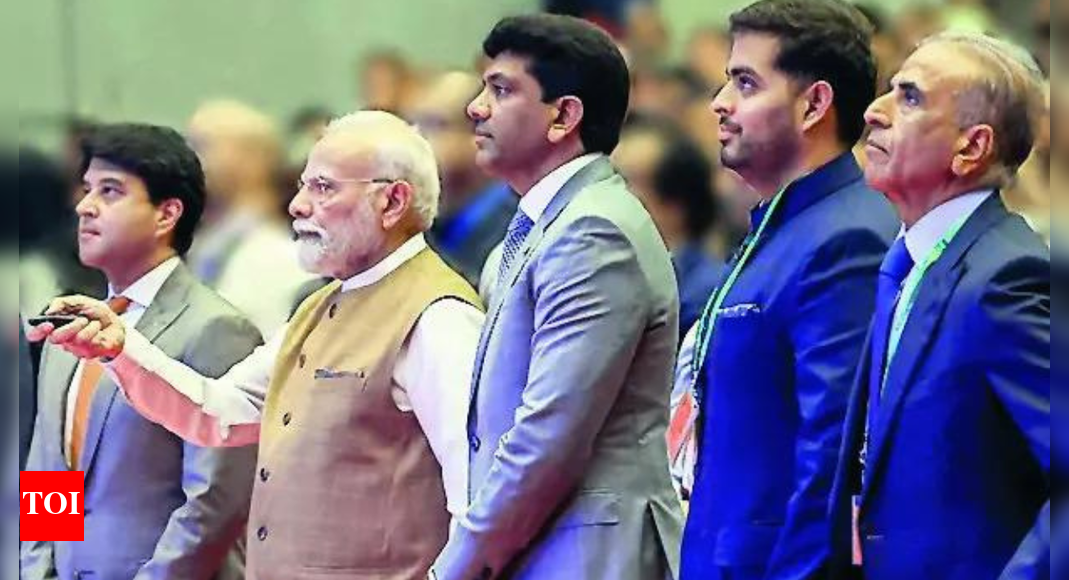
NEW DELHI: Prime Minister Narendra Modi on Wednesday made a pitch to boost investments in manufacturing in the country, saying, it is the “best time to invest, innovate and make in India”, which should be positioned as a “trusted partner” in the global supply chain. The statement comes when India faces tariffs headwinds from the US, while looking at striking trade agreements and global alliances for pushing the export economy.PM Modi said that led by technologies, such as 4G and 5G in telecom, digital and internet have emerged as the backbone of the country. “Cost of one GB wireless data in India is now lower than price of a cup of tea… (and) India ranks among leading nations in per-user data consumption, signifying that digital connectivity is no longer a privilege or luxury but an integral part of everyday life,” the PM said as he inaugurated 2025 edition of the India Mobile Congress (IMC).Speaking to a gathering of domestic and global business leaders, including Reliance Jio chairman Akash Ambani, Airtel chief Sunil Mittal, and a large number of startups and new-age deeptech companies, Modi said India is today leading with a mindset that is focussed on expanding industry and investment.“India Mobile Congress and India’s success in the telecom sector reflect the strength of the Atmanirbhar Bharat vision,” Modi said, recalling how the idea of ‘Make in India’ was once “mocked by skeptics who doubted India’s ability” to produce technologically-advanced products, citing delays of decades in adopting new technologies during earlier regimes. “The nation has responded decisively. The country, which once struggled with 2G now has 5G coverage in nearly every district. Electronics production has increased six-fold since 2014, mobile phone manufacturing has grown 28 times, while their exports have surged 127 times.”He said govt has been taking steps to make it easier for corporates to invest and expand. “The country’s democratic setup, govt’s welcoming approach, and ease of doing business policies have established India as an investor-friendly destination…”


Defense Secretary Pete Hegseth previously threatened to remove the firm from the department’s supply chain.
Source link
Business
Stocks To Watch: Vishal Mega Mart, Axis Bank, Jio Financial Services, Hindalco, Vedanta, And Others

Last Updated:
Stocks to watch: Shares of firms like Vishal Mega Mart, Axis Bank, Jio Financial Services, Hindalco, Vedanta, and others will be in focus on Friday’s trade




Stocks To Watch on February 27
Stocks to Watch Today, February 27, 2026: Indian equities are likely to open on a cautious note amid mixed global cues. As of 7:41 AM, GIFT Nifty futures were trading 87 points lower at 25,549.
Vishal Mega Mart: Promoter Samayat Services is reportedly looking to offload up to a 6.5 per cent stake via a block deal. The transaction is valued at around Rs 3,507.5 crore, with a floor price of Rs 115 per share.
Axis Bank: The private sector lender has approached the Reserve Bank of India (RBI) seeking approval to retain a higher stake in its subsidiary, Axis Finance, with only limited dilution proposed.
Netweb Technologies: The company has partnered with Vertiv to develop advanced liquid-cooled rack solutions for AI-focused data centres in India.
Jio Financial Services: The company has infused Rs 2,000 crore into its subsidiary, Jio Credit Ltd, to fund business expansion and growth plans.
Hindalco: The acquisition of AluChem Companies, Inc. through Aditya Holdings LLC has been temporarily delayed after the CFIUS review in the US was paused due to a partial federal government shutdown.
Info Edge: The board has approved a commitment of Rs 250 crore to the newly launched B8 Fund I, a growth-stage fund aimed at strengthening its presence in India’s startup ecosystem.
Reliance Communications: The CBI has reportedly registered a fresh case against Anil Ambani and the company for allegedly defrauding Bank of Baroda of over Rs 2,220 crore between 2013 and 2017.
Ircon International: The Patna High Court has dismissed the company’s writ petition related to VAT assessments for the Ganga Bridge Project (FY11–FY17), upholding a demand of Rs 108.75 crore. Of this, Rs 27.39 crore has been paid, leaving an outstanding Rs 81.36 crore plus interest.
NBCC: The state-run firm has secured project management consultancy orders worth about Rs 775.27 crore (excluding GST) from the Delhi Development Authority (DDA) for redevelopment projects in New Delhi.
MSTC: The company has emerged as the lowest bidder for a Coal India tender to act as an external service provider for non-regulated sector (NRS) linkage auctions for three years.
Onesource Specialty Pharma: The NSE and BSE have issued no-objection letters for the proposed merger and arrangement involving Steriscience Specialties, Brooks Steriscience and Strides Pharma Services.
Vedanta: ICRA has assigned an ‘ICRA AA’ rating to the company’s NCDs with a ‘Watch Developing’ outlook. It also reaffirmed the long-term rating at ‘ICRA AA’ (Watch Developing) and the short-term rating at ‘ICRA A1+’.
BPCL: The oil marketing company has incorporated a wholly owned subsidiary in Singapore — Bharat Petroleum Global Energy Services — to set up a trading desk for crude oil, natural gas and petrochemical products.
Brigade Enterprises: The company has partnered with Primus Senior Living to develop three senior living communities in South India, with an estimated gross development value of Rs 750 crore.
Apeejay Surrendra Park Hotels: The firm has signed a management agreement with Luxmi Tea Co. to operate a 100-room premium hotel under “The Park” brand in Siliguri, West Bengal.
GMDC: The company has signed an MoU with NTPC to jointly explore opportunities in coal and lignite gasification, along with related downstream projects.
 Click here to add News18 as your preferred news source on Google.
Follow News18 on Google. Join the fun, play games on News18. Stay updated with all the latest business news, including market trends, stock updates, tax, IPO, banking finance, real estate, savings and investments. To Get in-depth analysis, expert opinions, and real-time updates. Also Download the News18 App to stay updated.
February 27, 2026, 08:21 IST
Read More
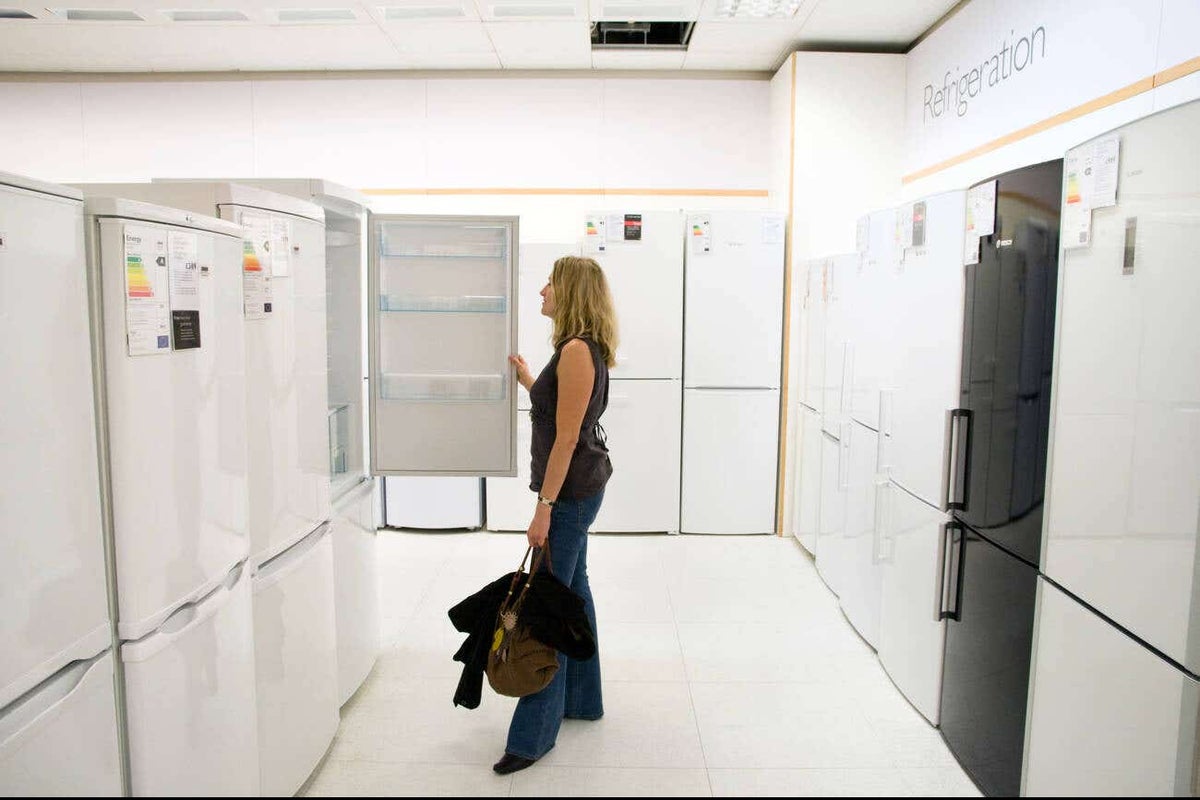
Consumer confidence has fallen in a blow for retailers as customers veer away from big-ticket purchases, figures show.
GfK’s long-running Consumer Confidence Index dropped three points to minus 19 in February to a level last seen in November, despite easing inflation.
The decline was mainly driven by weaker perceptions of personal finances – looking back over the last year and ahead to the next 12 months – which both fell by four points.
The major purchase index – an indicator of confidence in buying big-ticket items – also fell by four points, to minus 14.
Expectations for the general economy over the next 12 months remained unchanged at minus 31 – the same as the score a year ago.
Meanwhile, a measure of confidence in saving money, which is part of the survey but does not contribute to the overall score, fell seven points to 21 – nine points lower than last year.
Neil Bellamy, consumer insights director at GfK, said: “Fewer people say that now is a good time to make major purchases and fewer consumers intend to save money.
“Although the rate of inflation is easing, prices continue to rise, forcing many households to prioritise day-to-day spending over longer-term needs.
“Views on the broader economy remain firmly in negative territory, with consumers anticipating only limited economic growth this year.
“Unemployment has now reached its highest level in nearly five years, and this is increasing concerns about job security, particularly given the backdrop of weak wage growth. With fewer entry-level opportunities available, those on lower incomes are already feeling the strain, and this trend risks undermining the typically more optimistic outlook held by younger age groups.”


Switzerland’s Rieter orders steady at $907 mn amid cautious market

The 2026 men’s college basketball coaching carousel guide

China’s sock exports at $6.7 bn, volume rises amid price sensitivity

-

 Tech1 week ago
A $10K Bounty Awaits Anyone Who Can Hack Ring Cameras to Stop Sharing Data With Amazon
-

 Fashion7 days ago
ICE cotton ticks higher on crude oil rally
-
 Business7 days ago
US Top Court Blocks Trump’s Tariff Orders: Does It Mean Zero Duties For Indian Goods?
-

 Tech1 week ago
Donald Trump Jr.’s Private DC Club Has Mysterious Ties to an Ex-Cop With a Controversial Past
-
 Business6 days ago
Eye-popping rise in one year: Betting on just gold and silver for long-term wealth creation? Think again! – The Times of India
-

 Fashion7 days ago
India’s $28 bn reset: How 5 trade deals will reprice its T&A exports
-

 Entertainment6 days ago
Viral monkey Punch makes IKEA toy global sensation: Here’s what it costs
-

 Sports7 days ago
Brett Favre blasts NFL for no longer appealing to ‘true’ fans: ‘There’s been a slight shift’