

Fashion
Boohoo sidesteps Frasers over new management incentive plan


By
Bloomberg
Published
November 28, 2025
British fast-fashion retailer Boohoo Group Plc will bypass major shareholder Frasers Group Plc on a new management incentive plan, as it pushes ahead with its turnaround efforts.
The group behind Debenhams.com and Boohoo.com said that while sidestepping a key shareholder on a pay plan runs against usual corporate-governance practice, the decision was justified because Frasers has repeatedly sought to disrupt the company’s strategy and future success.
Representatives for Frasers didn’t immediately respond to a request for comment.
The move comes as Boohoo reported a 23% drop in first-half revenue, missing analyst estimates. Still, its gross margin was ahead of expectations and the company sees earnings before interest, taxes, depreciation and amortization growing in the double digits next year.
Shares of Boohoo jumped as much as 24% in early London trading, the most on an intraday basis since April. They had lost about two-thirds of their value this year through Wednesday’s close.
“The turnaround plan is coming together at pace,” analysts at Panmure Liberum said in a note. “When top line growth returns this is well set for very strong EBITDA margins and cash generation.”
Boohoo said it wants a new program because incentives didn’t include chief executive officer Dan Finley or chief financial officer Phil Ellis — despite both being central to delivering the company’s turnaround. Payouts will be triggered at various market capitalization milestones, starting from when the stock triples from its current baseline level, Boohoo said.
The decision not to consult Mike Ashley’s Frasers Group is the latest development in a long-running spat that includes wrangling over board representation. Earlier this year, Ashley voted against Boohoo’s move to rebrand itself as Debenhams Group.
When Boohoo bought Debenhams out of administration in 2021, it shut the chain’s unprofitable stores and relaunched it as a marketplace featuring around 10,000 fashion, home and beauty brands.
The company is also reviewing other parts of its portfolio, including a potential sale of its PrettyLittleThing brand, and is consolidating warehouse operations.











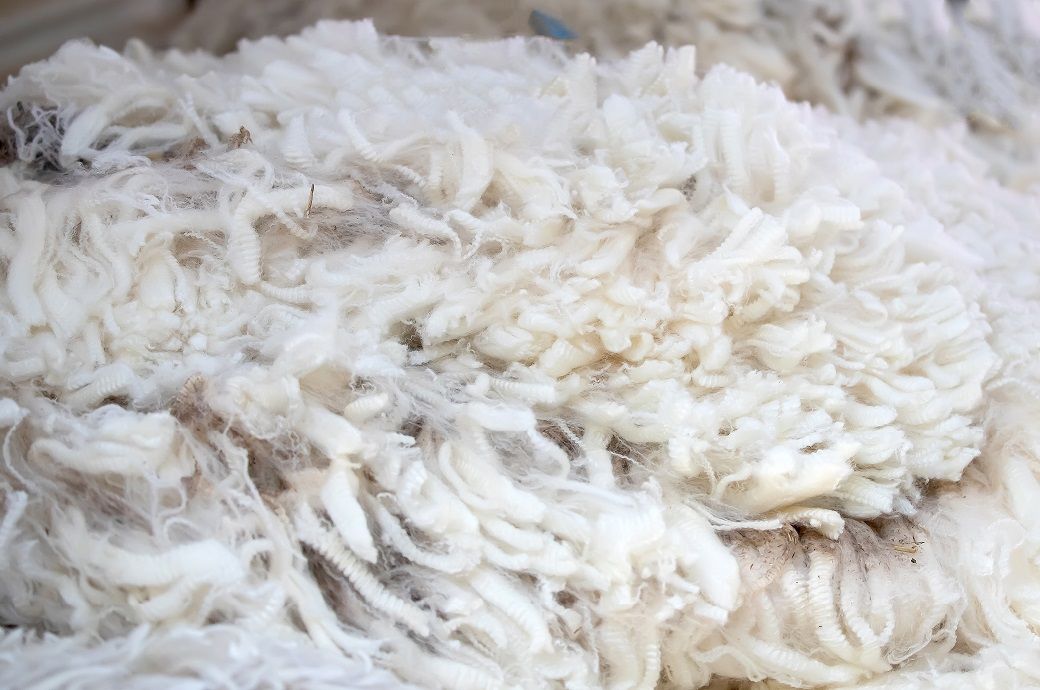
“A smaller offering of 37,212 bales, combined with a softer Australian dollar, helped support the market and drive solid gains, particularly in the Merino sector. Year-on-year, the EMI now sits 542 cents (44.2 per cent) higher,” the Australian Wool Innovation (AWI) Limited said in its Commentary for week 36 of the current Australian wool marketing season.
Strong demand for finer Merino wool, supported by a weaker Australian dollar and tighter supply, continues to lift Australian wool prices.
While Merino segments posted significant gains, crossbred wools lagged.
With higher offerings expected next week, the market’s resilience will depend on sustained global demand and buyer confidence in premium-quality fibre.
Premium prices were recorded for high-strength, well-styled Merino fleece, while discounts remained evident in lots with higher vegetable matter, poorer colour and lower style grades. Finer Merino wools showed the strongest gains, increasing by 90 to 95 cents across selling centres, with Fremantle leading the rise as these types advanced by 115 to 120 cents. Medium Merino wool also attracted solid demand, gaining around 80 to 85 cents, the AWI commentary noted.
In contrast, the crossbred segment experienced a quieter week, slipping by 5 to 10 cents. The cardings market in the eastern selling centres maintained its positive momentum, rising 35 to 40 cents, while cardings in the western region eased by 5 to 10 cents.
Following the latest price surge, next week’s offering is expected to expand as sellers respond to favourable market conditions. A total of 45,973 bales is scheduled for auction across all three centres. Fremantle and Sydney will conduct sales on Tuesday and Wednesday, while Melbourne will auction wool on Wednesday and Thursday.
Fibre2Fashion News Desk (CG)
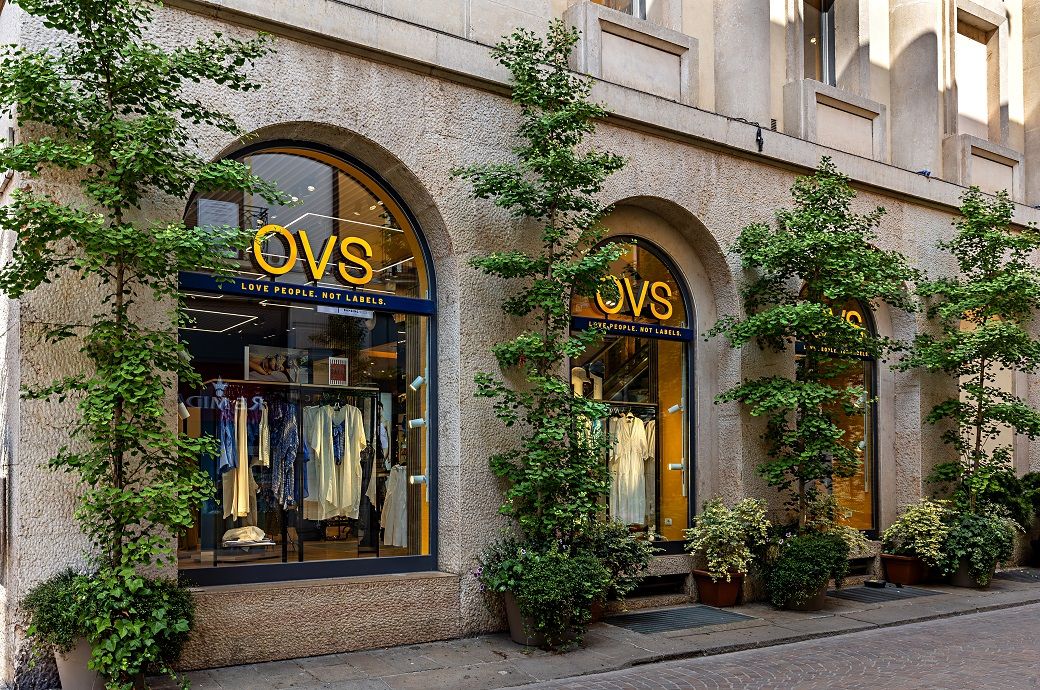
This opening will mark OVS’ second store in India, following its flagship debut in New Delhi in October 2025, and underscores the brand’s long-term commitment to the Indian market.
OVS will launch its first Mumbai store on March 14 at Sky City Mall, Borivali, expanding its India presence after debuting in New Delhi in October 2025.
The 11,000 sq ft outlet will feature womenswear, menswear and kidswear, including premium labels such as PIOMBO and Les Copains.
The move reflects strong early performance and OVS’ long-term growth plans in India.
Spanning approximately 11,000 sq. ft., the Mumbai store will introduce customers to OVS’ latest global retail concept, designed to deliver a modern and seamless shopping experience. Reflecting Mumbai’s diverse fashion sensibilities, where style ranges from everyday comfort to trend-forward dressing, the store offers a versatile mix across womenswear, menswear and kidswear, making Italian style affordable to all. The assortment spans accessible everyday fashion from OVS alongside premium and contemporary collections, including PIOMBO, Les Copains, B.Angel, Altavia, and OVS Kids, designed to meet the style needs of a wide spectrum of consumers.
Sharing his thoughts on the Mumbai launch, Sundeep Chugh, Managing Director at OVS India, said: “The response to our New Delhi launch has been highly positive and has validated our belief that Indian consumers are seeking global fashion that delivers both style and value. Mumbai is a natural next step for us, given its strong fashion consciousness and retail maturity. Our vision is to establish OVS as a trusted destination for the entire family, offering a distinctive Italian aesthetic at democratic price points while maintaining high standards of quality and sustainability.”
Carmine Di Virgilio, Global Chief Retail Officer at OVS S.p.A, added: “India represents an important growth market in our international strategy and Mumbai is among the country’s most influential retail destinations. This opening will allow us to further strengthen our global footprint while introducing consumers to a retail experience that reflects our heritage, the contemporary Italian design philosophy and commitment to responsible fashion. We are very satisfied with our Delhi debut and the enthusiastic response from a wide range of customers, particularly younger generations. At the same time, we are actively evaluating additional expansion opportunities across the Indian market to support our long term growth strategy.”
Globally, OVS operates over 2,200 stores across multiple markets and has built a strong position in accessible, everyday fashion by combining Italian design excellence with quality materials and affordable pricing. Sustainability remains central to the brand’s approach, with responsible sourcing, recyclable materials, water-efficient processes and transparency.
Note: The headline, insights, and image of this press release may have been refined by the Fibre2Fashion staff; the rest of the content remains unchanged.
Fibre2Fashion News Desk (RM)

India’s GDP growth for Q3 FY26 was 7.8 per cent, following high growth of 8.4 per cent in Q2, as per the revised GDP series.
Care Ratings recently projected India’s FY27 GDP growth at 7.2 per cent.
Favourable impact of the GST rate rationalisation and past central bank rate cuts are expected to remain supportive of the consumption scenario, it noted.
On the investment front, the central government’s continued emphasis on capital expenditure-led growth and some signs of revival in private capex are positives.
Favourable impact of the goods and services tax (GST) rate rationalisation and past central bank rate cuts are expected to remain supportive of the consumption scenario.
On the investment front, the central government’s continued emphasis on capital expenditure-led growth and some signs of revival in private capex are positives.
On the external front, the recently announced trade deals with several countries are favourable developments for India’s export performance, Care Ratings said in a release.
However, the external economic conditions remain volatile. It will be critical to monitor the evolving geopolitical situation and trade policy shifts.
Furthermore, the rise in probability of El Nino in 2026 remains a key watchout as it poses risks for agriculture and inflation outlook.
According to the second advance estimate, the full-year growth for FY26 has been revised higher to 7.6 per cent from the earlier estimate of 7.4 per cent. This follows high growth of 7.1 per cent in FY25.
Fibre2Fashion News Desk (DS)


Why Is Alexa+ So Bad?

Australian wool market gains on strong merino demand

UN Rights Chief Condemns Killing of Khamenei, Calls for Probe into Iran School Strike

-
 Business1 week ago
Attock Cement’s acquisition approved | The Express Tribune
-

 Fashion1 week ago
Policy easing drives Argentina’s garment import surge in 2025
-

 Politics1 week ago
What are Iran’s ballistic missile capabilities?
-
 Business1 week ago
India Us Trade Deal: Fresh look at India-US trade deal? May be ‘rebalanced’ if circumstances change, says Piyush Goyal – The Times of India
-

 Politics1 week ago
US arrests ex-Air Force pilot for ‘training’ Chinese military
-

 Sports7 days ago
LPGA legend shares her feelings about US women’s Olympic wins: ‘Gets me really emotional’
-
 Business7 days ago
Greggs to reveal trading amid pressure from cost of living and weight loss drugs
-

 Sports1 week ago
Sri Lanka’s Shanaka says constant criticism has affected players’ mental health