

Business
BrewDog US bars to be bought by firm behind UK rescue deal


Tilray Brands has agreed to buy some of BrewDog’s US assets, including its Ohio-based brewery and hotel and Las Vegas site, following a UK rescue deal.
The New York-based firm, which produces medicinal cannabis as well as craft beer in the US, said it had agreed to acquire certain key assets across North America.
This incorporates its brewery, pub and hotel in Columbus, Ohio, bars in New Albany and Cleveland in Ohio, and flagship pub in Las Vegas in Nevada, a franchised site in Denver, Colorado, and a licensed bar in Columbus International Airport.
It did not disclose the price of the deal.
Tilray, which bought a number of BrewDog’s assets and bars in the UK earlier this month, said the acquisition will help it to expand into the US craft beer industry.
Irwin D Simon, Tilray’s chief executive, said: “The acquisition of BrewDog’s key US assets strengthens our US beverage platform and advances our regional craft beer strategy across North America.
“BrewDog has built a strong following in Ohio and established a highly visible presence in Las Vegas, including a flagship brewpub located on a premier stretch of the Las Vegas Strip.
“These assets fit squarely within our brewpub model, creating destination-led venues that deepen consumer engagement while providing new opportunities to introduce and sell our broader portfolio of Tilray beverage brands.”
Tilray had already agreed to buy the global brand and related intellectual property, its UK brewing operation and 11 of its pub venues across the UK and Ireland, preserving 733 jobs.
It also bought BrewDog’s Australian business including a Brisbane-based brewery and a number of owned and franchised bars.
But the deal, which rescued the company out of administration, resulted in the closure of 36 bars in the UK, with around 480 workers losing their jobs.
The move also meant that any equity holders will be left empty-handed and not receive any returns from the deal.

A Peloton Interactive Inc. logo on a stationary bike at the company’s showroom in Dedham, Massachusetts, Feb. 3, 2021.
Adam Glanzman | Bloomberg | Getty Images
Peloton on Monday announced its Commercial Series, the company’s first Bike and Tread products built for high-traffic gym floors.
The move marks the company’s latest push beyond its core at-home business and deeper into the multibillion-dollar commercial fitness market.
“I’ve had the chance of speaking with the CEOs of a number of gyms, gym operators or big-box operators over the last year,” CEO Peter Stern told CNBC in an interview. “The one brand their members asked for, and therefore that they are asking for it, ‘Find a way to get me Peloton equipment.'”
The suite of products is a part of the company’s commercial unit, which it launched in 2025 in partnership with Precor, the fitness equipment maker it acquired in 2021. Peloton already has a presence in major businesses like hotel chains Hyatt and Hilton. The company did not say which gyms specifically would offer its new machines.
The expansion could broaden Peloton’s footprint in the fitness industry. Through its integration with Precor, Peloton now has access to a commercial distribution network spanning more than 60 countries, allowing the company to scale its equipment and digital platform internationally.
Stern did not disclose pricing for the new equipment, but said the products will be “priced competitively,” with more details expected closer to the planned launch in late 2026.
The machines combine Peloton’s digital workout platform and instructor-led classes with hardware engineered by Precor to withstand heavy daily use.
Pedaling uphill
Peloton’s push into gyms could face resistance. Some fitness chains have been reluctant to integrate Peloton equipment, preferring to promote their in-house classes, digital platforms and instructors.
“I need to leave how gyms react to that up to them,” said Stern. “But if you look at a typical gym floor, they’ve got Bikes, Treads and lots of other equipment that’s out there. We’re just now giving them a better experience for customers on those Bikes and on those Treads.”
Peloton has dipped its toes in commercial spaces for several years, including through the hotel partnerships, but has been held back because its hardware wasn’t designed to be used in high-traffic spaces. The company has been the subject of numerous product safety recalls.
Peloton machines have had a tendency to break, and fixing them can be challenging because its infrastructure is different from a traditional fitness manufacturer’s.
When Peloton launched its revamped product assortment last fall, the company also introduced a new line of equipment for its commercial business unit. The hardware is more durable than its consumer machines, but is still only designed for places with smaller gyms, like hotels and corporate wellness centers.
The development comes as Peloton struggles to convince consumers its new AI-driven product line, Peloton IQ, is worth the steep price tag.
When it reported fiscal 2026 second-quarter earnings last month, the company missed Wall Street’s expectations on the top and bottom lines and said it expected sluggish sales to continue in the current quarter.
The weak results, coupled with the soft guidance, were the first clue investors had that Peloton’s product overhaul wasn’t the sales driver the company had hoped it would be, putting more focus on its commercial business unit.
During Peloton’s last quarter, revenue in its commercial business unit rose 10%, even as companywide sales fell about 3%.
Last Updated:
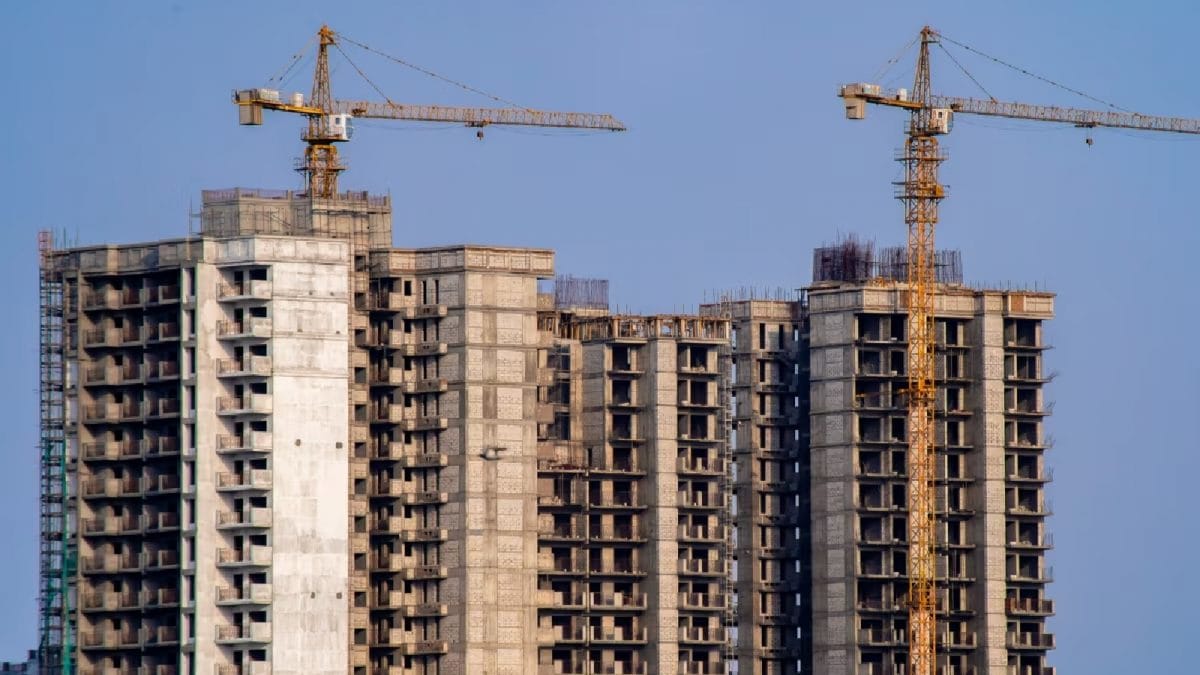
In 2025, Bengaluru’s housing market thrives with a 13% price rise to Rs 8533 per sqft, driven by IT jobs, start-ups, economic growth, and high demand for premium homes.




In a year marked by slowdown in residential real estate activity across India, Bengaluru’s housing market showed strong momentum in 2025.
In a year marked by slowdown in residential real estate activity across India, Bengaluru’s housing market showed strong momentum in 2025. The city has displayed a robust end-use demand, primarily driven by its job creation potential owing to the large presence of domestic and global IT and start-up companies, improving infrastructure and housing affordability measured by a relatively better price to income ratio which has remained stable over the years as compared to other cities.
According to a report by property consultancy firm PropTiger, the average price of homes rose by 12% in 2024 and by 13% in 2025 to Rs 8533 per sq. ft. In fact, between Q1 and Q4 in 2025, housing prices rose by 21%.
Unlike earlier cycles that were more investor-led, today’s market is far more stable, with families prioritising long-term housing.
Despite the average housing price growth in India’s top cities declining from 17% in 2024 to 6% in 2025, Bengaluru recorded two consecutive years of double-digit growth, according to the report.
The city scores high on other parameters like the number of companies formed, skilled professionals with a high base salary, passport holders, car registrations, AQI etc. To add to this, it is the first choice for GCCs, AI companies & start-ups, resulting in increased demand for office space with Bengaluru alone accounting for nearly one third of total absorption and supply. This has created high-paying jobs that have had a positive impact on the city’s housing market.
Navin Dhanuka, director of ArisUnitern, said, “We are seeing growing traction for plotted developments and well-planned residential communities, as buyers increasingly prioritise long-term value, quality of living, and organised development. Given these fundamentals, Bengaluru is likely to remain one of the most resilient and consistently performing residential markets in the country.”
Two factors have aided the city’s housing growth. The post-pandemic pent-up demand coinciding with the return to office. According to PropEquity, prices have risen by 17% CAGR between 2022-2025 with nearly 50% of sales and launches in the premium segment in home priced between Rs 1-2 crore.
Umesh Gowda H A, chairman and founder of Sanjeevini Group, said that strong employment opportunities, particularly in the technology and startup sectors, resulted in growing demand for premium homes from professionals after the pandemic; and this trend continues to sustain.
“East Bengaluru is seeing consistent growth in demand owing to its proximity to employment hubs like Whitefield. Mid-to-premium segments are gaining traction as homebuyers upgrade their lifestyles. Going forward, we expect the momentum to continue as Bengaluru remains one of India’s most dynamic real estate markets supported by strong economic fundamentals and long-term housing demand,” Gowda said.
Bengaluru’s strong price growth highlights the city’s unmatched resilience and global appeal. As India’s AI and tech capital, Bengaluru continues to attract end-users, global investors, and a growing migrant workforce looking for quality life and long-term value.
“Backed by robust economic growth, pleasant climate, thriving IT and startup ecosystems, evolving infrastructure, and strong mid-segment housing demand from young professionals and families, the city remains a benchmark for stability and aspiration. The continued rise of brand Bengaluru makes this appreciation both natural and long-term,” said Ramji Subramaniam, managing director of Sowparnika Projects.
The city saw the highest housing supply among top cities in 2025 reflecting continued developer confidence in long-term demand with large branded developers dominating the supply.
Bhavesh Kothari, founder & CEO of Property First Realty, said, “Bengaluru’s housing market continues to demonstrate strong resilience, with price appreciation largely driven by genuine end-user demand rather than speculative buying. We are seeing professionals and long-term investors prioritising home ownership, particularly in well-connected micro-markets offering lifestyle amenities and strong future appreciation potential.”
March 16, 2026, 17:06 IST
Read More

Pakistan Stock Exchange’s benchmark KSE-100 index lost 4,687.50 points on Monday, marking a turbulent start to the week as selling pressure returned to the market.
During intraday trading, the KSE-100 touched a high of 153,943.69 points and low of 149,385.39 points.
At close, the KSE-Index dropped 4,687.50 points to reach 149,178.66 points or minus 3.14 percent.
The sharp decline comes after the index recorded its seventh consecutive week of losses, with geopolitical uncertainty and weak investor sentiment continuing to weigh on Pakistani equities.
Two key factors affecting the market last week were the absence of positive economic developments and the ongoing delay in finalising a Staff-Level Agreement (SLA) with the International Monetary Fund (IMF) for Pakistan’s third review of its $7 billion Extended Fund Facility (EFF).
Another major factor has been the spike in global oil prices.
The increase was triggered by US-Israel aggression against Iran, which led to the closure of the Strait of Hormuz, a critical global oil shipping route.
The disruption raised concerns about energy supply and inflationary pressures for oil-importing economies, including Pakistan.
Investors will now be watching closely to see whether the current volatility persists through the remainder of the trading session and into the rest of the week, particularly as markets react to geopolitical developments and signals on the IMF programme.
It is pertinent to mention here that Pakistan’s stock market remained under sustained pressure during the week ended March 13, 2026, as heightened geopolitical tensions, domestic security concerns, and macroeconomic uncertainty continued to weigh heavily on investor sentiment.
The benchmark KSE-100 Index extended its losing streak, declining by 3,629.92 points on a week-on-week basis, representing a drop of 2.3 percent to close at 153,866.17 points compared with the previous week’s closing level of 157,496.09 points.
The market remained volatile throughout the week as investors trimmed positions and adopted a cautious stance in the face of external and domestic headwinds.
The latest decline follows an even steeper fall witnessed during the previous week, when the market had shed more than 10,500 points.
Analysts noted that escalating geopolitical risks across the region, coupled with domestic security concerns, have dampened investor confidence and triggered persistent selling pressure across multiple sectors.

Peloton is launching bikes and treadmills for gyms, accelerating commercial strategy

“All the Empty Rooms” wins Oscar for Steve Hartman’s project memorializing children killed in school shootings

Duke, Arizona, Michigan, Florida top NCAA tournament seeds

Stock market crash today (March 12, 2026): Nifty50 opens below 23,600; BSE Sensex down over 900 points on continuing US-Iran war – The Times of India

Intertextile Shanghai 2026: Fringe events spotlight market trends

Longtime Blackhawks great and broadcaster Troy Murray dies at 63, team says

-
Business5 days ago
Stock market crash today (March 12, 2026): Nifty50 opens below 23,600; BSE Sensex down over 900 points on continuing US-Iran war – The Times of India
-
 Fashion7 days ago
Intertextile Shanghai 2026: Fringe events spotlight market trends
-
 Sports1 week ago
Longtime Blackhawks great and broadcaster Troy Murray dies at 63, team says
-
 Business1 week ago
Gold On Sale In Dubai? Here’s Why Prices Have Dropped By $30 Per Ounce
-

 Fashion6 days ago
German brand Adidas posts 13% revenue growth in 2025
-

 Fashion1 week ago
Removing NTBs could boost trade with US: Bangladesh commerce minister
-

 Sports1 week ago
Kyle Schwarber leads Team USA to 9-1 World Baseball Classic win over Britain
-

 Entertainment1 week ago
Christian Bale makes shocking confession about Jacob Elordi’s ‘Frankenstein’